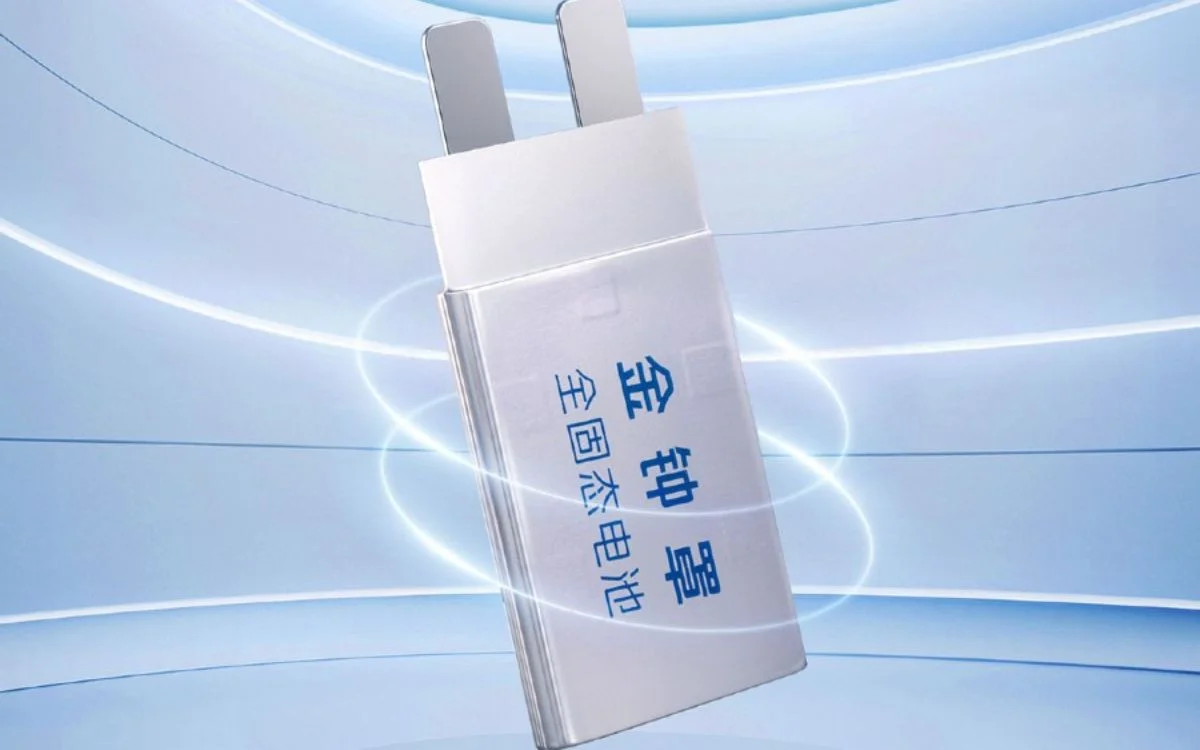
Executive Takeaways
- Industrial Scale Unlocked: The deployment of a 12 GWh manufacturing footprint marks the critical bridge from laboratory-scale chemistry to high-volume automotive supply chains.
- The Cost Parity Threshold: By streamlining dry-room requirements and eliminating complex separator winding, advanced solid-state architectures are projected to match or undercut traditional liquid electrolyte EV cell production costs.
- Capital Allocation & Risk Mitigation: Institutional investors and original equipment manufacturers (OEMs) are re-evaluating enterprise ROI models as production capacity shifts away from speculative pilot plants toward bankable giga-factories.
- Regulatory & Infrastructure Compliance: Enhanced thermal stability drastically reduces fire-suppression capital expenditure within downstream battery pack assembly plants, fundamentally altering global compliance benchmarks.
For more than a decade, the holy grail of automotive electrification has remained tantalizingly out of reach. While liquid lithium-ion chemistry successfully powered the first wave of mass-market electric vehicles, it hit a thermodynamic and economic ceiling constrained by safety margins, thermal management overhead, and incremental cost curves. Now, a seismic shift is underway across the energy storage landscape. Driven by aggressive capital allocation and breakthroughs in material science, the industry is transitioning from speculative R&D to hard industrial execution. The rollout of a targeted 12 GWh production capacity represents a watershed moment: the point where solid-state batteries step out of the cleanroom and directly into the crosshairs of liquid electrolyte cost parity.
To understand the gravity of this industrial pivot, one must examine the fundamental economics of contemporary cell manufacturing. Traditional liquid-based lithium-ion batteries rely on volatile organic solvents, microporous polymer separators, and complex liquid electrolyte filling processes that dictate massive factory footprints and stringent safety infrastructure. These legacy systems have steadily lowered their cost-per-kilowatt-hour through sheer volume, but they face diminishing returns. Conversely, solid-state architectures—utilizing advanced ceramic, sulfide, or polymer solid electrolytes—promise higher energy densities, radically accelerated charging cycles, and an elimination of thermal runaway risks. Historically, however, these advantages came with a prohibitive price tag, low manufacturing yields, and insurmountable scalability bottlenecks.
The July 2023 catalyst centers on a strategic convergence of production engineering and financial backing. By bypassing traditional slurry-coating and solvent-drying phases that consume up to 30% of a conventional giga-factory’s energy budget, next-generation solid-state innovators have redesigned the foundational manufacturing playbook. This structural overhaul directly impacts variable production costs. As automated continuous-roll processing replaces batch fabrication, the capital expenditure per gigawatt-hour drops precipitously, closing the delta between experimental solid-state cells and commoditized liquid chemistry.
In the boardrooms of legacy automakers and tier-one suppliers, this development forces an immediate recalculation of balance sheet exposure and long-term supply chain agreements. Enterprise ROI models that previously penciled in solid-state integration as a post-2030 luxury are now being pulled forward. Strategic risk mitigation strategies demand that automotive conglomerates secure offtake agreements with manufacturers capable of delivering commercial volumes without sacrificing margin. This 12 GWh deployment serves as a stress test for market liquidity and manufacturing execution, proving whether solid-state startups can successfully navigate the treacherous transition from prototype fabrication to high-yield mass production.
Comparative Metrics: Solid-State vs. Conventional Liquid Electrolyte Cells
Test Our Free AI & Tech Utilities Suite
Calculate LLM API token costs, analyze article dwell-time, or simulate tech DCA returns.
| Performance & Economic Metric | Legacy Liquid Electrolyte (NMC 811) | Next-Gen Solid-State (12 GWh Scale) | Strategic Impact |
|---|---|---|---|
| Estimated Cell Cost ($/kWh) | $110 – $130 | $95 – $105 (Target Parity) | Unlocks EV price parity with internal combustion engines. |
| Volumetric Energy Density | 650 – 750 Wh/L | 900 – 1,100 Wh/L | Significantly extends vehicle range or reduces pack weight. |
| Fast-Charging Time (10-80%) | 18 – 30 minutes | 10 – 15 minutes | Mitigates consumer range anxiety and charging station bottlenecks. |
| Factory Capex Intensity | Baseline ($100M/GWh) | -15% to -20% (Dry-room reduction) | Accelerates capital payback periods for institutional investors. |
Industry Ecosystem Impact: Winners, Losers, and Capital Redistribution

The realization of 12 GWh of solid-state manufacturing capacity is not merely an engineering milestone; it represents a profound reallocation of economic power across the global supply chain. As market liquidity concentrates around proven solid-state innovators, traditional commodity chemical suppliers and legacy cell manufacturers face an urgent strategic imperative to adapt or obsolesce.
The Winners: Automotive OEMs that early-vetted and co-developed solid-state solutions now possess a distinct competitive moat. By offering superior range, faster charge times, and enhanced safety profiles without incurring a green premium, these carmakers are positioned to capture premium market share. Furthermore, specialized equipment manufacturers specializing in high-precision dry coating, roll-to-roll pressing, and automated stacking are experiencing unprecedented order book expansion.
The Transitioning Incumbents: Legacy tier-one battery cell producers tied exclusively to liquid electrolyte chemistry are witnessing compressed valuation multiples. To defend their market share, these giants are forced to accelerate their own internal solid-state R&D budgets or pursue aggressive mergers and acquisitions, buying up pure-play startups to secure intellectual property portfolios and engineering talent.
The Downstream Beneficiaries: Beyond passenger vehicles, the broader electrification ecosystem—including aerospace, heavy-duty commercial transport, and high-performance maritime applications—stands to benefit immensely. The elimination of heavy liquid thermal management systems reduces dead weight, compounding efficiency gains across every mobile asset class.
Frequently Asked Questions (People Also Ask)
What does achieving cost parity mean for solid-state EV batteries?
Achieving cost parity means solid-state batteries can be manufactured at a price point per kilowatt-hour ($/kWh) comparable to or lower than conventional liquid lithium-ion cells (typically under $100/kWh). This removes the historical "green premium," allowing automakers to sell long-range electric vehicles at price points that directly compete with internal combustion engine vehicles while maintaining healthy profit margins.
How does a 12 GWh factory capacity impact automotive supply chains?
A 12 GWh production capacity represents the threshold where output transitions from niche pilot programs to meaningful industrial supply. For a typical fleet, 12 GWh can power approximately 120,000 to 150,000 long-range electric vehicles annually, providing OEMs with the verifiable volume needed to anchor multi-year vehicle production lines and reduce reliance on unproven suppliers.
Why are solid-state batteries considered safer than liquid electrolyte cells?
Traditional liquid electrolytes utilize volatile, flammable organic solvents that can trigger thermal runaway and catastrophic fires if punctured or short-circuited. Solid-state batteries replace these liquids with non-flammable ceramic, glass, or solid polymer electrolytes, dramatically enhancing thermal stability and virtually eliminating fire risks under extreme stress.
What are the primary manufacturing hurdles in scaling solid-state cells?
The principal hurdles include maintaining high ionic conductivity at room temperature, preventing dendrite growth across the solid electrolyte interface over thousands of charge cycles, and developing high-speed, continuous manufacturing processes that achieve high yield rates without micro-defects.
Future Outlook: Milestones and Market Trajectory
As the industry digests the operational implications of this 12 GWh manufacturing rollout, attention shifts toward the next critical milestones on the horizon. Over the next 24 to 36 months, financial markets and technical analysts will closely monitor yield optimization metrics, scrap rates, and actual field performance data from early commercial vehicle deployments. If these factories achieve projected throughput and unit economics, the tipping point for total market transformation will arrive well ahead of consensus forecasts.
Ultimately, this manufacturing leap signals the maturation of solid-state technology from a venture-backed scientific endeavor into an essential pillar of global industrial infrastructure. For institutional investors, corporate strategists, and policymakers alike, the directive is clear: capital allocation must adapt to a landscape where solid-state parity is no longer a distant theoretical goal, but an active, scaling market reality.