Executive Takeaways
- The V-Shaped Recovery: Following a volatile macroeconomic sell-off driven by rate-cut anxieties and profit-taking, Nvidia and major artificial intelligence bellwethers staged a decisive market rebound, underscoring resilient institutional demand.
- Enterprise ROI Drives Capital Allocation: Unlike the speculative internet bubble of 2000, current tech capital allocation is anchored in verified enterprise efficiency gains, massive cloud compute architecture upgrades, and measurable productivity return on investment.
- Valuation Multiples Reset: The recent correction successfully flushed out leveraged retail positions and forced a healthier valuation multiple compression, paving the way for institutional re-entry.
- Supply Chain Bottlenecks Easing: Advanced packaging (CoWoS) and high-bandwidth memory (HBM) supply stabilization are enabling semiconductor giants to meet unyielding hyperscaler demand heading into the next fiscal quarters.
Wall Street has rendered its verdict on the artificial intelligence trade—and the answer is an emphatic reaffirmation. Following weeks of erratic trading sessions, heightened volatility, and macro-induced risk-off sentiment, Nvidia Corp. and a cohort of premier semiconductor and cloud computing names have staged a powerful rebound. The sharp reversal from recent lows signals that institutional investors and global asset managers view any systemic sell-off not as a structural bust, but as a high-conviction buying opportunity in a generational technological transition.
Behind this market resurgence lies a complex interplay of capital allocation strategies, rigorous corporate earnings reports, and an unyielding corporate commitment to digital transformation. As Chief Executive Officers across Fortune 500 boardrooms accelerate investments in generative AI, the underlying cloud compute architecture required to support these models remains constrained. The recent market turbulence—sparked by fluctuating treasury yields, shifting Federal Reserve rate-cut trajectories, and localized profit-taking—provided a temporary smoke screen that institutional desks quickly pierced to accumulate shares at discounted valuation multiples.
Anatomy of the Sell-Off: Macro Headwinds Meet Tech Exuberance
Test Our Free AI & Tech Utilities Suite
Calculate LLM API token costs, analyze article dwell-time, or simulate tech DCA returns.
To understand the mechanics of the current rebound, one must dissect the catalysts that triggered the initial pullback. Throughout the preceding weeks, equity markets faced a confluence of macro pressures. Bond yields hovered near multi-month highs, forcing a reassessment of future cash flow discounting models for high-growth, high-multiple technology equities. Simultaneously, quantitative funds and algorithmic traders executed automated de-risking protocols, disproportionately impacting high-beta names that had led the year-to-date market advance.
Yet, underlying fundamental analysis consistently contradicted the bearish narrative. While skeptics raised alarms over peak capital expenditures by hyperscalers—such as Microsoft, Alphabet, Amazon, and Meta Platforms—executives during recent earnings calls doubled down on their infrastructure spending plans. These tech behemoths articulated a unified thesis: the risk of under-investing in AI infrastructure vastly outweighs the near-term risk of over-provisioning. Consequently, cash flow generation remained robust, balance sheets stayed pristine, and institutional risk mitigation strategies ultimately dictated a return to core secular growth winners.
The Semiconductor Vanguard: Nvidia’s Dominance and the Ecosystem Ripple Effect
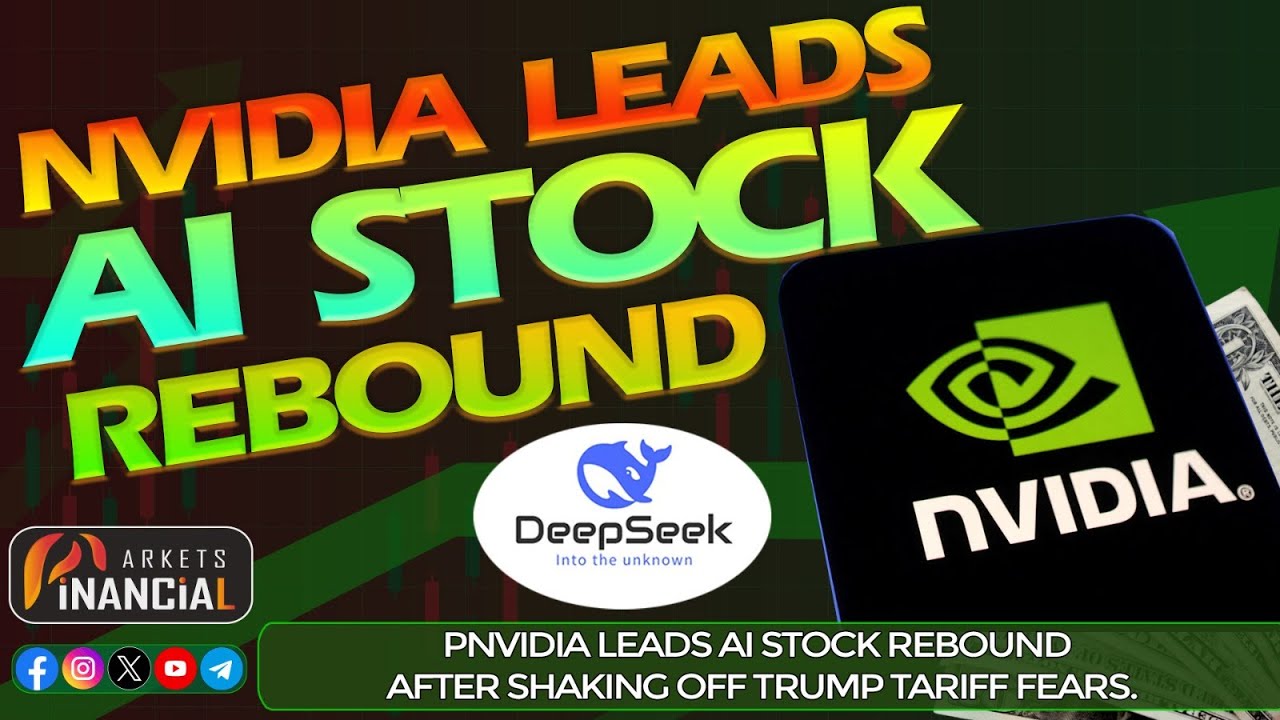
At the center of this market recovery stands Nvidia, whose graphics processing units (GPUs) remain the undisputed gold standard for large language model (LLM) training and inference. The company's recent price action reflects a broader recognition that its competitive moat extends far beyond hardware. Through its proprietary CUDA software ecosystem, enterprise-grade AI foundry services, and aggressive product roadmap cadence—transitioning from the Hopper architecture to the highly anticipated Blackwell platform—Nvidia has engineered a formidable barrier to entry.
However, the rebound is far from a single-stock phenomenon. A rising tide of institutional capital has lifted the entire semiconductor and hardware supply chain. Contract manufacturers, advanced packaging specialists, and high-bandwidth memory (HBM) producers have all participated in the wave. As supply chain bottlenecks gradually ease and production yields on cutting-edge nodes stabilize, throughput is accelerating, directly translating into top-line revenue expansion for the broader ecosystem.
| Metric / Indicator | Pre-Correction Phase | Trough / Sell-Off Period | Current Rebound Status |
|---|---|---|---|
| Nvidia (NVDA) Valuation Multiple (NTM P/E) | ~38x - 42x | ~28x - 32x | ~35x (Re-rating upward on earnings beats) |
| Hyperscaler CapEx Growth (YoY) | +35% to +45% | Unchanged / Scrutinized | Revised upward to +40% - +50% |
| HBM & CoWoS Supply Constraints | Severe backlog (40+ weeks) | Peak anxiety period | Easing; lead times shortening to 20-24 weeks |
| Institutional Fund Positioning | Overweight / Extended | Tactical trimming / Hedging | Aggressive re-accumulation & dip-buying |
Industry & Market Implications: Winners, Losers, and Economic Realities
The swift recovery of AI equities carries profound implications for global financial markets and corporate strategy. On the winning side of the ledger are tier-1 cloud service providers, specialized semiconductor fabricators, and enterprise software providers capable of successfully monetizing proprietary AI agents. These entities are benefiting from a compounding network effect: as more enterprises deploy AI models, the demand for underlying infrastructure surges, reinforcing high profit margins and cash flow generation.
Conversely, the losers in this environment include legacy technology firms slow to pivot toward accelerated computing architectures, as well as short-term traders who attempted to time the market top by betting against secular structural trends. Furthermore, companies unable to demonstrate clear enterprise ROI from their internal AI pilots face mounting skepticism from activist investors and boardrooms demanding strict capital efficiency.
From a macroeconomic perspective, the resilience of the tech sector acts as a stabilizing force for broader market indices. While interest rate uncertainty continues to cast a shadow over rate-sensitive sectors like real estate and small-cap value stocks, the massive balance sheet strength and earnings growth of mega-cap technology firms provide a durable floor for global equity valuations.
Frequently Asked Questions (People Also Ask)
What caused the recent sell-off in Nvidia and other AI stocks?
The recent market pullback was primarily driven by macroeconomic factors, including fluctuating Treasury yields, recalibrated expectations for Federal Reserve interest rate cuts, and routine profit-taking after an aggressive multi-quarter rally. Additionally, some market participants expressed short-term concerns regarding the pace of capital expenditure monetization by major hyperscale cloud providers.
Why did AI stocks bounce back so quickly?
Institutional buyers and quantitative desks viewed the correction as a temporary, liquidity-driven dip rather than a fundamental shift in business models. Strong corporate earnings reports, continued aggressive CapEx guidance from Big Tech, and easing supply chain bottlenecks in advanced semiconductor manufacturing gave investors the confidence to aggressively re-accumulate shares at compressed valuation multiples.
Is the current AI market boom comparable to the 2000 dot-com bubble?
Financial analysts and market historians note fundamental differences. Unlike the speculative dot-com era, today’s AI leaders—such as Nvidia, Microsoft, and Alphabet—boast massive, unencumbered free cash flows, pristine balance sheets, and immediate, verified enterprise ROI. Current spending is anchored in tangible productivity gains and massive global demand for cloud compute architecture rather than speculative retail hype.
What key milestones should investors monitor next for AI stocks?
Market participants should closely track upcoming quarterly earnings reports from hyperscalers for sustained CapEx commitments, updates on enterprise software monetization metrics, regulatory compliance developments across global jurisdictions, and production yield milestones for next-generation semiconductor architectures like Nvidia's Blackwell chips.
Future Outlook: Navigating the Next Phase of the AI Super-Cycle
As the market moves past the recent volatility shock, the narrative shifts from immediate price action to long-term structural execution. The artificial intelligence super-cycle is entering a more mature, disciplined phase where proof of execution and scalable enterprise deployment matter above all else.
Key milestones to watch in the coming quarters include the volume deployment of next-generation GPU architectures, the evolution of sovereign AI initiatives by international governments, and the regulatory compliance frameworks emerging from the United States, European Union, and Asia. For institutional allocators, volatility will remain a persistent companion, but the recent rebound confirms a core reality: the transformation of global enterprise infrastructure around accelerated computing is an irreversible secular trend, not a temporary market fad.