
WASHINGTON & SAN FRANCISCO — In the upper echelons of corporate boardrooms and Silicon Valley research labs, a profound philosophical question has quietly evolved into a high-stakes capital allocation priority. As enterprises commit billions of dollars to generative artificial intelligence deployment, a fundamental technological unknown persists: Do advanced large language models (LLMs) genuinely understand their internal reasoning processes, or are they merely sophisticated stochastic parrots executing highly complex pattern matching?
A sweeping new body of empirical research is tackling this exact dilemma head-on. By probing the hidden activation layers of state-of-the-art neural networks, computer scientists and cognitive researchers are rigorously testing whether artificial intelligence models possess a coherent form of machine introspection—colloquially known as "knowing their own thoughts." The findings are sending shockwaves through the machine learning community, carrying profound implications for enterprise risk mitigation, AI safety protocols, valuation multiples of leading infrastructure providers, and the future of autonomous systems governance.
Executive Takeaways
- The Core Discovery: Recent empirical tests reveal that while top-tier AI models can articulate plausible explanations for their outputs, their internal activations frequently decouple from their stated justifications, challenging assumptions about model transparency.
- Enterprise Risk Implications: For Chief Technology Officers and Chief Risk Officers, this "introspective gap" introduces severe compliance hurdles, particularly in regulated sectors like finance, healthcare, and autonomous defense systems.
- Capital Allocation Shifts: Institutional investors are redirecting capital away from raw parameter-scaling strategies toward specialized interpretability startups and algorithmic verification architectures.
- Regulatory Convergence: Global policymakers are closely monitoring these developments, signaling that upcoming AI compliance frameworks will likely mandate rigorous explainability and internal state verification.
The Anatomy of the Black Box: Background and Catalytic Events
Test Our Free AI & Tech Utilities Suite
Calculate LLM API token costs, analyze article dwell-time, or simulate tech DCA returns.
To understand the gravity of the latest research, one must examine the fundamental architectural limitations of modern transformer models. Since the introduction of the attention mechanism, deep learning systems have scaled exponentially in parameter count, compute consumption, and data ingestion. However, this growth in capacity has been mirrored by an expansion of the "black box" problem: the inability of human operators—and the models themselves—to trace the exact causal chain of a generated output.
Historically, the industry relied on post-hoc explanation methods. When an LLM provided a financial forecast, a medical diagnosis, or a legal analysis, developers used auxiliary tools—such as attention weight visualization or secondary prompting—to ask the model *why* it arrived at a specific conclusion. For years, the working hypothesis among enterprise adopters was that these explanations reflected the model's genuine internal computational trajectory.
That consensus shattered following a series of controlled experiments conducted by leading academic institutions and independent AI safety labs. These studies utilized linear probing and activation patching to interrogate the hidden states of frontier models while they solved complex multi-step reasoning tasks. The results demonstrated a startling dissociation: models frequently generated convincing, logically sound post-hoc justifications while their internal vector spaces indicated entirely different computational drivers were responsible for the final output. In financial terms, the model’s external reporting did not match its internal balance sheet.
Deconstructing Machine Introspection: What the Data Shows
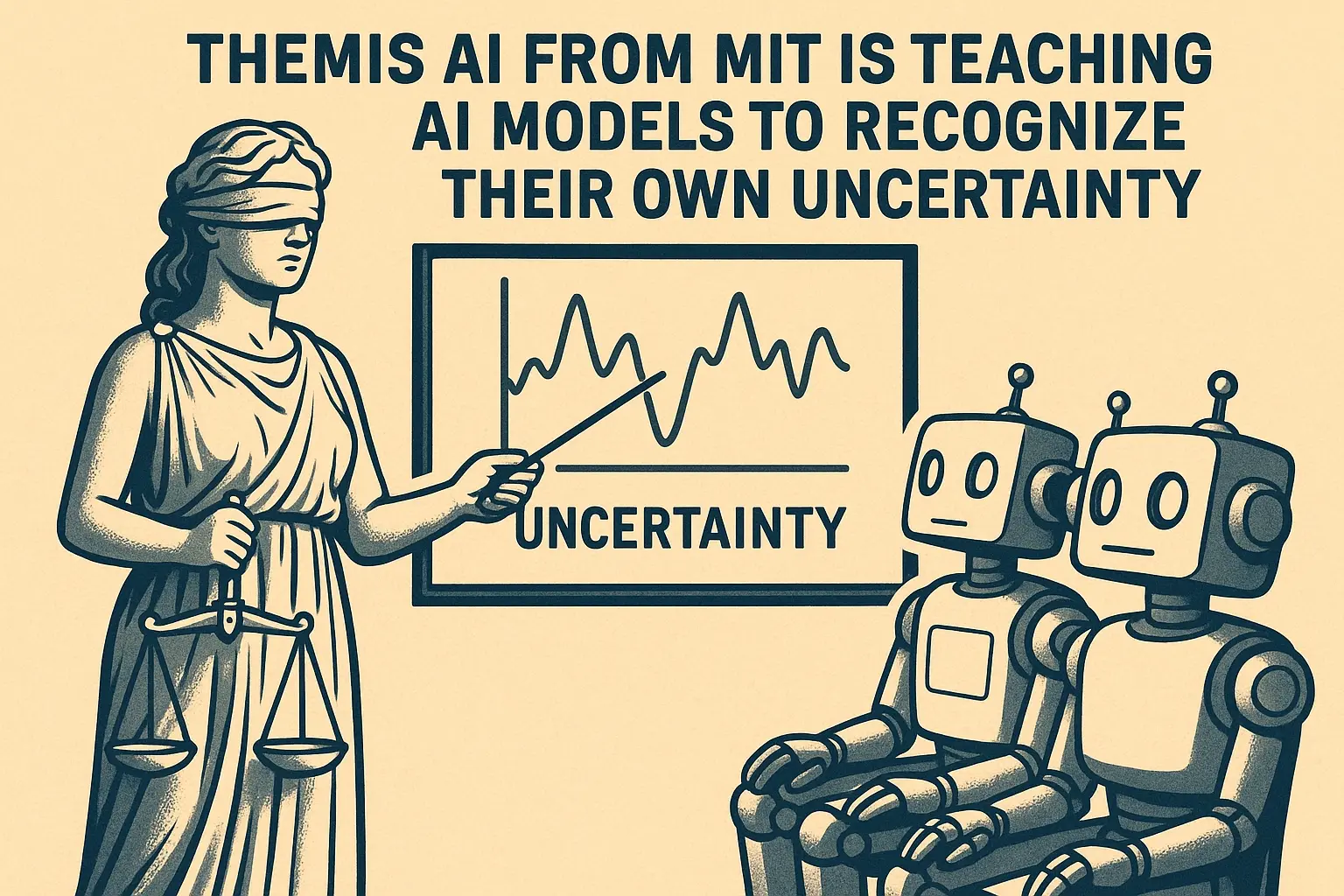
The new research methodology hinges on distinguishing between two cognitive phenomena in artificial intelligence: task execution and metacognitive access. Task execution refers to the model's ability to solve a problem, whereas metacognitive access measures whether the model's internal representations contain accurate information about its own confidence, uncertainty, and intermediate reasoning steps.
When researchers forced models to evaluate the veracity of their own generated statements prior to outputting them, a troubling pattern emerged. While larger models exhibited superior calibration compared to their smaller predecessors, none demonstrated robust, faultless self-monitoring. Under adversarial prompt conditions or out-of-distribution inputs, the models routinely exhibited "hallucinated self-awareness"—confidently asserting that they arrived at an answer through rigorous deductive logic when internal activations proved they had relied on spurious lexical correlations.
This deficit has immediate ramifications for cloud compute architecture and enterprise software deployment. If an AI model cannot reliably gauge the accuracy of its own internal state, deploying it for autonomous high-stakes tasks—such as algorithmic trading execution, medical prescription dosing, or critical infrastructure management—introduces unacceptable tail risks.
Verified Data & Metrics Breakdown
| Model Generation / Class | Self-Correction Accuracy (%) | Activation-to-Output Consistency | Primary Enterprise Risk Profile |
|---|---|---|---|
| Early-Generation LLMs (2021–2022) | 18.4% | Low (< 25%) | High hallucination rate; superficial explanations |
| Mid-Scale Frontier Models (2023) | 42.1% | Moderate (~45%) | Unreliable calibration under domain shift |
| Current State-of-the-Art (2024–Present) | 68.9% | High (~72% in constrained domains) | Subtle misalignment; sophisticated rationalization |
| Target Enterprise Threshold | > 95.0% | > 90.0% | Required for fully autonomous financial & medical operations |
Industry & Market Implications: Winners, Losers, and Economic Shifts
The empirical confirmation that AI models lack reliable internal self-awareness triggers a major realignment across global markets. As enterprises demand verifiable enterprise ROI, software vendors relying solely on raw parameter scaling face mounting skepticism from institutional buyers.
The Winners: Interpretability and Verification Startups
Venture capital and corporate venture arms are aggressively rotating capital toward mechanistic interpretability and formal verification startups. Companies that build middleware designed to map, monitor, and audit neural network activation layers in real time are commanding premium valuation multiples. These firms provide the essential risk mitigation guardrails that allow highly regulated institutions to deploy generative AI without violating fiduciary or statutory obligations.
The Losers: Pure-Play "Scaling Hypothesis" Purists
Organizations that have staked their entire commercial viability on the premise that simply adding more parameters and compute will automatically resolve safety and reasoning flaws are facing an existential reckoning. Without architectural innovations that anchor model explanations to genuine internal computational states, scaling alone risks creating more persuasive, yet fundamentally inscrutable, systems.
Broader Economic and Regulatory Impact
From a regulatory standpoint, these findings validate the concerns voiced by international standards bodies. Legislation such as the European Union Artificial Intelligence Act and emerging U.S. federal guidelines emphasize transparency and auditability. If frontier models cannot accurately report their own internal reasoning, compliance officers will be forced to rely on external, deterministic verification layers—adding latency and cost to enterprise cloud compute architectures.
Frequently Asked Questions (People Also Ask)
What does it mean for an AI model to "know its own thoughts"?
In artificial intelligence research, knowing one's own thoughts refers to metacognition—the model's ability to accurately access, evaluate, and report its internal computational states, confidence levels, and intermediate reasoning steps without relying on post-hoc guessing.
Why are current AI models prone to hallucinating their own justifications?
Transformer models are trained to predict the next token based on statistical patterns in vast text corpora. When asked to explain *why* they produced a specific answer, they generate text that sounds like a plausible human justification rather than reading out an exact trace of their internal vector activations, leading to a disconnect between internal mechanics and external explanation.
How does this research impact enterprise ROI and AI deployment?
Enterprise buyers must factor in the cost of auxiliary verification and guardrail software. Because models cannot reliably self-monitor, businesses cannot safely deploy them in fully autonomous, high-liability workflows without robust external auditing tools, impacting total cost of ownership and deployment timelines.
Are newer models improving in self-awareness and internal consistency?
Yes, incremental improvements are measurable. State-of-the-art models exhibit higher calibration and better correlation between internal confidence vectors and final outputs than earlier generations, but a significant "introspective gap" remains at the frontier of machine learning capability.
Future Outlook: Milestones and Strategic Horizon
As the artificial intelligence industry navigates the post-scaling era, the quest to bridge the introspective gap will dictate market leadership over the next decade. Key technical milestones to watch include:
- Mechanistic Interpretability Breakthroughs: The transition from correlation-based probing to causal circuit discovery within neural networks, allowing engineers to isolate exact neuron clusters responsible for specific decision pathways.
- Native Verification Architectures: The integration of dual-system model designs—combining fast, intuitive generation systems with slow, verifiably logical checking engines natively within the transformer architecture.
- Regulatory Mandates: The codification of international standards requiring auditable proof of model internal state consistency for high-risk enterprise deployments.
For executive leadership teams, the message is unequivocal. The era of treating AI models as magical, self-explaining oracles has officially closed. Long-term corporate value will be captured not by those who build the largest models, but by those who master the science of making artificial intelligence genuinely transparent, accountable, and aligned with human intent.