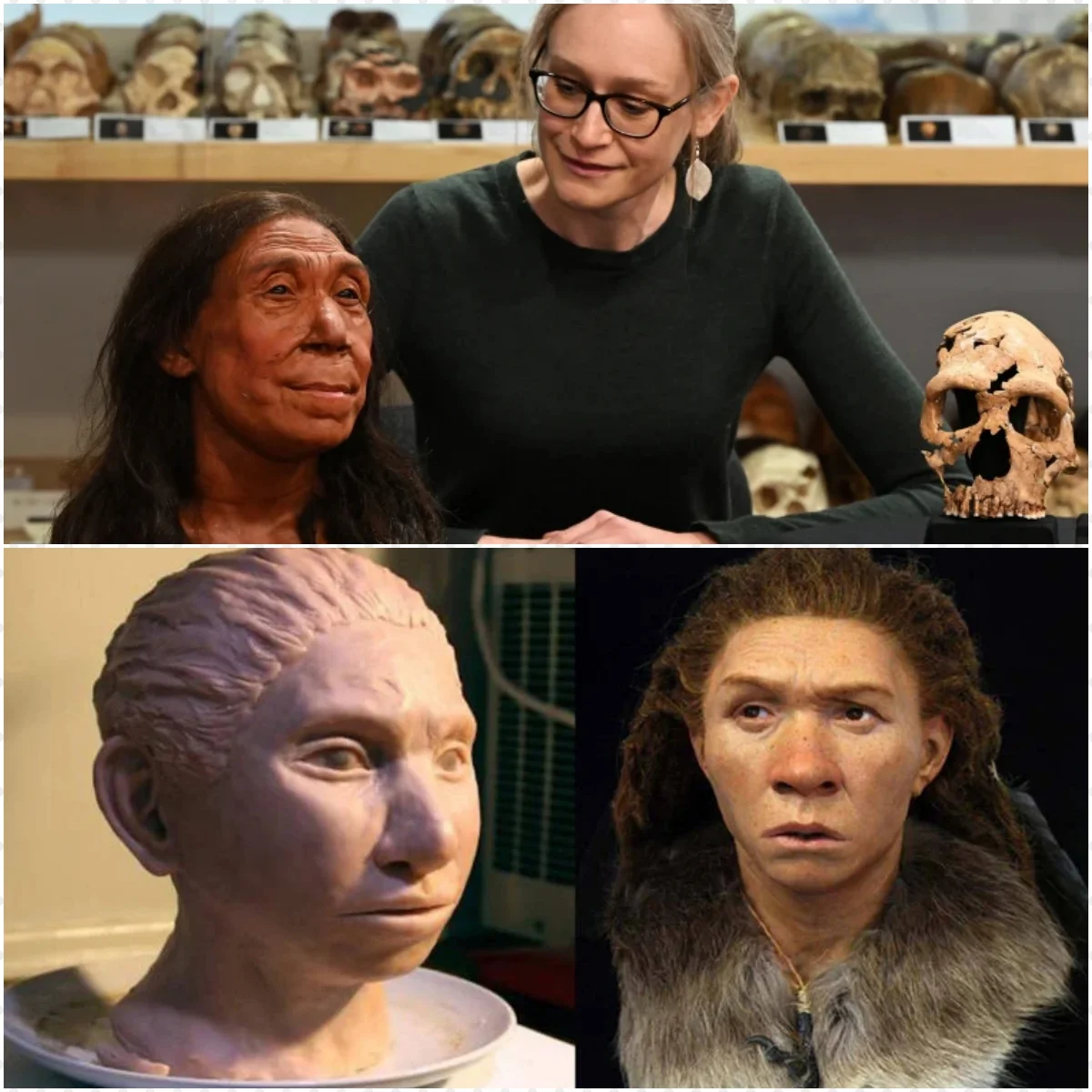
For decades, paleoanthropology was defined by a binary narrative: the robust, cold-adapted Neanderthals of Eurasia and the anatomically modern humans emerging from the cradle of East Africa. That tidy paradigm was shattered by the discovery of a microscopic finger bone in a Siberian cave. Today, cutting-edge paleogenomics and revolutionary epigenetic mapping have allowed scientists to peel back tens of thousands of years of evolutionary history, offering the first definitive glimpse into what our enigmatic Denisovan cousins actually looked like. As commercial biotech, high-performance computing, and computational biology converge, the unveiling of the Denisovan phenotype represents not just an academic triumph, but a masterclass in the commercialization and infrastructure scaling of modern genomic research.
Executive Takeaways
- Genomic Precision: Researchers have reconstructed the physical appearance of Denisovans entirely from ancient DNA methylation patterns rather than complete skeletal remains, marking a paradigm shift in computational paleobiology.
- Distinctive Morphology: Denisovans shared several traits with Neanderthals—such as sloping foreheads and robust jaws—but possessed a notably wider dental arch and a broader cranial base, indicating unique evolutionary adaptations.
- Modern Human Legacy: Traces of Denisovan DNA persist in modern populations across Oceania, Island Southeast Asia, and the Americas, directly influencing contemporary human immune response, high-altitude adaptation, and physiological traits.
- Enterprise & Technological Catalyst: The algorithms powering these facial reconstructions mirror the predictive data modeling and cloud-compute architecture utilized in modern biopharma, genomics, and enterprise risk mitigation.
The Genesis of a Discovery: From a Single Bone to a Global Phenomenon

The story of the Denisovans begins in 2008 within the hyper-arid, high-altitude chambers of Denisova Cave in the Altai Mountains of Siberia. Excavating archaeologists recovered a single, highly fragmented distal phalanx bone belonging to a juvenile hominin. To the naked eye, the fossil offered sparse structural clues. However, the subsequent extraction of nuclear and mitochondrial DNA by Svante Pääbo’s team at the Max Planck Institute for Evolutionary Anthropology in Leipzig revealed a genetic lineage distinct from both modern humans and Neanderthals.
Unlike Neanderthals, whose fossil record spans hundreds of specimens across Western Europe and the Levant, Denisovans were virtually invisible in the physical fossil record. Aside from a handful of massive molars and a parietal skull fragment, paleoanthropologists lacked the structural baseline necessary to reconstruct their anatomy. This data deficit created a massive bottleneck in evolutionary research—a challenge solved only when molecular biologists shifted their focus from static genetic sequences to dynamic gene regulation.
Decoding DNA Methylation: The Computational Breakthrough
To determine what Denisovans looked like, a team of Israeli and European geneticists deployed an innovative computational method analyzing DNA methylation—chemical modifications to DNA that control gene expression without altering the underlying genetic code. By mapping how methyl groups attach to ancient DNA, researchers can reconstruct skeletal anatomy with unprecedented fidelity.
This molecular roadmap required immense processing power, leveraging high-throughput sequencing pipelines and cloud-compute architecture comparable to the infrastructure utilized in large-scale financial modeling and enterprise risk assessment. By comparing the Denisovan methylation map to those of chimpanzees, Neanderthals, and modern humans, scientists identified 56 anatomical traits where Denisovans differed from either humans or Neanderthals, with 32 of those traits specifically impacting cranial structure.
Anatomy of an Ancient Cousin: The Phenotype Revealed
The resulting facial and skeletal reconstruction paints a vivid picture of a hominin built for endurance and survival in harsh Pleistocene environments. While Denisovans shared the Neanderthal hallmark of a sloping forehead, low-bridged nose, and protruding jaw, their cranial architecture diverged in striking ways.
Most notably, Denisovans possessed a wider dental arch, accommodating massive teeth designed for heavy mechanical mastication of raw, abrasive foods. Their cranial base was noticeably broader, and their pelvic structure displayed unique biomechanical adaptations. These physical characteristics suggest a species finely tuned to high-stress environmental conditions, requiring high caloric intake and robust physiological resilience.
Furthermore, physiological adaptations inherited from Denisovans have proven crucial for modern Homo sapiens. The high-altitude tolerance observed in modern Tibetan populations—driven by the EPAS1 gene variant—is a direct genetic legacy of interbreeding between ancestral humans and Denisovans in the Pleistocene highlands of Asia. This historical gene flow highlights a vital economic and biological reality: genetic capital allocation across species lines provided immediate survival dividends that reverberate through modern healthcare and population genomics today.
Verified Data & Metrics Breakdown
| Metric / Specimen | Denisovan Profile | Neanderthal Comparison | Modern Human (H. sapiens) |
|---|---|---|---|
| Primary Geographic Range | Siberia to Southeast Asia, Oceania | Western Europe to the Levant | Global |
| Cranial Width | Exceptionally broad cranial base | Broad, elongated cranium | Globular, high-vaulted cranium |
| Dental Morphology | Extremely large molars, wide dental arch | Large teeth, robust jaw structure | Reduced tooth size, parabolic dental arcade |
| Key Genetic Introgression | Up to 4-6% in Indigenous Papuans & Aboriginal Australians | 1-2% in non-African modern human genomes | Baseline reference population |
Industry & Market Implications: The Intersection of Genomics and Enterprise Tech
While paleoanthropology appears far removed from Wall Street or Silicon Valley, the commercial and technological underpinnings of these discoveries are deeply intertwined with high-growth sectors. The algorithms, neural networks, and machine learning models required to reconstruct extinct hominin phenotypes from fragmented chemical markers are identical to those utilized in biopharmaceutical R&D, genomic sequencing startups, and precision medicine.
Investors tracking the biotech and healthcare sectors recognize that the tools driving ancient DNA methylation mapping are the same assets scaling enterprise cloud infrastructure and accelerating drug discovery pipelines. Companies specializing in bioinformatics and computational biology are experiencing surging valuation multiples as institutional capital flows into genomic infrastructure scalability and regulatory-compliant data analytics.
- Winners: Cloud-compute providers, bioinformatics software developers, and genomic sequencing firms specializing in high-throughput data processing and methylation analysis.
- Traditional Sectors Facing Disruption: Legacy pharmaceutical firms slow to adopt AI-driven genetic modeling risk losing market share to agile biotech innovators leveraging predictive genomic insights.
- Macroeconomic Impact: Increased venture capital deployment into computational biology stimulates high-value job creation, accelerates intellectual property generation, and enhances global healthcare risk mitigation frameworks.
Frequently Asked Questions (People Also Ask)
How did scientists reconstruct the face of a Denisovan without a complete skull?
Researchers utilized DNA methylation maps—chemical modifications that regulate gene activity—extracted from a single finger bone and teeth. By comparing these epigenetic patterns to those of modern humans and Neanderthals, scientists trained predictive algorithms to determine how gene activity influenced skeletal and facial development.
Where did the Denisovans live, and when did they go extinct?
Denisovans ranged widely across Asia, from the freezing caves of Siberia to tropical Southeast Asia. Genetic evidence suggests they interacted and interbred with modern humans as recently as 15,000 to 30,000 years ago before disappearing as a distinct lineage, leaving behind a rich genetic legacy in contemporary populations.
Do modern humans carry Denisovan DNA today?
Yes. Indigenous populations in Papua New Guinea, Australia, and parts of Island Southeast Asia carry up to 4% to 6% Denisovan DNA. Smaller traces—around 0.1% to 0.2%—are also found across mainland Asian and Indigenous American populations, directly impacting physiological traits such as immune response and high-altitude adaptation.
Why are Denisovans considered so mysterious compared to Neanderthals?
Unlike Neanderthals, whose bones have been discovered across numerous European and Middle Eastern sites for over a century, the physical fossil record of Denisovans is exceedingly sparse, consisting primarily of microscopic bone fragments and isolated teeth, making genomic data our primary window into their existence.
Future Outlook: What Comes Next in Paleogenomics
The successful reconstruction of the Denisovan phenotype marks the opening salvo in a new era of computational paleontology. As sequencing technologies become faster and more cost-effective, researchers anticipate extracting usable proteins and epigenetic data from fossilized remains previously deemed too degraded for analysis.
Key milestones to watch over the next 24 to 36 months include the refinement of single-cell ancient genomics, the discovery of new hominin fossil sites in unexplored regions of Asia and Africa, and the integration of advanced artificial intelligence into predictive evolutionary modeling. For institutional investors, tech leaders, and scientific pioneers alike, the Denisovan enigma underscores a profound truth: understanding our deep evolutionary past is a vital prerequisite for navigating the technological and biological frontiers of our future.