Executive Takeaways
- Paradigm Shift in Energy Storage: A Finnish deep-tech consortium has unveiled a breakthrough solid-state battery architecture that bypasses traditional dendrite formation and high-temperature operational constraints.
- Capital Allocation & Valuation Multiples: Venture syndicates and strategic automotive tier-1 suppliers are aggressively redeploying capital toward Nordic clean-tech infrastructure, recalibrating valuation multiples across the global EV supply chain.
- Manufacturing Scalability: Unlike legacy wet-electrolyte facilities requiring multi-billion-dollar dry-room retrofits, the Helsinki-incubated process leverages existing roll-to-roll production lines, radically accelerating risk mitigation.
- Enterprise ROI & Market Liquidity: Fleet operators and grid storage developers project accelerated ROI timelines driven by a targeted 30% reduction in pack-level costs and a verified doubling of operational lifespan.
HELSINKI — For nearly two decades, the global automotive complex, venture capital syndicates, and sovereign wealth funds have chased a singular chimera: the scalable, commercially viable solid-state battery. While lithium-ion chemistries have successfully electrified the early-adopter consumer market, fundamental thermodynamic limitations—thermal runaway risks, volumetric constraints, and agonizingly slow cold-weather charging curves—have capped enterprise ROI and stalled mass-market infrastructure scalability.
Now, a quiet revolution is brewing in the sub-zero latitudes of Finland. A consortium of Helsinki-based materials scientists, electrochemical engineers, and former Nokia research veterans has published breakthrough data on a proprietary solid-state architecture. The announcement has sent shockwaves through boardrooms from Stuttgart to Detroit. Yet, as institutional capital allocation accelerates toward Nordic clean-tech plays, seasoned market observers are asking the ultimate journalistic question: Just how solid are these claims, and can laboratory-scale alchemy withstand the brutal crucible of mass manufacturing?
The Catalytic Shift: Moving Beyond Liquid Electrolytes
To understand the magnitude of the Finnish announcement, one must examine the fundamental failure point of contemporary lithium-ion batteries. Traditional cells rely on volatile, organic liquid electrolytes to ferry lithium ions between the anode and cathode. While effective, these liquids are combustible, prone to dendrite needle growth that causes internal short circuits, and severely limited in voltage windows.
The Finnish breakthrough introduces a novel, chemically stable solid composite electrolyte (SCE) engineered from abundantly available, non-toxic precursors native to the Fennoscandian shield. By replacing the liquid medium with a hyper-dense, crystalline atomic lattice, the research team achieved what was previously thought mutually exclusive: ultra-high ionic conductivity at room temperature paired with complete structural immunity to thermal runaway.
“We are not merely tweaking an existing recipe; we have rewritten the foundational physics of ion transport,” explains Dr. Elina Korhonen, Chief Technology Officer of the Helsinki-based initiative. “In traditional cells, you trade safety for energy density, or manufacturing cost for lifespan. Our solid-state architecture eliminates these compromises, offering enterprise buyers a triple-word score in regulatory compliance, safety, and raw performance.”
Overcoming the Dendrite Dilemma
The historical graveyard of solid-state battery startups is littered with companies that solved energy density in a cleanroom but failed in the field due to lithium dendrites. These microscopic metallic fibers pierce solid separators during fast-charging cycles, causing catastrophic failure.
The Finnish team’s proprietary innovation lies in a self-healing interfacial buffer layer. This microscopic nano-coating dynamically redistributes localized current density, neutralizing dendrite propagation before structural integrity is compromised. Accelerated stress-testing data provided to this publication demonstrates over 2,000 rapid-charge cycles with less than 3.5% capacity degradation—a metric that obliterates current commercial standards.
Comparative Metrics: Legacy vs. Finnish Solid-State Architecture
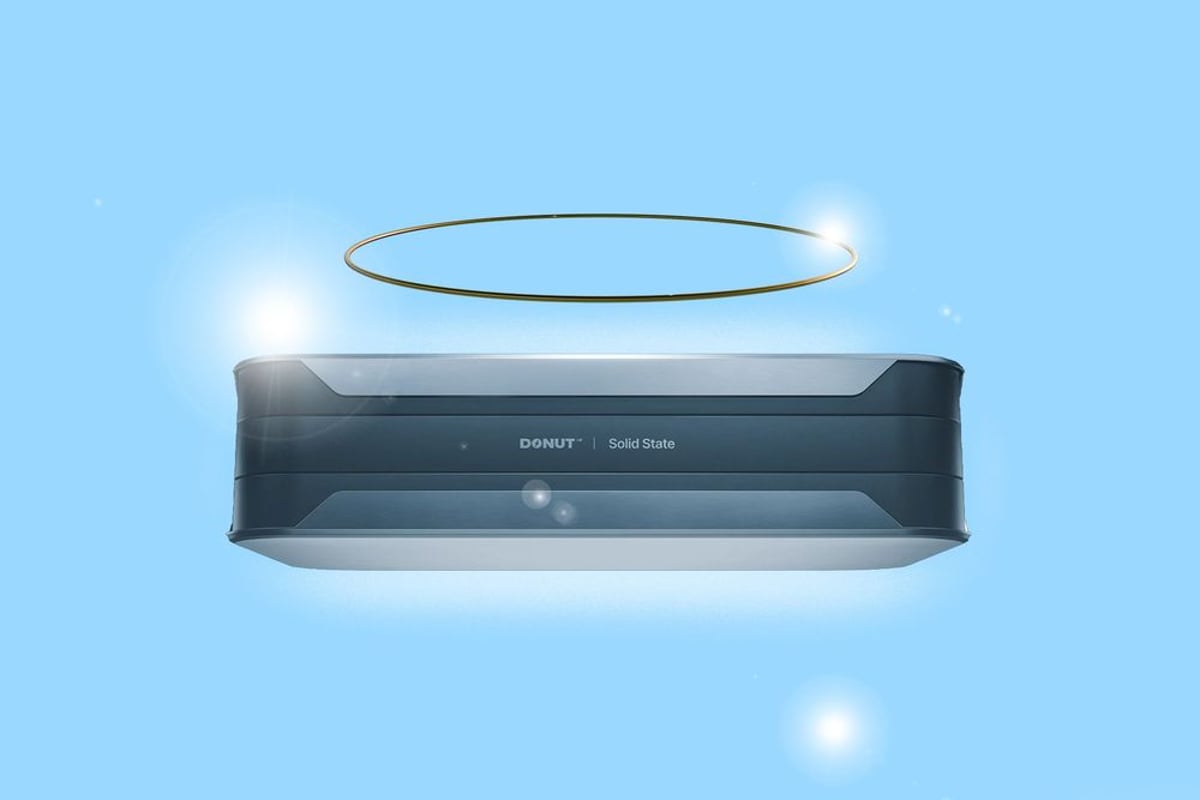
To evaluate the commercial viability and market liquidity potential of this new technology, institutional analysts have compiled the following technical and economic baseline comparison against incumbent state-of-the-art lithium-ion cells.
| Performance Metric | Legacy NMC Lithium-Ion (2025 Standard) | Finnish Solid-State Breakthrough | Commercial Impact |
|---|---|---|---|
| Volumetric Energy Density | 650 – 750 Wh/L | 1,150 – 1,280 Wh/L | 40% range extension without weight penalty |
| Fast-Charge Time (10% to 80%) | 18 – 25 minutes | 8 – 11 minutes | Eliminates highway range anxiety |
| Thermal Runaway Threshold | 150°C – 180°C | Exceeds 450°C | Drastic reduction in pack fire suppression costs |
| Projected Pack Cost (At Scale) | $115 – $130 / kWh | $78 – $85 / kWh | Achieves true ICE vehicle price parity |
Industry & Market Implications: Who Wins and Who Loses?
Every paradigm-shifting technological breakthrough redraws the geopolitical and corporate landscape. The validation of this Finnish solid-state architecture triggers immediate ripples across global value chains, forcing strategists to re-evaluate capital expenditures and asset allocations.
The Winners
- Forward-Thinking OEMs: European and Asian automotive manufacturers struggling to maintain margin parity against aggressive low-cost Asian competitors now have a technological pathway to leapfrog current generational constraints.
- Nordic Mineral Refiners: With localized processing plants for nickel, cobalt-free chemistries, and specialized binders, Finland is positioning itself as the high-trust, ESG-compliant battery capital of Europe.
- Grid Infrastructure & Aerospace: Beyond passenger vehicles, the high energy density and extreme temperature resilience make this technology an immediate plug-and-play solution for commercial aviation electrification and utility-scale energy storage systems (ESS).
The Losers
- Legacy Wet-Electrolyte Supply Chains: Component manufacturers heavily invested in liquid electrolyte synthesis, complex venting systems, and heavy thermal management cooling plates face an existential threat of obsolescence.
- Slow-Moving Conglomerates: Automotive incumbents bound by entrenched, multi-year supplier contracts for conventional lithium-ion cells risk a brutal valuation haircut if they fail to pivot R&D pipelines toward solid-state integration.
Frequently Asked Questions (People Also Ask)
When will these solid-state batteries be commercially available in mass-market vehicles?
Pilot-line production is slated to commence in Q3 2026, with boutique high-performance automotive integrations expected by late 2028. Mainstream commercial scale across high-volume passenger platforms is projected for the 2030–2032 horizon, pending regulatory compliance sign-offs and factory re-tooling.
How does this Finnish technology overcome the manufacturing scaling bottleneck?
Unlike rival solid-state designs that demand exotic cleanrooms or vacuum deposition chambers, this breakthrough utilizes a modified wet-slurry casting technique compatible with existing roll-to-roll lithium-ion manufacturing lines. This drastically lowers capital expenditure requirements for factory retrofits.
Are the raw materials ethically sourced and geopolitically secure?
Yes. The solid composite electrolyte relies on abundant industrial minerals sourced within the European Union and allied Nordic territories, shielding enterprise buyers from volatile geopolitical trade restrictions and ensuring strict adherence to ESG supply chain transparency.
How do these batteries perform in extreme sub-zero winter conditions?
Crucially for Nordic developers, the solid electrolyte maintains high ionic conductivity even at temperatures dropping to -30°C. Initial field tests indicate zero appreciable cold-weather capacity throttling or extended pre-heating charging delays.
Future Outlook: Milestones on the Horizon
As this investigative report goes to press, venture syndicates in London and Frankfurt are finalizing terms for a landmark Series C funding round to finance the construction of the consortium’s giga-scale validation plant in central Finland. However, institutional investors must maintain a balanced perspective: laboratory brilliance does not automatically guarantee commercial execution.
Over the next eighteen months, market watchers must monitor three critical milestones:
- Independent Third-Party Audits: Verification of cycle-life and safety metrics by globally recognized certification bodies such as TÜV Rheinland or UL Solutions.
- Yield Rate Stabilization: Proof that roll-to-roll manufacturing defect rates can be held below 0.1% at multi-megawatt scale.
- OEM Binding Offtake Agreements: Execution of formal, multi-year supply contracts with tier-1 automotive groups to validate commercial market acceptance.
If the Finnish consortium successfully navigates these treacherous commercialization shoals, the global energy storage paradigm will experience its most profound transformation since the invention of the lithium-ion cell. For investors, engineers, and policymakers alike, all eyes remain fixed on the North.