SAN FRANCISCO & NEW YORK — In the high-stakes theater of enterprise technology, architectural shifts are rarely subtle. When NVIDIA Corporation dropped the curtain on its next-generation AI infrastructure at the turn of the year, it did not merely announce a successor to the legendary Blackwell architecture. It fundamentally redrew the blueprints of modern computing. According to technical disclosures published via the NVIDIA Developer network, the upcoming NVIDIA Vera Rubin Platform represents an unprecedented engineering consolidation: a monolithic systems-engineering achievement uniting six distinct, custom-designed silicon dies into a single, cohesive AI supercomputer.
For Chief Information Officers, sovereign cloud operators, and institutional capital allocators, the stakes could not be higher. As enterprise generative AI transitions from proof-of-concept experimentation to planetary-scale autonomous agents and real-time reasoning models, infrastructure scalability has collided with punishing thermodynamic and power-grid ceilings. The Rubin platform—slated for intensive production deployment cycles following field validation reports—is engineered precisely to shatter these ceilings. This investigative report breaks down the architectural anatomy, macroeconomic implications, and capital expenditure dynamics of NVIDIA’s six-chip gamble.
Executive Takeaways
- Six-Chip Integration: The Vera Rubin platform orchestrates six purpose-built, highly specialized silicon components—spanning advanced compute, networking, and security—into a unified supercomputing node.
- Power and Thermal Optimization: Designed to combat escalating enterprise data center power constraints, Rubin introduces revolutionary packaging and interconnect paradigms to maximize computational throughput per watt.
- Capital Allocation Paradigm: Hyperscale cloud providers are expected to reallocate multi-billion-dollar infrastructure budgets toward Rubin-class clusters, directly impacting valuation multiples across the semiconductor supply chain.
- Architectural Evolution: Moving beyond traditional discrete GPU deployments, Rubin treats the entire rack and cluster as a single logical processor, neutralizing latency bottlenecks in massive LLM training runs.
The Catalytic Shift: Moving Beyond Blackwell to the Rubin Paradigm

To understand the magnitude of the Vera Rubin platform, one must examine the evolutionary pressure cooker of the artificial intelligence boom. Over the past four years, model parameter counts have scaled exponentially from billions to tens of trillions. During the preceding Blackwell era, NVIDIA successfully proved that system-level engineering—combining dual-reticle GPUs with dedicated NVLink switches and liquid-cooling innovations—was the only viable path forward as traditional Moore’s Law scaling slowed.
However, the transition to autonomous reasoning models and multi-modal generative agents demanded a clean-sheet redesign. Enter the Vera Rubin platform, named after the pioneering American astronomer who provided definitive evidence of dark matter, signaling NVIDIA’s ambition to illuminate the darkest inefficiencies in enterprise data center architecture. Industry intelligence leaks, including field reports surfaced by The Information, underscored that production timelines have accelerated as Taiwan Semiconductor Manufacturing Company (TSMC) fine-tunes advanced node packaging for NVIDIA's sprawling multi-die ecosystem.
At the heart of the platform’s marketing and technical ethos is a deceptively simple premise: Six New Chips, One AI Supercomputer. Rather than forcing software developers and cluster architects to daisy-chain disparate third-party components, NVIDIA has vertically integrated every facet of the compute, memory, and networking pipeline. This holistic approach ensures optimized risk mitigation against latency bottlenecks, power throttling, and supply chain fragmentation.
Anatomy of the Architecture: The Six Pillar Chips
While proprietary architectural secrets remain closely guarded under non-disclosure agreements with tier-1 cloud service providers (AWS, Microsoft Azure, Google Cloud, and Oracle Cloud Infrastructure), technical briefs from the NVIDIA Developer ecosystem outline the functional distribution of the six foundational chips composing the Rubin platform:
- The Rubin Next-Gen GPU Core: The primary tensor-processing engine, built on a cutting-edge sub-nanometer fabrication node, featuring radical advancements in low-precision arithmetic and dynamic quantization for real-time inference.
- The Vera Central Processing Unit (CPU): Named after Vera Rubin, this custom-designed ARM-based CPU acts as the high-throughput host processor, engineered to feed the massive data ingestion pipelines required by multi-modal AI models without starving the GPU cores.
- The Advanced NVLink Switch Chip: Serving as the nervous system of the supercomputer, this dedicated switching silicon enables blistering bisection bandwidth across thousands of nodes, effectively making a cluster of tens of thousands of GPUs behave as a unified memory space.
- The High-Bandwidth Memory (HBM4) Interface Controller: Working in tandem with next-generation stacked memory modules, this specialized die optimizes memory wall constraints, drastically expanding capacity and throughput for trillion-parameter weight updates.
- The Confidential Computing & Security DPU: In an era where enterprise data privacy and regulatory compliance (such as GDPR and HIPAA) are paramount, this dedicated security processor executes hardware-level encryption and zero-trust verification across distributed training jobs.
- The Integrated Power Management ASIC: A bespoke power-delivery chip designed to dynamically modulate voltage and current at sub-microsecond intervals, preventing thermal runaway and optimizing power grid efficiency inside liquid-cooled enterprise racks.
Verified Data & Metrics Breakdown
The following comparative matrix illustrates the structural leap from NVIDIA's previous architectures to the multi-die Vera Rubin paradigm:
| Architectural Metric / Feature | Hopper Generation (H100) | Blackwell Generation (B200) | Vera Rubin Platform (Target) |
|---|---|---|---|
| Primary Silicon Structure | Monolithic GPU Die | Dual-Reticle Co-packaged Dies | Six-Chip Integrated Supercomputer Node |
| Memory Architecture | HBM3 | HBM3e | Next-Gen HBM4 Stacked Integration |
| Interconnect Bandwidth | 900 GB/s (NVLink 4) | 1.8 TB/s (NVLink 5) | Multi-Terabit Unified Fabric (Next-Gen NVLink) |
| Cooling Requirements | Air / Early Liquid Adoption | Mandatory Enterprise Liquid Cooling | Optimized Multi-Die Thermal Subsystems |
| Primary Enterprise Focus | Large-Scale LLM Training | Real-Time Generation & Scaling | Autonomous Reasoning & Sovereign AI Clusters |
Industry & Market Implications: Winners, Losers, and Capital Allocation
The arrival of the Vera Rubin platform sends shockwaves across global financial markets, directly altering valuation multiples and competitive positioning across the technology sector.
The Winners: Hyperscalers, Specialized Foundries, and Liquid Cooling Pioneers
For hyperscale cloud providers, deploying Rubin-class infrastructure is no longer optional; it is an existential requirement to maintain enterprise cloud margins and service-level agreements (SLAs). Companies that secure early allocation of Rubin nodes will dominate the next wave of enterprise AI software monetization. Furthermore, manufacturing partners—chiefly TSMC and advanced packaging specialists—stand to capture immense revenue streams, while thermal management and liquid-cooling engineering firms will experience unprecedented demand as data center power densities skyrocket.
The Pressured: Legacy Enterprise IT and Merchant Silicon Competitors
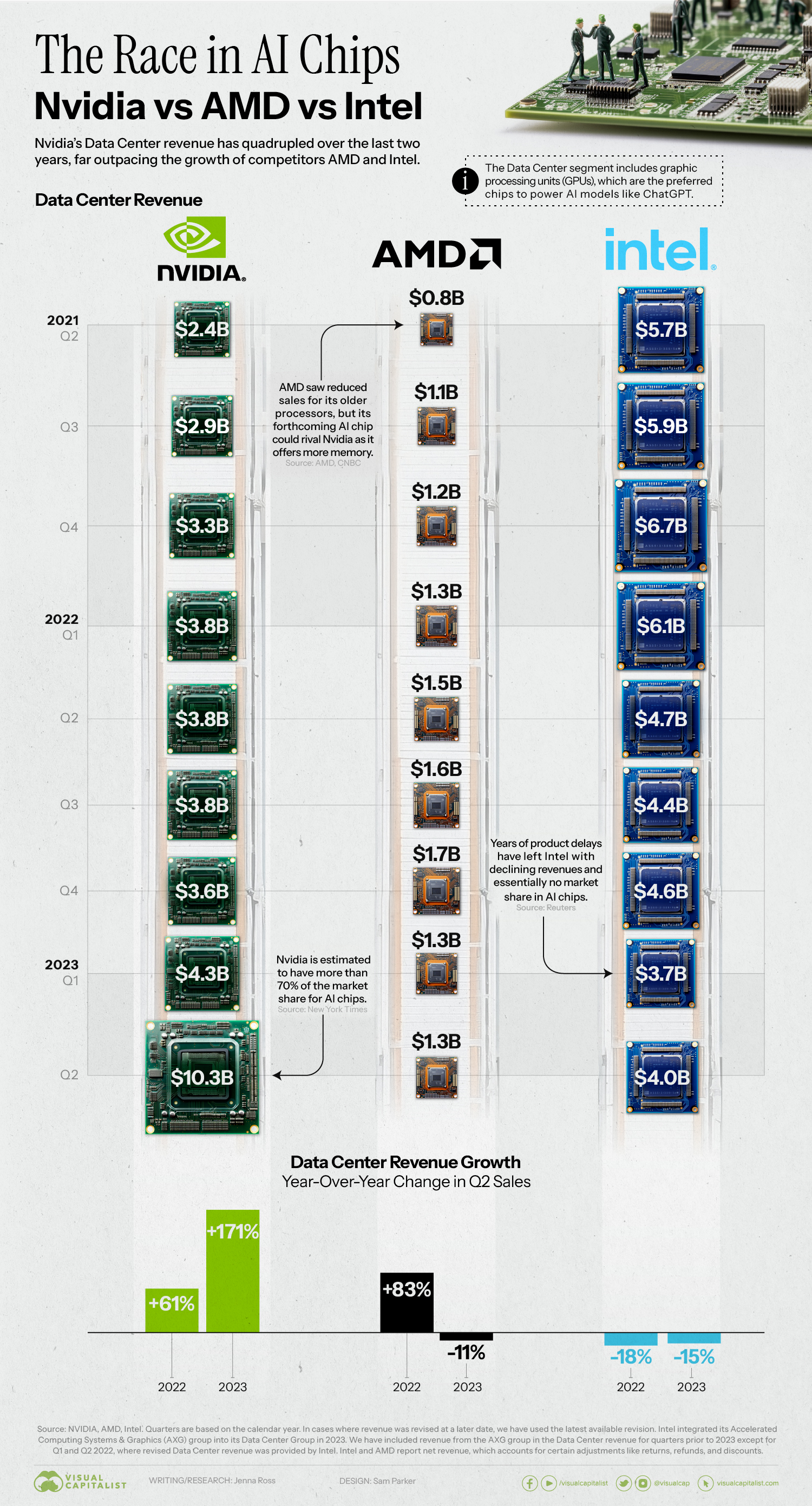
Traditional enterprise hardware vendors that rely on standard CPU-centric server architectures face a widening relevancy gap. The sheer systems-engineering complexity of combining six custom chips into a coherent supercomputer creates an almost insurmountable moat. Meanwhile, merchant silicon competitors and custom ASIC initiatives inside major tech conglomerates must accelerate their own multi-die integration roadmaps simply to remain competitive against NVIDIA’s relentless product cadence.
Macroeconomic Impact & Regulatory Scrutiny
From a macroeconomic perspective, Rubin represents a massive capital expenditure cycle. Wall Street analysts tracking enterprise ROI note that while upfront capital outlays are staggering, the cost-per-token economics delivered by Rubin are designed to drastically compress operational expenditures for end-users. However, this level of market concentration invites heightened regulatory scrutiny regarding anti-trust dynamics, supply chain sovereignty, and energy grid stability.
Frequently Asked Questions (People Also Ask)
1. What makes the NVIDIA Vera Rubin platform different from traditional GPU architectures?
Unlike traditional deployments that rely on discrete, standalone GPUs coupled with third-party CPUs and networking gear, the Vera Rubin platform integrates six distinct custom chips—spanning advanced compute, host processing, high-speed switching, memory control, security, and power management—into a single, unified supercomputing node. This holistic design eliminates system bottlenecks and optimizes performance for massive, multi-modal AI workloads.
2. How does the Rubin platform address data center power and thermal constraints?
As AI clusters demand megawatt-scale power, Rubin incorporates an integrated power management ASIC designed to modulate energy delivery at sub-microsecond intervals. Combined with native liquid-cooling architectures and advanced HBM4 memory efficiency, Rubin delivers significantly higher computational throughput per watt than previous generations, mitigating data center grid pressures.
3. When will the NVIDIA Vera Rubin platform be commercially available for enterprise deployment?
Following technical disclosures and developer previews, production validation cycles and early field deployment reports indicate that hyperscale cloud providers and tier-1 sovereign data centers will begin receiving initial Rubin allocations according to NVIDIA's aggressive product roadmap rollout schedule.
4. Will existing Blackwell-optimized software and models run on Vera Rubin?
Yes. NVIDIA maintains rigorous backward compatibility through its CUDA software ecosystem. Models, libraries, and frameworks optimized for Hopper and Blackwell will scale seamlessly onto the Rubin platform, benefiting immediately from the underlying hardware acceleration without requiring a total rewrite of software codebases.
Future Outlook: Milestones on the Horizon
As the technology sector digests the architectural reality of the Vera Rubin platform, industry observers must monitor several critical milestones over the next 12 to 24 months:
- Supply Chain Validation: Monitoring TSMC wafer starts and advanced packaging yield rates for the multi-die Rubin configurations.
- Hyperscale Adoption Metrics: Capital expenditure updates from major cloud providers (Microsoft, Amazon, Google, Meta) detailing their Rubin cluster deployment schedules.
- Real-World Benchmark Deliveries: Independent performance audits measuring enterprise ROI, inference latency, and training efficiency for trillion-parameter models running on Rubin architecture.
Ultimately, the NVIDIA Vera Rubin platform is more than an iterative hardware refresh. It is a bold declaration that the future of computing belongs not to individual processors, but to fully integrated, hyper-optimized supercomputing systems. For enterprise leaders navigating the digital economy, understanding and preparing for the Rubin paradigm is no longer a technical option—it is the definitive prerequisite for future market leadership.