
The global financial architecture is undergoing a quiet, high-stakes restructuring that few retail investors fully comprehend. When the U.S. Department of the Treasury deployed an unexpected debt buyback program—a policy instrument traditionally reserved for stabilizing illiquid corners of the sovereign debt market—it sent immediate shockwaves through trading desks from Wall Street to London. Published analysis from the Council on Foreign Relations (CFR), authored by macro strategist Rebecca Patterson, brought this structural pivot into sharp focus. The core debate centers on an uncomfortable reality: are advanced economies crossing a Rubicon where central banks and fiscal authorities must actively engineer market liquidity to prevent yield-curve dysfunction, or are these operations masking deeper vulnerabilities in capital allocation and sovereign debt sustainability?
As senior financial editors tracking systemic risk, regulatory compliance, and macroeconomic policy, we have examined the mechanics, market reactions, and long-term implications of the Treasury’s maneuver. This investigative report breaks down the catalysts behind the buyback surprise, evaluates quantitative metrics across historical debt cycles, and analyzes how institutional capital allocators are adjusting their risk mitigation strategies in an era of heightened fiscal volatility.
Executive Takeaways
- Strategic Intervention: The Treasury’s unexpected debt buyback initiative signals a shift from passive debt issuance management to active market-making and liquidity engineering.
- The Yield Curve Dilemma: Advanced economies are increasingly deploying targeted balance-sheet interventions to curb soaring government bond yields and restore order in fractured secondary markets.
- Institutional Capital Realignment: Chief Investment Officers and enterprise treasury teams are overhauling their asset-liability matching (ALM) models to account for artificial suppression of term premiums.
- The Policy Trade-Off: While buybacks successfully alleviate near-term funding stress and dealer inventory constraints, critics warn they blur the line between fiscal management and monetary accommodation.
The Anatomy of a Market Surprise: Background and Catalytic Events
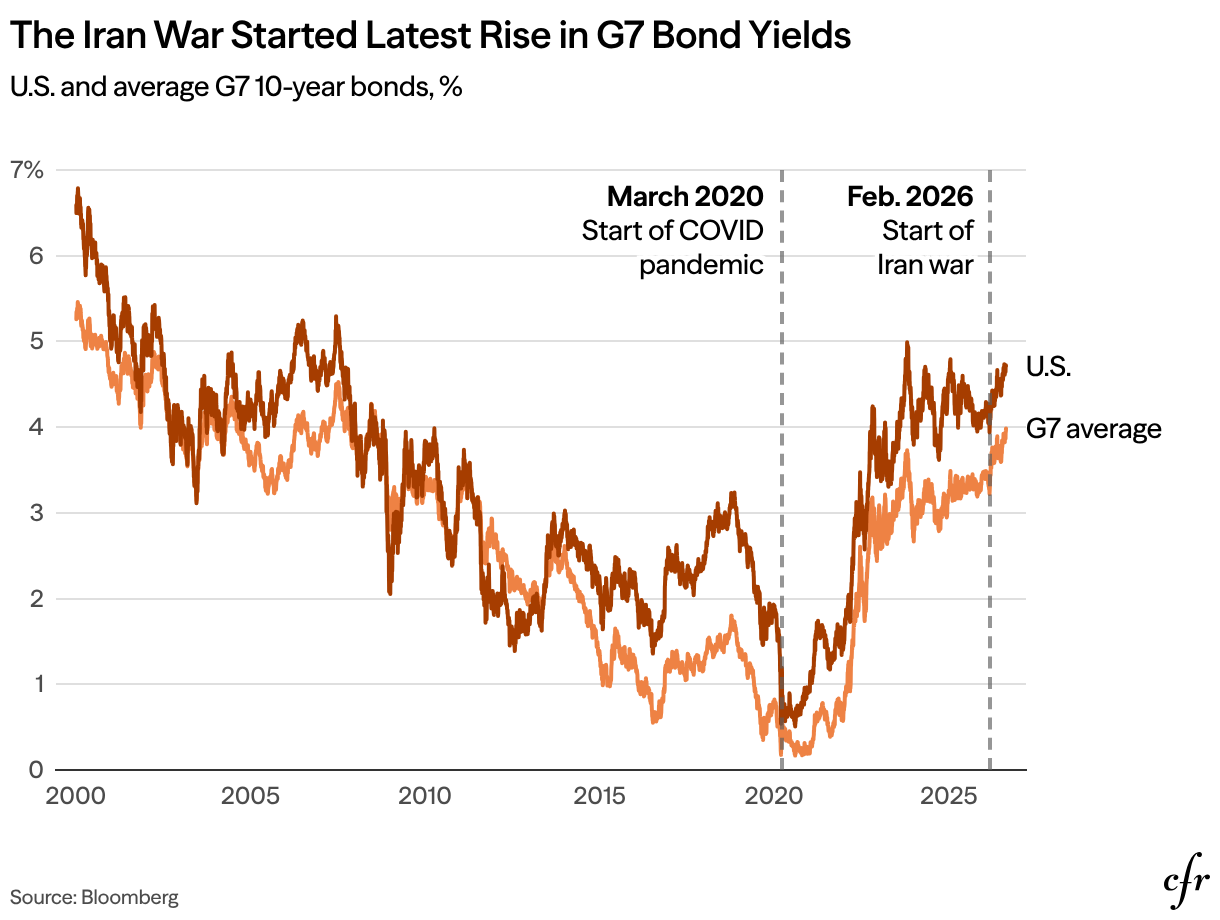
To understand the significance of the Treasury’s recent maneuvers, one must examine the plumbing of the $27 trillion U.S. Treasury market. For decades, primary dealers—major global investment banks—served as the primary shock absorbers for government debt issuance. However, post-crisis regulatory frameworks, most notably the Supplementary Leverage Ratio (SLR) and stringent capital requirements, have constrained the balance-sheet capacity of these institutions. When macroeconomic volatility spiked, driven by persistent inflation prints and quantitative tightening (QT), secondary market liquidity evaporated.
Bid-ask spreads widened significantly, and primary auctions occasionally suffered from tail risk—moments where the high yield cleared above the pre-auction-when-issued trading level, signaling tepid demand. It was against this backdrop of structural illiquidity that the Treasury introduced its systematic buyback program. Officially framed as a debt-management tool designed to improve cash-market liquidity and smooth out off-the-run security pricing anomalies, market participants quickly recognized its secondary utility: managing the duration profile of the national debt and providing price support during acute sell-offs.
As Rebecca Patterson emphasized in her analysis for the Council on Foreign Relations, these interventions raise profound questions about the independence and signaling mechanisms of modern economic policy. When a sovereign issuer steps in to buy back its own debt to influence yields, it mirrors the balance-sheet operations typically managed by independent central banks. This convergence of fiscal and monetary policy mechanics has forced institutional investors to re-evaluate their valuation multiples and risk premiums.
Data & Metrics Breakdown: Treasury Buybacks vs. Historical Issuance
A rigorous examination of the data reveals the scale of the structural shift in U.S. debt management. The table below outlines key operational parameters, contrasting the historical approach to debt issuance with the modern era of active liquidity management and targeted buybacks.
| Metric / Parameter | Pre-Crisis / Traditional Regime | Current Managed-Liquidity Regime |
|---|---|---|
| Primary Dealer Inventory Capacity | Robust; unconstrained by post-crisis capital rules | Restricted by SLR and risk-weighted asset caps |
| Treasury Buyback Frequency | Ad-hoc, infrequent, strictly for cash management | Systematic, regularized liquidity and-refunding operations |
| Secondary Market Bid-Ask Spreads | Consistently tight across off-the-run tenors | Episodically volatile, requiring public intervention |
| Policy Objective Convergence | Strict separation of fiscal issuance and monetary policy | Interdependent execution between Treasury and Federal Reserve |
Industry & Market Implications: Who Wins, Who Loses
The implementation of active debt management alters the risk-reward matrix across multiple asset classes. Understanding these dynamics is essential for enterprise risk mitigation and strategic portfolio construction.
The Winners
- Primary Dealers & Wall Street Trading Desks: With the Treasury absorbing off-the-run securities and providing a synthetic floor for liquidity, dealer balance-sheet risk is significantly mitigated. This lowers the cost of maintaining market-making operations.
- Leveraged Macro Hedge Funds: Funds utilizing basis trades and relative-value fixed-income strategies benefit from reduced tail risk of sudden, disorderly spikes in yields that can trigger margin calls.
- Corporate Borrowers: A more stable benchmark U.S. Treasury curve reduces volatility in corporate debt issuance, allowing CFOs to optimize capital allocation and lock in financing costs with greater predictability.
The Losers
- Long-Term Bond Investors & Pension Funds: Institutional portfolios dependent on natural term premiums face compressed yields. Artificially managed liquidity distorts the true economic cost of capital, penalizing long-duration savers.
- Fiscal Conservatives & Inflation Hawks: Critics argue that utilizing Treasury cash to buy back debt while running structural budget deficits creates moral hazard, undermining market discipline and fueling long-term inflationary expectations.
- Global Central Bank Independence: As fiscal authorities take on market-stabilizing functions, the boundary separating monetary policy from fiscal policy blurs, complicating the Federal Reserve's mandate to combat inflation independently.
Frequently Asked Questions (People Also Ask)
What is a U.S. Treasury buyback, and why did the government implement it?
A Treasury buyback is an operation where the U.S. government purchases its own outstanding debt securities before their scheduled maturity date. While historically used in small amounts for cash management, the modern program was scaled up to improve secondary market liquidity, repurchase less liquid "off-the-run" securities, and smooth out structural dysfunctions in the U.S. government bond market caused by constrained primary dealer balance sheets.
How do Treasury buybacks impact government bond yields?
By purchasing outstanding debt, the Treasury increases demand for those specific securities, which pushes their prices higher and yields lower. Furthermore, by retiring longer-duration debt or smoothing issuance, the Treasury can alleviate upward pressure on the long end of the yield curve, serving as a stabilizing mechanism during periods of market stress.
Are Treasury buybacks a form of monetary policy or quantitative easing (QE)?
Technically, buybacks are a fiscal operation managed by the Treasury Department, whereas quantitative easing is conducted by the Federal Reserve. However, market analysts note that both operations share similar economic outcomes: injecting liquidity into the financial system, expanding sovereign presence in the bond market, and exerting downward pressure on yields. This functional overlap has sparked intense debates among economists regarding policy independence.
What does this mean for institutional investors and portfolio managers?
For institutional investors, the normalization of buybacks means that traditional price discovery in the fixed-income market is increasingly influenced by official sector intervention. Portfolio managers must factor in potential policy interventions when assessing duration risk, yield curve positioning, and enterprise asset-liability matching models.
Future Outlook: What Comes Next
As we look toward the horizon, the trajectory of the bond market will depend heavily on the interplay between persistent federal deficits, quantitative tightening, and the operational evolution of the Treasury's buyback calendar. If fiscal deficits remain elevated while foreign official buyers—such as foreign central banks—reduce their holdings of U.S. sovereign debt, the Treasury may find itself compelled to expand its buyback and liquidity-support operations even further.
For market participants, complacency is no longer an option. Enterprise risk management frameworks must account for a world where sovereign debt markets are actively managed rather than purely market-driven. Key milestones to watch in the coming quarters include quarterly refunding announcements, shifts in the Treasury General Account (TGA) balance, and commentary from Federal Reserve officials regarding the division of labor between monetary and fiscal authorities. In this new macroeconomic paradigm, staying ahead of structural policy shifts will separate top-tier institutional outperformers from the rest.