Executive Takeaways
- Structural Liquidity Intervention: The U.S. Department of the Treasury's revived bond buyback program—the first regular operation of its kind in more than two decades—signals systemic distress in secondary Treasury market depth rather than mere cash management optimization.
- Monetary Policy Entanglement: Analysis highlighted by the Council on Foreign Relations (CFR) underscores that debt management is increasingly blurring the line with central bank monetary policy, effectively conducting quasi-liquidity operations while the Federal Reserve attempts quantitative tightening (QT).
- The Primary Dealer Bottleneck: Regulatory leverage ratios (SLR) and record-setting debt issuance have overwhelmed primary dealer absorption capacity, leaving deep-pocketed "off-the-run" maturities chronically illiquid.
- Capital Allocation Consequences: Institutional allocators face distorted yield curve dynamics, with the buybacks artificially compressing basis spreads while shifting sovereign refinancing risk into shorter-dated issuance structures.
The Anatomy of an Intervention: Why Treasury Buybacks Mask Structural Fragility
When the U.S. Department of the Treasury launched its formalized debt buyback program, senior officials framed the move through the measured language of bureaucratic plumbing: routine cash management, coupon smoothing, and foundational liquidity enhancement. Yet behind the Treasury Borrowing Advisory Committee (TBAC) press releases and standard issuance calendars lies a far more unsettling economic reality.
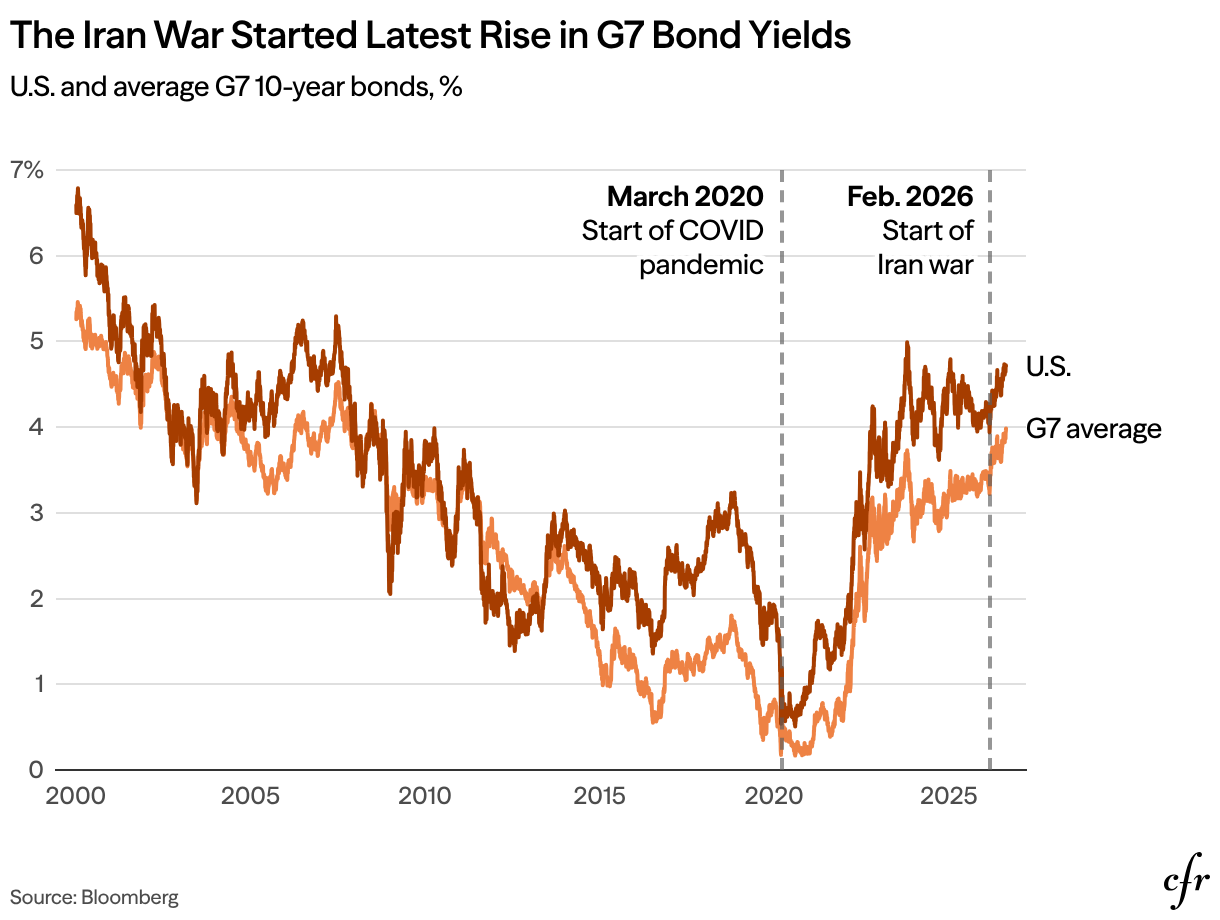
As sovereign debt issuance surges past historical precedents to fund multi-trillion-dollar federal deficits, the world’s most foundational financial benchmark—the $27 trillion U.S. Treasury market—is suffering from persistent structural sclerosis. In a seminal evaluation published by the Council on Foreign Relations (CFR), financial strategist Rebecca Patterson exposed the core paradox of this maneuver: actions taken by advanced economies to insulate government bond markets from upward yield pressure reflect deep anxieties regarding real-world market absorption, threatening to compromise the institutional firewall that separates sovereign debt issuance from monetary intervention.
The Treasury’s decision to buy back "off-the-run" debt—older, less liquid Treasury issues that trade at an idiosyncratic discount—and replace them with highly liquid, newly auctioned "on-the-run" benchmarks is not merely an exercise in financial housekeeping. It is an assertive defense mechanism. Facing an escalating debt load, geopolitical fragmentation, and the progressive retreat of traditional price-insensitive sovereign buyers such as the People’s Bank of China and the Bank of Japan, the Treasury has stepped into the breach to become the buyer of last resort for its own orphaned paper.
Plumbing, Primary Dealers, and the Off-the-Run Liquidity Trap
To understand the necessity of the Treasury’s intervention, one must examine the internal plumbing of primary dealer balance sheets. Following the 2008 Global Financial Crisis, Basel III regulatory compliance mandates—most notably the Supplementary Leverage Ratio (SLR)—fundamentally altered how Wall Street banks intermediate government debt. The SLR treats risk-free cash and U.S. Treasuries with the same balance sheet capital charges applied to speculative corporate loans.
While the nominal size of the marketable Treasury debt pool has expanded by more than 300% since 2010, the aggregate balance sheet capacity of primary dealers dedicated to warehousing this debt has remained essentially static. When market volatility flares, primary dealers pull back from quoting bid-ask spreads on non-benchmark securities. The result is an acute structural divergence:
- On-the-Run Securities: The most recently auctioned notes and bonds benefit from intense algorithmic trading, razor-thin bid-ask spreads, and deep futures-market integration.
- Off-the-Run Securities: Once an issue is superseded by a newer auction, its secondary market liquidity collapses. Trillions of dollars in outstanding paper become stranded in institutional portfolios, widening liquidity premiums and pushing debt servicing costs structurally higher for the entire curve.
By executing recurring buyback auctions, the Treasury provides a continuous balance-sheet clearing mechanism for primary dealers. The state-run repurchase program extracts these illiquid, capital-intensive legacy bonds from private ledgers, freeing up dealer capacity to underwrite the unrelenting barrage of new gross coupon issuance flowing from Washington.
Debt Management or Stealth Monetary Policy? The Blurred Line with Central Banking
The strategic friction introduced by the Treasury's buyback program is amplified by its timing. For the past two years, the Federal Reserve has operated an aggressive balance-sheet contraction campaign, running down its asset holdings through Quantitative Tightening (QT). Simultaneously, the executive branch's fiscal managers are executing operational buybacks that pump liquidity directly back into the secondary market.
As Patterson and sovereign debt analysts at CFR have observed, advanced economy central banks and finance ministries are locked in a dangerous policy paradox. When debt managers alter issuance maturity profiles—leaning heavily on short-dated Treasury bills to avoid locking in historically elevated long-term yields—and concurrently repurchase distressed duration paper, they mimic the economic transmission channels of quantitative easing (QE). This dynamic threatens the clear separation between debt management and monetary authority.
If private markets cannot digest sovereign supply without executive interventions to engineer liquidity, market participants begin pricing in an implicit "Treasury Put." This fiscal backstop suppresses the true risk premium of sovereign obligations, disincentivizes fiscal restraint, and distorts enterprise capital allocation models across the real economy.
Empirical Comparison: Mechanics of U.S. Debt Management Shifts
| Metric / Dimension | Historical Baseline (2014–2020) | Post-Pandemic Expansion (2021–2023) | Active Buyback Era (Current Paradigm) |
|---|---|---|---|
| Marketable Treasury Debt | $12.5T – $20.0T | $22.0T – $26.0T | $27.0T+ (Expanding exponentially) |
| Primary Dealer Capacity / Debt Ratio | Moderate (Pre-crisis buffers) | Depressed (Basel III / SLR constraints binding) | Critically Constrained (Requires administrative balance sheet release) |
| Off-the-Run Liquidity Premium | Cyclical; driven by market events | High; recurrent intraday flash dislocations | Administratively Managed via scheduled buybacks |
| Monetary/Fiscal Coordination | Independent; standard debt management | Coordinated Crisis Response (ZIRP + QE) | Conflicted (Treasury buybacks offset structural QT drag) |
| Issuance Composition | TBAC 15–20% T-Bill target band | Fluctuating post-stimulus | Sustained reliance on T-Bills >20% to avoid duration spikes |
Institutional Winners, Losers, and Capital Allocation Shifts
The recalibration of the sovereign yield framework produces distinct operational consequences across institutional finance, enterprise valuation multiples, and broader market infrastructure:
The Winners
- Systemic Primary Dealers: Major Wall Street trading desks directly benefit from an administrative exit window for aged inventory, dampening repo volatility and improving balance-sheet velocity.
- Basis-Trade Hedge Funds: Multi-strategy hedge funds deploying levered Treasury cash-futures basis strategies gain structural insurance against liquidity seizures. Knowing the Treasury systematically backstops fractured off-the-run points on the curve lowers tail-risk probabilities.
- Corporate Debt Issuers: By actively dampening catastrophic volatility spikes in benchmark government debt, the buyback framework stabilizes the risk-free reference rate, allowing high-grade corporate borrowers to price credit spreads with tighter predictability.
The Losers
- Long-Term Sovereign Creditors: Pension funds and international reserve managers holding duration risk face suppressed nominal term premiums that fail to compensate for structural inflation risks and expanding sovereign debt piles.
- The Taxpayer: From a public finance perspective, buying back deeply discounted, lower-coupon debt (issued during the zero-interest rate era) with cash raised via historically high modern coupon and bill auctions locks in sovereign capital losses, translating theoretical mark-to-market declines into realized institutional liabilities.
- Market Transparency and Price Discovery: Constant administrative intervention masks underlying structural imbalances. If price discovery in the world's premier benchmark instrument is actively curated, capital allocation throughout the global macro framework becomes misdirected.
Frequently Asked Questions (People Also Ask)
Why is the Treasury buying back debt while the Federal Reserve is shrinking its balance sheet?
The Treasury and the Federal Reserve operate under distinct mandates. While the Federal Reserve runs Quantitative Tightening (QT) to remove excess liquidity and stabilize consumer price inflation, the Treasury is responsible for orderly debt issuance. The Treasury's buyback program is designed to prevent structural dysfunction in secondary trading: by acquiring illiquid, older "off-the-run" debt, it prevents secondary trading freezes and unburdens primary dealer balance sheets, ensuring that newly issued debt auctions continue to clear efficiently.
Does the Treasury buyback program directly expand the money supply like Quantitative Easing (QE)?
Operationally, no; economically, it shares critical characteristics. Unlike QE, where the central bank creates central bank reserves to purchase debt, the Treasury funds its buybacks on a cash-neutral basis by issuing newly auctioned on-the-run securities and short-term Treasury bills. However, because it extracts illiquid, high-duration paper from dealer networks and substitutes it with near-cash equivalents (T-bills), it improves effective system liquidity, functionally working against central bank balance-sheet tightening.
What are "off-the-run" Treasuries, and why do they pose a systemic liquidity risk?
"Off-the-run" Treasuries are previously issued government notes and bonds that have been supplanted by the most recently issued debt of the same maturity ("on-the-run"). Because daily speculative and hedging flows concentrate overwhelmingly in on-the-run issues, older bonds trade less frequently. In an era of strict bank capital mandates (like the Supplementary Leverage Ratio), holding these illiquid assets ties up critical dealer capital, creating systemic vulnerabilities when broad market stress triggers institutional liquidations.
How do sovereign debt buybacks impact enterprise ROI and corporate cost of capital?
The U.S. Treasury curve serves as the global baseline for the cost of capital. When sovereign bond liquidity deteriorates, the risk-free rate incorporates a variable "liquidity premium," increasing corporate borrowing spreads and injecting volatility into discounted cash flow (DCF) models. By dampening extreme dislocations at the back end of the curve, buybacks artificially stabilize baseline benchmark yields, enabling more predictable enterprise capital allocation and reducing credit underwriting volatility.
Strategic Outlook: The Road Ahead for Sovereign Issuance and Global Rates
As the U.S. national debt accelerates through unprecedented thresholds, the Treasury’s buyback experiment will face structural trials. The central issue is simple: debt buybacks address secondary market friction, not the supply-demand imbalance generated by structural fiscal deficits. If global institutional demand for long-duration U.S. debt softens, liquidity smoothing will do little to stop broad yield curves from steepening under the weight of auction sizes.
Over the next twelve to twenty-four months, market participants must monitor critical inflection milestones:
- The End of Central Bank Quantitative Tightening: As the Federal Reserve reaches the terminal boundary of its balance sheet reduction, the interaction between Treasury liquidity engineering and bank reserve adequacy will dictate whether the repo market encounters another liquidity squeeze like the one seen in September 2019.
- Regulatory Adjustments to the SLR: If structural illiquidity persists despite buybacks, federal banking regulators will face mounting political and market pressure to permanently exempt central bank reserves and U.S. Treasuries from the Supplementary Leverage Ratio calculations.
- The Limits of T-Bill Reliance: The Treasury cannot finance long-term deficits via ultra-short-dated bills indefinitely without introducing severe roll-over and refinancing risks. When duration issuance must inevitably expand, the market’s true appetite for sovereign risk will be tested without the safety net of administrative liquidity operations.
The Council on Foreign Relations analysis cuts to the core of the matter: what began as technical cash management has effectively evolved into an institutional hedge against sovereign debt market vulnerability. Investors, corporate treasurers, and macroeconomic allocators can no longer evaluate the Treasury market strictly through traditional macroeconomic fundamentals; they must price in an evolving architecture where sovereign issuers are forced to actively backstop their own markets.