The War Dividend vs. The Volatility Trap: How Geopolitical Shockwaves Actually Rewrite the Rules of Wall Street
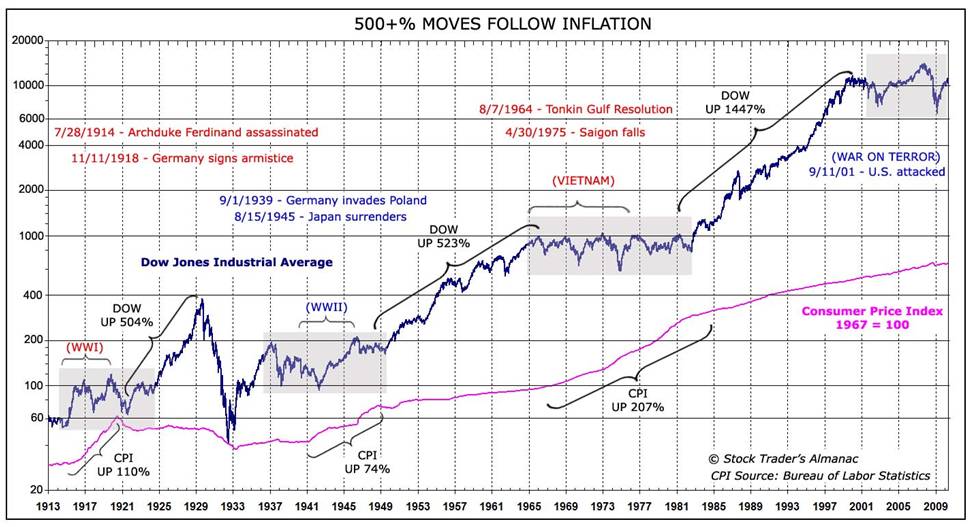
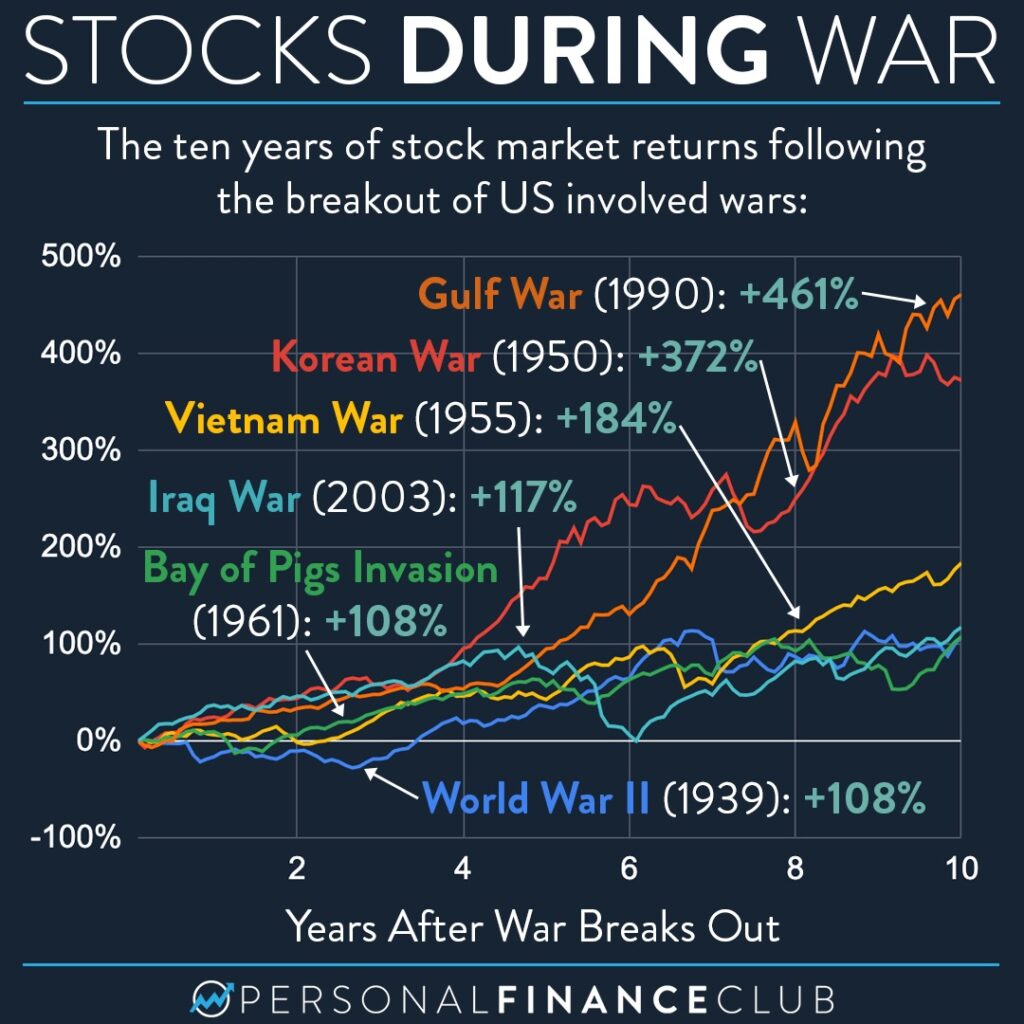
NEW YORK — In the high-stakes arena of global finance, nothing tests the raw nerve of an investor quite like the drums of war. When geopolitical tensions boil over into armed conflict, the immediate reaction across trading desks worldwide is almost always a synchronized gasp of panic. As the old Wall Street adage goes, "markets hate uncertainty." Yet, beneath the gut-wrenching volatility lies a counterintuitive historical truth: stock markets are remarkably resilient to the shocks of war, and for the disciplined investor, these crises often rewrite the rules of wealth creation rather than destroying it.
As of March 3, 2026, macro analysts are closely dissecting these exact dynamics. Drawing on foundational research from financial authorities, including analysis championed by Deborah D'Souza, former news editor at Investopedia, we dive deep into how military conflicts reshape the financial landscapes of the United States and Canada. This is the comprehensive blueprint of what happens when the geopolitical order fractures, which sectors capture the "war dividend," and how smart money navigates the volatility trap.
The Anatomy of a Market Shock: Sell First, Ask Questions Later
When military actions commence, the initial market reaction is driven by algorithms and human panic. Safe-haven assets—specifically gold, the U.S. dollar, and short-term Treasuries—experience immediate capital inflows. Conversely, equities undergo swift drawdowns. Historically, however, this initial shock is short-lived.
According to historical market data analyzing major geopolitical conflicts over the last century, the median drawdown of the S&P 500 following a major geopolitical shock is surprisingly shallow, and the recovery timeline is often swifter than the public realizes. The primary driver of this recovery is liquidity; central banks frequently step in to stabilize credit markets, and the underlying corporate earnings engine of the domestic economy quickly adapts to the new geopolitical reality.
Historical S&P 500 Reactions to Geopolitical Crises
To understand the current market climate, investors must look at how Wall Street responded to past geopolitical crises. The table below outlines the S&P 500's behavior during pivotal historical conflicts:
| Geopolitical Event | Immediate S&P 500 Reaction (1-Day) | S&P 500 Performance (3 Months Post-Event) | S&P 500 Performance (6 Months Post-Event) |
|---|---|---|---|
| Pearl Harbor (1941) | -3.8% | -8.2% | -4.1% |
| Cuban Missile Crisis (1962) | -0.1% | +11.4% | +16.3% |
| Gulf War / Invasion of Kuwait (1990) | -1.1% | -7.3% | +4.2% |
| September 11 Attacks (2001) | -4.9% | +3.7% | +1.8% |
| Iraq War Invasion (2003) | +2.3% | +13.1% | +15.7% |
A Tale of Two Borders: Wall Street vs. Bay Street
While the United States (Wall Street) and Canada (Bay Street) share the longest undefended border in the world, their stock markets react differently to global warfare. Understanding this divergence is crucial for geographical asset allocation.
- Wall Street (S&P 500 / Nasdaq): The U.S. market is heavily weighted toward Technology, Consumer Discretionary, and highly valued growth stocks. During the onset of war, these high-beta sectors are highly vulnerable to multiples compression as discount rates rise and risk premiums expand. However, the U.S. also boasts the world's most robust defense industry, which acts as a powerful buffer.
- Bay Street (TSX): The Toronto Stock Exchange is heavily weighted toward Financials, Materials, and Energy. Because war almost always disrupts global supply chains and drives up commodity prices, the TSX often acts as a natural hedge. When crude oil, natural gas, potash, and precious metals surge, the Canadian index frequently outperforms its American counterpart on a relative basis.
The Sector Breakdown: Identifying Winners, Losers, and Safe Havens
War does not affect all companies equally. It initiates a massive, violent rotation of capital across different sectors of the economy. Investors who fail to rebalance during these periods risk catching falling knives, while those who understand the macro-shift can protect—and grow—their portfolios.
1. The "War Dividend" Sectors (The Outperformers)
Defense & Aerospace: Companies that manufacture munitions, tactical aircraft, naval vessels, and cybersecurity defense systems experience immediate order book expansions. Governments routinely expand defense budgets during times of geopolitical tension, guaranteeing long-term, high-margin revenue pipelines for prime contractors.
Energy & Basic Materials: Modern warfare is resource-intensive. Disruptions to shipping lanes, pipeline networks, and trade agreements restrict supply while demand remains constant or increases. Oil, gas, agricultural commodities (wheat, fertilizer), and industrial metals (aluminum, titanium) typically skyrocket, benefiting producer equities.
2. The Highly Vulnerable Sectors (The Underperformers)
Travel & Consumer Discretionary: Rising fuel prices directly eat into airline profit margins, while geopolitical anxiety suppresses international tourism. Similarly, as the cost of living rises due to energy-driven inflation, consumers pull back on non-essential purchases, hurting retail and leisure stocks.
High-Growth Technology: Because growth stocks rely on cash flows projected far into the future, they are highly sensitive to interest rate fluctuations. War-induced inflation often forces central banks to keep interest rates higher for longer, discounting those future tech earnings and triggering sharp valuation contractions.
The Strategic Blueprint: How Investors Should Respond
Panic is not an investment strategy. To navigate the turbulence of war-driven markets, Senior Bureau Chief and market analysts recommend a disciplined, three-step blueprint:
- Embrace Dollar-Cost Averaging (DCA): Trying to time the absolute bottom of a war-induced market correction is a fool's errand. Instead, systematic investing allows you to acquire more shares of fundamentally sound companies at discounted valuations.
- Rebalance, Don’t Liquidate: Review your portfolio mix. If your asset allocation has drifted too far into high-risk, unhedged growth equities, reallocate a portion into value-generating commodities, defensive stalwarts, and dividend-paying blue chips.
- Ignore the Headline Noise: Mainstream media thrives on sensationalism. While the human cost of war is tragic, the economic engine of corporate profitability has historically proven capable of adapting to new geopolitical realities far faster than headlines suggest.
Frequently Asked Questions (FAQ)
Does the stock market always drop when a war begins?
No. While there is almost always an immediate "knee-jerk" sell-off in the days leading up to and directly following the outbreak of hostilities, markets historically bottom out quickly. In many cases, such as the 2003 Iraq Invasion, the stock market actually rallied in the months following the initial intervention as uncertainty was replaced by operational clarity.
Which assets perform best as safe havens during geopolitical conflicts?
Historically, physical Gold, the U.S. Dollar (USD), Swiss Franc (CHF), and short-term U.S. Treasury bills are the premier safe-haven assets. Within equities, defensive sectors such as Utilities, Consumer Staples, and Aerospace & Defense historically show the highest resilience and lowest correlation to broader market declines during wartime.