Executive Takeaways
- Aggressive Liquidity Intervention: The U.S. Department of the Treasury's unexpected move to at least double its buyback schedule for longer-dated benchmark notes and bonds marks a decisive shift from passive debt issuance to proactive sovereign yield curve management.
- Plumbing Over Policy: While distinct from Federal Reserve Quantitative Easing (QE), the expanded buyback facility functions as structural risk mitigation, neutralizing off-the-run illiquidity and freeing up primary dealer balance sheets constrained by regulatory leverage caps.
- The Bill-Financed Duration Swap: By funding long-end bond retirements through shorter-duration Treasury bills, the Treasury is actively extracting duration risk from private markets, lowering the systemic clearing cost of unprecedented federal fiscal deficits.
- Structural Market Ramifications: Institutional asset allocators, hedge funds, and corporate treasuries face compressed term premia, recalibrated cost-of-capital assumptions, and altered valuation multiples across fixed income and enterprise equities.
The August Pivot: A Critical Turn in Sovereign Debt Management
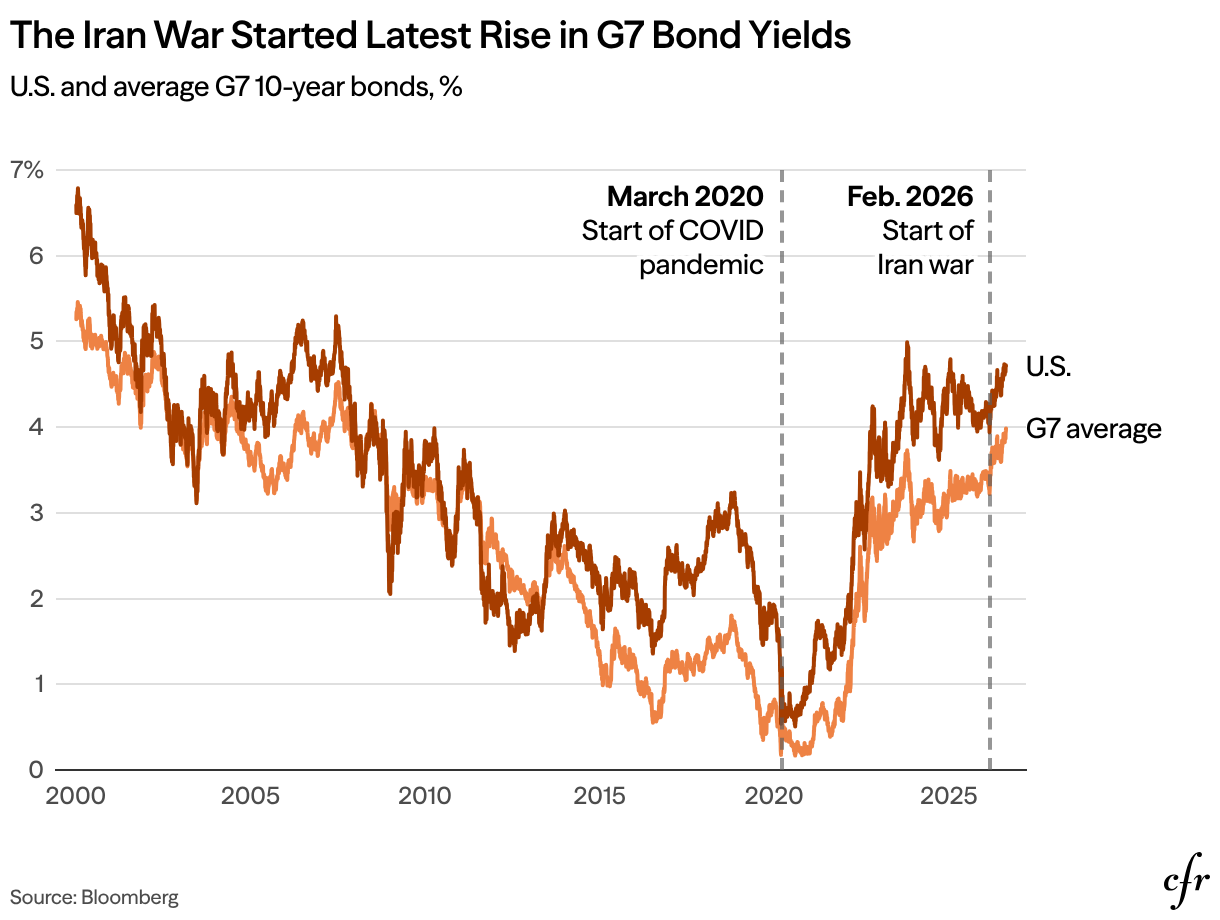
When the U.S. Treasury quietly signaled its intention to double down on buybacks of longer-dated debt securities, institutional trading desks recognized a pivotal turning point in global macro finance. The announcement—confirming that the Treasury would drastically ramp up operations targeting off-the-run nominal coupons and long-dated bonds—was not merely a routine adjustment to the quarterly refunding schedule. It was an unmistakable response to an acute vulnerability in the world's most fundamental asset class: structural liquidity exhaustion in the $27 trillion U.S. Treasury market.
For more than eighteen months, sovereign debt markets across advanced economies have absorbed an unprecedented avalanche of supply. The intersection of persistent fiscal deficits, higher-for-longer monetary policy, and the quantitative tightening (QT) balance-sheet runoff by the Federal Reserve created severe indigestion across primary dealer networks. Bid-ask spreads on seasoned ("off-the-run") paper widened, auction tails grew increasingly volatile, and the depth of the central limit order books decayed to levels last observed during the liquidity freeze of March 2020.
The Treasury’s targeted intervention addresses this exact vulnerability. By stepping into the secondary market as a structural, non-economic buyer of last resort for older, less-liquid 10-year, 20-year, and 30-year paper, the debt management office is executing a calculated intervention designed to safeguard market functioning without overtly violating the political divide between monetary and fiscal policy.
Deconstructing the Mechanics: How the Buyback Engine Operates
Historically, the U.S. Treasury has rarely utilized debt buybacks. The framework was briefly deployed in 2000–2002 under then-Undersecretary Gary Gensler to retire high-coupon debt during rare federal budget surpluses. The current iteration, designed under Undersecretary for Domestic Finance Nellie Liang, functions under an entirely different economic premise: liquidity support and cash management optimization rather than debt reduction.
To understand the structural implications, institutional market participants must dissect the operational mechanics:
1. Off-the-Run Liquidity Support
New Treasury securities ("on-the-run") trade with extreme liquidity and tight bid-ask spreads because they serve as benchmark hedging instruments and collateral primitives for global repo markets. However, once an auction passes and an issue is replaced by a newer vintage, it becomes "off-the-run." These seasoned securities migrate into institutional buy-and-hold portfolios, sovereign wealth reserves, and central bank vaults, progressively losing liquidity.
As the Treasury issues massive new coupon supply, primary dealers—the Wall Street institutions obligated to bid at auction—are forced to warehouse aging off-the-run paper. Constrained by post-Global Financial Crisis capital rules, notably the Supplementary Leverage Ratio (SLR), primary dealers lack the balance sheet capacity to warehouse this inventory without charging an onerous liquidity premium. The Treasury’s expanded buybacks systematically target these exact illiquid CUSIPs, absorbing the dealer inventory and recycling it into pure cash.
2. The T-Bill Financed Duration Extraction
The Treasury does not eliminate the national debt when executing these buybacks; it actively alters its duration profile. The capital used to purchase long-dated, 20-to-30-year paper is primarily funded via the issuance of short-dated Treasury bills (T-Bills) or through cash management operations drawn from the Treasury General Account (TGA).
From an Asset-Liability Management (ALM) perspective, this operation extracts duration—a measure of interest-rate sensitivity—out of the private market and replaces it with zero-duration cash equivalents. While the Treasury formally asserts that this is neutral debt administration, the macro market effect operates identically to a targeted, debt-financed "Operation Twist." It caps runaway long-end yields by eliminating the market overhang of long-maturity paper, dampening volatility across the wider term structure.
Verified Data: Program Scale, Mechanics, and Auction Parameters
The acceleration of the buyback initiative represents an operational escalation from tentative exploratory auctions to an essential market stabilization pillar. The following comparative data details the evolution of the program parameters.
| Program Dimension | Baseline Pilot Phase (Initial Rollout) | Post-Pivot Expansion (Current Posture) | Strategic Objective & Impact |
|---|---|---|---|
| Monthly Target Volume | $5B to $10B aggregate per month | $15B to $20B+ aggregate per month | Doubles liquidity extraction, ensuring regular demand across stale lines. |
| Maturity Sector Focus | Broadly dispersed; nominal 2- to 7-year tenors | Heavily weighted to 10-year, 20-year, and 30-year bonds | Removes problematic long-end duration overhang from dealer balance sheets. |
| Funding Source | Organic TGA cash balances | Front-end Treasury Bill issuance expansion | Transfers borrowing liability to the front end where money market demand is robust. |
| Dealer Participation | Restricted testing groups; price-discovery focus | All primary dealers with automated API scheduling | Provides dependable market liquidity backstop during auction stress. |
| Off-the-Run Pricing Spread | Dislocated across 20-year and deep off-the-runs | Measurable spread compression relative to on-the-run curves | Restores price continuity across the sovereign yield curve. |
Institutional Market Implications: Winners, Losers, and Capital Allocation
The ramifications of the Treasury’s amplified market footprint ripple across asset classes, realigning enterprise capital deployment, bank balance sheets, and relative-value trading frameworks.
Winners: Primary Dealers and Private Capital
- Wall Street Primary Dealers: The most immediate beneficiaries are the 24 primary dealers. By guaranteeing programmatic liquidity in off-the-run paper, the Treasury relieves the leverage-ratio bottlenecks that have plagued dealer intermediation since the implementation of Basel III reforms. Capital allocation capacity that was previously trapped in illiquid inventory is liberated to support core market-making and underwriting activities.
- Private Equity and High-Yield Issuers: Long-dated benchmark sovereign yields function as the base discount rate for corporate debt. By dampening long-end volatility and suppressing term premia, the Treasury lowers corporate refinancing walls, stabilizing enterprise credit spreads and bolstering valuation multiples for private equity portfolio company exits.
- Relative-Value Hedge Funds: Fixed-income arbitrageurs capitalizing on cash-futures basis trades and on-the-run/off-the-run dislocations can operate with lower tail-risk margins, knowing that an active sovereign buyer exists to close anomalous pricing gaps.
Losers: Money Market Yields and Fiscal Discipline
- Conservative Long-Duration Fixed Income Allocators: Traditional real-money managers (pension systems, life insurers) relying on higher term premia to match long-dated liabilities find their yield opportunities artificially curtailed. Yield curve flattening driven by structural duration extraction compresses long-term risk-adjusted returns.
- Deficit Sustainability Credibility: Relying on short-term debt to retire long-term paper exposes the federal government to severe rollover risk. If the Federal Reserve is forced to hold short-term policy rates elevated due to persistent inflation, the Treasury's aggressive T-bill issuance strategy significantly accelerates the interest-expense burden borne by the U.S. sovereign balance sheet.
Frequently Asked Questions (People Also Ask)
Is the Treasury buyback program a form of Quantitative Easing (QE)?
Technically, no. Quantitative Easing is an unsterilized monetary policy operation executed by an independent central bank (the Federal Reserve), which expands the monetary base by creating commercial bank reserves to buy assets. The Treasury buyback program is a sterilized fiscal debt-management operation run by the executive government. It is funded either through cash reserves in the Treasury General Account or by issuing short-term debt (T-Bills). However, because it extracts long-term duration from the market and absorbs dealer inventory, its market-calming impact closely mirrors the structural benefits of targeted central bank balance-sheet programs.
Why is the Treasury focusing buybacks on 10-, 20-, and 30-year maturities?
Long-dated maturities carry the highest interest rate risk (duration) and suffer the most severe liquidity erosion as they age. In particular, the 20-year Treasury bond has experienced chronic structural underperformance and wide liquidity discounts since its reintroduction in 2020. By focusing operations on the 10- to 30-year maturity spectrum, the Treasury addresses the most illiquid nodes of the sovereign curve, providing primary dealers with balance-sheet relief where risk capital is most tightly constrained.
How does this policy affect everyday investors and enterprise capital?
For everyday investors and non-financial enterprises, the policy stabilizes the broader credit landscape. Mortgage rates, corporate bond pricing, municipal debt, and corporate loan coupons are all benchmarked against the long end of the Treasury yield curve. By forestalling liquidity-driven yield spikes, the Treasury suppresses sudden volatility shocks, providing corporate treasurers with more predictable debt financing rates and stabilizing benchmark valuation multiples for equity assets.
What does this move reveal about the real health of the Treasury market?
The aggressive expansion of the buyback mechanism exposes significant structural vulnerabilities in sovereign debt microstructure. It indicates that the organic absorption capacity of traditional buyers (foreign reserve managers, commercial banks, and primary dealers) is inadequate to smoothly digest ongoing multitrillion-dollar deficit issuances. Without direct institutional intervention by debt managers, the Treasury market risks recurrent bouts of acute illiquidity, disorderly yield volatility, and catastrophic auction failures.
Future Outlook: Strategic Milestones and Regulatory Triggers
Looking ahead, the success of the Treasury’s expanded buyback framework will be measured not by the nominal volume of retired debt, but by its ability to prevent liquidity fractures during severe market sell-offs. Institutional investors and macroeconomic analysts must monitor three vital triggers:
- The Ratio of Bill Issuance to Total Debt: As the Treasury utilizes short-dated paper to clear long-dated dislocations, the share of outstanding debt in T-bills has broken above the Treasury Borrowing Advisory Committee’s (TBAC) historical 15% to 20% recommended threshold. A persistent breach tests the capacity of domestic institutional money market funds to absorb issuance without forcing yields higher at the extreme front end.
- Mandatory Central Clearing Implementation: The SEC’s looming mandate requiring central clearing for virtually all secondary market Treasury trades (staggered through 2025 and 2026) will profoundly transform margin requirements and dealer balance sheets. The buyback program serves as an essential bridge mechanism to maintain baseline liquidity while market participants re-engineer their compute pipelines and collateral networks to satisfy the new clearing mandate.
- Supplementary Leverage Ratio (SLR) Revisions: Treasury buybacks represent a partial fiscal workaround for rigid bank balance-sheet caps. If the Federal Reserve and regulatory agencies ultimately decide to permanently exempt U.S. Treasuries and cash reserves from the Tier 1 leverage ratio, primary dealer absorption capacity could triple overnight, dramatically reducing the necessity for large-scale Treasury-funded buybacks.
The sovereign debt landscape has fundamentally changed. The Treasury's buyback acceleration proves that in an era of colossal fiscal footprints and constrained market intermediaries, the sovereign cannot remain an indifferent issuer. Sovereign debt management has entered a new phase of targeted, active intervention—reshaping market plumbing, duration distribution, and global liquidity for years to come.