Executive Takeaways
- Operating Earnings Contraction: Berkshire Hathaway posted a notable retreat in core operating earnings across its sprawling conglomerate empire, driven by underwriting pressures in insurance and softening demand in industrial manufacturing.
- Aggressive Capital Allocation: Despite declining operating cash flows in select segments, Warren Buffett and his investment lieutenants ramped up share buybacks, signaling management’s firm belief that the company’s equity remains undervalued relative to its intrinsic worth.
- Massive Cash Hoard: The enterprise continues to sit on an unprecedented cash and Treasury bill pile, reflecting stringent risk mitigation and a disciplined valuation discipline in an overheated macroeconomic environment.
- Strategic Market Signals: Institutional investors are closely analyzing these dual dynamics—falling earnings paired with rising repurchases—as a bellwether for broader macroeconomic liquidity, corporate valuation multiples, and equity market resilience.
OMAHA — In the upper echelons of global finance, few corporate actions command the instantaneous, market-moving scrutiny of a quarterly earnings release from Berkshire Hathaway. As the conglomerate released its latest financial disclosures, Wall Street analysts, institutional portfolio managers, and global macro strategists immediately locked onto a compelling dichotomy: a tangible contraction in underlying operating earnings juxtaposed against a decisive acceleration in share repurchases.
For decades, Warren Buffett, Chairman and Chief Executive Officer, alongside Vice Chairman Greg Abel, has preached a gospel of operational resilience and opportunistic capital allocation. This latest reporting period, however, tests that philosophy in real time. Against a backdrop of shifting interest rate paradigms, persistent inflationary pressures, and complex geopolitical headwinds, Berkshire’s sprawling ecosystem of railroads, energy utilities, insurance giants, and manufacturing concerns is flashing nuanced signals about the health of the broader domestic and international economy.
The Anatomy of the Earnings Squeeze: What Drove the Operating Decline?
Test Our Free AI & Tech Utilities Suite
Calculate LLM API token costs, analyze article dwell-time, or simulate tech DCA returns.
To understand Berkshire Hathaway’s falling operating earnings, one must deconstruct the engine room of the conglomerate. Unlike investment gains or losses—which fluctuate wildly based on mark-to-market accounting rules for its colossal equity portfolio—operating earnings represent the cash-generative heartbeat of Berkshire’s wholly owned subsidiaries.
Insurance Underwriting and Catastrophe Pressures
Historically the crown jewel of Berkshire's enterprise value, the insurance segment—anchored by GEICO, General Re, and the Berkshire Hathaway Reinsurance Group—faced distinct headwinds during the quarter. While float generation remained robust, underwriting profitability experienced compression. Rising severity in motor claims at GEICO, combined with industry-wide catastrophe losses from severe convective storms and international weather events, weighed heavily on underwriting margins.
Furthermore, intense competitive pricing pressures in commercial lines forced underwriters to balance aggressive volume acquisition with stringent risk mitigation standards. The result was a temporary dip in underwriting income, proving that even the world’s most disciplined insurance operation is not entirely immune to macroeconomic cost inflation.
Railroads and Energy: BNSF and BHE Face Industrial Headwinds
In the industrial and infrastructure sectors, Burlington Northern Santa Fe (BNSF) railway and Berkshire Hathaway Energy (BHE) reported muted performance metrics. BNSF wrestled with shifting intermodal freight volumes, fluctuating consumer goods demand, and elevated labor and maintenance expenditures. Infrastructure scalability and capital expenditure demands remain high, requiring sustained investment to maintain network efficiency.
Concurrently, BHE navigated complex regulatory compliance shifts, wildfire liability litigation concerns across western jurisdictions, and changing energy commodity pricing. These capital-intensive divisions underscore the broader industrial slowdown, where top-line revenue growth is routinely challenged by rising operational expenditures and tightening regulatory oversight.
The Counter-Cyclical Play: Why Buybacks Accelerated
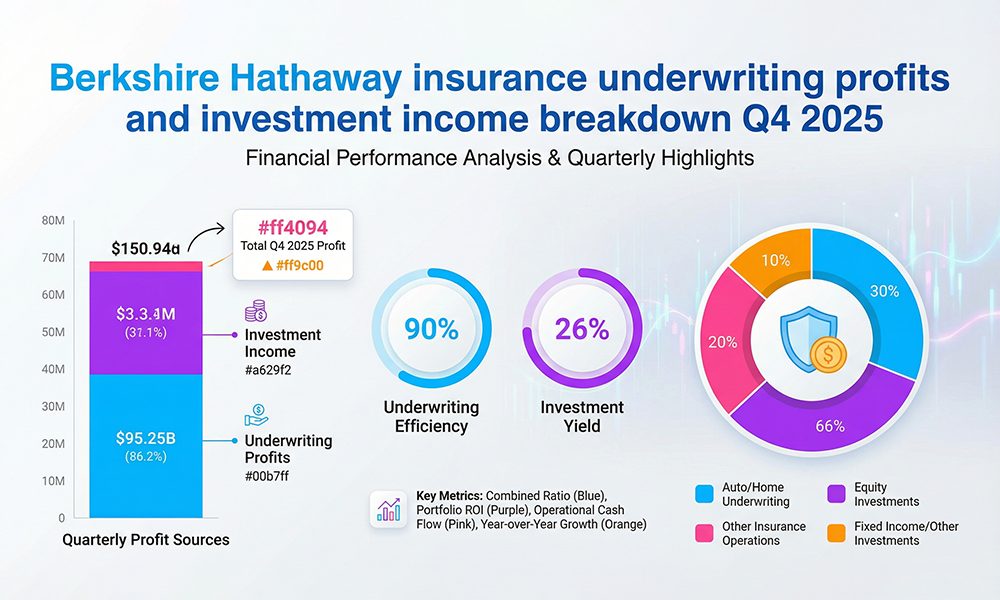
While operating earnings drifted downward, the most revealing narrative of the financial disclosure lay within Berkshire’s statement of cash flows: an increase in share buybacks. Under the authorization framework managed by Buffett and Abel, Berkshire aggressively repurchased its own Class A and Class B shares on the open market.
This capital allocation strategy communicates a profound institutional message. When a corporate titan with an expansive internal opportunity set chooses to buy back its own stock during a period of softening operating earnings, it signals three critical realities:
- Intrinsic Value Conviction: Management believes that the current market valuation multiples do not accurately reflect the underlying enterprise ROI and long-term asset value of its operating subsidiaries and equity portfolio.
- Scarcity of External M&A Targets: Despite holding a fortress balance sheet, Berkshire continues to find public and private acquisition targets overwhelmingly expensive. In the absence of attractively priced corporate takeovers, repurchasing its own equity serves as the most accretive deployment of excess liquidity.
- Accretive Value for Continuing Shareholders: By reducing the total share count, Berkshire systematically increases each remaining shareholder's proportionate claim on future earnings and net asset value.
| Metric Category | Previous Reporting Period | Current Reporting Period | Strategic Direction / Impact |
|---|---|---|---|
| Operating Earnings | Higher baseline | Moderate Contraction | Reflects insurance underwriting headwinds and softer industrial demand. |
| Share Repurchases (Buybacks) | Measured pace | Accelerated deployment | Indicates management views the equity valuation as attractive. |
| Cash & T-Bill Reserves | Record-high levels | Sustained massive hoard | Maintains ultimate market liquidity and dry powder for future dislocations. |
| Equity Portfolio Value | Stable concentration | Optimized positioning | Continued strategic pruning of core holdings (e.g., banking and tech exposure). |
Industry & Market Implications: Who Wins, Who Loses?
The broader economic implications of Berkshire’s recent financial report extend far beyond Omaha. As a conglomerate that touches everything from freight rail and retail to high-end energy and consumer insurance, Berkshire serves as a reliable micro-economic proxy for the United States economy.
The Winners: Disciplined value investors and long-term shareholders stand to benefit directly from the accelerated buyback program. By retiring shares at reasonable valuation multiples, Berkshire enhances per-share intrinsic value. Additionally, fixed-income investors and sovereign wealth managers tracking Berkshire's record cash and short-term Treasury bill holdings view the firm as a premier anchor of market liquidity, providing stability during capital market volatility.
The Losers: Corporate dealmakers, private equity sponsors, and investment banking syndicates hoping for Berkshire to unleash its massive cash hoard on mega-mergers will find little immediate relief. Buffett’s continued hesitation to engage in aggressive external M&A highlights a stubborn valuation disconnect between private sellers and public market buyers. Furthermore, competitors in the property and casualty insurance space face relentless pricing competition as GEICO and its peers aggressively defend and capture market share.
People Also Ask (Frequently Asked Questions)
Why did Berkshire Hathaway’s operating earnings fall while buybacks increased?
Operating earnings fell primarily due to temporary cyclical headwinds, including underwriting margin compression in insurance, weather-related catastrophe losses, and softer demand across industrial and transportation subsidiaries like BNSF. Conversely, management increased share buybacks because they evaluated the company's stock price as undervalued relative to its intrinsic worth, turning excess liquidity inward to accretively buy back equity.
How does Berkshire Hathaway fund its share repurchases?
Berkshire funds its share repurchases almost entirely out of its immense operational cash flow and its extraordinary reserve of cash and short-term U.S. Treasury bills. Despite operating earnings dipping slightly, the conglomerate generates billions of dollars in free cash flow every quarter, ensuring that buybacks do not compromise its operational liquidity or financial stability.
What does Berkshire’s massive cash pile indicate about the broader market?
Berkshire’s historically large cash and Treasury bill position signals that Warren Buffett and his investment team view most public equities and private acquisition targets as overpriced. It reflects a deeply cautious macroeconomic outlook, prioritizing capital preservation and risk mitigation while waiting patiently for major market dislocations or distressed asset valuations.
Are falling operating earnings a sign of structural decline at Berkshire Hathaway?
Financial analysts widely agree that Berkshire's operating earnings contraction is cyclical rather than structural. Given the immense diversification of the conglomerate—spanning insurance, energy, railroads, manufacturing, and retail—short-term fluctuations in individual segments are normal. The underlying economic engine remains exceptionally strong and profitable.
Future Outlook: Key Milestones to Watch
As the financial markets digest these earnings, attention immediately pivots to the upcoming quarters and critical governance milestones. Investors will monitor whether the pace of share repurchases remains elevated or moderates as equity valuations shift. Furthermore, market participants will track how Greg Abel and Todd Combs and Ted Weschler manage equity portfolio concentrations and navigate evolving interest rate environments.
Ultimately, Berkshire Hathaway’s current posture is a masterclass in disciplined capital allocation. By absorbing a temporary dip in operating earnings while aggressively buying back its own stock, the enterprise reaffirms its long-term orientation. In a corporate landscape increasingly obsessed with quarterly earnings beats and short-term stock price momentum, Berkshire’s patient, value-driven playbook remains the gold standard of corporate finance.