Executive Takeaways
Test Our Free AI & Tech Utilities Suite
Calculate LLM API token costs, analyze article dwell-time, or simulate tech DCA returns.
- Market Capitulation Meets Fundamental Re-Evaluation: Intel Corporation (NASDAQ: INTC) faced a violent post-earnings selloff, driving shares to multi-year valuation troughs before a flurry of upgrades across Seeking Alpha and sell-side desks established a tactical floor.
- The 18A Manufacturing Inflection: Financial analysts cite the approaching commercialization of the Intel 18A (1.8-nanometer class) process node—featuring RibbonFET Gate-All-Around (GAA) and PowerVia backside power delivery—as the primary technological wedge to reclaim process leadership from TSMC.
- Balance Sheet De-Risking via Non-Dilutive Capital: Massive federal backing through the U.S. CHIPS and Science Act, combined with private equity co-investments (e.g., Brookfield, Apollo), provides crucial cash flow cushioning as capital expenditure (CAPEX) intensity peaks.
- Enterprise ROI and Valuation Multiples: At post-selloff lows, Intel’s enterprise value-to-sales and price-to-book ratios priced in worst-case structural erosion, ignoring the latent value of its standalone Intel Foundry Services (IFS) division.
The Capitulation Event: Anatomy of an Earnings-Led Repricing

In the high-stakes theater of semiconductor equities, few events trigger as much volatility as a quarterly earnings release from Intel Corporation. Following its latest financial disclosure, the market delivered a swift and unrelenting punishment. A confluence of compressed gross margins, heavy front-loaded capital expenditures, and cautious near-term revenue guidance ignited a wave of algorithmic and institutional selling. Within trading sessions, billions of dollars in market capitalization were erased, pushing the stock into deep technical oversold territory.
The immediate narrative driving the selloff was rooted in short-term execution friction. Intel's ongoing transition to its internal foundry model—separating its Product business units from Intel Foundry Services (IFS)—created interim margin noise that unnerved retail and momentum-focused institutional investors. Furthermore, intense competition in the data center compute space from Advanced Micro Devices (AMD) and market-wide capital diversion toward specialized AI accelerators like Nvidia’s Hopper and Blackwell architectures stoked fears that Intel’s legacy x86 server dominance was eroding faster than its next-generation products could commercialize.
However, once the initial wave of post-earnings liquidation cleared, senior equity research analysts, value-oriented hedge funds, and major contributors across Seeking Alpha initiated a fundamental reassessment. The consensus among upgrading analysts is clear: the market overreacted to transient operational friction while completely mispricing the structural real estate of Intel's long-term manufacturing turnround.
The Catalyst for Upgrades: Why Analysts are Flipping Bullish
The sudden reversal in analyst sentiment—reflected in a spate of upgrades from "Hold" to "Buy" and "Strong Buy"—stems from a sophisticated analysis of asymmetric risk-reward dynamics. At the heart of this bullish consensus is the realization that the post-earnings plunge compressed Intel's valuation multiples to historical trough levels, creating a wide margin of safety for long-term allocation.
1. Asymmetric Valuation and SOTP (Sum-of-the-Parts) Realization
Prior to the earnings report, Intel was priced under the assumption of seamless, linear margin expansion. Post-selloff, the stock traded at valuation levels that effectively ascribed near-zero enterprise value to Intel Foundry Services as an independent commercial entity. Analysts upgrading the stock emphasize that a Sum-of-the-Parts (SOTP) valuation model reveals substantial hidden value. By unbundling the enterprise value of Intel’s high-margin product business (Client Computing Group and Data Center/AI) from its foundry infrastructure, the standalone valuation of IFS offers an extraordinary option on global semiconductor reshoring.
2. Technological Parity and Process Leadership (18A Node)
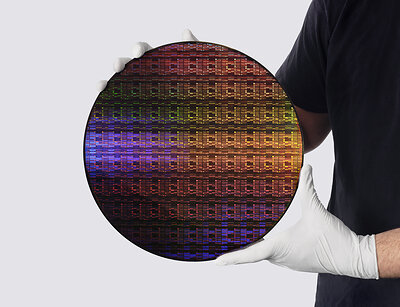
Intel’s "Five Nodes in Four Years" (5N4Y) execution roadmap has reached its critical, value-accretive zenith. The upcoming deployment of the Intel 18A process node represents the company’s definitive effort to leapfrog Taiwan Semiconductor Manufacturing Company (TSMC) in transistor density and power efficiency. Crucially, 18A introduces two breakthrough technologies ahead of the competition:
- RibbonFET Architecture: Intel's implementation of Gate-All-Around (GAA) field-effect transistors, replacing legacy FinFETs to maximize drive current and minimize leakage.
- PowerVia Backside Power Delivery: An industry-first implementation that decouples power wiring from signal routing on the silicon wafer, dramatically reducing IR drop, saving interconnect space, and yielding significant frequency gains.
Analyst upgrades highlight that early test chips for major external clients—including Microsoft and defense infrastructure contractors—have achieved encouraging yield milestones, setting the stage for commercial volume production in late 2024 and full scale-out through 2025.
3. Capital Structure Resilience and Non-Dilutive Subsidies
While skeptics point to high CAPEX requirements as a drag on free cash flow, institutional analysts view Intel’s capital allocation strategy through a macro lens. The company has secured tens of billions of dollars in non-dilutive capital through U.S. CHIPS Act grants, direct tax credits, and European government incentives. Combined with strategic capital funding models—such as the Semiconductor Co-Investment Program (SCIP) with Brookfield Asset Management and Apollo Global Management—Intel is executing a multi-billion-dollar buildout of fabs in Oregon, Arizona, Ohio, and Germany with significantly reduced corporate balance sheet exposure.
Financial & Strategic Metrics: Pre- vs. Post-Selloff Landscape
| Metric / Strategic Pillar | Pre-Earnings Peak | Post-Earnings Selloff Trough | Upgraded Target Consensus / 2025 Outlook |
|---|---|---|---|
| Trailing P/E Ratio | ~28.5x | ~16.2x (Trough Compression) | 22.0x - 24.0x (Normalized Earnings) |
| Enterprise Value / Sales | ~3.4x | ~2.1x | 3.1x (Reflecting IFS Re-rating) |
| Gross Margin (Non-GAAP) | 45.0% - 46.5% Target | 38.7% (Impairment & Scale Drag) | 44.0% - 48.0% (Post-18A Scale) |
| Intel 18A Commercial Status | Risk Production / Sampling | Yield Validation Phase | Volume Manufacturing / High-Volume Ramp |
| IFS External Order Pipeline | ~$10 Billion Lifetime Value | ~$15 Billion (Post-Microsoft Win) | >$20 Billion (Projected FY2025) |
| Gaudi 3 AI Accelerator Shipments | Ramp Initiated | Supply Chain Bottlenecks Cited | $500M+ Target Commercial Revenue |
Macro & Ecosystem Implications: Who Wins, Who Loses?
The repricing and subsequent equity upgrades of Intel carry profound structural implications for the broader technology ecosystem and capital markets.
The Enterprise Compute Shift
For enterprise software architects and cloud infrastructure managers, Intel’s stabilizing foundry roadmap ensures continued long-term platform competition. The roll-out of Xeon 6 processors (incorporating Sierra Forest efficiency cores and Granite Rapids performance cores) provides high-density, power-efficient cloud compute architecture capable of competing directly with ARM-based custom silicon developed by Amazon Web Services (Graviton) and Ampere Computing.
Foundry Dynamics: TSMC, Samsung, and Geo-Risk Mitigation
The geopolitical concentration of advanced semiconductor manufacturing in the Taiwan Strait remains a systemic risk for hyperscalers like Apple, Nvidia, Qualcomm, and AMD. Intel’s transformation into a trusted, geographically diversified commercial foundry offers hyperscalers a critical risk mitigation alternative. Upgrades across Seeking Alpha frequently point to the "geopolitical premium" that IFS will command as Western enterprises prioritize supply chain resilience and regulatory compliance over marginal cost differentials.
Impact on Legacy Competitors
- AMD: While AMD continues to take market share in legacy server nodes, Intel’s aggressive pricing and accelerated 18A timeline limit AMD’s ability to achieve unchecked margin expansion in x86 data centers.
- Nvidia: Intel’s Gaudi 3 AI accelerator offers enterprise customers a cost-effective alternative for fine-tuning and inference workloads, challenging Nvidia’s gross margins at the mid-tier enterprise level, where total cost of ownership (TCO) and enterprise ROI override raw compute peak performance.
Frequently Asked Questions (People Also Ask)
Why did Intel stock crash post-earnings before receiving upgrades?
Intel stock experienced a sharp drop due to short-term gross margin compression, higher-than-expected structural restructuring costs, and conservative near-term revenue guidance. The selloff was exacerbated by systematic tax-loss harvesting and momentum algorithmic selling. Upgrades emerged once institutional research analysts identified that the equity was severely oversold, creating a favorable entry point relative to its long-term manufacturing recovery assets.
What makes Intel's 18A process node critical to its turnaround valuation?
The 18A node is Intel's 1.8-nanometer class manufacturing technology. It is vital because it introduces RibbonFET (Gate-All-Around) architecture and PowerVia (backside power delivery) ahead of TSMC’s N2 node. Reclaiming process leadership with 18A allows Intel to manufacture higher-performing, lower-power chips internally, restoring gross margins while unlocking lucrative contract manufacturing revenue through Intel Foundry Services (IFS).
How do federal subsidies and the CHIPS Act protect Intel's balance sheet?
Direct capital grants from the U.S. CHIPS and Science Act, along with European state aids and tax credits, provide billions of dollars in non-dilutive financing. Furthermore, Intel’s Semiconductor Co-Investment Program (SCIP) offsets heavy fab construction capital expenditures by bringing in private equity partners. This enables Intel to maintain liquidity and fund R&D without over-leveraging its balance sheet or heavily diluting shareholder equity.
How does Intel's Gaudi 3 accelerator compete in the enterprise AI market?
While Nvidia leads the ultra-high-end LLM training market with Hopper and Blackwell architectures, Intel’s Gaudi 3 targets the massive enterprise AI inference and fine-tuning segments. Gaudi 3 offers competitive compute performance at a significantly lower total cost of ownership (TCO), superior price-to-performance metrics, and an open software ecosystem (PyTorch native integration), making it highly attractive for budget-conscious enterprise workloads.
Future Outlook: Strategic Milestones to Watch
As Intel navigates the immediate aftermath of its earnings-led selloff, the path to long-term valuation recovery hinges on execution against key, quantifiable milestones over the next 12 to 24 months:
- 18A Commercial Yield Milestones (H2 2024 - H1 2025): Investors must closely monitor high-volume manufacturing (HVM) yield metrics for Intel 18A. Reaching target wafer yields without schedule delays will be the ultimate validation of CEO Pat Gelsinger’s IDM 2.0 strategy.
- External Foundry Customer Announcements: Securing additional tier-one fabless chip designers (such as Nvidia, Qualcomm, or Apple) as commercial customers for IFS on 18A or 14A nodes will serve as immediate re-rating catalysts for the equity.
- Financial Disaggregation Clarity: As Intel continues to report independent operational results for IFS and Intel Products, operational margin expansion in the product segments will demonstrate whether internal transfer pricing is successfully driving corporate cost efficiencies.
- CAPEX Moderation and Free Cash Flow Generation: With major infrastructure spending peaking in 2024, the transition toward lower capital intensity in 2025–2026 is expected to result in a sharp positive inflection in free cash flow, supporting capital return strategies and debt paydown.
The consensus among elite financial analysts is clear: while near-term market volatility remains elevated, the post-earnings selloff removed speculative froth and established a formidable floor. Intel’s trajectory is no longer defined by quarterly earnings noise, but by a multi-year industrial transformation that is now priced at an exceptionally compelling risk-adjusted entry point.