Executive Takeaways
- Internal Retail Directive: Apple Inc. has issued operational guidance to its global retail fleet instructing staff to explicitly discourage walk-in customers from attempting same-day purchases of the new $1,999 iPhone Duo, redirecting traffic toward multi-week backorder queues.
- Structural Yield Deficits: The inventory shortfall stems from sub-60% production yields on the device’s zero-crease titanium-alloy dual hinge and custom ultra-thin glass (UTG) substrate, capping early channel availability well beneath historical launch day quotas.
- ASP and Margin Strategy: At a starting price point of $1,999, the iPhone Duo represents Apple’s most aggressive elevation of Average Selling Price (ASP) to date, testing enterprise balance sheets and consumer liquidity amid high interest rates.
- Wall Street Capital Allocation Impact: Equity analysts are recalculating second-half hardware margins, weighing initial production cost premiums against long-term operating leverage as Apple enters the premium foldable and dual-display enterprise segment.
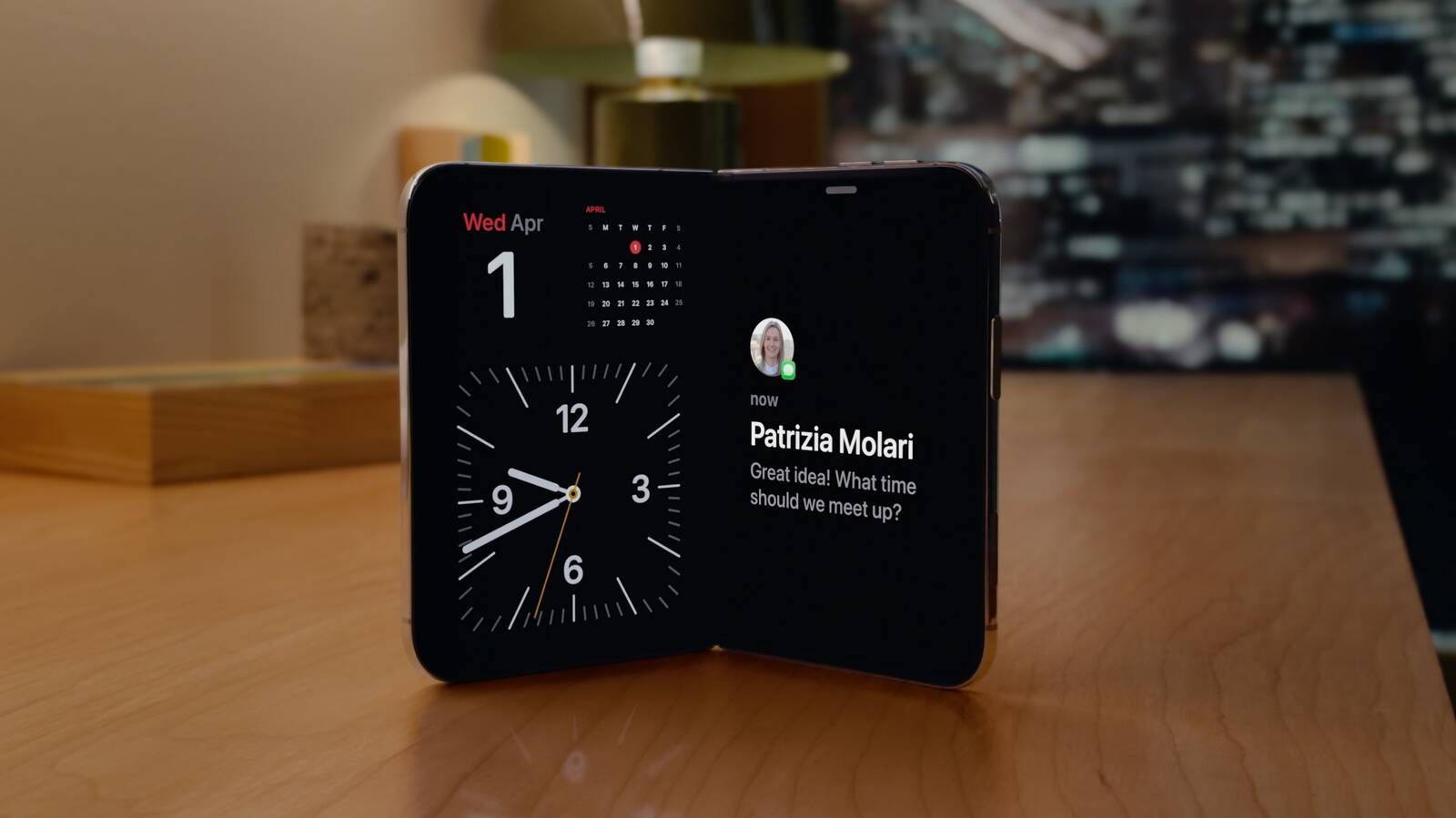
CUPERTINO, Calif. — In an uncharacteristic intervention into front-line retail operations, Apple Inc. (NASDAQ: AAPL) has distributed an internal directive instructing global retail specialists to proactively warn customers against visiting brick-and-mortar stores with the expectation of purchasing an iPhone Duo off the shelf. The internal communication, distributed across Apple’s Tier-1 flagship stores throughout North America, Europe, and key Asia-Pacific markets, highlights unprecedented supply chain bottlenecks surrounding the company’s inaugural $1,999 foldable form-factor device.
The directive, marked "Internal Operational Priority," instructs floor staff and Genius Bar personnel to conduct proactive intake management outside storefronts. Associates are directed to inform queuing walk-ins that store allocations are strictly ring-fenced for existing digital reservations and enterprise business accounts. The move underscores the friction between the tech giant’s high-margin launch strategy and the physical realities of early-stage advanced manufacturing.
The Operational Memo: Inside the Retail Containment Strategy
The leaked guidance, confirmed by multiple retail managers across flagship locations in New York, London, and Tokyo, outlines a strict script for customer interaction. Rather than permitting prospective buyers to form traditional physical queues, staff are trained to perform "expectation recalibration." Customers are advised to secure a delivery slot via the Apple Store application or consider an immediate transition to the conventional flagship, the iPhone Pro Max.
"Physical retail walk-in availability for the iPhone Duo is virtually zero across the first three allocation cycles," says an operations manager stationed at a top-quartile European flagship, speaking on the condition of anonymity due to non-disclosure restrictions. "Our explicit instruction is to clear the footprint. If a consumer enters seeking the Duo without a confirmed pickup barcode, we are directed to manage their sentiment, pivot them toward our trade-in valuation desk, and process an online reservation for backorder delivery, which is already trending into subsequent quarters."
This operational pivot represents a significant departure from Apple’s historically celebrated launch dynamics. For nearly two decades, the company leveraged sprawling launch-day lines outside Regent Street, Fifth Avenue, and Ginza as visceral marketing collateral to demonstrate unyielding consumer sentiment. With the iPhone Duo, however, unchecked foot traffic poses a distinct corporate risk: brand equity erosion driven by immediate customer frustration at retail display tables that feature demo units consumers cannot walk away with.
The Production Crucible: Hinge Mechanics, UTG, and Yield Deficits

Behind the inventory crunch lies an industrial engineering challenge that has tested Apple’s supply chain resilience. People familiar with Apple’s contract manufacturing partners at Foxconn (Hon Hai Precision Industry) and Luxshare Precision reveal that production line yield rates for the iPhone Duo are lagging far behind target key performance indicators (KPIs).
The core bottleneck centers on two interdependent components: the proprietary micro-gear fluid droplet hinge mechanism and the third-generation Ultra-Thin Glass (UTG) laminated panel. Unlike competing foldable hardware that tolerates subtle surface deviations, Apple’s industrial design mandates a true zero-crease mechanical plane when fully deployed at 180 degrees. Achieving this has pushed tolerance margins down to the micron level.
Reports from upstream component fabricators indicate that the failure rate during structural stress validation remains elevated. When mechanical hinges undergo automated cyclic deployment during end-of-line testing, micro-torsion discrepancies frequently crack the display panel’s internal structural matrix. Industry analysts estimate current assembly yields at between 52% and 58%—meaning nearly half of the fabricated sub-assemblies fail to meet commercial shipment standards. In comparison, mature form-factor lines such as the standard iPhone chassis regularly achieve yields exceeding 92% to 94% prior to mass global distribution.
Hardware Architecture & Enterprise Comparison
The iPhone Duo is not merely a cosmetic redesign; it is an ultra-dense compute platform engineered to challenge the boundaries of mobile productivity and enterprise workflow automation. The table below outlines how the Duo intersects with existing enterprise hardware paradigms and rival premium flagships.
| Metric / Specification | Apple iPhone Duo | Samsung Galaxy Z Fold 6 | Apple iPhone 16 Pro Max |
|---|---|---|---|
| Base Retail Price (MSRP) | $1,999 | $1,899 | $1,199 |
| Display Architecture | Dual 6.3" to 7.9" Continuous ProMotion OLED | 6.3" Cover / 7.6" Main Dynamic AMOLED 2X | 6.9" Fixed Super Retina XDR OLED |
| Hinge Engineering | 14-Gear Fluid Titanium-Steel Matrix | Dual-Rail Armor Aluminum Hinge | N/A (Solid Structural Chassis) |
| Production Line Yield Rate | ~55% (Early Mass Run) | >88% (Mature Platform) | >94% (Optimized Line) |
| Lead Time for Fulfillment | 6 to 8 Weeks (Global Backorder) | Immediate (Off-the-shelf) | 1 to 2 Weeks (Normalized) |
| Target Margin Profile | 44% Gross (Long-Term Run-Rate) | 39% Gross | 48% Gross |
Financial Architecture: ASP Escalation, BOM Pressures, and Margin Defense
From an enterprise finance perspective, the iPhone Duo’s $1,999 retail debut represents a calibrated capital allocation maneuver. Faced with a plateauing global smartphone replacement cycle, Apple’s strategic imperative has shifted from raw unit volume growth to aggressive Average Selling Price (ASP) enhancement and Services ecosystem tie-ins.
According to supply-chain teardown projections, the initial Bill of Materials (BOM) for the iPhone Duo exceeds $820 per unit—substantially higher than any standard flagship in Apple’s history. The dual display assemblies, specialized hinge tooling, redesigned modular dual-cell battery architecture, and the high-thermal-conductivity vapor chamber contribute heavily to early fixed manufacturing overhead. Consequently, initial unit shipments carry gross margins lower than Apple’s corporate average of roughly 46%. However, financial analysts note that as yield rates climb toward 75% in subsequent quarters, the economies of scale will unlock significant operating leverage.
Institutional desks are monitoring how telecommunications carriers navigate capital expenditures associated with device subsidies. Mobile operators across the U.S. and Europe, eager to incentivize enterprise tier-5G infrastructure migrations, are packaging the iPhone Duo with aggressive trade-in promotions and 36-month service agreements. This strategy effectively insulates retail consumers from the immediate shock of the $1,999 upfront price tag while locking enterprise fleets into prolonged ecosystem cycles.
Industry & Market Implications: Who Wins and Who Loses?
The acute inventory shortage creates a ripple effect across multiple market segments, reorganizing competitive dynamics in the ultra-premium enterprise mobility sphere.
- The Incumbent Beneficiaries: Samsung Electronics and Alphabet's Google stand to capture impatient consumer surplus. Enterprise mobility managers under immediate budget-cycle deadlines to deploy dual-screen productivity hardware may turn to the Galaxy Z Fold 6 rather than wait out Apple’s six-to-eight-week shipping backlog.
- Upstream Component Winners: Advanced materials suppliers, specialized hinge fabricators, and custom glass processors are poised for revenue expansions. As Apple pours capital into yield optimization and tooling redundancy across secondary suppliers, capital expenditures in precision engineering will yield long-term high-margin contracts.
- Enterprise Mobility Management (EMM) Deployments: Corporate IT departments face immediate deployment hurdles. Many CIOs who budgeted fiscal-year hardware upgrades around the Duo’s native Apple Silicon architecture and multitasking software integrations are now forced to re-allocate funds or defer transition roadmaps.
- The Grey Market Arbitrageurs: The disparity between immense localized demand and thin inventory has reignited secondary market speculation. Unlocked units secured via early-bird pre-orders are already commanding markups exceeding 40% on secondary digital exchanges, mirroring dynamics previously observed during the original iPhone X rollout.
Frequently Asked Questions (People Also Ask)
Why is Apple warning retail customers against walk-in purchases of the iPhone Duo?
Apple issued the retail directive to prevent chaotic foot traffic and negative consumer sentiment at physical stores. Extreme inventory constraints caused by complex manufacturing tolerances mean that almost 100% of physical store stock is allocated exclusively to pre-orders and enterprise reserve accounts, leaving zero supply for walk-in transactions.
What manufacturing issues are causing the iPhone Duo shortage?
The primary manufacturing bottleneck is sub-60% production yields associated with the continuous zero-crease dynamic OLED display and the multi-gear titanium hinge assembly. Fabricators are experiencing high defect rates during the final stress-testing phase, significantly capping the volume of finished units clearing quality assurance.
How long are delivery wait times for the iPhone Duo?
Current online reservation delivery estimates indicate backorders ranging from six to eight weeks across major territories. High-spec configurations (such as the 1TB enterprise storage tier) face extended lead times pushing into subsequent operational quarters as supply chains prioritize standard memory tiers to maximize immediate throughput.
Can enterprise clients bypass standard retail queues for the iPhone Duo?
While Apple maintains a dedicated B2B sales pipeline for corporate accounts, enterprise clients are also subject to allocation limits. Dedicated corporate account executives are currently rationing device deployments on a phased schedule, prioritizing executive pilot programs over full corporate fleet migrations until assembly yields stabilize.
The Horizon: Operational Scaling and What to Watch Next
As Apple navigates the volatile launch window of its most intricate hardware device to date, institutional investors and industry observers are watching three pivotal operational milestones:
First, the rate of yield-curve steepening across manufacturing plants in Zhengzhou and Shenzhen will dictate supply stabilization. If contract fabricators can elevate line yields past 75% prior to the critical holiday production ramp, fulfillment timelines will normalize, mitigating market share loss to entrenched competitors.
Second, equity analysts will scrutinize Apple’s upcoming quarterly earnings call for direct commentary on hardware gross margin dilution. CFO statements regarding the capital expenditure dedicated to tooling capacity and wafer fabrication will signal management's confidence in long-term platform adoption.
Finally, enterprise software optimization remains the ultimate structural test. The commercial success of the iPhone Duo depends not merely on resolving manufacturing bottlenecks, but on whether third-party enterprise platforms update their applications to leverage the dual-screen form factor. Until supply matches ambient market demand, the device remains an elusive, high-priced emblem of the physical limits confronting modern consumer electronics engineering.