The Berlin Fracture: Germany’s Far-Right AfD Forces Historic Crisis on Europe’s Economic Engine
BERLIN — The political foundations of postwar Germany are experiencing their most severe tremors in decades. The Alternative for Germany (AfD), a hard-right populist party once dismissed as a fringe protest movement, has achieved a historic breakthrough in eastern state elections, positioning itself on the cusp of state-level governance. According to a landmark analysis by the Center for Strategic and International Studies (CSIS), this political shift marks a permanent structural realignment of the German political landscape, carrying profound consequences for the European Union's largest economy, global investors, and transatlantic security.
By securing a resounding victory in Thuringia and a razor-thin second-place finish in neighboring Saxony, the AfD has shattered the traditional cordon sanitaire—the informal "firewall" whereby mainstream parties pledge never to govern with the far-right. For international markets and corporate boardrooms, the political paralysis in Berlin is no longer a distant tail risk; it is the new baseline reality.
The Electoral Earthquake: Shifting the Balance of Power
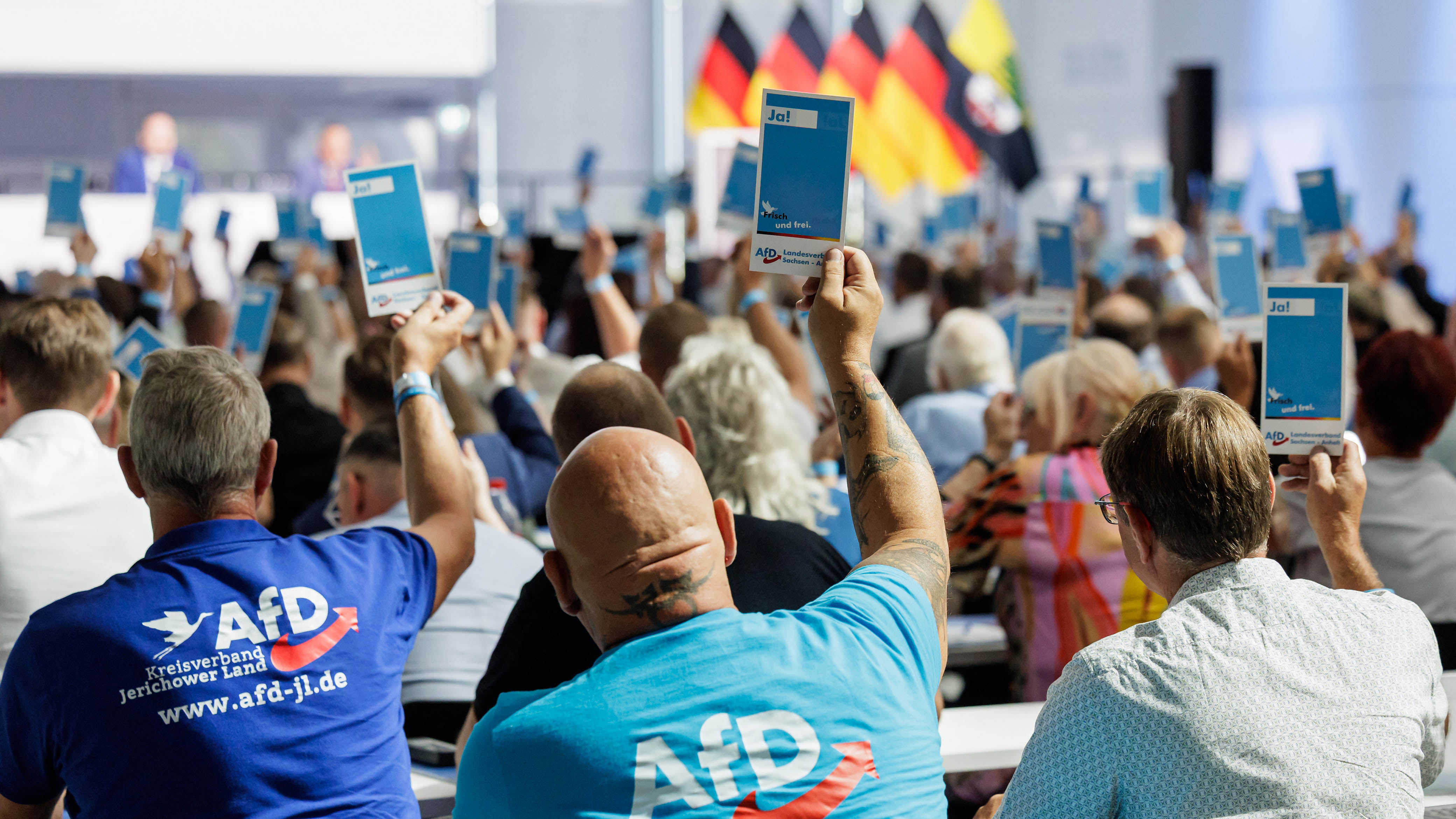
The state elections in Thuringia and Saxony have fundamentally altered Germany's domestic power dynamics. In Thuringia, the AfD won an unprecedented 32.8% of the vote, marking the first time a far-right party has finished first in a German state legislative election since World War II. In Saxony, the party secured 30.6%, finishing just behind the center-right Christian Democratic Union (CDU).
While mainstream parties continue to scramble to form highly complex, fragile coalitions to lock the AfD out of executive office, the CSIS report underscores a critical reality: the AfD no longer needs to be in a formal coalition to exert immense power. By capturing more than one-third of the seats in these state parliaments, the AfD has achieved a "blocking minority" (Sperrminorität).
Key Powers of the AfD’s Blocking Minority:
- Judicial Vetoes: The party can now block the appointment of state constitutional judges, bringing the local judiciary to a standstill if its demands are not met.
- Constitutional Amendments: Any changes to state constitutions, which require a two-thirds majority, are now entirely dependent on AfD consent.
- Administrative Oversight: The party can veto the dissolution of state parliaments and block key legislative appointments, severely hampering governance.
The Economic Stakes: Why Global Investors Are Sounding the Alarm

For the German business elite, the AfD’s ascent represents an existential threat to an economy already suffering from structural stagnation, high energy costs, and an acute labor shortage. Leaders from Germany’s DAX-listed giants, including Siemens, BASF, and Infineon, have taken the unusual step of publicly campaigning against the far-right, warning of devastating economic repercussions.
The primary concern for multinational corporations is the chill the AfD’s anti-immigration rhetoric casts over the international talent pool. Germany’s Federal Employment Agency estimates that the country requires at least 400,000 skilled immigrant workers annually to maintain its industrial base. Eastern German states, which are rapidly aging and suffering from youth emigration, are particularly vulnerable. A political climate perceived as hostile to foreigners threatens to halt foreign direct investment (FDI) in critical sectors like semiconductor manufacturing and clean energy infrastructure.
Electoral Performance and Political Shift
The following table details the dramatic shift in electoral support in Thuringia and Saxony, highlighting the rise of populist forces against the collapse of Chancellor Olaf Scholz’s federal "traffic light" coalition (SPD, Greens, FDP):
| State / Party | AfD Vote Share (%) | CDU Vote Share (%) | BSW (Left-Populist) (%) | Scholz's SPD (%) | Political Status |
|---|---|---|---|---|---|
| Thuringia | 32.8% | 23.6% | 15.8% | 6.1% | AfD holds blocking minority; coalition deadlock. |
| Saxony | 30.6% | 31.9% | 11.8% | 7.3% | CDU seeking unstable multi-party alliance. |
Geopolitical Fallout: Berlin’s Weakness is Europe’s Vulnerability
The CSIS analysis warns that the domestic political paralysis in Germany will inevitably reverberate across the European Union and NATO. The AfD's foreign policy platform is explicitly pro-Russian, anti-NATO, and deeply skeptical of the European Union. Alongside the newly formed left-wing populist Sahra Wagenknecht Alliance (BSW), which also performed exceptionally well, over 40% of voters in eastern Germany supported parties demanding an immediate halt to military aid for Ukraine.
As Chancellor Olaf Scholz’s federal coalition enters its final year ahead of the September 2025 national elections, its authority has been severely diminished. Scholz’s Social Democrats (SPD) barely cleared the 5% threshold required to remain in the state parliaments. A weakened, inward-looking German government is ill-equipped to lead Europe through mounting geopolitical crises, trade tensions with China, and the ongoing war on the continent's eastern flank.
"The firewall is holding for now at the executive level, but the structural damage is done," notes a senior European diplomat based in Berlin. "We are looking at a Germany that is increasingly consumed by its own domestic polarization, leaving a leadership vacuum at the heart of the European Union."
The Road Ahead: A Fragile Future
As the mainstream parties attempt to construct unprecedented coalitions bridging the traditional left-right divide—such as the CDU partnering with the socialist-rooted BSW—the risk of political instability remains extraordinarily high. These "shotgun weddings" are united solely by their opposition to the AfD, offering little in the way of coherent economic or social policy.
For global markets, the German political landscape has entered uncharted territory. The "German stability" that once anchored the Eurozone is giving way to a volatile, fragmented political reality. Investors must now price in a prolonged period of political horse-trading, policy gridlock, and a growing challenge to the European integration project from the heart of the continent.
Frequently Asked Questions
What is the "blocking minority" and why does it matter?
A blocking minority (Sperrminorität) occurs when a political party controls more than one-third of the seats in a parliament. In Germany, this allows the AfD to veto key decisions that require a two-thirds majority, such as the appointment of constitutional judges, changing the state constitution, or dissolving the parliament. This gives the party immense leverage without being in government.
How does the AfD’s rise impact foreign businesses operating in Germany?
The primary concern for foreign businesses is the threat to labor recruitment and retention. Multinational companies warn that the AfD's nationalist, anti-immigrant rhetoric makes it difficult to attract highly skilled global talent, particularly to eastern Germany. Additionally, political instability and policy gridlock increase regulatory uncertainty for long-term capital investments.