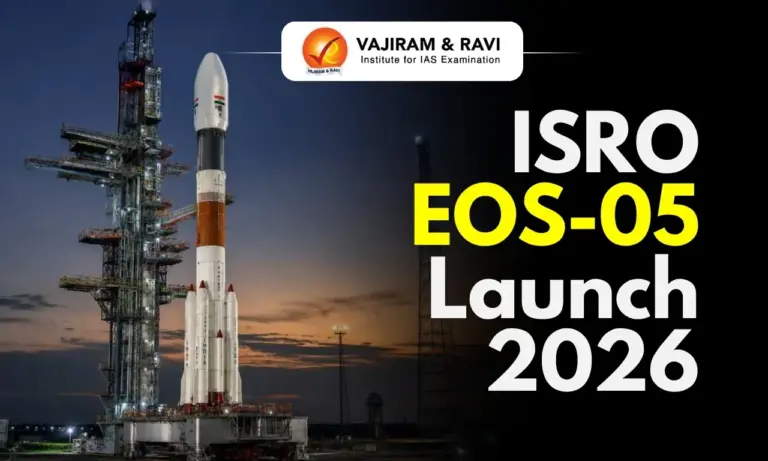
ISRO Sticks the Landing: GSLV-F17 Places Game-Changing EOS-05 Imaging Satellite into Orbit
BENGALURU/NEW DELHI — In a monumental leap for India’s commercial and strategic space ambitions, the Indian Space Research Organisation (ISRO) successfully executed the launch of its advanced Earth observation satellite, EOS-05. Blasting off on its 19th flight, the reliable Geosynchronous Satellite Launch Vehicle (GSLV-F17) cleanly pierced the stratosphere, precisely injecting the 2,367-kilogram payload into its designated geosynchronous orbit.
Announced early in the launch cycle and verified by primary wire reports, this mission marks a watershed moment for the nation’s space program. EOS-05 is not merely another routine payload; it is India’s first-ever dedicated imaging satellite operating from a geosynchronous vantage point. By maintaining a constant eye on vast geographical regions, the satellite fundamentally transforms how government agencies, agricultural conglomerates, and disaster response teams monitor the subcontinent.
For global markets, aerospace investors, and domestic policymakers, the successful GSLV-F17 mission underscores India’s growing prowess as a cost-effective, highly reliable hub for cutting-edge space technology. As climate volatility rattles global supply chains, the arrival of EOS-05 offers an unprecedented data stream designed to mitigate economic risks from natural disasters and erratic weather patterns.
The Technical Marvel: What Makes EOS-05 Different?
Traditional low-Earth orbit (LEO) imaging satellites sweep across the globe rapidly, offering high-resolution snapshots but leaving long observational gaps over specific regions. EOS-05 changes the game by sitting in a geosynchronous orbit, matching the Earth’s rotational speed. This allows the satellite to continuously and repeatedly stare down at large swaths of territory.
- Continuous Monitoring: Unlike LEO constellations that pass over a target for only a few minutes a day, EOS-05 provides uninterrupted, real-time data feeds over major regions.
- Precision Engineering: The 2,367-kg spacecraft represents the pinnacle of indigenous manufacturing, featuring state-of-the-art optical payloads built to withstand the harsh thermal dynamics of space.
- Workhorse Reliability: The GSLV-F17 mission solidifies the reliability of the cryogenic upper stage, proving ISRO's capability to safely hoist heavy, high-value payloads into high-altitude orbits.
According to senior mission directors at ISRO, the telemetry data received at the Satish Dhawan Space Centre in Sriharikota confirmed that all solar panels deployed successfully and the spacecraft is operating on its internal power systems in prime health.
Economic and Strategic Implications: Why This Matters Now

Beyond the technological milestone, the economic utility of EOS-05 is immense. In a country where agriculture dictates a significant portion of GDP, predictive weather modeling and real-time crop health assessment are worth billions of dollars.
"The ability to observe large regions of Earth repeatedly from a geosynchronous orbit opens entirely new commercial and operational possibilities," noted a senior economic analyst tracking the Indian aerospace sector. "From precision farming to rapid disaster assessment, this data will trickle down to corporate boardrooms and rural cooperatives alike."
Furthermore, the high-resolution imaging capabilities serve a vital dual-use purpose. In an era marked by heightened geopolitical tensions across South Asia—exemplified by recent extreme weather events and cross-border environmental crises like the Nepal floods—having an independent, high-cadence eye in the sky gives Indian planners unmatched strategic situational awareness.
Mission Profile At-a-Glance
| Parameter | Mission Detail |
|---|---|
| Satellite Name | EOS-05 (Earth Observation Satellite-05) |
| Launch Vehicle | Geosynchronous Satellite Launch Vehicle (GSLV-F17) |
| Flight Number | 19th flight of the GSLV program |
| Satellite Weight | 2,367 kg |
| Orbit Type | Geosynchronous Orbit (High-altitude continuous observation) |
| Primary Application | Continuous imaging, agriculture monitoring, and disaster management |
Looking Ahead: The Next Frontier for ISRO
With EOS-05 now safely parked in its operational slot, ISRO is wasting no time. Agency insiders report that the successful flight of GSLV-F17 clears the manifest for a series of high-stakes commercial launches scheduled through the remainder of the fiscal year. As global demand for reliable, independent Earth observation data skyrockets, India is well-positioned to capture a larger share of the multi-billion-dollar global space economy.
As calibration of the satellite’s advanced instruments wraps up over the coming weeks, the first batch of high-definition imagery is expected to be released to key stakeholder ministries, signaling the dawn of a new era in India's space-based economic intelligence.
Frequently Asked Questions
1. What is the primary function of the EOS-05 satellite?
EOS-05 is designed to repeatedly and continuously observe large regions of the Earth from a geosynchronous orbit. Its primary applications include advanced agricultural tracking, resource management, environmental monitoring, and rapid disaster assessment.
2. Why is launching EOS-05 via GSLV into a geosynchronous orbit significant?
Unlike standard low-Earth orbit satellites that provide only brief, periodic snapshots, a geosynchronous satellite matches the Earth's rotation. This allows EOS-05 to maintain a constant, real-time observational eye over target regions, providing unprecedented data continuity for commercial and strategic users.