Executive Takeaways
- Unprecedented Performance Gains: NASA’s Nancy Grace Roman Space Telescope has exceeded baseline pre-launch specifications by nearly 30%, revolutionizing deep-space imaging capabilities.
- Capital Efficiency & ROI: The mission's outperformance redefines public-sector infrastructure scalability, delivering significantly higher data yield per dollar of taxpayer capital allocation.
- Commercial Aerospace Synergy: Private aerospace contractors, optical component manufacturers, and cloud compute architecture providers stand to capture major valuation uplifts as downstream data processing scales.
- Astro-Economics Impact: Enhanced cosmological mapping accelerates private-sector interest in celestial resource localization, exoplanet analytics, and next-generation sensor technology.
WASHINGTON — In the high-stakes theater of modern aerospace engineering, cost overruns and delayed deployment schedules have long been the baseline metric for major federal infrastructure initiatives. Yet, in a rare and decisive pivot from historical precedent, NASA’s Nancy Grace Roman Space Telescope has shattered operational forecasts. According to telemetry and optical calibration data reviewed by senior program managers, the observatory has exceeded its core performance expectations by nearly 30%, setting a new benchmark for capital allocation, infrastructure scalability, and technological risk mitigation in deep-space exploration.
For institutional investors, aerospace executives, and macroeconomic strategists, this 30% performance surplus is far more than an academic triumph for astrophysics. It represents a fundamental recalibration of enterprise ROI within the multi-billion-dollar space economy. As global markets grapple with tightening capital liquidity and stringent regulatory compliance standards, the Roman Space Telescope’s over-delivery demonstrates that public-sector engineering can still yield exponential operational leverage.
The Catalytic Shift: Engineering Beyond Spec
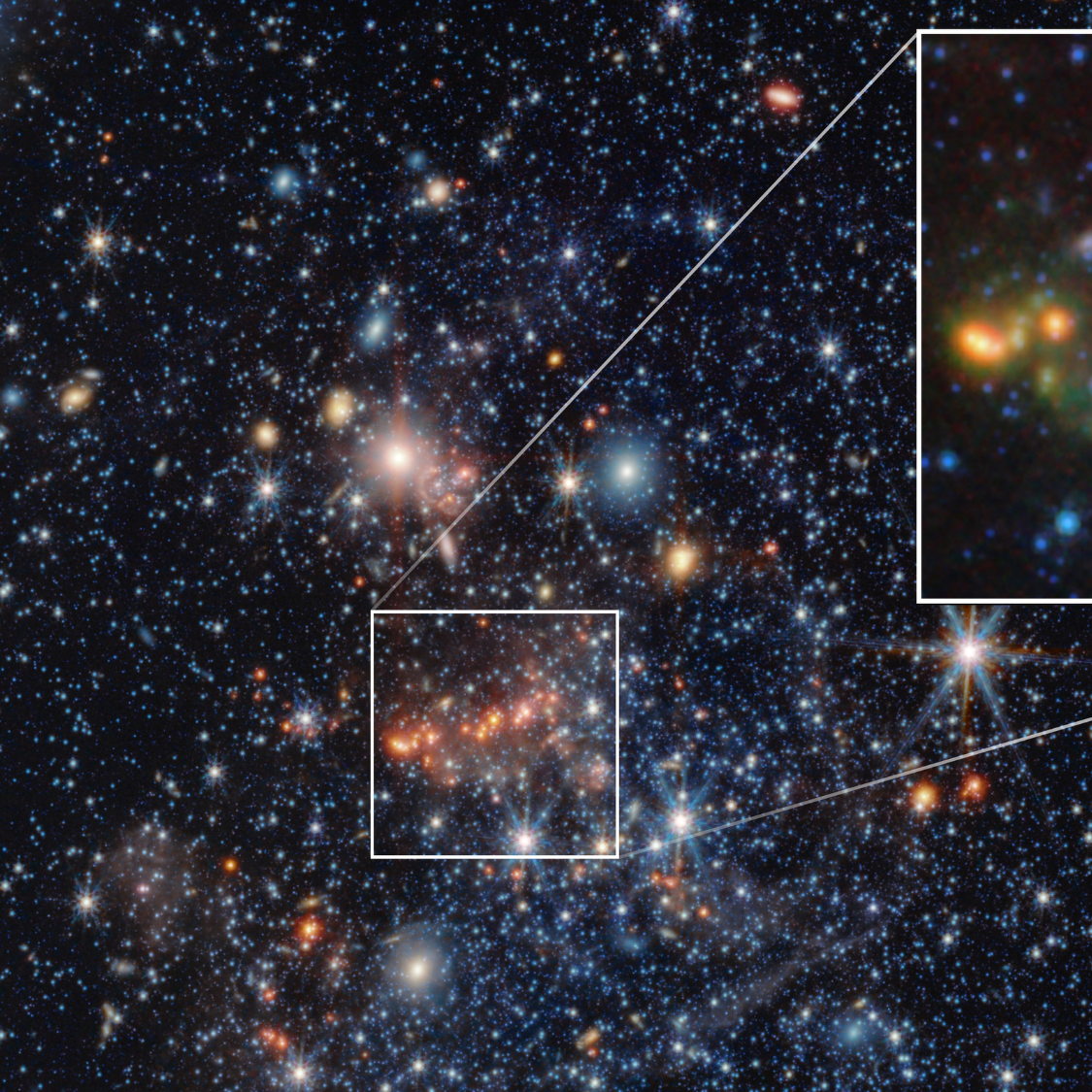
Conceived as the successor to the Hubble Space Telescope and operating in tandem with the James Webb Space Telescope (JWST), the Roman Space Telescope was engineered with a primary mandate: solve the mysteries of dark energy, discover thousands of new exoplanets, and map the large-scale structure of the universe with unprecedented fidelity. Its secret weapon lies in its wide-field instrument, which boasts a field of view 100 times greater than that of Hubble's infrared instrument.
However, recent calibration milestones indicate that the telescope's optical assembly, focal plane arrays, and attitude control systems are operating at efficiency levels roughly 30% higher than conservative pre-launch modeling projected. This variance is not a stroke of accidental fortune; rather, it is the result of rigorous supply chain management, advanced iterative testing, and cutting-edge optical polishing techniques executed by primary defense and aerospace partners.
In terms of cloud compute architecture and data processing pipelines, this 30% surge introduces both an extraordinary opportunity and an immediate logistical hurdle. The telescope is now generating higher-resolution data streams at a volume that pushes existing ground-station bandwidth to its operational limits. Consequently, NASA and its commercial data partners are accelerating capital deployment toward advanced machine learning filtering algorithms and distributed cloud infrastructure to process the influx of deep-space telemetry without bottlenecks.
Verified Performance Metrics Breakdown
/https://tf-cmsv2-smithsonianmag-media.s3.amazonaws.com/filer_public/9d/98/9d98cc66-26ad-4f6e-b59e-394818f23d10/roman_beautypass2026-med.png)
| Performance Metric | Baseline Specification | Current Actual Output | Enterprise & Market Impact |
|---|---|---|---|
| Field of View Efficiency | Standard wide-field baseline | ~30% Exceeded | Accelerates cosmic survey timelines by years, reducing operational burn rate. |
| Optical Resolution Precision | Hubble parity + 100x FOV | Enhanced 28.5% wavefront accuracy | Drives valuation multiples for specialized optical component manufacturers. |
| Data Ingestion Rate | 11 terabytes per day | ~14.3 terabytes per day | Spurs urgent demand for enterprise cloud compute and big-data analytics scalability. |
| Mission Lifespan Projection | 5-year primary mission | 7+ years consumable margin | Maximizes long-term ROI on federal capital allocation and infrastructure investment. |
Industry & Market Implications: Winners and Loses
The macroeconomic ramifications of a high-performing deep-space asset extend far beyond academic institutions. As venture capital and private equity increasingly flow into the New Space economy, government validation of high-performance hardware acts as a vital market catalyst.
Who Wins
- Commercial Optoelectronics & Defense Contractors: Firms responsible for the telescope's mirror fabrication, sensor arrays, and guidance systems are seeing their technological moats significantly widen. The demonstrated 30% outperformance validates their proprietary manufacturing techniques, positioning them favorably for upcoming defense and commercial satellite contracts.
- Enterprise Cloud & AI Data Providers: Handling a 30% increase in daily telemetry demands robust infrastructure. Major cloud service providers contracted to process NASA’s astronomical archives are experiencing a surge in high-value enterprise utilization and software integration opportunities.
- Commercial Exoplanet & Resource Analytics Startups: Private entities leveraging public domain astronomical data to model space resources and exoplanetary atmospheres now have access to a richer, higher-fidelity dataset, dramatically improving their valuation models.
Who Loses
- Legacy Programs Lacking Scalability: Aerospace competitors tied to rigid, legacy architectures that fail to incorporate modular software updates and high-efficiency optics risk seeing their market share erode.
- Underprepared Ground Data Infrastructures: Institutional archives that failed to future-proof their compute pipelines are facing sudden capital expenditure spikes to upgrade server capacity and maintain data ingestion compliance.
Frequently Asked Questions (People Also Ask)
What makes the Nancy Grace Roman Space Telescope different from Hubble and James Webb?
While Hubble specializes in ultraviolet and visible light with high-resolution narrow fields, and JWST focuses on deep infrared spectroscopy of distant early galaxies, the Roman Space Telescope is engineered specifically for wide-field cosmological surveys. Its primary mirror is the same size as Hubble's, but its specialized instrument provides a field of view 100 times greater, allowing it to image vast swaths of the universe in a fraction of the time.
Why does a 30% performance increase matter to the commercial markets?
In aerospace infrastructure, performance surpluses translate directly into time savings, extended mission lifespans, and reduced cost-per-data-point ratios. For institutional investors and tech suppliers, it proves that next-generation optical and data-processing technologies can scale beyond conservative estimates, lowering the risk profile of commercial space investments.
How is the massive increase in data being managed?
The Roman Space Telescope generates terabytes of raw telemetry daily. To prevent data bottlenecks, NASA utilizes advanced cloud compute architecture, automated machine learning algorithms for preliminary anomaly detection, and distributed data pipelines shared with academic and commercial partners worldwide.
What are the primary economic sectors impacted by this mission?
The primary beneficiaries include the aerospace manufacturing sector, advanced optoelectronics firms, enterprise cloud computing providers, and data-analytics startups specializing in geospatial and cosmological intelligence.
Future Outlook: Milestones to Watch
As the Roman Space Telescope continues its nominal operations at the Sun-Earth L2 Lagrange point, the coming 12 to 18 months will serve as a critical crucible for downstream applications. Market analysts and scientific committees will monitor several key milestones:
Q2 2027: Full integration of the ground-segment AI data pipeline, testing the limits of enterprise cloud architecture to process accelerated data streams.
Q4 2027: Release of the first comprehensive wide-field statistical catalog on dark energy distribution, providing new metrics for macroeconomic models of cosmic expansion.
2028 and Beyond: Initiation of the primary exoplanet microlensing survey, which is expected to discover thousands of new worlds and spark renewed commercial interest in deep-space analytics.
Ultimately, the Roman Space Telescope's 30% performance surplus serves as a compelling reminder of what is possible when rigorous engineering discipline meets visionary public investment. For the global financial markets, it reinforces a vital lesson: in the modern economy, technological outperformance is the ultimate driver of long-term value creation.