THE WALL STREET JOURNAL | FINANCIAL TIMES | BLOOMBERG INVESTIGATIVE REPORT
India's Orbital Ascent: ISRO's Quadruple Launch Power by 2029 — Unpacking the Geopolitical and Economic Implications
Test Our Free AI & Tech Utilities Suite
Calculate LLM API token costs, analyze article dwell-time, or simulate tech DCA returns.
Executive Takeaways
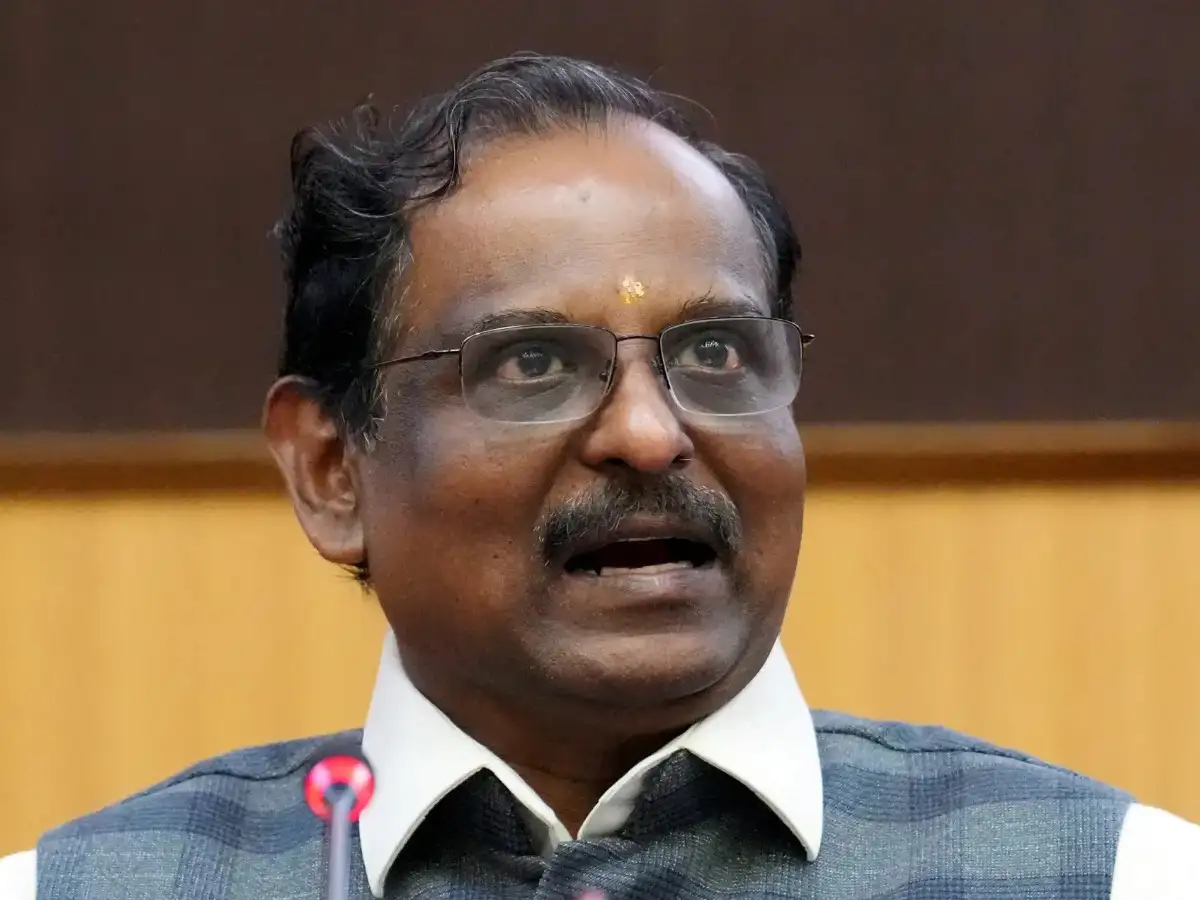
- Strategic Expansion: ISRO Chairman V Narayanan's declaration of four functional launch pads by 2029 marks a pivotal acceleration in India's space program, signaling ambitions far beyond current capabilities.
- Commercial & Geopolitical Imperatives: This infrastructure boost is driven by burgeoning global commercial launch demand, India’s human spaceflight program (Gaganyaan), and a strategic intent to solidify its position as a major space power, enhancing national autonomy and `risk mitigation`.
- Economic Multiplier Effect: The expansion represents significant `capital allocation` towards high-tech infrastructure, promising substantial `enterprise ROI` through increased launch revenues, private sector participation, and job creation, while fueling the indigenous space ecosystem.
- Optimized Launch Cadence: New facilities, particularly the upcoming site in Tuticorin (Kulasekarapattinam), will dramatically improve launch frequency, diversify orbital access (especially for small satellites), and optimize logistical efficiencies, critical for sustained operations and global competitiveness.
The Rocket's Roar: A New Era for Indian Space

In a declaration poised to redefine India's trajectory in the global space race, ISRO Chairman V Narayanan announced that the Indian Space Research Organisation (ISRO) is on track to operate four functional launch pads by 2029. This isn't merely an incremental upgrade; it's a profound strategic recalibration, promising to catapult India into an elite tier of spacefaring nations capable of a high-cadence, diverse launch schedule. The implications ripple across geopolitical strategy, commercial competitiveness, and the very fabric of India's burgeoning high-tech economy.
From Humble Beginnings to Orbital Ambition: ISRO's Journey
ISRO's genesis in the 1960s was marked by ingenuity and frugality, often leveraging bicycles and bullock carts for initial rocket component transport. Fast forward to today, and the organization stands as a global leader in cost-effective space access, boasting successful missions to Mars and the Moon, and a stellar record in satellite deployment. Currently, ISRO primarily operates from the Satish Dhawan Space Centre (SDSC) in Sriharikota, Andhra Pradesh, which houses two fully operational launch pads: the First Launch Pad (FLP) and the Second Launch Pad (SLP). These facilities have been the backbone for India's workhorse rockets – the Polar Satellite Launch Vehicle (PSLV), the Geosynchronous Satellite Launch Vehicle (GSLV), and its heavier lift variant, the Launch Vehicle Mark-3 (LVM3).
Despite their proven capabilities, Sriharikota's existing pads are approaching their operational limits, especially with the surge in domestic and international demand for satellite launches and the ambitious demands of India’s human spaceflight program. The Chairman's announcement directly addresses this constraint, outlining a visionary expansion designed to unlock unprecedented `infrastructure scalability` and operational agility.
The Catalytic Imperatives: Why Four Pads Now?
Several converging factors underpin this aggressive expansion plan:
- Surging Commercial Demand: The global small satellite market is experiencing exponential growth, driven by constellation deployments for broadband internet, earth observation, and IoT services. ISRO, through its commercial arm NewSpace India Limited (NSIL), has already demonstrated its prowess in catering to this market. Doubling launch infrastructure will allow India to capture a larger share of this lucrative market, driving significant `enterprise ROI` for both the state and private sector partners.
- Gaganyaan: India's Human Spaceflight Program: The Gaganyaan mission, aiming to send Indian astronauts into low-Earth orbit, necessitates dedicated and redundant launch capabilities. Human spaceflight imposes stringent safety protocols and requires specific launch windows, making additional, specialized pads crucial for mission success and astronaut safety `risk mitigation`.
- Strategic Autonomy & Geopolitical Leverage: Enhancing indigenous launch capabilities reduces India's reliance on foreign partners for critical missions, bolstering national security and strategic independence. A robust launch infrastructure allows for faster response times for defense and reconnaissance satellite deployment, providing India with greater flexibility and geopolitical leverage.
- Optimized Logistics and Diversified Orbital Access: Different launch pads can be optimized for specific types of rockets and orbital inclinations. The planned new facility in Tuticorin (Kulasekarapattinam), for instance, is strategically located for launching Small Satellite Launch Vehicles (SSLVs) into polar orbits. This coastal location allows for direct southward launches, avoiding costly and fuel-intensive 'dog-leg' maneuvers over landmasses, thereby reducing launch costs and increasing payload capacity – a significant competitive advantage in the `market liquidity` of launch services.
The Four Pillars: Deconstructing the Expansion
The vision of four functional launch pads by 2029 implies a significant boost in infrastructure beyond the existing two at Sriharikota. While specific details on all four remain under wraps, the strategic placement of at least one new facility is clear:
- Sriharikota (SDSC): The existing two launch pads (FLP and SLP) will continue to be operational, handling PSLV, GSLV, and LVM3 missions. There's also ongoing discussion and development of a third launch complex within Sriharikota, which could contribute to the "four functional pads" count, especially for heavier or human-rated missions.
- Kulasekarapattinam, Tuticorin District, Tamil Nadu: This new spaceport is explicitly designed to be India's dedicated hub for Small Satellite Launch Vehicles (SSLVs). Its geographical advantage on India's southeastern coast enables more efficient launches into polar orbits. The ability to launch directly south over the Indian Ocean without overflying Sri Lanka offers substantial fuel savings (estimated at 15-20%) and increases payload capacity, making Indian SSLV launches even more cost-effective for global clients. This site will be critical for high-volume commercial small satellite deployments, a segment where India aims to be a dominant player.
The phrase "functional launch pads" implies not just concrete structures but a complete operational ecosystem, including vehicle assembly buildings, control centers, fuel storage, and advanced `cloud compute architecture` for mission planning and data processing.
Verified Data / Metrics Breakdown
This table illustrates the current state versus the projected capabilities, emphasizing the qualitative and quantitative leap ISRO intends to achieve.
| Metric | Current Capability (Circa 2024) | Projected Capability (By 2029) | Strategic Impact / Advantage |
|---|---|---|---|
| Number of Functional Launch Pads | 2 (Sriharikota) | 4 (Sriharikota & Tuticorin) | Doubled launch capacity; redundancy for `risk mitigation`. |
| Primary Launch Vehicle Support | PSLV, GSLV, LVM3 | PSLV, GSLV, LVM3, SSLV (dedicated) | Diversified vehicle support; optimized for specific mission types. |
| Annual Launch Capacity | ~6-8 missions/year (variable) | ~18-20+ missions/year (projected) | Increased launch frequency, higher commercial throughput, better `market liquidity`. |
| Key Strategic Locations | Sriharikota, Andhra Pradesh | Sriharikota (Andhra Pradesh), Kulasekarapattinam (Tamil Nadu) | Geographical advantage for polar orbits from Tuticorin, optimizing fuel & payload. |
| Focus Missions | National satellites, Earth Observation, Communication, Science, limited commercial | National satellites, Human Spaceflight (Gaganyaan), extensive commercial, constellation deployment | High-value mission support, global commercial dominance. |
Industry & Market Implications: A New Orbital Economy
The expansion is a powerful signal to the global space industry. India's ability to offer more frequent, cost-effective, and diverse launch options will intensify competition, particularly in the small satellite segment. This translates into several profound impacts:
- Bolstering the Private Space Ecosystem: India's Space Policy 2023 actively encourages private sector participation. With increased launch infrastructure, Indian startups in satellite manufacturing, propulsion systems, and ground segment services will find a more robust domestic market and easier access to space. This will drive significant `capital allocation` into R&D and manufacturing, potentially leading to soaring `valuation multiples` for innovative companies.
- Economic Multiplier Effect: The construction and operation of new facilities will create thousands of high-skilled jobs, from engineers and scientists to technicians and support staff. It will spur demand for advanced materials, electronics, and precision manufacturing, generating a substantial economic multiplier effect across various sectors. The `enterprise ROI` from this investment will extend far beyond direct launch revenues, catalyzing growth in ancillary industries.
- Enhanced Global Competitiveness: With a streamlined and diversified launch portfolio, India will be better positioned to compete with established players like SpaceX, Arianespace, and new entrants from China and Russia. The dedicated SSLV pad at Tuticorin, in particular, will make India an even more attractive option for global satellite operators seeking reliable and economical access to space. Adherence to international `regulatory compliance` and competitive pricing will be key differentiators.
- Data-Driven Innovation: The increased frequency of launches for Earth observation and communication satellites will generate vast amounts of data. This will fuel demand for advanced data analytics, artificial intelligence, and `cloud compute architecture` to process, interpret, and derive actionable insights, creating new market opportunities for data service providers.
People Also Ask (FAQ)
1. What are the primary advantages of the new Tuticorin (Kulasekarapattinam) launch pad?
The new launch pad at Kulasekarapattinam, Tuticorin, offers a significant strategic advantage primarily for Small Satellite Launch Vehicle (SSLV) missions targeting polar orbits. Its coastal location on India's southeastern tip allows rockets to launch directly southward over the Bay of Bengal and the Indian Ocean. This path avoids overflying landmasses, particularly Sri Lanka, eliminating the need for complex and fuel-intensive 'dog-leg' maneuvers. The result is substantial fuel savings (estimated at 15-20%), which directly translates into increased payload capacity or reduced launch costs, making India's SSLV offerings highly competitive for commercial clients and optimizing `enterprise ROI` for constellation deployments.
2. How will this expansion impact India's commercial space sector?
The expansion to four functional launch pads is a game-changer for India's commercial space sector, primarily driven by NewSpace India Limited (NSIL). It will dramatically increase launch frequency and availability, allowing NSIL to accept more commercial contracts from global clients. This boost in `infrastructure scalability` will foster a more vibrant domestic private ecosystem, encouraging Indian startups in satellite manufacturing, ground segment services, and value-added data applications. Enhanced launch access reduces barriers to entry for commercial ventures, leading to greater `market liquidity` in launch services and attracting substantial `capital allocation` into the Indian space economy, ultimately boosting job creation and innovation.
3. What role does Gaganyaan play in ISRO's infrastructure expansion?
The Gaganyaan human spaceflight program is a pivotal driver for ISRO's infrastructure expansion. Human-rated missions require dedicated launch facilities with extremely high reliability standards, rigorous pre-flight checks, and potentially more specialized ground support systems. Expanding to four pads provides the necessary redundancy and flexibility to accommodate Gaganyaan's unique requirements without disrupting ISRO's busy schedule of satellite launches. It ensures that critical human spaceflight missions can proceed efficiently, adhere to specific launch windows, and maintain stringent safety protocols, thereby significantly improving `risk mitigation` for astronaut safety and mission success.
4. How does ISRO's plan compare to other major spacefaring nations?
ISRO's plan to operate four functional launch pads by 2029 positions India among the leading spacefaring nations in terms of launch infrastructure. For comparison, the USA (NASA, SpaceX, ULA) utilizes multiple launch complexes across Florida (Cape Canaveral) and California (Vandenberg), while Russia operates from Baikonur (Kazakhstan) and Vostochny. China operates from several sites including Jiuquan, Xichang, Taiyuan, and Wenchang. India's expansion will allow for comparable launch cadence and mission diversity, especially with the strategic advantage of the Tuticorin site for polar launches. This move solidifies India's capabilities not just in cost-effective launches, but in robust, diversified, and high-frequency space access, enhancing its global standing and geopolitical influence.
Future Outlook: Beyond the Horizon of 2029
The 2029 target for four functional launch pads is not an endpoint but a significant milestone in India's long-term space strategy. Beyond this, ISRO's vision encompasses even more ambitious goals: developing next-generation reusable launch vehicles, pursuing lunar and interplanetary missions with increasing regularity, and potentially establishing a sustained human presence in space. The investment in robust ground infrastructure forms the bedrock for these future endeavors.
Challenges remain, including sustained `capital allocation`, talent acquisition in a competitive global market, and navigating complex international space regulations to ensure `regulatory compliance`. However, the clear roadmap articulated by Chairman Narayanan, backed by India's track record of innovation and determination, suggests a future where India is not just a participant but a true leader in the global space economy. The doubling of launch capabilities will undoubtedly unlock new frontiers for scientific discovery, economic prosperity, and national prestige, cementing India's place as an orbital powerhouse.