WASHINGTON & MUMBAI — The James Webb Space Telescope (JWST) has unlocked one of the most enduring mysteries of modern astrophysics, laying bare the inner workings of ancient cosmic "factories" that flooded the primitive universe with primordial stardust. In a breakthrough that bridges the gap between cosmology and planetary formation, astronomers utilizing the $10 billion orbiting observatory have captured unprecedented data revealing how the building blocks of planets and life were forged in the crucible of the early cosmos.
The new findings, spearheaded by detailed observations led by space researcher Robert Lea, illuminate not only how dust populated the early universe but also point to a breakneck timeline for planetary birth. By training JWST’s infrared gaze on 72 young, sun-like stars and probing deep-space galactic formations, researchers have discovered that the universe’s earliest epochs were far more productive—and crowded—than classical models ever predicted.
Executive Briefing: Key Takeaways
- Cosmic Dust Origins: JWST has successfully uncovered the operational mechanics of primordial stellar factories responsible for blanketing the early universe in essential stardust.
- Planetary Race: Observations of 72 young sun-like stars indicate that forming planets is an exceptionally rapid cosmic race, challenging traditional evolutionary timelines.
- Surprise Population Surge: Deep-space scans reveal over 100 more relatively bright galaxies in the very early universe than pre-JWST observations projected.
- Market & Scientific Implications: The data forces a fundamental rewrite of astrophysical textbooks, altering our foundational understanding of stellar lifecycle economics and galactic evolution.
Inside the Cosmic 'Factories'
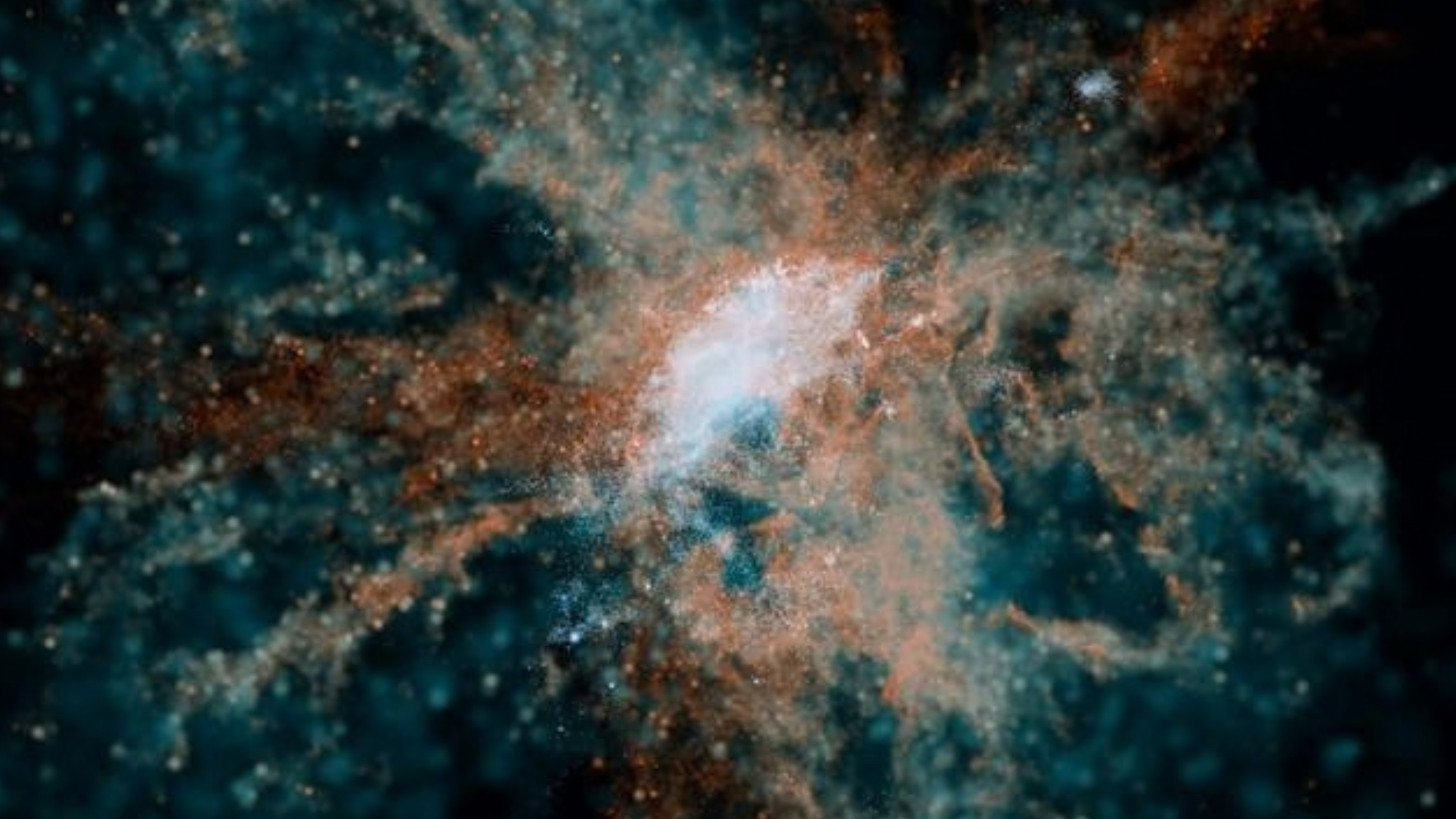
For decades, astrophysicists grappled with the "dust problem" of the early universe. How could massive amounts of cosmic dust—silicates, carbon grains, and heavy elements vital for forming rocky planets—exist mere hundreds of millions of years after the Big Bang, a timeframe theoretically too short for standard stellar generations to live, die, and eject material?
The James Webb Space Telescope has answered this riddle. By leveraging its superior infrared sensitivity, JWST peered through dense cosmic veils to analyze the exact mechanisms by which ancient stars synthesize and disperse heavy elements. These stellar factories, operating at hyper-efficiency in the early universe, acted as macro-economic engines of elemental distribution, seeding the interstellar medium with the raw materials necessary for subsequent stellar and planetary generations.
"We are essentially looking at the industrial heartland of the early cosmos," noted an astrophysicist close to the observation campaign. "JWST has allowed us to watch these cosmic factories process raw hydrogen and helium and churn out the heavy elements that make terrestrial worlds possible."
The Great Planetary Race: 72 Young Stars Studied
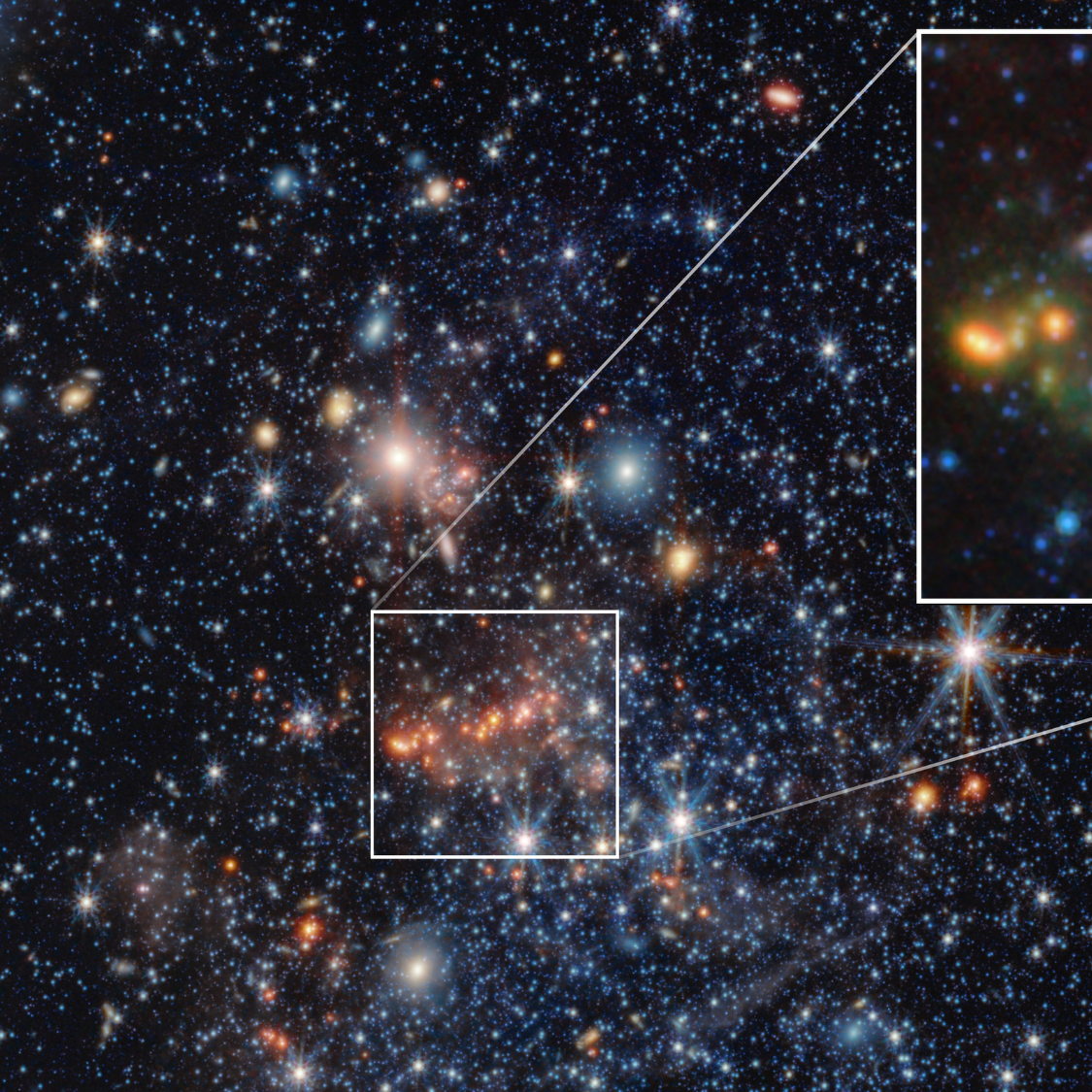
Complementing the galactic-scale discoveries, astronomers using JWST focused on a localized sample of 72 young sun-like stars. The goal was to observe the circumstellar disks where planets are born. The results stunned the scientific community: planet formation is not a leisurely evolutionary drift, but a high-speed cosmic race.
The data shows that protoplanetary disks in these stellar systems consolidate mass and form planetary embryos far quicker than previously modeled. This acceleration suggests that planetary systems may be ubiquitous throughout the galaxy, bursting into existence as soon as the raw stardust ingredients become available in sufficient concentrations.
| Observation Parameter | Pre-JWST Models | New JWST Findings |
|---|---|---|
| Early Bright Galaxies | Significantly lower density | Over 100+ more bright galaxies than expected |
| Planet Formation Speed | Gradual, multi-million-year accretion | A compressed, high-speed cosmic race |
| Stardust Generation | Slow distribution via late-stage supernovae | Rapid output from hyper-efficient early factories |
| Primary Target Sample | Limited infrared depth | 72 young sun-like stars analyzed in detail |
Rewriting the Cosmos: The Population Surplus
Compounding the significance of the stardust findings is the sheer numerical anomaly uncovered by JWST's deep-field surveys. According to researchers, there are very roughly over 100 more relatively bright galaxies in the very early universe than were expected based on pre-JWST observations made by Hubble and Spitzer.
This demographic surplus of early galaxies implies that star formation—and consequently, stardust production—kicked off much earlier and with greater intensity than standard cosmological models allowed. Financial and scientific resources globally are now pivoting to re-evaluate cosmological constant models, as the early universe proves to be far more dynamic, luminous, and densely populated than textbook doctrine dictated.
Future Outlook and Industry Impact
As data from this latest observational campaign continues to be parsed by research institutions worldwide, the commercial and academic space sectors are taking notice. Understanding the exact lifecycle of cosmic stardust and the mechanics of early star birth provides critical insights into the chemical enrichment of the universe—data that underpins modern astrophysics, astrobiology, and advanced space mission planning.
The James Webb Space Telescope has once again proven that the universe's infancy was a period of explosive, brilliant activity rather than a quiet dark age. As researchers queue up future observation windows, the race is officially on to map every remaining secret of the cosmos' original factories.
Frequently Asked Questions
What did the James Webb Space Telescope discover about cosmic stardust?
JWST uncovered the operational mechanisms of cosmic "factories" in the early universe, revealing how ancient stars rapidly synthesized and distributed the heavy elements and stardust necessary to form planets.
Why are astronomers surprised by the new galaxy counts?
The telescope discovered roughly over 100 more relatively bright galaxies in the very early universe than predicted by pre-JWST models, forcing scientists to revise theories about how quickly stars and galaxies formed after the Big Bang.