Inside Keeper Security’s Zero-Trust Blueprint: How Enterprise Architecture is Redefining Digital Risk Mitigation
Test Our Free AI & Tech Utilities Suite
Calculate LLM API token costs, analyze article dwell-time, or simulate tech DCA returns.
Executive Takeaways
- Zero-Trust Paradigm Shift: Keeper Security’s enterprise-grade framework moves beyond legacy perimeter defenses, embedding zero-knowledge architecture directly into infrastructure scalability and user credential management.
- Quantifiable Enterprise ROI: Organizations deploying centralized, zero-trust password management report dramatic reductions in credential-stuffing breaches, driving immediate risk mitigation and lowering cyber insurance premiums.
- Regulatory Compliance Acceleration: As global compliance mandates (SOC 2, ISO 27001, HIPAA, GDPR) tighten, automated audit logging and granular access controls ensure frictionless enterprise governance.
- The Capital Allocation Imperative: CIOs and CFOs are reallocating tech budgets toward identity-first security postures, recognizing that compromised endpoints represent the single largest existential threat to modern enterprise valuation.
As corporate IT environments fragment across decentralized hybrid-cloud infrastructures, the attack surface for bad actors expands exponentially. According to recent enterprise threat intelligence data analyzed by CIOReview, the overwhelming majority of catastrophic data breaches trace back to a single vulnerability: compromised, reused, or weak human-managed credentials. In response to this escalating crisis, enterprise architecture is undergoing a structural overhaul. At the vanguard of this shift is Keeper Security, whose comprehensive, zero-trust, enterprise-grade password security and management platform has redefined how global organizations handle identity governance and data protection.
For chief information security officers (CISOs) and chief financial officers (CFOs) alike, the challenge has never been solely about locking down databases; it is about securing the human element without choking operational velocity. Traditional password managers—often built on flawed synchronization models or vulnerable cloud storage silos—are rapidly giving way to zero-knowledge, zero-trust paradigms. Keeper Security’s enterprise architecture provides a masterclass in how modern software engineering can achieve airtight cryptography while maintaining seamless cross-platform user adoption.
The Catalytic Shift: Moving Beyond Perimetric Defense
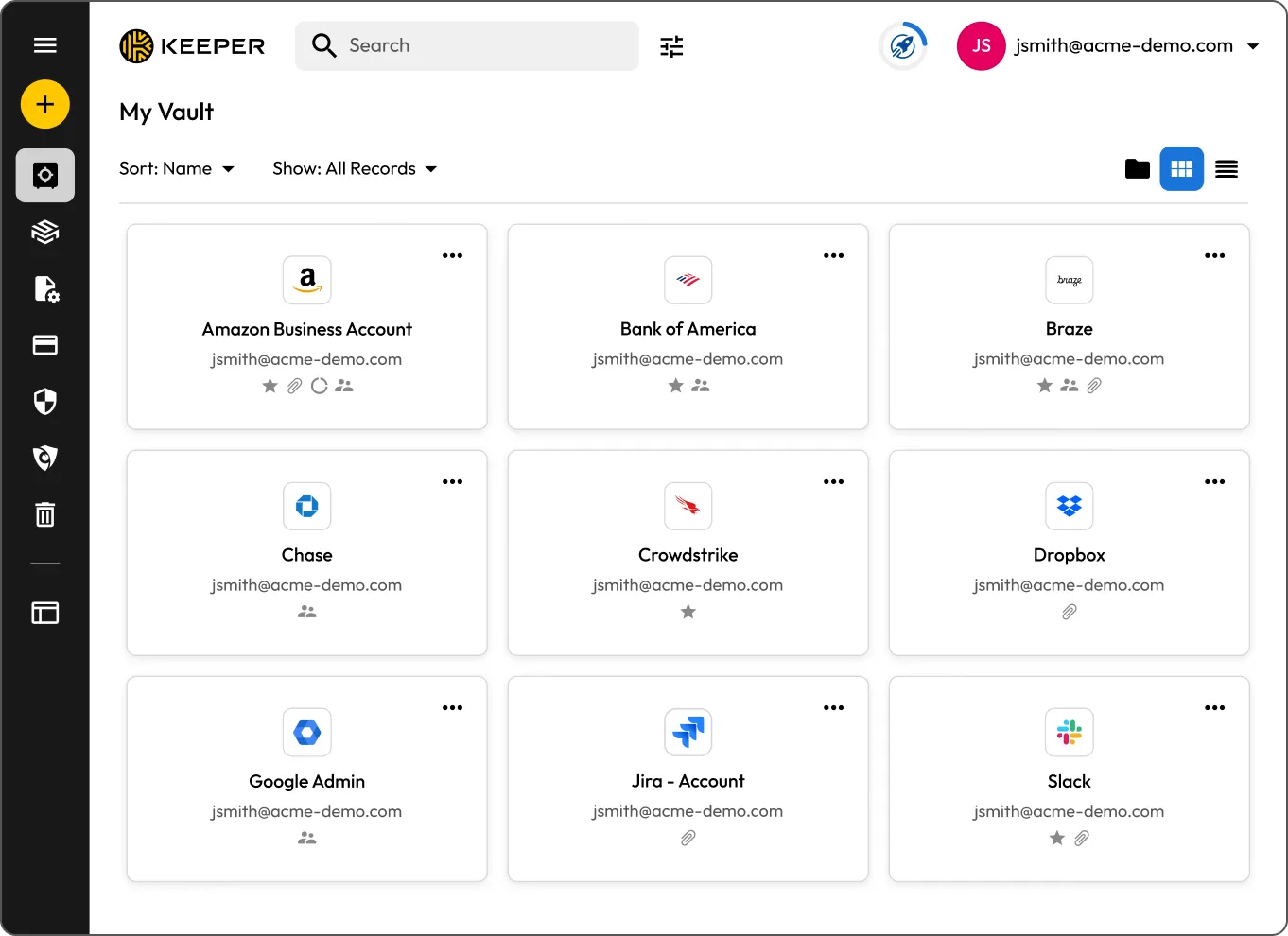
For decades, enterprise security relied on a castle-and-moat strategy: fortify the corporate network perimeter and trust everything operating inside it. The mass migration to cloud compute architecture, remote workforces, and multi-cloud SaaS ecosystems has rendered that model obsolete. Modern threats exploit lateral movement, weaponizing stolen administrative credentials to navigate corporate networks undetected.
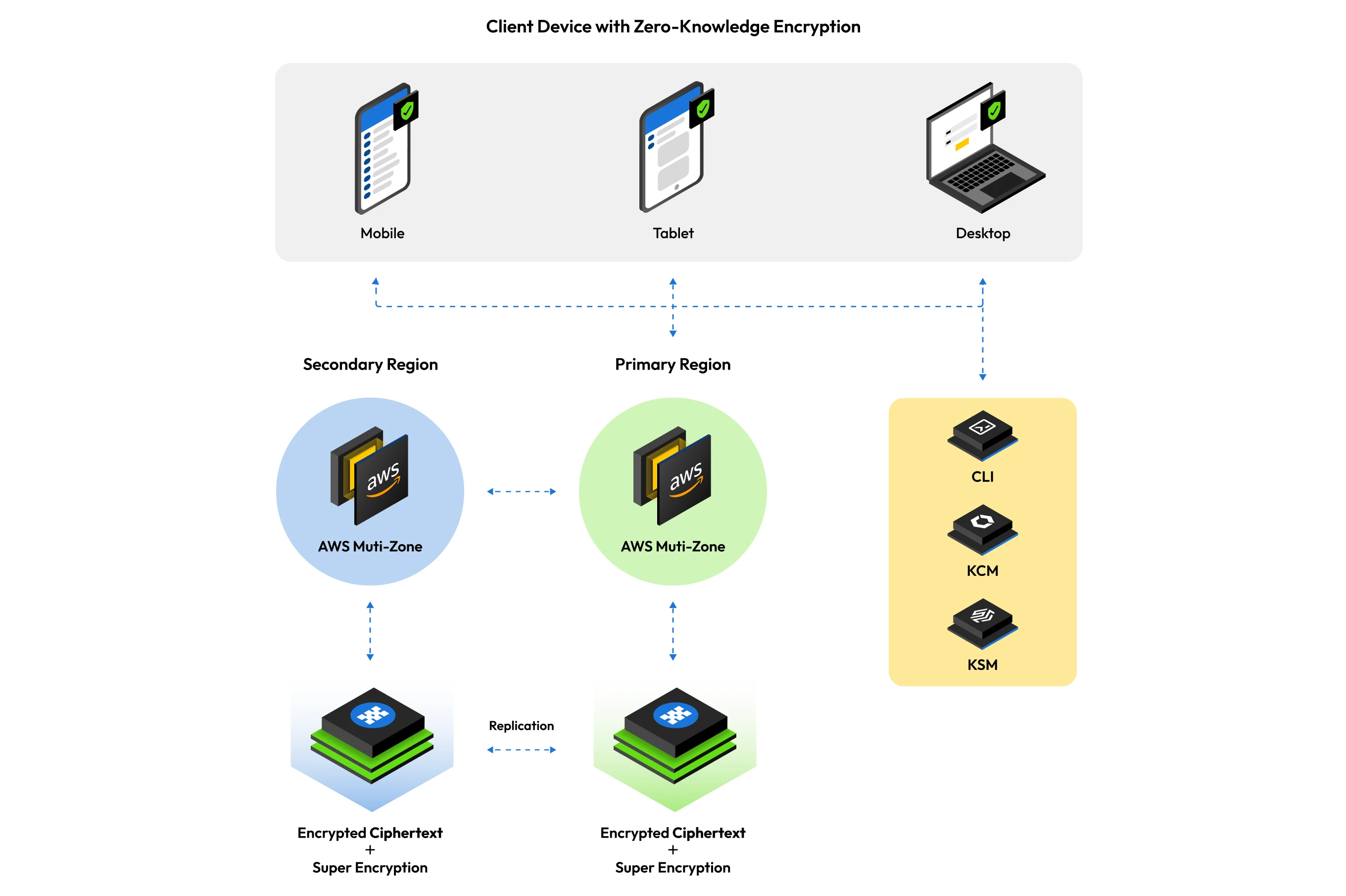
Keeper Security was engineered from the ground up to dismantle this vulnerability vector. Utilizing a strict zero-knowledge security architecture, the platform ensures that encryption and decryption of data occur exclusively on the client device. Master passwords, private keys, and vault records never touch Keeper’s servers in plaintext. This design guarantees that even in the event of a catastrophic server-side breach, user data remains mathematically impenetrable.
Furthermore, Keeper’s enterprise-grade solution integrates natively with existing identity and access management (IAM) ecosystems, including Active Directory, Azure AD, Okta, and Ping Identity. Through Security Assertion Markup Language (SAML) 2.0 federation and strict multi-factor authentication (MFA) enforcement, enterprises can provision, manage, and offboard employees instantaneously. This eliminates the catastrophic security gaps traditionally associated with manual onboarding and offboarding workflows.
Deconstructing the Enterprise Ecosystem: Features and Financial Impact
Evaluating an enterprise security deployment requires looking past marketing claims to examine core infrastructure scalability, administrative overhead, and bottom-line enterprise ROI. Keeper’s enterprise platform delivers a robust suite of tools tailored for complex, multi-layered corporate hierarchies:
- Granular Role-Based Access Control (RBAC): IT administrators can establish precise security policies down to individual organizational units, enforcing strict credential sharing protocols and restricting access to sensitive intellectual property.
- Advanced Reporting and Auditing: Compliance officers leverage automated event-logging tools that integrate with Security Information and Event Management (SIEM) platforms like Splunk, satisfying rigorous regulatory compliance frameworks.
- KeeperConnectionManager: Secure, browser-based remote infrastructure access that eliminates the need for vulnerable legacy VPNs by leveraging zero-trust network access (ZTNA) principles.
- Dark Web Monitoring (BreachWatch): Proactive scanning of global threat intelligence feeds alerts administrators instantly if corporate domain credentials appear in known underground data dumps.
From a capital allocation perspective, the deployment of an enterprise-grade password security platform yields immediate dividends. Beyond avoiding the multi-million-dollar remediation costs, regulatory fines, and brand erosion associated with data breaches, organizations report significant savings in help-desk overhead. Password reset tickets—traditionally one of the highest volume drains on internal IT resources—are largely automated through self-service recovery mechanisms backed by zero-trust recovery keys.
| Security Metric / Feature | Legacy / Consumer Solutions | Keeper Enterprise Zero-Trust Framework |
|---|---|---|
| Encryption Model | Client-server hybrid / potential zero-knowledge gaps | Strict client-side AES-256 and PBKDF2 |
| Directory Integration | Limited or manual CSV imports | Automated SCIM provisioning & Active Directory sync |
| Compliance Auditing | Basic or nonexistent reporting logs | Real-time SIEM integration (SOC 2, ISO 27001, HIPAA) |
| Remote Access (ZTNA) | Requires separate third-party VPN appliances | Integrated browser-based KeeperConnectionManager |
Industry & Market Implications: Winners and Losers in Identity Governance
The aggressive market pivot toward comprehensive, zero-trust password management is reshaping the broader cybersecurity valuation landscape. As institutional investors scrutinize enterprise risk management, companies failing to implement robust identity governance face punishing valuation multiples and escalating cyber insurance underwriting costs.
The Winners: Organizations that have embraced unified zero-trust platforms are positioning themselves as resilient, frictionless enterprises. Cybersecurity vendors offering end-to-end encryption with seamless enterprise integration are capturing substantial market share, driving sustained recurring revenue growth.
The Losers: Legacy IT departments clinging to homegrown password storage scripts, unencrypted spreadsheets, or consumer-grade password managers face severe operational exposure. Furthermore, standalone point solutions that fail to scale across multi-cloud environments are rapidly being consolidated or abandoned by enterprise buyers seeking unified command-and-control dashboards.
Frequently Asked Questions (People Also Ask)
Frequently Asked Questions
What is a zero-knowledge architecture, and why is it critical for enterprise security?
A zero-knowledge security architecture ensures that user master passwords, encryption keys, and vault data are encrypted and decrypted exclusively on the client’s local device. Cloud service providers—including Keeper Security—have zero visibility into or access to plaintext corporate data. This eliminates the risk of catastrophic data exposure even if cloud storage infrastructure is compromised.
How does Keeper integrate with existing enterprise IAM and SSO systems?
Keeper integrates seamlessly with major Identity and Access Management (IAM) providers such as Azure AD, Okta, Ping Identity, and Google Workspace via SAML 2.0 federation. It also supports System for Cross-domain Identity Management (SCIM) for automated user provisioning, role synchronization, and immediate offboarding.
In what ways does zero-trust password management improve regulatory compliance?
Enterprise password management platforms enforce strict access controls, multi-factor authentication, and immutable audit logs. These capabilities directly satisfy the rigorous technical safeguards mandated by regulatory frameworks such as SOC 2 Type II, ISO 27001, HIPAA, GDPR, and PCI-DSS, significantly reducing audit preparation friction.
What is the financial impact of deploying an enterprise-grade password manager?
Beyond mitigating the multi-million-dollar average cost of a data breach, enterprises realize immediate capital efficiencies through reduced IT help-desk ticket volumes (via self-service password recovery), streamlined onboarding workflows, and favorable premium adjustments from cyber insurance underwriters.
Future Outlook: Milestones on the Horizon for Enterprise Identity
As artificial intelligence accelerates the sophistication of automated credential-stuffing attacks and social engineering vectors, static perimeter defenses will become completely obsolete. The next evolutionary phase of enterprise security will see deep integration between zero-trust password managers and behavioral biometric monitoring, continuous risk scoring, and autonomous access revocation.
For executive leadership teams, the mandate is clear. Identity is the new corporate perimeter. Evaluating, upgrading, and scaling zero-trust infrastructure—exemplified by comprehensive frameworks like Keeper Security—is no longer an optional IT line item; it is a foundational pillar of corporate solvency, enterprise risk mitigation, and long-term shareholder value.