The Paradigm Shift: From CPI Containment to Sovereign Solvency
For more than three years, the narrative driving global capital markets has been anchored to a singular macroeconomic obsession: the post-pandemic inflation surge and the Federal Reserve’s aggressive monetary tightening cycle. However, behind closed doors in Washington policy circles and Wall Street trading desks, a profound structural realignment is underway. The primary constraint facing U.S. monetary authorities is no longer merely cooling consumer demand or re-anchoring inflation expectations; it is the sheer mechanics of servicing a $35 trillion national debt portfolio against a backdrop of escalating interest expenses.
As market liquidity shifts and long-duration yields remain stubbornly elevated, financial analysts and institutional strategists are increasingly examining the policy philosophies of key economic architects like Kevin Warsh. The emerging consensus among elite macroeconomic observers suggests that the next phase of U.S. monetary policy will be defined less by standard Taylor Rule rate hikes and far more by the imperative of debt cost management. When sovereign interest payments begin to rival discretionary defense outlays, the traditional boundaries separating monetary policy from fiscal solvency dissolve entirely.
The Mathematics of Fiscal Dominance: Interest Rates Versus GDP Growth
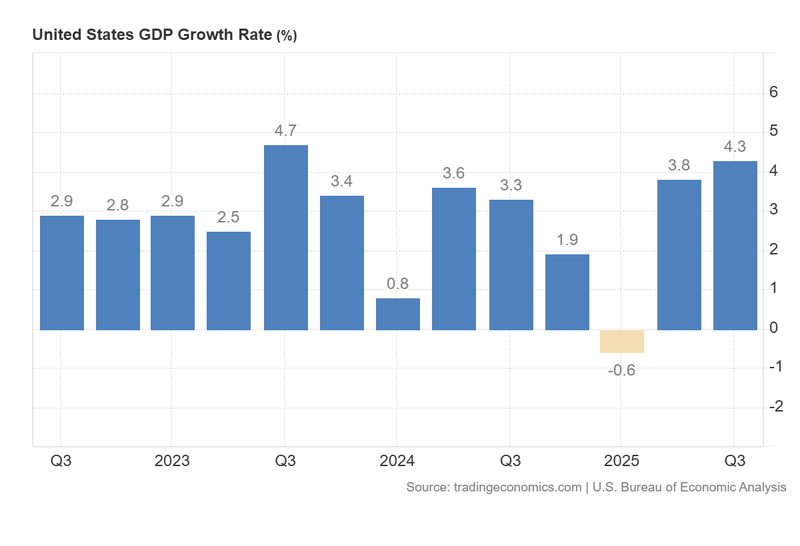
At the heart of this unfolding crisis lies a foundational economic axiom: when the marginal cost of government borrowing consistently exceeds the growth rate of the underlying economy (r > g), the national debt enters an unsustainable, self-reinforcing compounding cycle. Historically, post-war expansions allowed the United States to grow out of its debt burdens as robust nominal GDP expansion outpaced nominal interest rates.
Today, that dynamic faces severe structural headwinds. With the federal debt-to-GDP ratio sitting near historic highs, even moderate shifts in the yield curve trigger exponential increases in annualized Treasury outlays. Enterprise risk mitigation strategies across Fortune 500 boardrooms and private equity portfolios must now factor in the probability of "fiscal dominance"—a scenario where central bank rate-setting is dictated not by inflation metrics, but by the Treasury Department’s quarterly refunding needs and the sheer cost of rolling over maturing sovereign debt.
Decoding the Warsh Framework: Capital Allocation and Market Liquidity
Kevin Warsh, widely regarded as a pragmatic institutionalist with deep private market and central banking expertise, has long advocated for structural reforms that transcend cyclical monetary tinkering. Within financial engineering and macroeconomic strategy circles, the "Warsh Doctrine" emphasizes balance sheet discipline, regulatory modernization, and the preservation of central bank credibility.
If entrusted with steering or influencing U.S. monetary architecture, Warsh’s approach is projected to prioritize structural supply-side reforms and market liquidity preservation over reactionary rate adjustments. For corporate CFOs and institutional asset managers, navigating this environment requires sophisticated capital allocation models. Infrastructure scalability, technology investments, and cloud compute architecture spending are all vulnerable to tighter credit conditions if sovereign debt issuance crowds out private capital formation.
Comparative Analysis: The Divergence Between Inflation Targeting and Debt Servicing
To fully grasp the stakes of this policy pivot, we must examine the quantitative divergence between traditional inflation-focused tightening and modern debt-service optimization. The following data breakdown illustrates the systemic pressures building within the federal balance sheet.
| Economic Metric | Pre-Pandemic Baseline (2019) | Current Environment (2024–2025) | Projected Trajectory (Warsh Paradigm) |
|---|---|---|---|
| Federal Debt-to-GDP Ratio | ~107% | ~123% | Stabilization via supply-side focus |
| Annualized Net Interest Outlays | $375 Billion | Exceeds $850 Billion+ | Targeted yield curve containment |
| Nominal GDP Growth vs. Effective Rate | GDP growth > Borrowing rate | Convergence (r approaching g) | Restoration of positive g > r spread |
| Primary Policy Focus | 2% Core PCE Inflation Target | Sticky inflation vs. Liquidity risk | Sovereign cost control & liquidity |
Industry & Market Implications: Who Wins and Who Loses
As the realization spreads that monetary policy must pivot to accommodate federal debt servicing realities, equity and fixed-income markets are undergoing intense re-pricing. The ripple effects will touch every corner of global commerce:
- Winners — Hard Assets and Productivity Enablers: Sectors capable of demonstrating robust enterprise ROI, resilient pricing power, and efficient capital allocation will outperform. Technology firms driving massive productivity gains through advanced infrastructure scalability and automated workflows will command premium valuation multiples.
- Losers — Highly Leveraged Entities: Companies reliant on continuous, low-cost debt refinancing face acute margin compression. Businesses unable to pass on rising financing costs will see their debt-service coverage ratios deteriorate rapidly.
- Banking & Financial Services: Financial institutions must navigate a complex regulatory compliance landscape while managing asset-liability mismatches in their investment portfolios. Net interest margins will face volatility depending on how the Federal Reserve manages the short-end versus the long-end of the yield curve.
Frequently Asked Questions (People Also Ask)
Why is Kevin Warsh associated with managing U.S. debt costs rather than just inflation?
Kevin Warsh has consistently emphasized that modern central banking cannot operate in a vacuum isolated from fiscal realities. With the national debt exceeding historical thresholds and annual interest expenses ballooning, monetary policy decisions directly impact the federal government's ability to service its obligations. Warsh’s institutional framework prioritizes structural balance sheet management, regulatory efficiency, and avoiding the trap of fiscal dominance where rate hikes inadvertently exacerbate government debt servicing crises.
What does it mean when interest rates risk topping GDP growth?
In macroeconomics, when the effective interest rate (r) paid on government debt exceeds the nominal growth rate of the economy (g), the national debt naturally compounds faster than the economic output required to pay for it. This condition (r > g) creates a compounding fiscal feedback loop that forces governments to either implement severe austerity measures, dramatically increase borrowing, or rely on central bank accommodation to suppress yields.
How does this shift impact institutional investors and corporate CFOs?
Corporate leaders and institutional asset allocators must transition away from models assuming perpetually low interest rates. Capital allocation strategies must prioritize organic cash flow generation, balance sheet resilience, and high enterprise ROI. Valuation multiples for growth assets are recalibrated as discount rates adjust to reflect a permanent higher-cost-of-capital regime dictated by sovereign debt dynamics.
Future Outlook and Key Milestones to Watch
The convergence of monumental U.S. debt issuance, sticky inflation metrics, and restrictive monetary policy has pushed the global financial system into uncharted territory. As leadership discussions in Washington evolve, market participants must monitor several critical indicators over the coming quarters:
Watch closely for shifts in the U.S. Treasury’s quarterly refunding announcements, particularly the balance between short-term bill issuance and long-duration bond auctions. Furthermore, any formal pivot in Federal Reserve communications acknowledging fiscal sustainability constraints—or signaling coordination with Treasury debt-management objectives—will mark a watershed moment for global asset pricing.
Ultimately, whether managed by Kevin Warsh or institutional consensus, the inescapable reality remains: monetary policy in the United States is inextricably bound to the fate of the federal balance sheet. Investors who recognize this transition early will be best positioned to protect capital, optimize portfolios, and capitalize on the tectonic shifts reshaping the global economy.