The Zero-Day Trap: How Kiteworks and Citrix Incidents Exposed the Fatal Flaws in Enterprise Crisis Response
Test Our Free AI & Tech Utilities Suite
Calculate LLM API token costs, analyze article dwell-time, or simulate tech DCA returns.
Executive Takeaways
- Drastic Remediation Measures: Recent zero-day exploits targeting Kiteworks and Citrix infrastructure forced vendors to issue extreme directives, including temporarily powering down mission-critical data-protection platforms.
- Business Disruption vs. Security Imperatives: The incidents highlight the immense tension between maintaining operational continuity and achieving absolute risk mitigation during active exploitation campaigns.
- Capital Allocation Shift: Enterprise boards are re-evaluating risk mitigation budgets, moving away from reactive patching models toward automated cloud compute isolation and resilient architecture.
- Regulatory Exposure: Extended downtime and emergency shutdowns amplify compliance risks under strict frameworks like GDPR, NIS2, and SEC cyber-disclosure rules.
The modern digital enterprise operates on a razor-thin margin between hyper-efficiency and catastrophic systemic failure. When a zero-day vulnerability strikes core infrastructure, the timeline compressed from initial discovery to weaponization leaves security teams scrambling. Recent high-profile security incidents involving Kiteworks and Citrix have once again exposed the profound operational challenges organizations face when responding to zero-day exploits. Far beyond a routine technical patch cycle, these events forced vendors and enterprise customers into uncomfortable territory—ranging from frantic emergency patches to the unthinkable directive to power down secure data-protection platforms entirely.
As sophisticated threat actors, including state-sponsored Advanced Persistent Threat (APT) groups and financially motivated ransomware syndicates, weaponize vulnerabilities faster than ever, the incident response playbook is being rewritten. For Chief Information Security Officers (CISOs), risk committees, and financial markets, the Kiteworks and Citrix crises serve as a glaring case study in the limits of current defensive postures, forcing a fundamental reckoning with infrastructure scalability, vendor accountability, and enterprise risk management.
Anatomy of a Zero-Day Crisis: The Kiteworks and Citrix Flashpoints
The core dilemma of a zero-day response lies in asymmetry. Attackers operate with total initiative, deploying custom exploits before defensive signatures exist or patches can be compiled, tested, and deployed. In the case of secure file transfer and enterprise networking platforms like those managed by Kiteworks and Citrix, the targeted systems are inherently high-value choke points. They sit at the perimeter of the corporate network, holding crown-jewel intellectual property, personally identifiable information (PII), and sensitive financial data.
When researchers and incident responders uncovered active exploitation campaigns against these ecosystems, the response protocols tested the limits of corporate resilience. One vendor’s directive to customers to completely power down their data-protection platforms sent shockwaves through executive suites. While shutting down a compromised server halts lateral movement and data exfiltration, it simultaneously severs vital communication channels, halts supply chain workflows, and introduces immediate business interruption costs that can paralyze daily operations.
This stark binary choice—risk catastrophic data theft by keeping systems online, or invite operational paralysis by pulling the plug—demonstrates the inadequacy of traditional incident response frameworks. Enterprise ROI models are rarely calibrated for scenarios where the primary mitigation strategy involves voluntary self-sabotage of core digital assets.
Verified Incident Metrics and Operational Impact
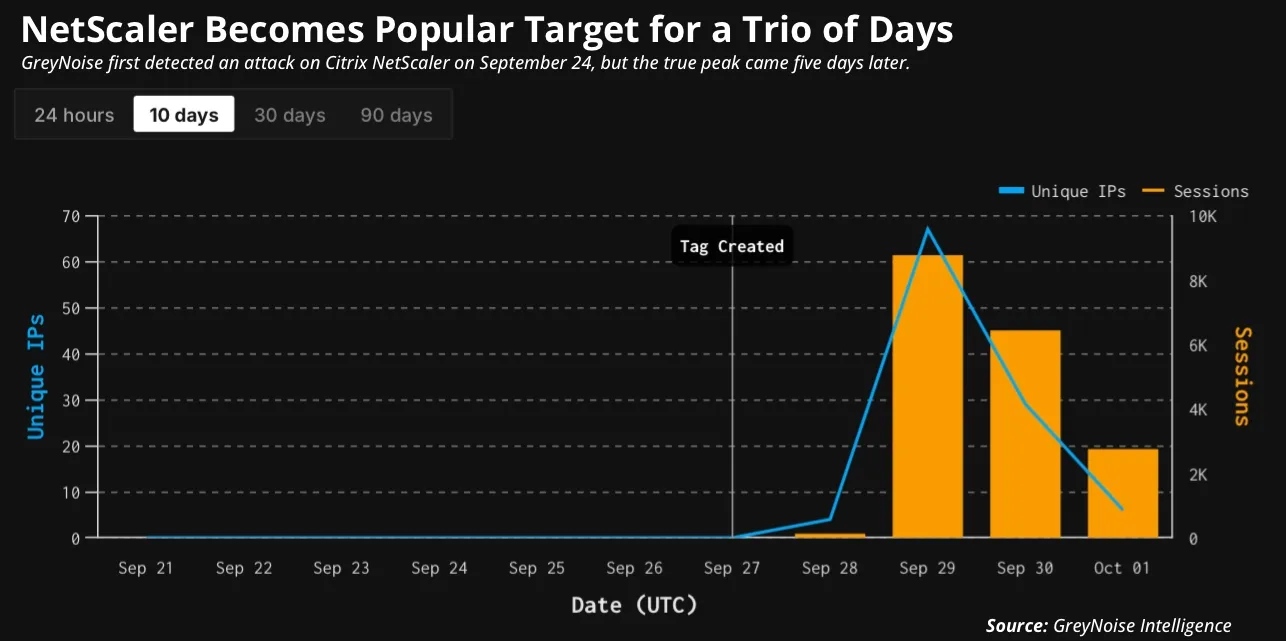
To understand the systemic weight of these zero-day incidents, we must examine the operational vectors, response timelines, and mitigation strategies deployed across enterprise environments.
| Metric / Parameter | Citrix Ecosystem Incidents | Kiteworks Ecosystem Incidents |
|---|---|---|
| Primary Vulnerability Type | Edge device authentication bypass & RCE | Secure file transfer injection & data exfiltration |
| Immediate Remediation Directive | Micro-segmentation, firmware updates, config resets | Emergency patching & platform power-down orders |
| Business Continuity Impact | Moderate to High (remote access throttling) | Severe (halted secure communications & transfers) |
| Regulatory & Compliance Exposure | High (SEC reporting, GDPR notification timelines) | Critical (direct compromise of regulated data vaults) |
Industry and Market Implications: Valuation, Risk, and Capital Allocation
The fallout from zero-day vulnerabilities extends far beyond the server rack; it directly influences market liquidity, corporate valuation multiples, and investor confidence. In an era where software supply chain security is scrutinized by institutional investors, a major zero-day exploit can trigger immediate valuation compression for both the software vendor and its downstream enterprise clients.
Who Wins: Resilience Vendors and Managed Detection Providers
Organizations specializing in continuous threat exposure management, automated micro-segmentation, and cloud-native resilience are seeing accelerated capital inflows. Investors are actively reallocating portfolios toward security models built on "Zero Trust Architecture" (ZTA) and assumptions of inevitable breach. Companies that provide rapid isolation tools without requiring total platform shutdowns command higher valuation premiums.
Who Loses: Legacy Perimeters and Monolithic Platforms
Monolithic enterprise applications that require deep, persistent access to internal networks without robust runtime application self-protection (RASP) are falling out of favor. Enterprises are beginning to penalize vendors whose architectures cannot absorb a zero-day exploit without requiring manual, disruptive intervention. Furthermore, organizations lacking robust cloud compute architecture find themselves unable to spin up redundant, ephemeral environments during an emergency shutdown, suffering prolonged operational downtime.
Frequently Asked Questions (People Also Ask)
What makes zero-day responses for platforms like Kiteworks and Citrix uniquely challenging?
Because these platforms sit at the direct intersection of external networks and internal data vaults, they are high-privilege targets. A zero-day exploit allows attackers to bypass standard authentication controls instantly. Mitigating these threats often requires drastic measures—such as isolating gateways or powering down servers—which inherently disrupts critical business operations and data flows.
Why would a security vendor advise customers to power down a data-protection platform?
When active exploitation of a zero-day vulnerability is detected in the wild and no verified patch exists, powering down the affected system is the most definitive way to halt active data exfiltration and lateral movement. While disruptive to business continuity, it prevents attackers from harvesting intellectual property or installing persistent backdoors while emergency remediation is engineered.
How do these incidents impact regulatory compliance and corporate liability?
Extended system downtime, coupled with the potential unauthorized access to sensitive repositories, triggers strict regulatory reporting requirements under frameworks such as SEC cybersecurity rules, GDPR, and NIS2. Organizations must carefully balance rapid disclosure mandates with ongoing forensic investigations, exposing them to potential shareholder lawsuits and regulatory fines if due diligence is found lacking.
What long-term architectural shifts are enterprises making to counter zero-day risks?
Enterprise buyers are shifting capital toward resilient cloud architectures that leverage immutable infrastructure, ephemeral workloads, and automated micro-segmentation. Instead of relying solely on perimeter defenses, modern security strategies focus on containing compromised nodes instantly without requiring total enterprise shutdowns.
Future Outlook: Navigating the Post-Zero-Day Era
The Kiteworks and Citrix incidents are not isolated anomalies; they represent the new baseline of cyber conflict. As threat actors harness automated discovery tools and artificial intelligence to uncover and weaponize vulnerabilities, enterprise security strategies must evolve in tandem.
Looking ahead over the next 12 to 36 months, several critical milestones will define industry maturity:
- Regulatory Convergence: Regulators will likely demand standardized incident response SLAs and transparent vendor disclosure protocols, penalizing software providers that obscure zero-day severity.
- Automated Isolation Tech: Capital allocation will heavily favor technologies capable of automated workload isolation, drastically reducing the window between zero-day discovery and network containment without requiring manual power-downs.
- Cyber Insurance Evolution: Underwriters will increasingly tie policy premiums and coverage limits to an organization's ability to demonstrate ephemeral architecture and rapid recovery runbooks, moving past basic perimeter checklists.
Ultimately, the zero-day challenge cannot be entirely solved through patch velocity alone. As Kiteworks and Citrix demonstrated, true resilience requires an architecture built to bend without breaking—ensuring that when the inevitable zero-day strikes, the enterprise can isolate the threat without shutting down its own heartbeat.