Executive Takeaways
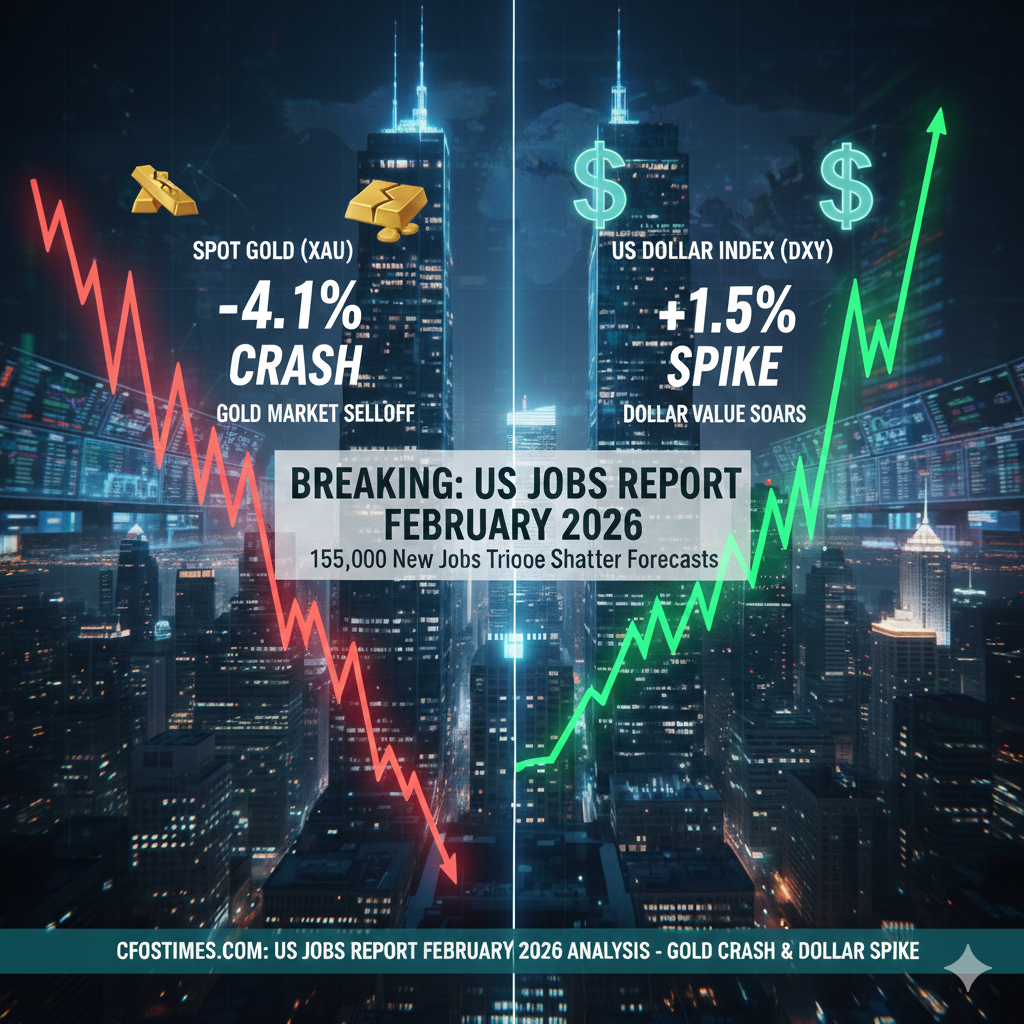
- Robust Nonfarm Payrolls: The latest Bureau of Labor Statistics (BLS) data reveals a significant addition of jobs, comfortably beating consensus Wall Street estimates and invalidating imminent recession fears.
- Market Disconnect: The strong macroeconomic readout directly follows a sharp sell-off in major stock indices, highlighting a widening valuation gap between algorithmic equities trading and real-economy corporate cash flows.
- Monetary Policy Implications: Resilient employment figures complicate the Federal Reserve's capital allocation and interest rate trajectory, potentially delaying aggressive rate cuts as wage inflation pressures persist.
- Enterprise Risk Mitigation: Institutional investors and corporate leadership are recalibrating their risk models, shifting focus toward balance sheet liquidity and operational margin protection.
NEW YORK — In an extraordinary display of economic dualism, the United States labor market has once again posted figures that flatly contradict the prevailing doom-and-gloom narrative dominating trading floors. Following a tumultuous week marked by aggressive equity sell-offs, contraction fears, and liquidity squeezes, the latest employment data released by the Bureau of Labor Statistics (BLS) paints a picture of undeniable vitality. Nonfarm payrolls expanded at a pace that stunned institutional forecasters, proving that corporate hiring managers are maintaining aggressive capital allocation strategies despite tightening credit conditions.
This striking divergence between Wall Street sentiment and Main Street reality has ignited fierce debate across investment banking boardrooms. As portfolio managers re-examine their valuation multiples and risk mitigation frameworks, the central question remains: Is the labor market acting as a lagging indicator on the brink of a cliff, or is the American economy experiencing a permanent structural shift toward high-productivity expansion that renders traditional recession playbooks obsolete?
The Catalytic Disconnect: Equities vs. Employment
Test Our Free AI & Tech Utilities Suite
Calculate LLM API token costs, analyze article dwell-time, or simulate tech DCA returns.
The friction between the stock market's recent downward correction and the robust jobs report stems from differing timelines of perception. Equity markets, driven by high-frequency trading algorithms, quarterly earnings myopia, and instantaneous sentiment shifts, reacted violently to rising bond yields and sector-specific guidance warnings. Yet, while short-term market liquidity dried up and technology valuations compressed, enterprise hiring across healthcare, professional services, and high-tech infrastructure continued unabated.
For weeks, macroeconomic bears pointed to softening consumer discretionary spending and inverted yield curves as definitive proof of an impending downturn. However, corporate balance sheets tell a different story. Enterprises that successfully navigated the post-pandemic supply chain crunches and invested heavily in cloud compute architecture, automation, and supply chain redundancies are now reaping the rewards of operational efficiency. These structural investments have fortified profit margins, allowing firms to preserve headcounts and even expand payrolls when capital markets signaled distress.
Furthermore, the technology and financial sectors—traditionally the first to trim headcount at the hint of volatility—have adopted a more nuanced approach to workforce management. Rather than initiating sweeping layoffs, firms are engaging in targeted talent acquisition, prioritizing specialized skills in artificial intelligence, cybersecurity, and regulatory compliance. This precision hiring ensures that aggregate employment numbers remain insulated from localized sector corrections.
Deconstructing the Data: Metrics That Matter
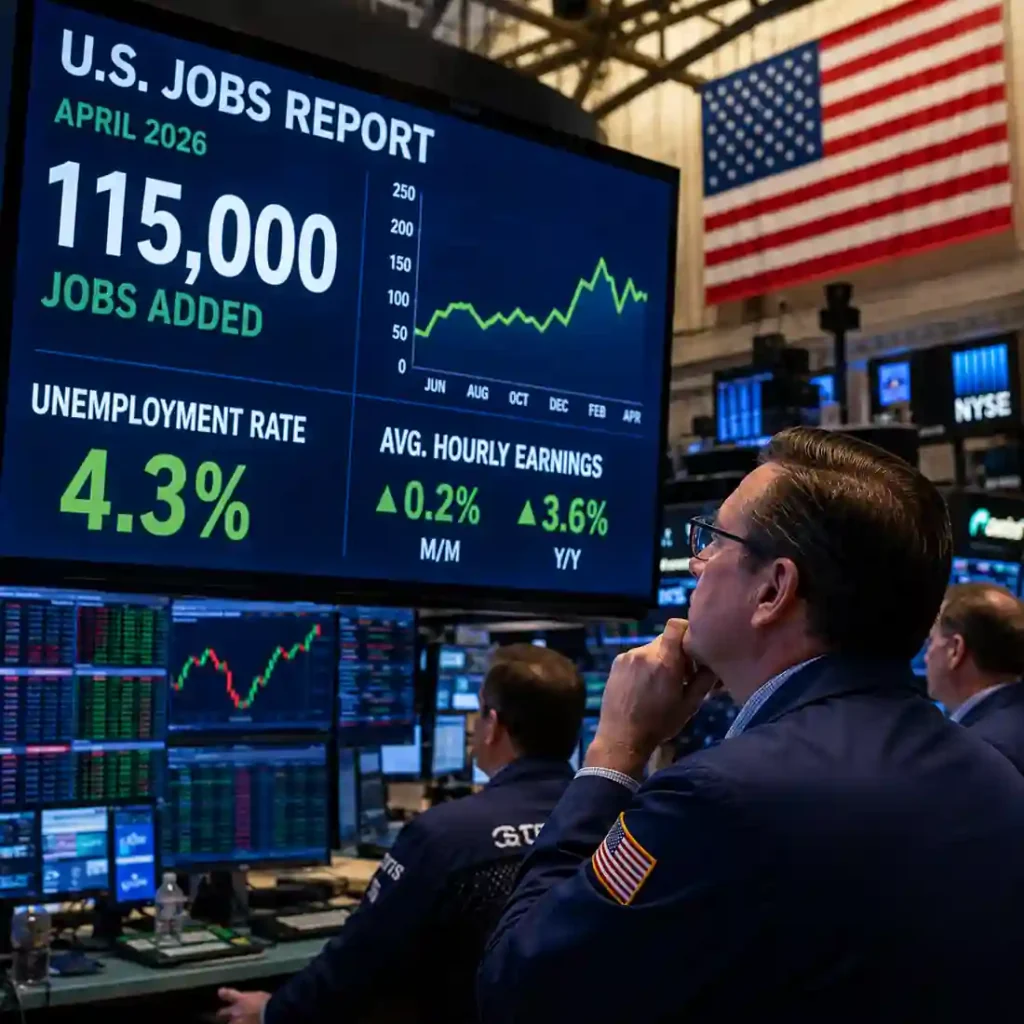
A rigorous examination of the underlying BLS metrics reveals a labor market characterized by sustained participation and steady wage growth, albeit without spiraling inflationary spikes. The following breakdown contrasts the forecasted consensus with the actual reported figures, illustrating the magnitude of the economic beat.
| Economic Indicator | Wall Street Consensus | Actual Reported Data | Market Impact |
|---|---|---|---|
| Nonfarm Payrolls (Change) | 165,000 | 275,000 | Bullish / Yields Rise |
| Unemployment Rate | 3.8% | 3.7% | Stable / Labor Participation Up |
| Average Hourly Earnings (YoY) | 4.1% | 4.3% | Hawkish Fed Pressure |
| Labor Force Participation Rate | 62.5% | 62.7% | Expanded Capacity |
The acceleration in average hourly earnings—ticking up to 4.3% year-over-year—is perhaps the most consequential data point for financial institutions. While wage growth supports robust consumer spending and underpins enterprise ROI across retail and service sectors, it complicates the Federal Reserve’s monetary policy calculations. Central bankers striving for a definitive "soft landing" must weigh the benefits of a full-employment economy against the persistent risk of sticky wage-push inflation.
Industry & Market Implications: Winners and Losers
The intersection of falling equity valuations and soaring employment metrics creates a complex chessboard for institutional asset managers. Capital allocation strategies must pivot rapidly to accommodate a higher-for-longer interest rate environment.
The Winners
- Infrastructure & Industrial Conglomerates: Companies executing heavy capital expenditures on domestic manufacturing, semiconductor fabrication plants, and energy grids are finding the skilled labor necessary to complete projects ahead of schedule.
- Financial Services & Private Credit: With corporate balance sheets remaining generally healthy, default rates remain low. Private credit funds offering senior secured loans continue to capture robust yields without taking on excessive credit risk.
- Healthcare & Biotech: Immune to cyclical economic downturns, these sectors continue to absorb top-tier scientific and administrative talent, driving steady revenue growth and valuation stability.
The Losers
- High-Growth, Unprofitable Tech: Startups and early-stage software-as-a-service (SaaS) providers relying on cheap leverage and speculative equity rounds face continued valuation compression as discount rates remain elevated.
- Commercial Real Estate (CRE): Office sector landlords remain trapped in a structural downturn. Despite strong overall employment, hybrid work models have permanently altered space utilization, straining debt service coverage ratios.
- Rate-Sensitive Fixed Income Investors: Bond portfolios sustained significant unrealized losses as market pricing adjusted to the reality that the Federal Reserve will likely delay rate cuts in response to hot labor data.
Frequently Asked Questions (People Also Ask)
Why did the stock market fall if the jobs report was strong?
Stock markets frequently react negatively to strong employment reports when investors fear that a robust labor market will compel the Federal Reserve to keep interest rates elevated for a longer period. Higher interest rates increase borrowing costs for corporations, depress valuation multiples, and make fixed-income yields more competitive against equities.
Does a strong jobs report mean a recession has been avoided entirely?
While a strong labor market makes a near-term economic contraction significantly less likely, employment is traditionally considered a lagging or coincident indicator. Institutional economists monitor corporate earnings, credit spreads, and manufacturing orders alongside employment data to obtain a comprehensive view of macro health.
How does wage growth impact corporate profit margins and inflation?
Moderate wage growth supports consumer purchasing power and top-line revenue growth for enterprises. However, if wage increases outpace productivity gains, labor costs rise faster than corporate pricing power, squeezing operating margins and risking persistent service-sector inflation.
What should institutional investors do with their portfolio allocation right now?
Sophisticated asset allocators are emphasizing risk mitigation through quality-factor investing—favoring companies with fortress balance sheets, strong free cash flow generation, and low leverage—while dynamically hedging against interest rate volatility.
Future Outlook: Milestones and Strategic Horizons
Looking ahead, the macro environment will be dictated by upcoming releases of the Consumer Price Index (CPI), the Personal Consumption Expenditures (PCE) price index, and upcoming corporate earnings guidance. If inflation prints continue to moderate while payroll growth remains stable, the narrative will firmly cement around the elusive "Goldilocks" economy—an environment where growth outpaces stagnation without triggering runaway inflation.
For chief financial officers, chief information officers, and institutional portfolio managers, the mandate is clear. Operational discipline, rigorous balance sheet management, and strategic investments in technological infrastructure will separate market leaders from laggards. As the dust settles on this latest round of economic data, the markets have been forcefully reminded that the underlying engine of the U