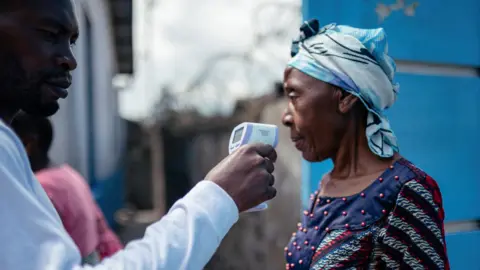
WHO Declares Ebola a Global Health Emergency: Death Toll Surges Past 204, U.S. Citizens Exposed as Congo Outbreak Spreads
GENEVA / KINSHASA — May 18, 2026 — In a move reflecting heightened global anxiety over a rapidly escalating health crisis, the World Health Organization (WHO) has officially declared the Ebola outbreak in the Democratic Republic of Congo (DRC) a Public Health Emergency of International Concern (PHEIC). The designation, handed down late Friday, May 15, 2026, underscores the terrifying speed with which the virus is spreading across Central Africa, having already breached borders into neighboring Uganda and exposed multiple foreign nationals, including at least six Americans.
Late on Saturday, DRC health officials dramatically updated the grim toll, confirming that deaths have reached 204—a sharp escalation from earlier estimates of over 80. The sudden rise in fatalities has triggered emergency mobilizations by the Red Cross and international medical charities, who warn that the containment window is closing fast amid regional conflict and porous borders.
The Escalating Crisis: Inside the Numbers
The decision by the WHO to sound its highest level of alarm was catalyzed by two critical factors: the crossing of the outbreak into Uganda and the exponential rise in active transmissions. What began as a localized cluster has rapidly mutated into a regional threat. The international community is now scrambling to deploy therapeutic countermeasures and vaccines to the affected zones.
The following table outlines the current trajectory of the outbreak as verified by the WHO and the DRC Ministry of Health as of May 18, 2026:
| Metric | Status / Figures | Primary Risk Level |
|---|---|---|
| Total Confirmed Deaths | 204 (Updated May 16) | Critical / Escalating |
| Geographic Spread | DR Congo (East) & Western Uganda | High (Cross-border transmission) |
| U.S. Citizens Exposed | 6 Individuals (Currently isolated) | Under Active Monitoring |
| WHO Status | Public Health Emergency of International Concern | Highest Alert Level |
| Primary Responders | WHO, Red Cross, DRC Ministry of Health | Severe Resource Strain |
U.S. Citizens Exposed Amid Containment Hurdles

Of immediate concern to Western intelligence and health agencies is the confirmed exposure of at least six American citizens working within the affected regions of the DRC. According to sources close to the U.S. Centers for Disease Control and Prevention (CDC), these individuals—believed to be aid workers and medical researchers—are currently under strict isolation and monitoring protocol. No active symptoms have been reported yet, but the incubation period of the virus (up to 21 days) means health officials remain on high alert.
Containment efforts are being severely hampered by local security dynamics. The eastern provinces of the DRC have long been plagued by militia violence, making it exceedingly difficult for medical teams to trace contacts, distribute vaccines, and establish secure treatment centers. Over the weekend, Red Cross personnel reported facing resistance in some rural communities, driven by deep-seated distrust of external medical interventions and widespread misinformation.
The Economic & Geopolitical Fallout
For global markets, the WHO's emergency declaration introduces a fresh wave of uncertainty. The DRC is the world’s leading producer of cobalt—a critical component in electric vehicle batteries and electronics—and a major source of high-grade copper. Analysts at the Economic Times warn that if the outbreak spreads closer to key mining hubs in the southern Katanga region, localized lockdowns or labor shortages could trigger severe supply chain bottlenecks.
Furthermore, neighboring East African economies, including Uganda and Rwanda, are already tightening border controls. While necessary to halt the virus, these measures threaten to choke vital trade corridors that support millions of livelihoods across the region.
Key Takeaways: What You Need to Know
- The WHO Declaration: The Public Health Emergency of International Concern (PHEIC) status unlocks international funding, coordinates global vaccine distribution, and mandates strict border monitoring protocols.
- Rapidly Rising Death Toll: The official death toll surged to 204 on Saturday, up from initial estimates of 80, proving this strain's highly lethal nature.
- American Exposure: Six U.S. citizens are currently isolated under surveillance, highlighting the immediate global reach of the outbreak.
- Supply Chain Threats: While mining operations are currently unaffected, further geographic expansion of the virus could disrupt critical cobalt and copper exports.
Frequently Asked Questions (FAQ)
What makes this Ebola outbreak different from previous ones?
Unlike previous localized outbreaks, this current surge has quickly breached international borders into Uganda and is occurring in an active conflict zone in eastern DRC. The presence of armed militias severely limits the ability of international health agencies to safely conduct contact tracing and distribute highly effective vaccines like Ervebo.
Is there a risk of global transmission to the West?
While the exposure of six U.S. citizens has heightened domestic anxieties, the risk of a widespread outbreak in Western nations remains extremely low. Modern airport screening, rapid isolation protocols, and robust public health infrastructure in developed countries are highly effective at containing the virus should an imported case occur.