Canada’s Bold Play for EU ‘Associate Member’ Status: What Mark Carney’s Radical Proposal Means for Global Trade, Tariffs, and the Loonie
OTTAWA & BRUSSELS — In a geopolitical landscape increasingly defined by protectionism, fracturing supply chains, and aggressive tariff threats from Washington, Canada is quietly exploring an unprecedented diplomatic leap: securing an "associate membership" or a highly customized "unique relationship" with the European Union.
The push, championed by former Bank of Canada and Bank of England Governor Mark Carney—currently a key economic advisor to Prime Minister Justin Trudeau’s Liberal government—signals a fundamental shift in Ottawa’s long-term strategic posture. As Canada seeks to insulate itself from its heavy economic dependence on the United States, the concept of a transatlantic regulatory and economic merger is moving from the fringes of academic debate straight into the corridors of power in Brussels and Ottawa.
This potential realignment comes at a time of profound political volatility across the Western world. From the sudden political shifts in Europe—highlighted by recent electoral shocks and leadership transitions, including the sudden resignation of Swedish Prime Minister Ulf Kristersson following a severe election setback—to the looming threat of universal baseline tariffs from the United States, policymakers are frantically rewriting the global trade playbook.
The Carney Doctrine: Why Canada Wants a 'Unique' Transatlantic Alliance
For decades, Canada’s economic strategy was simple: leverage the North American Free Trade Agreement (and its successor, the USMCA) to feed the massive consumer engine to its south. However, with the rising tide of protectionism in Washington, Canadian policymakers are realizing that relying on a single trading partner is a systemic vulnerability.
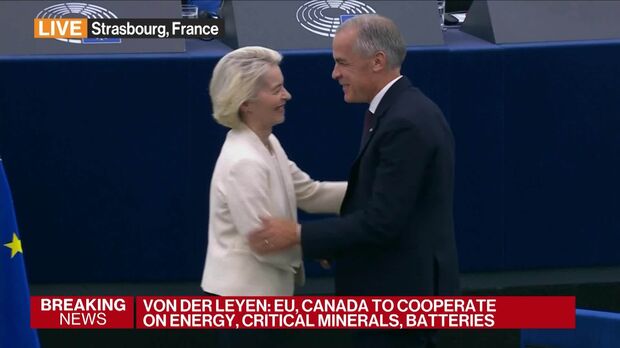
Enter Mark Carney. Speaking at recent high-level forums, Carney emphasized that Canada must pursue a "unique" and deeper structural relationship with the EU that goes far beyond the existing Comprehensive Economic and Trade Agreement (CETA). Carney’s vision of "associate status" would theoretically integrate Canada into aspects of the EU single market, particularly in critical areas like clean technology, carbon markets, regulatory standards, and critical mineral supply chains.
"CETA was a 20th-century trade agreement focused on tariffs," notes an Ottawa-based trade diplomat speaking on the condition of anonymity. "What Carney is proposing is a 21st-century strategic integration. Canada wants a seat at the table where European regulatory standards are written, especially as the world transitions to a net-zero economy."
Decoding 'Associate Member' Status: What It Could Look Like
While the EU does not have a formal, off-the-shelf "associate member" status for non-European nations, there are precedents for highly integrated relationships. Countries like Norway, Iceland, and Liechtenstein participate in the European Economic Area (EEA), while Switzerland navigates access through a complex web of bilateral treaties.
For Canada, a G7 nation located across the Atlantic, any associate status would have to be entirely bespoke. Industry experts suggest the arrangement would likely focus on three primary pillars:
1. Critical Mineral and Energy Integration
Europe is desperately searching for secure, democratic sources of lithium, cobalt, nickel, and copper to power its green transition and break its reliance on China. Canada possesses these resources in abundance. An associate status could grant European companies preferential investment access in Canada in exchange for European technology transfers and long-term supply contracts.
2. Regulatory and Carbon Border Alignment
With the EU rolling out its Carbon Border Adjustment Mechanism (CBAM), non-aligned countries face steep tariffs on carbon-intensive exports. By aligning its domestic carbon pricing closely with the EU’s Emissions Trading System (ETS), Canada could secure a permanent exemption from CBAM, giving Canadian manufacturers a massive competitive advantage over US and Asian rivals.
3. Research, Defense, and Space Collaboration
Canada has already taken steps in this direction by joining Horizon Europe—the EU’s flagship €95.5 billion research and innovation program—as an associate country. Expanding this to security, artificial intelligence governance, and defense procurement is the logical next step.
Comparing Canada’s Trade Horizons: CETA vs. Associate Status
To understand the magnitude of this potential shift, we must look at how an associate status would upgrade Canada’s current economic integration with Europe.
| Economic Metric / Dimension | Current CETA Framework | Proposed 'Associate Member' Status |
|---|---|---|
| Eliminated 98% of tariffs, but subject to strict Rules of Origin. | Near-total elimination of non-tariff barriers and harmonized rules of origin. | |
| Mutual recognition in limited sectors; separate regulatory approvals required. | "Passive passporting" and mutual alignment on environmental, AI, and labor standards. | |
| Subject to future EU Carbon Border Adjustment Mechanism (CBAM) scrutiny. | Full exemption from CBAM through linked carbon pricing systems. | |
| Limited temporary entry for business professionals and service providers. | Streamlined mutual recognition of professional qualifications and fast-tracked visas. |
The Geopolitical Headwinds: Europe’s Internal Instability
Despite the mutual benefits, Canada’s transatlantic ambitions face significant hurdles, not least of which is the political volatility within Europe itself. The recent political shockwave in Stockholm—where Swedish Prime Minister Ulf Kristersson resigned after a crushing electoral defeat—underlines the fragile nature of European coalitions.
As domestic populist pressures rise across the EU, European leaders are increasingly turned inward, focusing on migration, domestic inflation, and industrial stagnation. Convincing 27 sovereign member states to ratify a highly complex, unprecedented "associate membership" for a non-European nation will require monumental diplomatic capital.
Furthermore, any move by Canada to align too closely with EU regulations could anger its primary trading partner, the United States. Under the USMCA, any member country that enters into a trade agreement with a "non-market economy" or significantly diverges from North American regulatory standards risks triggering retaliatory measures from Washington. Balancing the wrath of a protectionist US administration while courting Brussels will be the ultimate tightrope walk for Ottawa.
Executive Summary: Key Takeaways
- The Catalyst: Mark Carney is leading the intellectual charge for Canada to secure a "unique," highly integrated "associate" relationship with the EU to hedge against US protectionism.
- The Strategic Assets: Canada’s vast reserves of critical minerals and its established carbon-pricing system make it an incredibly attractive strategic partner for a resource-hungry, climate-focused Europe.
- The Mechanism: Rather than full membership, Canada is eyeing a bespoke arrangement that could include carbon-tax exemptions (CBAM), regulatory passporting, and deep supply-chain integration.
- The Obstacles: European political instability—exemplified by the resignation of Sweden’s Ulf Kristersson—and potential backlash from Washington under USMCA rules represent significant roadblocks.
Frequently Asked Questions (FAQ)
Can Canada actually join the European Union as a member?
No. Under the Maastricht Treaty, formal EU membership is strictly limited to geographically European nation-states. However, "associate member" status or a bespoke bilateral integration treaty (similar to the frameworks utilized by Norway or Switzerland) is legally and politically feasible if both Ottawa and Brussels agree on the terms.
How would an associate status affect everyday Canadians and businesses?
For Canadian businesses, it would dramatically lower the cost of exporting to a market of 450 million consumers by eliminating regulatory red tape and avoiding European carbon border taxes. For everyday Canadians, it could lead to simplified professional mobility, easier working-holiday visas, and lower prices on high-quality European imports, though it could also lead to higher domestic regulatory compliance costs to match strict EU standards.

![[HMG Tech Talent Forum 2026 Series ②] Minwoo Park, President and Head of AVP Division at Hyundai Motor Group and CEO of 42dot; Hyundai Motor Group’s Roadmap for Commercializing AI Technology](https://www.hyundaimotorgroup.com/image/upload/asset_library/MDA00000000000079943/06e7fc79563c448eb27874eeea34f579.jpg)