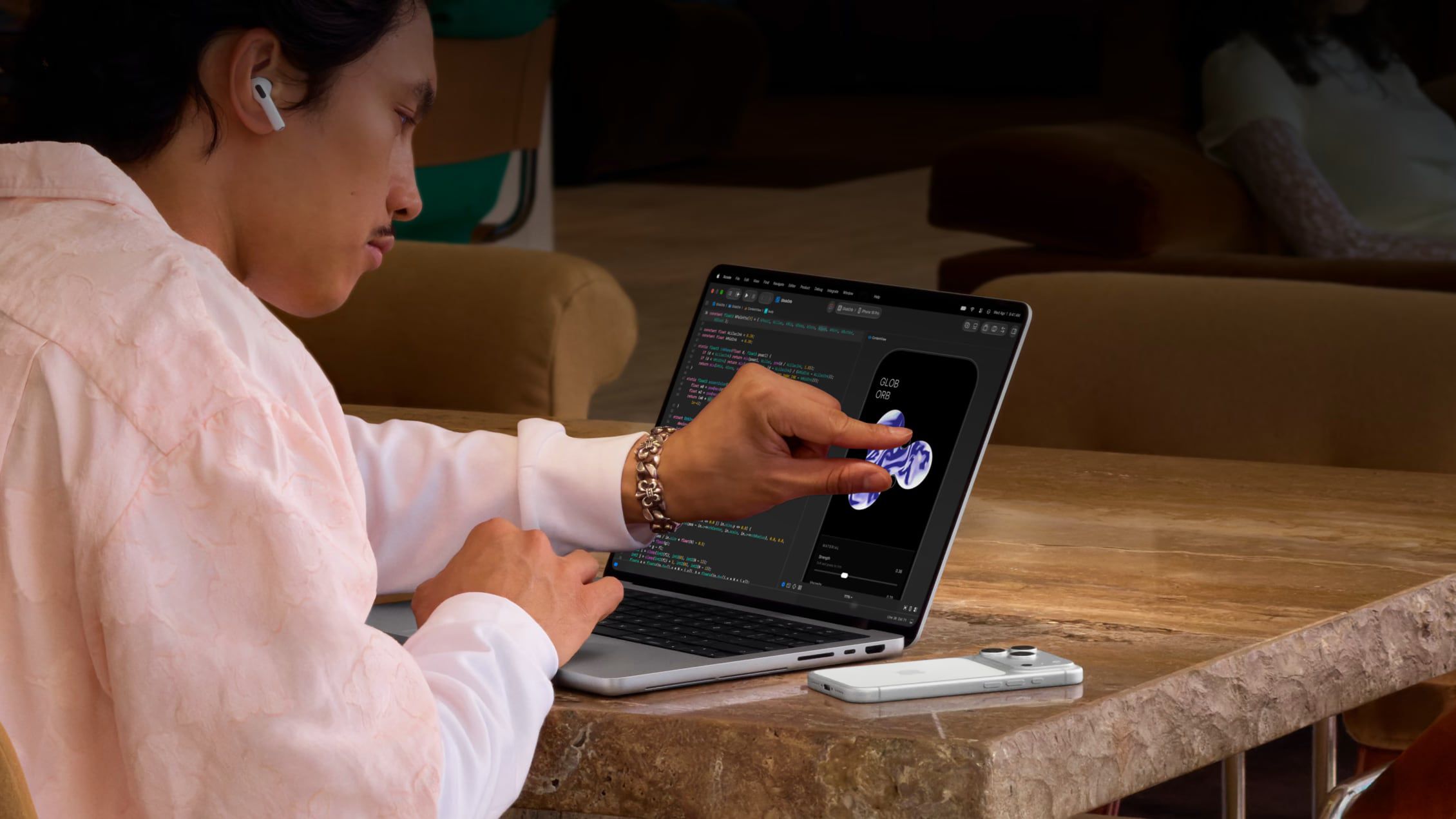
For months, the rumor mill surrounding Apple Inc.’s next-generation professional portable line has operated at a fever pitch. The promise of a MacBook Pro integrated with PROLED XDR display technology—borrowing the quantum-dot, multi-zone local dimming architecture of Apple’s legendary Pro Display XDR—has finally materialized in real-world leaks, hands-on previews, and early developer units. Visually, the hardware is a triumph. The panels deliver staggering peak brightness, deep blacks, and a color-accurate workflow environment that makes mobile grading and engineering look breathtaking.
Yet, across boardrooms in Silicon Valley, quantitative trading floors in Lower Manhattan, and high-end post-production houses in Soho, a collective hesitation has taken hold. While the industrial design and optical fidelity look phenomenal, seasoned enterprise procurement officers, chief technology officers (CTOs), and independent professionals are arriving at the same measured conclusion: the new MacBook Pro with PROLED XDR looks awesome, but I’m not rushing to upgrade. In an era defined by aggressive capital allocation scrutiny, constrained enterprise IT budgets, and marginal generational compute gains, the calculus of hardware lifecycles has shifted dramatically away from impulse purchases toward rigorous risk mitigation and total cost of ownership (TCO) analysis.
Executive Takeaways
Test Our Free AI & Tech Utilities Suite
Calculate LLM API token costs, analyze article dwell-time, or simulate tech DCA returns.
- Visual Leap vs. Practical Utility: While the PROLED XDR screen offers unprecedented mobile contrast ratios and peak luminance, standard office environments, coding terminals, and standard software workflows rarely leverage its full dynamic range capabilities.
- Capital Allocation Discipline: Enterprise buyers are facing compressed valuation multiples and macro-economic headwinds, making IT budget approval contingent on undeniable enterprise ROI rather than incremental hardware refreshes.
- Infrastructure Scalability and Portability: The thermal design, power draw, and potential weight increases associated with advanced mini-LED or micro-LED display topologies introduce trade-offs in mobile ergonomics that frequent travelers find difficult to justify.
- The Upgrade Horizon: Current M-series architectures (M2 Max/Ultra and early M3 iterations) continue to handle heavy cloud compute architecture, multi-threaded compiling, and native data analytics effortlessly, diminishing the urgency for immediate migration.
The Anatomy of the Hype: Decoding the PROLED XDR Panel

To understand why the tech community is simultaneously mesmerized and hesitant, one must examine the engineering breakthroughs behind the rumored PROLED XDR moniker. Apple has long dominated consumer and professional display markets through rigorous color calibration and integration between hardware and macOS color management frameworks (ColorSync). However, bringing true XDR (Extreme Dynamic Range) performance down to a 14-inch and 16-inch portable form factor requires packing thousands of localized dimming zones behind a high-density oxide TFT or advanced mini-LED backplane.
For digital artists, colorists grading HDR content in DaVinci Resolve, and photographers working in remote field locations, the attraction is palpable. The ability to achieve sustainable high-nit output without thermal throttling or aggressive clipping represents a Holy Grail in mobile production. In previous generations, sustaining peak luminance meant battling thermal degradation and fan noise. The integration of more efficient diode arrays theoretically mitigates this, promising desktop-class reference monitor performance on an airplane tray table.
However, from a broader market perspective, this level of fidelity serves a highly specialized vertical. For the vast majority of corporate knowledge workers—financial analysts building complex DCF models, enterprise software engineers compiling microservices, and legal professionals reviewing dense corporate filings—the difference between a standard Liquid Retina XDR screen and a next-generation PROLED XDR panel is functionally invisible during daily operations. The marginal utility drops sharply when weighed against the capital expenditure required to roll out a fleet-wide hardware refresh.
Financial Prudence and Enterprise IT Strategy
In the current macroeconomic climate, corporate purse strings are drawn tight. CFOs and IT infrastructure directors view hardware procurement not as a status symbol, but as a direct driver of operational efficiency and employee productivity. When evaluating the business case for a fleet-wide deployment of top-tier MacBook Pro configurations, financial committees look closely at enterprise ROI and depreciation schedules.
Historically, developer and analyst workstations enjoyed a standard 36-to-48-month replacement cycle. In recent years, however, the maturation of Apple Silicon has fundamentally disrupted this cadence. An M2 Max or M3 Max MacBook Pro purchased within the last 24 months operates at a fraction of its performance ceiling for standard workloads. When compiling code, running local Docker containers, or querying massive relational databases, current-generation silicon rarely exhibits bottlenecks that a new display technology can solve.
Furthermore, risk mitigation plays a critical role in delaying immediate upgrades. First-generation display architectures—especially those incorporating new manufacturing processes, novel thermal management layouts, or complex localized dimming algorithms—carry a higher statistical probability of early-batch manufacturing anomalies, firmware calibration bugs, or supply chain constraints. Enterprise risk mitigation strategies dictate letting early adopters and consumer markets vet the hardware through initial production runs before committing institutional capital.
Verified Data & Specifications Breakdown
| Hardware Attribute | Previous Gen (Liquid Retina XDR) | Next-Gen (PROLED XDR Speculation) | Enterprise Impact & Value Assessment |
|---|---|---|---|
| Peak HDR Brightness | 1,600 nits (sustained 1,000 nits full screen) | Estimated 2,000+ nits with expanded local dimming zones | Critical for HDR video workflows; negligible impact for text/spreadsheet productivity. |
| Backlight Technology | Mini-LED (approx. 2,000 to 10,000 zones) | Advanced High-Density Micro/PROLED Array | Drastically reduces blooming artifacts; increases manufacturing cost and potential component weight. |
| Average Fleet Unit Cost | $2,499 – $3,999 (Config dependent) | Projected $100–$300 premium at launch | Requires strict justification through productivity gains to satisfy Q4 capital expenditure audits. |
| Performance Multiplier (CPU/GPU) | Baseline M3/M4 Architecture | Next-generation node iteration (TSMC N3E/N2 variants) | Incremental performance gains (10-15%) fail to offset total hardware replacement costs for general staff. |
Industry & Market Implications: Who Wins and Who Loses?
The market reaction to a high-end, premium-priced MacBook Pro refresh sends ripples across several interconnected sectors, from component manufacturers to enterprise software vendors.
The Winners: Niche creative agencies, high-end VFX studios, and mobile broadcast units stand to benefit immediately. For these organizations, time-to-delivery and color accuracy directly translate to client billings and project profitability. Additionally, secondary market refurbishers and trade-in platforms (such as Gazelle, Back Market, and enterprise asset liquidation firms) win as cautious upgraders delay purchases, stabilizing the residual valuation of current-generation M2 and M3 hardware.
The Losers: Apple’s hardware gross margin targets face pressure if enterprise adoption slows and corporate buyers opt to extend depreciation cycles. Furthermore, high-end display calibration hardware manufacturers and external monitor vendors may see a prolonged lull in sales to mobile professionals who previously relied on tethered desktop reference displays for field work.
From a macroeconomic standpoint, this hesitation reflects a broader corporate behavioral shift. Enterprises are prioritizing cloud compute architecture optimization, generative AI software integration, and cybersecurity compliance over incremental desktop and laptop client refreshes. Dollars that might have gone toward top-spec notebooks are being reallocated toward cloud infrastructure scalability and proprietary machine learning pipelines.
Frequently Asked Questions (People Also Ask)
Why are enterprise buyers holding off on upgrading to the new MacBook Pro?
Enterprise buyers focus on total cost of ownership (TCO) and return on investment (ROI). Because current-generation M-series processors already exceed the computational demands of standard office productivity, data analysis, and software development, the productivity gain from a new display or minor processor bump does not justify the capital expenditure of a fleet-wide upgrade.
What makes the rumored PROLED XDR display different from standard mini-LED?
PROLED XDR technology aims to push the boundaries of mobile display technology by increasing the density of local dimming zones, utilizing advanced quantum-dot color films, and achieving higher sustainable peak brightness levels with improved energy efficiency. While visually stunning for HDR media production, its primary benefits are tailored to creative professionals rather than corporate knowledge workers.
How does delaying hardware upgrades impact enterprise risk mitigation?
Delaying hardware upgrades allows IT departments to bypass the initial production runs of newly redesigned hardware, thereby avoiding early-batch manufacturing defects, firmware stability issues, and supply chain bottlenecks. It also aligns with stretched asset depreciation schedules, preserving capital liquidity.
Are current M-series chips still viable for heavy cloud computing and development?
Yes. M2 Max, M3 Max, and emerging Apple Silicon processors feature robust multi-threaded processing power, unified memory architectures, and dedicated hardware accelerators that handle complex local coding environments, Docker containers, and high-volume data modeling with ease, negating the urgent need for a hardware swap.
Future Outlook: Milestones and What to Watch
As the market digests the rollout of Apple’s latest portable hardware innovations, attention will inevitably shift toward the structural milestones that will dictate the pace of future adoption. Industry analysts and supply chain watchers should monitor three critical indicators over the next twelve to eighteen months:
- Enterprise IT Budget Shifts: Track whether macro-economic stabilization prompts corporate finance committees to unlock deferred hardware replacement budgets in upcoming fiscal years.
- Software Optimization for Advanced Displays: Observe how operating systems and professional software suites (such as Xcode, Adobe Creative Cloud, and quantitative financial modeling packages) leverage specialized display features to create undeniable operational bottlenecks for older hardware.
- Manufacturing Yields and Pricing Pressure: Evaluate whether supply chain efficiencies drive down the cost of high-end display components, making future iterations more accessible for broad corporate deployment.
Ultimately, the MacBook Pro with PROLED XDR is a masterclass in hardware engineering—a dazzling achievement that commands respect and admiration. Yet, in the disciplined world of corporate finance and strategic IT management, awe is rarely a sufficient justification for capital outlay. Until the operational imperative catches up to the optical brilliance, the smart money will remain safely seated in the current generation.