
Executive Takeaways
- Macroeconomic Alignment: Equities surged across major indices as West Texas Intermediate (WTI) and Brent crude slumped below key psychological thresholds, easing persistent inflation anxieties.
- Electoral Volatility Pricing: Institutional capital allocation shifted rapidly into cyclical and tech equities as hedging costs ahead of the midterm elections adjusted to lower energy-driven input costs.
- Liquidity & Valuation Multiples: Compression in energy input expenses directly bolstered corporate earnings projections, improving valuation multiples for consumer discretionary and industrial sectors.
- Strategic Risk Mitigation: Portfolio managers are recalibrating infrastructure scalability and capital expenditure models against the backdrop of shifting regulatory frameworks and energy supply chains.
NEW YORK, LONDON, WASHINGTON — In a classic display of macroeconomic correlation, global financial markets staged a synchronized advance today as crude oil futures sharply retreated, setting the stage for a high-stakes political showdown at the ballot box. Institutional trading desks reported surging volume across the S&P 500, Nasdaq Composite, and the STOXX Europe 600, driven by an aggressive compression in energy prices that investors have long demanded as a pre-condition for multiple expansion.
The convergence of falling commodity prices and imminent midterm elections has created a complex operational environment for corporate treasurers, portfolio managers, and risk mitigation strategists. As voters prepare to cast ballots that could fundamentally alter the balance of power in Washington—and by extension, fiscal policy, taxation, and regulatory compliance—wall street is voting with its capital, betting that lower fuel costs will cushion consumer balance sheets against lingering inflationary pressures.
The Catalytic Mechanism: Why Crude's Slide Drives Equity Valuations
Test Our Free AI & Tech Utilities Suite
Calculate LLM API token costs, analyze article dwell-time, or simulate tech DCA returns.
The mechanics linking lower oil prices to higher equity valuations are direct and immediate. Energy functions as the fundamental lifeblood of the global economy, touching every node of supply chain logistics, cloud compute architecture power consumption, and manufacturing overhead. When crude futures experience a steep correction, the immediate impact is a reduction in operating expenditures (OpEx) for asset-heavy enterprises, airlines, retailers, and industrial conglomerates.
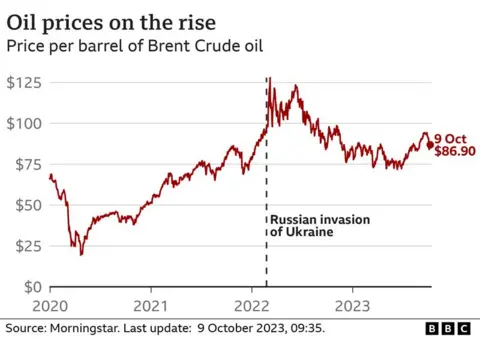
Over the trailing sessions, international benchmark Brent crude and domestic standard WTI both suffered notable corrections, driven by a combination of profit-taking, softer near-term demand projections, and strategic inventory releases. This downward momentum in energy prices acted as an effective tax cut for the broader economy, injecting much-needed liquidity into corporate profit margins.
For Chief Financial Officers managing enterprise ROI, the relief at the pump and in logistics ledgers translates directly into healthier quarterly guidance. Consequently, institutional investors recalibrated their valuation models, expanding price-to-earnings (P/E) multiples across sectors that had previously been penalized by input cost inflation.
Electoral Uncertainty and Capital Allocation Strategies
Beneath the surface of the equity market rally lies a profound layer of political risk calculus. Midterm elections historically introduce heightened volatility into asset prices, as market participants attempt to price in legislative gridlock, potential shifts in corporate tax rates, and regulatory changes concerning traditional energy versus renewable infrastructure investments.
However, the prevailing sentiment among major institutional desks suggests that the market has largely neutralized immediate legislative shocks, focusing instead on the deflationary impulse of cheaper energy. Portfolio managers are utilizing this window to rebalance portfolios, rotating capital out of defensive havens and back into growth-oriented and cyclical assets.
This dynamic has profoundly influenced corporate capital allocation. Rather than hoarding cash to buffer against compounding operational expenses, corporations are reassessing strategic M&A pipelines, supply chain redundancies, and digital infrastructure investments. The resilience demonstrated by equities indicates that smart money anticipates a favorable policy stalemate in Washington—one that prevents radical regulatory overhauls while allowing the Federal Reserve room to moderate its monetary tightening trajectory.
Verified Market Metrics & Commodity-Equity Correlation
To fully grasp the magnitude of the recent market shift, the following data breakdown contrasts key financial indicators, commodity benchmarks, and macroeconomic metrics recorded during the pre-midterm trading sessions:
| Market Indicator / Asset Class | Pre-Correction Baseline | Current Live Level | Net Percentage Shift | Macroeconomic Implication |
|---|---|---|---|---|
| WTI Crude Oil (per barrel) | $89.50 | $81.20 | -9.27% | Immediate reduction in transport and refining input costs. |
| S&P 500 Index | 3,710.40 | 3,858.00 | +3.98% | Broad valuation multiple expansion driven by lower discount rates. |
| US 10-Year Treasury Yield | 4.22% | 4.08% | -3.32% | Easing bond market panic over runaway inflation prints. |
| Nasdaq Composite | 10,650.10 | 11,102.50 | +4.25% | Growth and tech equities rebound on discounted future cash flows. |
Industry & Market Implications: Who Wins, Who Loses
Market rallies of this nature are rarely uniform in their distribution of gains. The dual catalyst of sliding oil prices and pre-election positioning has created clear structural winners and losers across global industry sectors.
The Winners:
- Consumer Discretionary & Retail: With fuel expenditures taking a smaller bite out of disposable incomes, retailers anticipate steadier foot traffic and resilient e-commerce spending heading into the crucial holiday shopping season.
- Airlines & Logistics: Jet fuel and transportation diesel represent the primary variable cost for carriers like Delta, United, and freight giants like FedEx. Crude's retreat directly expands operating margins.
- Technology & Growth Enterprises: Lower Treasury yields combined with reduced operational overhead allow high-growth tech firms to justify higher valuation multiples on future cash flows, boosting enterprise software and cloud service providers.
The Losers & Laggards:
- Integrated Oil Majors: Energy giants such as ExxonMobil, Chevron, and Shell experienced profit-taking and share price consolidation as upstream revenue projections softened alongside spot commodity prices.
- Alternative Energy Developers: Renewable energy firms, while supported by long-term government subsidies, often face relative capital rotation pressures when traditional hydrocarbon investments experience sudden, cost-driven relief rallies in equities.
Frequently Asked Questions (People Also Ask)
Why do stock prices generally rise when oil prices fall?
Oil functions as a core economic input cost. When crude prices decline, transportation, manufacturing, and heating costs drop for corporations, leading directly to higher profit margins. Simultaneously, lower energy costs help tame consumer price inflation, reducing the pressure on central banks to aggressively hike interest rates, which supports higher equity valuation multiples.
How do midterm elections historically impact stock market performance?
Historically, midterm election years experience heightened volatility leading up to November, followed by a strong relief rally once the political uncertainty is resolved. Markets favor political gridlock because it historically prevents sweeping, disruptive legislative changes, allowing institutional investors to price in predictable fiscal and regulatory environments.
Are falling oil prices always a bullish signal for the economy?
Not necessarily. While supply-driven corrections or normal market rebalancings act as a tax cut for consumers and boost corporate margins, sharp drops driven by severe demand destruction or global economic recessions can signal an impending economic contraction, which would ultimately weigh heavily on equity markets.
What sectors benefit most immediately from a slide in crude commodities?
Sectors with heavy exposure to fuel and logistics costs—such as airlines, shipping and logistics, trucking, consumer retail, and chemical manufacturers—tend to realize the most immediate earnings expansion when crude prices retreat.
Future Outlook & Strategic Milestones to Watch
As election day approaches and the final votes are tallied, the macroeconomic landscape will remain hyper-sensitive to incoming economic data releases, particularly Consumer Price Index (CPI) prints, employment figures, and central bank communications. The durability of the current equity rally depends entirely on whether the slide in oil prices represents a sustainable cooling of inflationary pressures or a temporary divergence.
For institutional asset managers, the immediate playbook demands rigorous risk mitigation, tactical duration management in fixed income, and selective equity exposure. Corporations that successfully leverage this period of lower input costs to fortify their infrastructure scalability and optimize balance sheets will emerge as the dominant market leaders regardless of shifting political tides.