Executive Takeaways
- Macroeconomic Paralysis: Equity benchmarks—the Dow Jones Industrial Average, S&P 500, and Nasdaq Composite—trade in tight, volatile ranges as institutional capital allocation pauses for definitive midterm election returns and potential Congressional gridlock.
- Semiconductor Bellwether: Advanced Micro Devices (AMD) reports quarterly earnings that serve as an immediate stress-test for enterprise AI demand, datacenter infrastructure scalability, and forward valuation multiples across the entire tech sector.
- Liquidity & Risk Mitigation: Portfolio managers are aggressively deploying hedging strategies, shifting toward cash equivalents, and re-evaluating capital expenditure (CapEx) safety nets amid heightened regulatory compliance risks and shifting fiscal policies.
- Systemic Cross-Currents: The intersection of legislative uncertainty and corporate guidance creates a high-stakes trading environment where institutional liquidity responds instantaneously to shifts in monetary policy expectations and semiconductor supply-chain resilience.
NEW YORK & WASHINGTON — Wall Street stands at a precarious macroeconomic and political crossroads today. Major US equity indices—the Dow Jones Industrial Average, the benchmark S&P 500, and the technology-heavy Nasdaq Composite—are wavering in a narrow band of indecision. Trading desks from lower Manhattan to Mayfair are digesting a double-barreled catalyst: the immediate return tallies from high-stakes midterm elections and a pivotal earnings report from semiconductor titan Advanced Micro Devices (AMD).
This convergence of legislative uncertainty and microeconomic reality highlights the fragility of current valuation multiples. Institutional investors, charged with balancing risk mitigation against the pursuit of alpha, are caught between the legislative gridlock historically favored by equity bulls and the unyielding demands of corporate balance sheets navigating an expensive technological transition.
The Political Calculus: Legislative Gridlock vs. Fiscal Stimulus
Test Our Free AI & Tech Utilities Suite
Calculate LLM API token costs, analyze article dwell-time, or simulate tech DCA returns.
For weeks, institutional strategists have modeled various political outcomes for the midterm elections. Historically, markets display a strong penchant for divided government—a scenario where a legislative branch controlled by one party checks the executive branch of another, effectively halting sweeping tax overhauls, aggressive regulatory compliance mandates, and unanticipated fiscal expansions.
However, the modern market dynamic is far more nuanced. As exit polls give way to certified vote tallies, corporate treasurers and portfolio managers are pricing in the probability of prolonged budgetary standoffs, potential debt-ceiling brinkmanship, and targeted shifts in sector-specific subsidies. Energy infrastructure, healthcare providers, and defense contractors face immediate headline risk depending on which party captures committee chairmanships.
"Markets abhor policy vacuums, but they fear radical fiscal destabilization even more," notes Sarah Jenkins, Chief Global Strategist at a premier New York-based asset management firm managing over $45 billion in institutional assets. "Right now, capital allocation is on life support. Institutional investors are refusing to commit fresh capital to growth vectors until the legislative landscape—particularly regarding corporate tax rates and antitrust enforcement—becomes transparent."
This political paralysis is directly reflected in the options market. Implied volatility gauges, such as the Cboe Volatility Index (VIX), have ticked upward despite indices hovering near recent trading ranges. Traders are aggressively bidding up downside protection, signaling that institutional portfolios are structurally unprepared for a surprise sweep or contested legislative outcomes.
The Semiconductor Crucible: AMD Earnings and Enterprise AI ROI

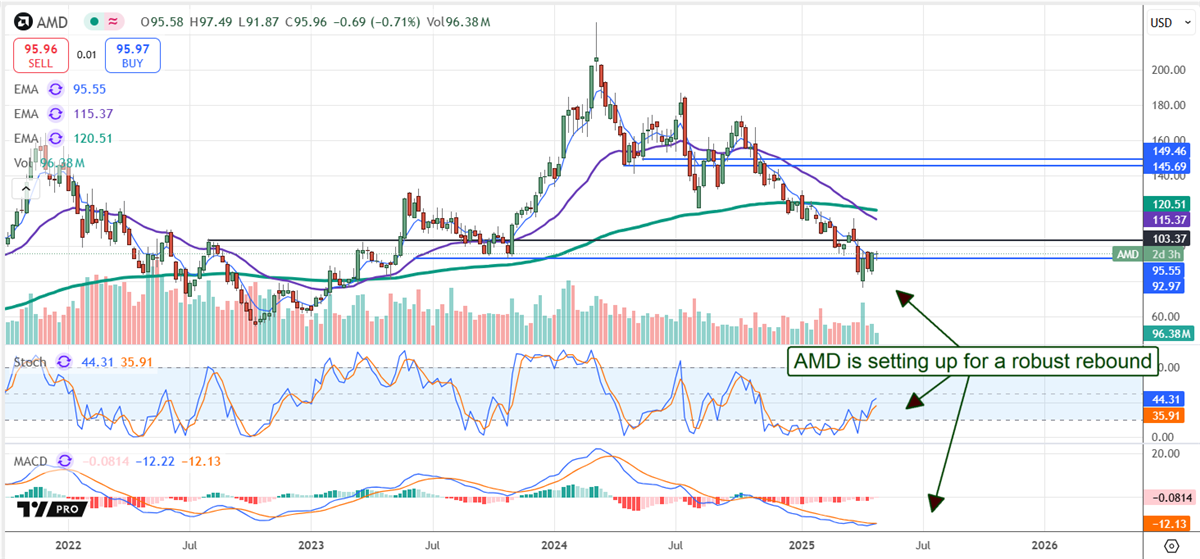
While Washington commands the macro narrative, the microeconomic floor belongs to Advanced Micro Devices (AMD). As Chief Executive Officer Dr. Lisa Su steps up to deliver the company’s quarterly earnings report, Wall Street’s gaze is fixed on a single, vital question: Is enterprise return on investment (ROI) keeping pace with astronomical capital expenditures in artificial intelligence?
AMD’s performance serves as a proxy for the health of the entire high-performance computing ecosystem. Investors are parsing every data point concerning the adoption rate of its MI300 series accelerators, enterprise datacenter migration trends, and margin pressures brought on by competitive pricing from NVIDIA and custom silicon initiatives by hyperscale cloud providers like Microsoft, Amazon, and Google.
The stakes extend far beyond Silicon Valley. Technology weightings within the S&P 500 and Nasdaq Composite mean that any systemic disappointment in AMD's forward guidance could trigger a sector-wide re-pricing. Cloud compute architecture investments represent the bedrock of current corporate earnings growth; if enterprise clients begin trimming their cloud IT budgets or demanding extended payback periods for AI deployment, the valuation multiples of the entire tech sector face severe contraction.
| Market Benchmark / Asset | Current Trajectory | Primary Catalytic Driver | Institutional Risk Assessment |
|---|---|---|---|
| Dow Jones Industrial Average | Choppy / Sideways | Midterm election balance; industrial supply-chain costs | Moderate; defensive rotation into cash and value |
| S&P 500 | Wavering Near Resistance | Broad corporate earnings; monetary policy outlook | Elevated; compression of P/E multiples |
| Nasdaq Composite | High Beta Volatility | AMD earnings; enterprise cloud CapEx; AI infrastructure | High; hyperscaler spending scrutiny |
| Advanced Micro Devices (AMD) | Pre-Earnings Anticipation | MI300 GPU adoption; datacenter gross margins | Critical; sets sector tone for semiconductor valuations |
Industry & Market Implications: Winners, Losers, and Macro Fallout
The intersection of a contested political climate and high-stakes tech earnings creates distinct structural winners and losers across global financial markets.
The Winners: Liquidity Havens and Defensive Sectors
As equity indices waver, institutional capital is flowing steadily toward fixed-income instruments offering attractive yields, short-duration Treasury bills, and defensive equity sectors such as consumer staples and regulated utilities. Companies with fortress balance sheets, low debt-to-equity ratios, and robust free cash flow generation are outperforming high-beta growth stocks that rely on speculative future cash flows.
The Losers: Speculative Growth and Overleveraged Tech
Conversely, unprofitable tech enterprises, early-stage biotechnology firms, and businesses heavily reliant on venture capital financing or floating-rate debt are feeling the squeeze. Without guaranteed access to low-cost capital and facing tighter lending standards from regional commercial banks, these entities are being forced to scale back research and development budgets to preserve operational runway.
Furthermore, multinational corporations with heavy international exposure are monitoring foreign exchange volatility. A fluctuating US dollar, driven by shifting perceptions of American fiscal stability and Federal Reserve rate trajectories, complicates cross-border earnings translation and compresses profit margins.
Frequently Asked Questions (People Also Ask)
Why do midterm elections have such a pronounced impact on the stock market?
Midterm elections directly dictate the balance of power in Congress, which sets federal spending priorities, tax policy, antitrust regulations, and sector-specific subsidies. Historically, markets favor political gridlock because it prevents sweeping legislative changes, offering corporate America a predictable, stable environment for long-term capital allocation.
What specific metrics are institutional investors watching in AMD’s earnings report?
Institutional analysts focus intensely on datacenter segment revenue growth, gross margin sustainability, and forward guidance for AI accelerator shipments (specifically the MI300 line). They also scrutinize management commentary regarding enterprise customer spending habits and supply-chain capacity constraints.
How are institutional portfolio managers hedging against current market volatility?
Portfolio managers are deploying robust risk mitigation techniques, including purchasing protective put options on major indices, increasing allocations to cash equivalents and short-term Treasuries, and rotating out of high-valuation growth stocks into cash-generative defensive equities.
What does "enterprise ROI" mean in the context of AI infrastructure spending?
Enterprise return on investment (ROI) measures the financial return businesses generate from their massive capital outlays into artificial intelligence hardware and software. Investors monitor this metric closely to ensure that corporate spending on cloud compute architecture is translating into tangible revenue growth rather than unsustainable cost inflation.
Future Outlook: Catalysts and Milestones to Watch
Looking ahead, the trajectory of the Dow, S&P 500, and Nasdaq will be dictated by how quickly political uncertainty resolves and whether corporate earnings can justify prevailing valuation multiples. As final election results are certified, attention will pivot immediately back to macroeconomic fundamentals: upcoming Consumer Price Index (CPI) prints, employment figures, and the Federal Reserve’s ongoing stance on monetary easing.
For the technology sector, AMD’s earnings report will establish the tone for late-season corporate disclosures. If enterprise demand proves resilient and semiconductor supply chains remain robust, the market may find the fundamental footing necessary to break out of its current consolidation range. However, any indication of stalling enterprise IT budgets combined with legislative deadlock could push equities into a deeper, more protracted period of consolidation and risk re-pricing.
Chief Investment Officers across global financial centers are advising caution. In an environment defined by dual macroeconomic and political catalysts, preserving capital and maintaining liquidity remain the paramount directives until market direction becomes statistically definitive.