
The global pharmaceutical market experienced a sharp recalibration today as clinical trial updates from biotechnology pioneer Moderna and pharmaceutical titan Merck & Co. failed to satisfy institutional investors. Despite high expectations surrounding their jointly developed personalized mRNA cancer vaccine, shares of both companies retreated in heavy trading. The pullback underscores a brutal reality in modern biopharmaceutical valuation: in an era of stringent capital allocation and compressed valuation multiples, even highly innovative scientific milestones must clear insurmountable commercial and statistical bars to sustain aggressive stock momentum.
As institutional portfolio managers, hedge fund analysts, and health-tech venture capitalists re-evaluate their positions, this investigative report unpacks the underlying clinical data, market reactions, regulatory compliance hurdles, and broader economic implications of today's market-moving disclosures.
Executive Takeaways
- Market Reaction: Moderna and Merck shares faced immediate downward pressure following the release of updated clinical trial metrics for their investigational mRNA cancer vaccine, highlighting investor impatience with long-term clinical timelines.
- Data Nuance: While the underlying science demonstrates compelling enterprise ROI in targeted oncology, specific progression-free survival (PFS) metrics and recurrence intervals fell short of aggressive Wall Street consensus models.
- Capital Allocation: Institutional investors are increasingly scrutinizing research and development (R&D) expenditure, infrastructure scalability, and cash-burn rates amidst shifting macroeconomic conditions and higher interest rates.
- Strategic Outlook: Despite near-term valuation headwinds, the long-term paradigm shift toward personalized mRNA therapeutics remains intact, though commercialization pathways require meticulous risk mitigation.
The Catalytic Event: Deconstructing the Clinical Data
The market correction was catalyzed by the release of updated data sets concerning mRNA-4157 (V940) in combination with Merck’s blockbuster immunotherapy checkpoint inhibitor, Keytruda (pembrolizumab). The therapy, designed to train the patient’s immune system to recognize and attack specific neoantigens unique to their individual tumors, was evaluated in patients with high-risk melanoma and other complex solid tumors.
While the data reaffirmed the foundational thesis of individualized cancer vaccination—showing a statistically significant reduction in the risk of recurrence or death compared to Keytruda monotherapy—market participants zeroed in on granular sub-group analyses. Sophisticated biotech analysts reviewing the hazard ratios, confidence intervals, and adverse event profiles noted that the incremental clinical benefit over standard-of-care baselines did not sufficiently accelerate the projected commercial timeline required to justify elevated stock valuations.
In the biotechnology sector, market liquidity and valuation multiples are inextricably linked to clinical velocity. When pivotal Phase 3 trial readouts introduce incremental uncertainties regarding regulatory approval pathways or market adoption curves, algorithmic trading models and institutional blockholders frequently trigger defensive profit-taking. Consequently, Moderna and Merck shares experienced accelerated selling pressure as short-term traders rushed to de-risk their portfolios.
Financial Mechanics and Market Liquidity Impact
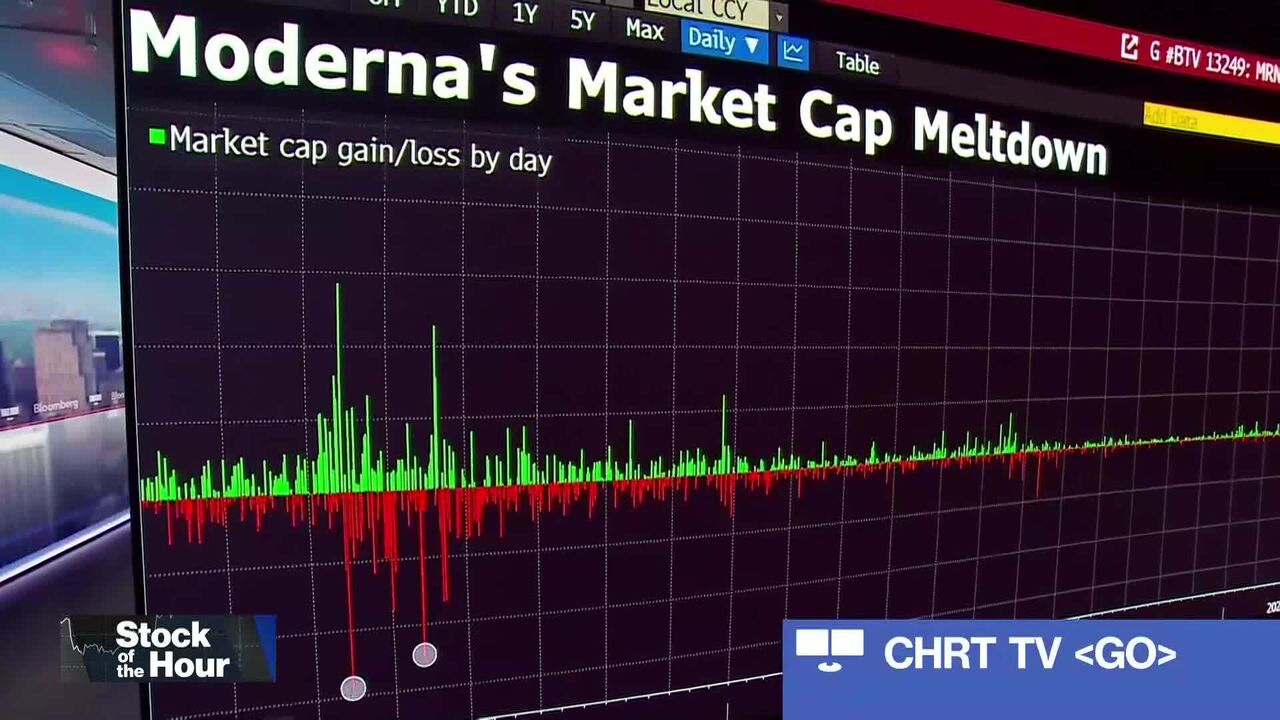
To understand the magnitude of today's equity adjustment, one must analyze the broader financial architecture supporting personalized mRNA pipelines. Developing, manufacturing, and commercializing personalized cancer vaccines requires massive capital deployment. Each vaccine is essentially a bespoke pharmaceutical product, engineered from scratch based on the unique genetic sequencing of an individual patient's resected tumor.
This decentralized manufacturing model introduces complex supply chain dependencies, rigorous quality assurance protocols, and substantial regulatory compliance overhead. For Moderna, whose post-pandemic valuation heavily relies on successfully pivoting its mRNA platform from infectious diseases to oncology and rare genetic disorders, maintaining investor confidence is paramount. The recent market pullback reflects a growing demand from institutional investors for clear visibility into gross margin expansion and infrastructure scalability.
Similarly, for Merck, whose flagship asset Keytruda faces impending patent expirations toward the end of the decade, mRNA-4157 represents a critical pillar of its long-term revenue diversification strategy. Any friction in the clinical or regulatory timeline directly threatens the company's long-term capital allocation framework and top-line growth projections.
Verified Data and Metrics Breakdown
| Metric / Parameter | Moderna / Merck Trial Data | Wall Street Consensus Expectations | Market Implications |
|---|---|---|---|
| Indication Focus | Adjuvant treatment for high-risk melanoma (Stage III/IV) | Broad initial label expansion across multiple solid tumors | Narrower initial addressable market limits near-term peak sales estimates. |
| Recurrence / Mortality Reduction | Statistically significant reduction in risk of recurrence or death | Higher magnitude of risk reduction across all sub-populations | Prompts recalibration of long-term discounted cash flow (DCF) valuation models. |
| Manufacturing Turnaround Time | Approximately 3 to 4 weeks per bespoke patient dose | Sub-3-week turnaround with automated digital infrastructure | Logistical complexities impact gross margin scaling and hospital adoption curves. |
| Regulatory Pathway | Breakthrough Therapy Designation & PRIME eligibility | Accelerated approval timelines with unhindered FDA cooperation | Heightened scrutiny on secondary endpoint data prior to Biologics License Application (BLA) submission. |
Industry and Market Implications: Winners, Losers, and Economic Ripples
The downward movement in Moderna and Merck shares reverberated across the entire life sciences ecosystem, creating distinct ripples among competitors, suppliers, and institutional investors:
- Biotech Competitors: Rival companies developing competing cancer vaccine platforms—such as BioNTech, Gritstone bio, and Moderna's various peers—experienced mixed secondary movements. While validation of the neoantigen approach remains intact, competitors are now under intense pressure to demonstrate superior clinical efficacy and more streamlined manufacturing workflows.
- CDMOs and Supply Chain Partners: Contract Development and Manufacturing Organizations (CDMOs) specializing in mRNA synthesis, lipid nanoparticle (LNP) delivery systems, and automated genomic sequencing continue to experience high demand. However, investors are demanding greater clarity on capacity utilization and capital expenditure discipline.
- Institutional Investors: Portfolio managers are prioritizing defensive positioning, rotating capital away from high-beta clinical-stage biotechs toward profitable large-cap pharmaceutical enterprises with established cash flows and robust dividend yields.
Frequently Asked Questions (People Also Ask)
Why did Moderna and Merck shares fall despite positive clinical data?
While the clinical data demonstrated statistical significance in reducing cancer recurrence, specific secondary endpoints, hazard ratios, and sub-group metrics did not meet the exceptionally aggressive growth models priced in by Wall Street. Investors are also factoring in the high capital expenditures and logistical complexities required to scale personalized manufacturing.
How do personalized mRNA cancer vaccines work?
Unlike traditional vaccines that prevent infectious diseases, personalized cancer vaccines are therapeutic. Doctors sequence a patient's tumor and healthy tissue to identify unique mutations (neoantigens). An mRNA sequence encoding these neoantigens is synthesized and delivered via lipid nanoparticles, training the patient's immune system to selectively target and destroy cancer cells while sparing healthy tissue.
What are the primary regulatory and manufacturing hurdles facing these therapies?
The manufacturing process is entirely bespoke for each patient, requiring rapid genetic sequencing, digital design, mRNA synthesis, and stringent quality release testing within a tight turnaround window. Ensuring regulatory compliance, supply chain redundancy, and cost-effective hospital integration remains a formidable operational challenge.
How does this impact the long-term valuation outlook for Moderna and Merck?
Long-term fundamentals remain anchored by multi-billion-dollar oncology market opportunities. However, today's market correction signals a transition from speculative exuberance to execution-driven valuation, where companies must consistently meet commercialization milestones and demonstrate capital efficiency to regain upward momentum.
Future Outlook: What Comes Next and Key Milestones to Watch
As the dust settles on today's trading session, executive leadership teams at both Moderna and Merck are pivoting toward upcoming clinical readouts and regulatory milestones. The true test of mRNA-4157 will not be dictated by single-quarter stock fluctuations, but by upcoming data readouts from expansive Phase 3 trials in non-small cell lung cancer (NSCLC), renal cell carcinoma, and melanoma.
For investors, risk mitigation requires close monitoring of several key operational metrics over the next 12 to 24 months:
- Phase 3 Readouts: Broader data verification across diverse oncology indications will determine whether the therapy can secure expanded label claims.
- Manufacturing Efficiency: Improvements in cloud-compute architecture, automated laboratory workflows, and supply chain infrastructure scalability will directly influence gross margin expansion.
- Regulatory Milestones: Formal feedback from the U.S. Food and Drug Administration (FDA) and the European Medicines Agency (EMA) regarding BLA submission requirements and accelerated approval pathways.
Ultimately, today's market pullback serves as a healthy reminder that disruptive technological innovation must navigate the rigorous demands of financial discipline, commercial scalability, and statistical validation. As clinical development progresses, disciplined capital allocation and transparent stakeholder communication will dictate which pharmaceutical pioneers successfully translate scientific breakthroughs into enduring enterprise value.