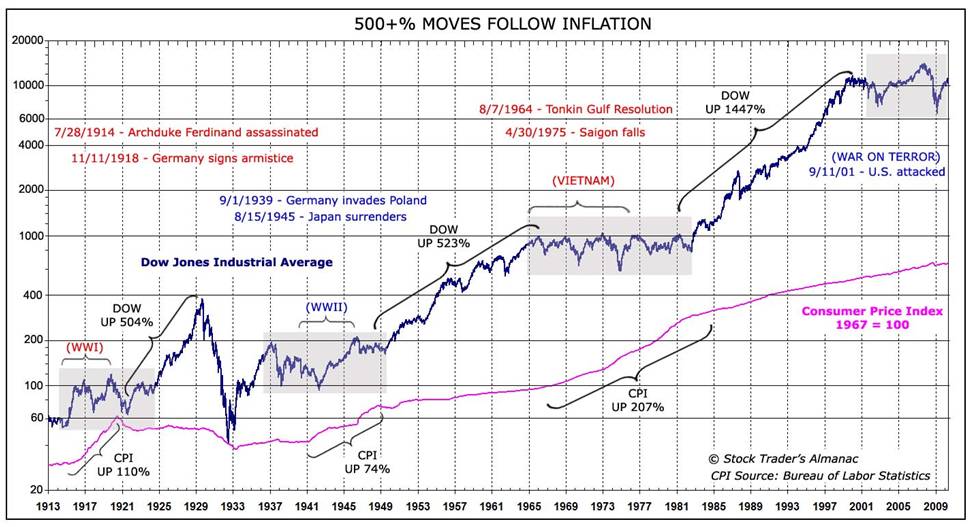
NEW YORK — In a stunning reversal of prevailing market pessimism, global financial assets staged a powerful, broad-based rally today following a decisive interest rate hike by the Federal Reserve and a welcome collapse in global crude oil prices. Wall Street desks were flooded with capital as benchmark indices surged, Treasury yields retreated, and U.S. crude briefly breached the psychologically critical $100-per-barrel threshold for the first time in months.
The convergence of aggressive monetary policy action from central bankers and sudden relief at the energy pump has fundamentally altered the near-term economic narrative. According to reports from NBC News and primary market feeds, investors responded enthusiastically to signals that the central bank is aggressively reclaiming its policy credibility, paving the way for a potential stabilization of inflation expectations.
The Anatomy of the Market Rally
The dramatic market response caught many institutional strategists off guard. Typically, a Federal Reserve rate hike sends shudders through equity markets due to fears of stifled corporate growth and higher borrowing costs. However, today’s reaction suggests that investors had already heavily priced in aggressive monetary tightening, viewing the actual delivery of the hike—coupled with falling energy input costs—as a signal that peak inflation may finally be in the rearview mirror.
Treasury yields tumbled across the curve as bond investors rushed to lock in higher yields while simultaneously expressing renewed confidence in the Federal Reserve’s long-term inflation-fighting strategy. The Bank of England’s simultaneous decision to leave rates unchanged further underscored a bifurcated global macroeconomic landscape, throwing a spotlight back onto the relative strength and aggressive posture of U.S. monetary policy.
- Equities Surge: Major U.S. stock indices rallied sharply, led by technology and consumer discretionary sectors that benefit from lower long-term discount rates and receding cost pressures.
- Bond Market Relief: U.S. Treasury yields fell significantly as investor trust in the Federal Reserve's policy trajectory was reaffirmed, driving up bond prices.
- Energy Price Breather: WTI crude oil prices briefly dipped below $100 per barrel, offering immediate relief to manufacturing, logistics, and consumer wallets.
- Global Divergence: While the Fed pushed rates higher, international counterparts like the Bank of England opted to hold steady, altering cross-border capital flows.
Crude Slips Below $100: The Inflation Relief Valve
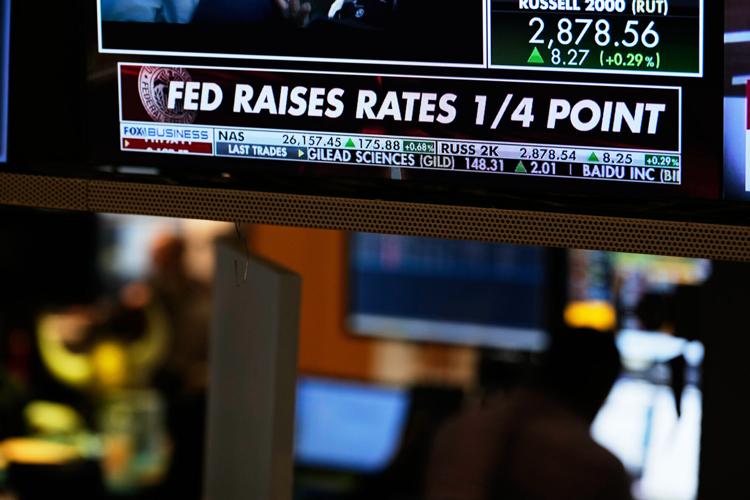
Perhaps the most potent psychological catalyst for today's market exuberance was the movement in energy markets. U.S. crude oil fell below the $100-a-barrel mark, driven by a combination of shifting supply dynamics, global demand fears, and a detailed reassessment of geopolitical risk premiums—including ongoing discussions regarding the true costs and duration of military operations concerning Iran.
High energy prices have acted as the single most destructive tax on the global consumer over the past year. By dropping below the triple-digit psychological barrier, crude has given central banks critical breathing room. Lower energy costs directly feed into lower transportation and manufacturing expenses, theoretically pouring cold water on persistent headline inflation figures.
Key Market Metrics at a Glance
| Asset Class | Market Action | Underlying Catalyst |
|---|---|---|
| U.S. Equities (S&P 500 / Nasdaq) | Strong Rally | Fed policy clarity and lower input costs |
| U.S. Treasuries | Yields Fall / Prices Rise | Renewed confidence in central bank credibility |
| WTI Crude Oil | Dipped Below $100/bbl | Shifting supply dynamics and geopolitical recalculations |
| British Pound / BOE Policy | Rates Left Unchanged | Divergent macroeconomic strategy from the UK |
What Market Analysts Are Saying
Wall Street veterans are divided on whether this rally marks the beginning of a durable bull market or merely a sharp, tactical bear-market rally. Speaking on condition of anonymity, a senior chief investment officer at a major New York asset management firm noted that the market's willingness to look past the immediate pain of higher borrowing costs is telling.
"The market was starved for certainty," the strategist explained. "By executing the rate hike and seeing commodities retreat simultaneously, investors are betting that the worst of the inflationary spiral has peaked. The Fed is regaining command of the narrative, and bond markets are rewarding that discipline."
However, caution remains the watchword among veteran economists. While lower oil prices and decisive central bank action provide a powerful short-term sugar rush for financial assets, the broader economic impact of sustained high interest rates has yet to fully filter through corporate balance sheets and consumer credit markets. Real estate, auto loans, and corporate debt refinancing will all face stiff headwinds in the quarters ahead.
Looking Ahead: The Path for Investors
As the dust settles on today's trading session, institutional portfolios are shifting rapidly to adapt to the new economic reality. Wealth managers recommend keeping a close eye on upcoming employment data and core consumer price index (CPI) prints to confirm whether today's optimism is backed by structural economic data.
For now, investors are enjoying a rare, harmonious session where both stocks and bonds moved higher in lockstep—a stark reminder that in modern financial markets, perception, liquidity, and energy prices ultimately dictate the daily rhythm of global capital.
Frequently Asked Questions
Why did stocks and bonds both rally when the Federal Reserve raised interest rates?
Typically, rate hikes hurt stocks and bonds. However, in this instance, the market viewed the Fed's decisive action—combined with a sharp drop in oil prices below $100—as a sign that inflation is peaking and that the central bank is effectively managing the economic cycle, restoring investor confidence.
What does oil dropping below $100 per barrel mean for the economy?
A drop in crude oil below $100 per barrel relieves inflationary pressures on manufacturing, shipping, and consumer gasoline prices. Lower energy costs act as a tax cut for consumers and businesses, helping to offset the negative impacts of higher borrowing costs.