Executive Takeaways
- Historic Valuation: Marvell Technology has agreed to acquire Lumentum Holdings in a blockbuster $115 billion cash-and-stock transaction, marking one of the largest technology sector consolidations in corporate history.
- The AI Compute Bottleneck: The mega-deal is an aggressive bet on solving enterprise data-center bottlenecks, specifically marrying Marvell’s custom ASICs and high-speed networking silicon with Lumentum’s industry-leading optical networking and laser components.
- Capital Allocation Strategy: The merger highlights accelerating boardroom urgency for infrastructure scalability as hyperscalers pour hundreds of billions of dollars into generative AI cloud compute architecture.
- Regulatory & Antitrust Scrutiny: Given the massive market capitalization and consolidation of critical semiconductor supply chains, the transaction will face rigorous global regulatory compliance reviews across the US, EU, and Asia.
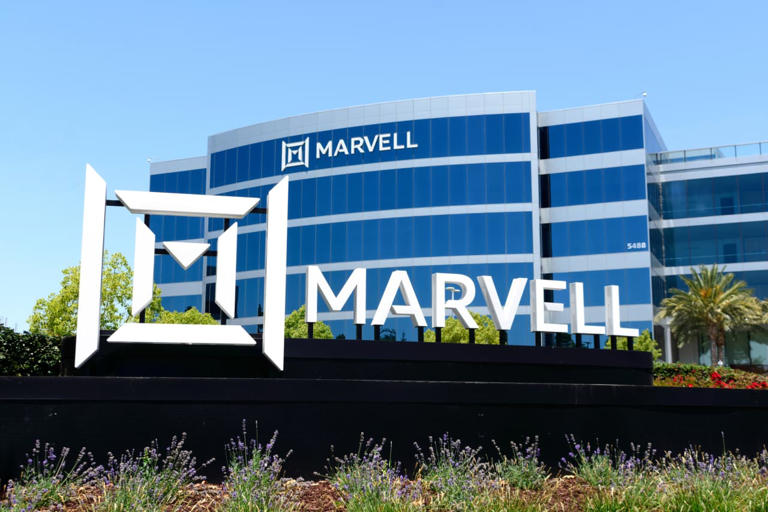
NEW YORK — In a definitive transaction that fundamentally alters the global semiconductor landscape, Marvell Technology has reached a definitive agreement to acquire Lumentum Holdings in a monumental $115 billion cash-and-stock deal. Announced early this morning amid intense market speculation, the combination fuses a powerhouse of high-speed networking silicon with a pioneer in optical components and photonic lasers. The strategic maneuver is engineered to capture the next wave of capital expenditure from hyperscale cloud providers racing to scale artificial intelligence data-center infrastructure.
The deal underscores a critical pivot in enterprise technology economics: as generative AI models scale from billions to trillions of parameters, the physical limitations of electrical interconnects within data centers have become the primary constraint on performance. By uniting Marvell’s compute acceleration portfolio with Lumentum’s optical transceivers and coherent optics, the combined entity aims to deliver a vertically integrated hardware stack capable of moving data at unprecedented speeds while optimizing enterprise ROI.
The Catalytic Shift: Solving the AI Interconnect Crisis
Test Our Free AI & Tech Utilities Suite
Calculate LLM API token costs, analyze article dwell-time, or simulate tech DCA returns.
For the past thirty-six months, Wall Street has closely monitored the hardware bottlenecks plaguing artificial intelligence deployment. While Graphics Processing Units (GPUs) and custom Application-Specific Integrated Circuits (ASICs) handle heavy computational workloads, the movement of data between thousands of clustered chips generates massive thermal output and severe latency. Traditional copper cabling is rapidly reaching its physical limits over long data-center distances, paving the way for optical interconnects.
Lumentum has long occupied a commanding position in this ecosystem, supplying high-performance lasers, photonic integrated circuits, and optical components essential for next-generation data-center interconnects. By integrating Lumentum directly into its operational structure, Marvell secures proprietary access to supply chains that are currently experiencing unprecedented demand surges from hyperscalers such as Microsoft, Amazon Web Services, Google, and Meta Platforms.
Financial analysts note that this aggressive capital allocation strategy protects Marvell from commoditization. Instead of competing solely on standard switching silicon, the merged entity will offer end-to-end data-center infrastructure solutions. This includes custom cloud-optimized silicon, digital signal processors (DSPs), and advanced optics packaged together, creating a formidable defensive moat against competing semiconductor giants.
Financial Architecture and Valuation Multiples

The $115 billion enterprise value represents a substantial premium over Lumentum's trailing trading multiples, signaling intense boardroom competition and a shared belief in long-term infrastructure scalability. Under the terms of the merger agreement, Lumentum shareholders will receive a blend of cash and newly issued Marvell common stock, representing a significant valuation milestone for the optical components sector.
Investment banking syndicates advising both firms have structured the deal to preserve robust market liquidity and maintain investment-grade credit ratings. Despite the massive transaction size, executive leadership teams project substantial operational synergies, driven by supply chain rationalization, combined research and development expenditures, and streamlined manufacturing footprints across North America and Asia.
However, risk mitigation remains a central focus for institutional investors. Valuation multiples in the semiconductor space remain sensitive to macroeconomic fluctuations, cyclical inventory corrections, and shifts in enterprise software spending. Marvell's executive team has outlined a clear debt-financing path and equity structure designed to protect shareholder value and accelerate earnings accretion within the first twenty-four post-closing months.
Verified Data & Metrics Breakdown
| Metric / Parameter | Marvell Technology (Pre-Deal) | Lumentum Holdings (Pre-Deal) | Combined Entity Projections |
|---|---|---|---|
| Transaction Value | — | — | $115 Billion (Cash & Stock) |
| Core Competency | Custom ASICs, Networking Silicon, Storage | Optical Transceivers, Photonic Lasers | Full-Stack AI Data-Center Hardware |
| Primary End Market | Cloud Hyperscalers, Enterprise Networking | Telecom, Datacom, Optical Interconnects | Global Hyperscale AI Infrastructure |
| Target Closing Horizon | — | — | Pending Regulatory Approval (12-18 Mos.) |
Industry & Market Implications: Winners and Losers
The monumental tie-up sends shockwaves across the global technology ecosystem, fundamentally altering competitive dynamics among semiconductor suppliers, networking giants, and cloud infrastructure providers.
- Winners — Hyperscale Cloud Providers: Tech titans investing heavily in proprietary large language models will benefit from a unified hardware vendor capable of supplying end-to-end optical and computational architectures, reducing system integration friction.
- Winners — Photonics and Optical Component Suppliers: The transaction validates the immense strategic value of optical networking, likely sparking secondary M&A interest across laser technology and fiber-optic manufacturing sectors.
- Losers — Traditional Competitors: Pure-play networking competitors and alternative silicon providers now face a formidable adversary with unmatched scale, product breadth, and supply chain leverage.
- Losers — Legacy Telecom Hardware Vendors: Companies slow to pivot toward AI-optimized data-center optical solutions may find themselves squeezed out of lucrative high-margin hyperscale contracts.
Frequently Asked Questions (People Also Ask)
Why is Marvell acquiring Lumentum for $115 billion?
Marvell is acquiring Lumentum to create a vertically integrated AI data-center hardware powerhouse. As generative AI workloads demand faster data transfer speeds between processors, traditional copper connections are failing. By combining Marvell's custom ASICs and networking silicon with Lumentum's cutting-edge optical lasers and transceivers, the combined company can deliver complete, high-speed optical infrastructure solutions for cloud hyperscalers.
How will the $115 billion transaction be financed?
The transaction is structured as a combination of cash and stock. Marvell intends to fund the cash portion through a combination of balance sheet liquidity, newly secured commercial debt financing facilities, and equity issuance, designed to protect investment-grade credit metrics while rewarding Lumentum shareholders.
What regulatory hurdles does the Marvell-Lumentum merger face?
Given the immense size and market concentration of the combined entity, the deal will trigger comprehensive antitrust reviews from regulatory bodies worldwide, including the United States Federal Trade Commission (FTC), the European Commission, and competition authorities in Asia. Analysts anticipate scrutinized reviews regarding supply chain dominance in critical AI hardware components.
When is the deal expected to officially close?
Both corporate boards have approved the transaction, but final closing remains subject to customary closing conditions, including regulatory clearances and approval from Lumentum shareholders. Industry executives estimate a completion window between 12 to 18 months.
Future Outlook and Key Milestones to Watch
As the integration planning gets underway, financial markets and technology analysts will closely monitor several key milestones. First, shareholder proxy filings will reveal granular details regarding the financing structure, termination fees, and projected cost synergies. Second, regulatory filings across major global jurisdictions will test antitrust sentiment regarding semiconductor consolidation.
Ultimately, the success of Marvell’s $115 billion bet will be measured by its ability to execute on next-generation co-packaged optics and custom silicon designs. If successful, the merged entity will not only dominate the AI data-center hardware ecosystem for the next decade but also establish a new blueprint for how semiconductor giants scale in the era of artificial intelligence.