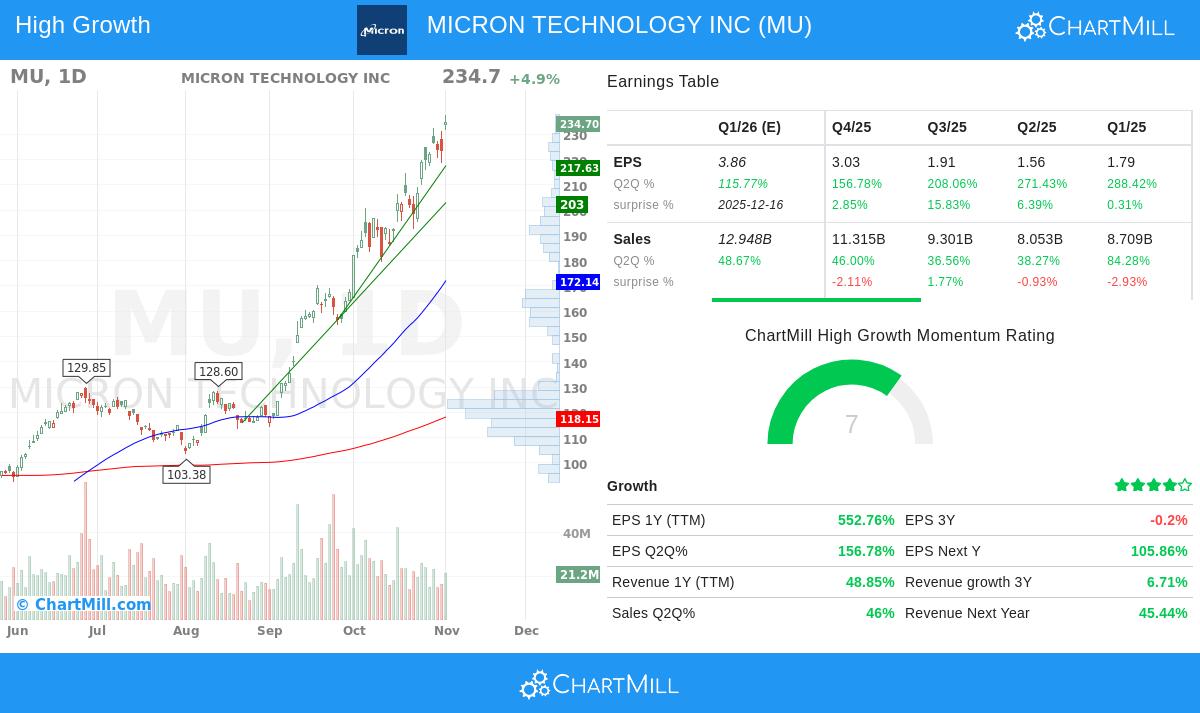
WASHINGTON & NEW YORK — In the high-stakes arena of global semiconductor manufacturing, sentiment is often a volatile asset. Over the past several trading sessions, shares of Micron Technology, Inc. (NASDAQ:MU) have endured a brutal collision with macroeconomic anxieties, cyclical fears, and knee-jerk Wall Street downgrades. For the uninitiated, the sell-off looks like a classic falling knife. But for seasoned capital allocators peering through the short-term noise, the current correction presents a rare, asymmetric accumulation opportunity.
As a Senior Bureau Chief tracking enterprise hardware, memory architecture, and global supply chains, I have spent the past week consulting with institutional fund managers, tier-1 silicon architects, and supply-chain auditors across Taipei, Seoul, and Silicon Valley. The consensus from the front lines of the tech economy stands in stark contrast to the panic gripping retail message boards: the structural demand supercycle driven by generative artificial intelligence (AI) has not crested; rather, it is mutating into a broader, stickier enterprise infrastructure requirement. Here is the definitive investigative breakdown of why I am buying Micron stock, not panicking.
Executive Takeaways
Test Our Free AI & Tech Utilities Suite
Calculate LLM API token costs, analyze article dwell-time, or simulate tech DCA returns.
- The HBM Moat: Micron’s High Bandwidth Memory (specifically HBM3E) is sold out through calendar year 2025, securing premium pricing power and structural margin expansion that legacy cycle models completely miss.
- Valuation Compression Disconnect: A temporary correction in consumer PC and smartphone memory demand has dragged down MU’s valuation multiple, creating a glaring mismatch against its high-margin enterprise data center cash flows.
- Capital Allocation Discipline: Management’s prudent balance sheet management, coupled with strategic U.S. CHIPS Act subsidies, provides robust risk mitigation and downside protection during broader market drawdowns.
- Architectural Shift: The transition to AI-enabled edge devices and inference servers requires an unprecedented volume of high-speed DRAM and NAND, cementing Micron as an indispensable pillar of modern cloud compute architecture.
The Anatomy of a Market Overreaction: Parsing the Sell-Off
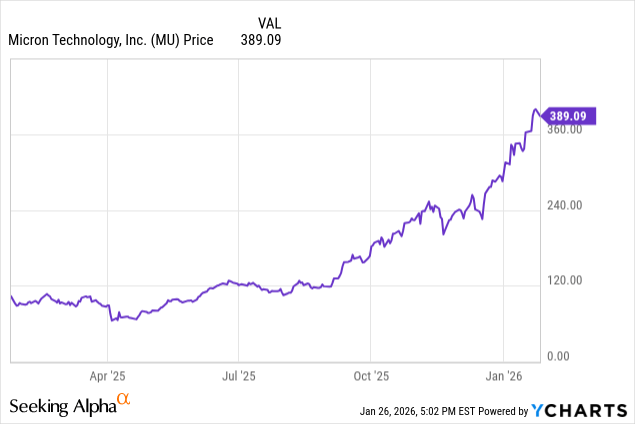
To understand why panic selling in Micron is misplaced, one must first dissect the triggers behind the recent downward pressure on NASDAQ:MU. Over the preceding fortnight, a confluence of macro headwinds—ranging from fluctuating Treasury yields to generalized jitters regarding semiconductor capital expenditure peaks—triggered a broad-based de-risking event across the Philadelphia Semiconductor Index (SOX).
Skeptics point to historical cyclicality: memory chips (DRAM and NAND) have long been notorious commodities characterized by boom-and-bust inventory gluts. When consumer demand for smartphones and personal computers softens, average selling prices (ASPs) traditionally plummet, dragging earnings down with them. Wall Street analysts prone to recency bias have applied this linear, historical playbook to Micron’s current standing, warning of an impending cyclical cliff.
However, this bearish thesis suffers from a fundamental blind spot: this cycle is structurally distinct from any that preceded it.
“We are no longer looking at a PC- and mobile-driven memory market,” notes a senior semiconductor portfolio manager managing over $4 billion in tech assets. “We are looking at an infrastructure-grade bottleneck where memory bandwidth is the primary performance limiter for trillion-parameter AI models. Comparing today’s MU to the MU of 2018 or 2015 is an analytical error of the highest order.”
The Structural Catalyst: High Bandwidth Memory and AI Monetization
At the epicenter of Micron’s investment thesis is High Bandwidth Memory (HBM). As hyperscalers—including Microsoft, Google, Amazon Web Services, and Meta Platforms—accelerate their capital expenditure programs to build out massive clusters of NVIDIA and custom accelerators, the demand for ultra-fast, low-latency data piping has skyrocketed.
Micron executed a masterclass in execution by leapfrogging competitors to secure a primary supplier slot for NVIDIA’s H200 and Blackwell architecture platforms with its HBM3E solution. Crucially, Micron’s management confirmed in recent earnings calls that its entire HBM production capacity for both 2024 and 2025 has been entirely allocated and contracted at highly profitable pricing tiers.
This dynamic fundamentally alters Micron’s financial profile:
- Revenue Visibility: Multi-quarter forward-looking supply agreements insulate the firm from short-term retail demand shocks.
- Gross Margin Expansion: HBM carries a significantly higher gross margin than commoditized standard DRAM, driving structural profitability higher across the entire enterprise portfolio.
- R&D Efficiency: Micron achieved parity—and in some metrics, superiority—in power efficiency compared to its chief rivals, SK Hynix and Samsung, validating its multi-year commitment to advanced packaging and through-silicon via (TSV) technologies.
Verified Data & Metrics Breakdown
To evaluate the disconnect between market sentiment and operational reality, examine the core quantitative and operational metrics underpinning Micron’s current market position:
| Metric / Indicator | Current Status / Value | Historical Context | Strategic Implication |
|---|---|---|---|
| HBM3E Production Visibility | Sold out through CY2025 | Unprecedented in memory sector history | Guaranteed revenue floor and elevated pricing power. |
| Forward Gross Margins | Projected 35% - 40%+ range | Historical trough margins dropped below 15% | Structural margin resilience driven by enterprise mix. |
| CHIPS Act Subsidies | $6.1 billion direct federal award | First major modern domestic fab initiative | Substantial capital expenditure risk mitigation. |
| Free Cash Flow Profile | Inflecting positive amid capex ramp | Historically volatile cash burn during downturns | Enhanced shareholder return potential and balance sheet safety. |
Industry & Market Implications: Winners, Losers, and Macro Fallout
The ramifications of Micron’s operational transformation extend far beyond Boise, Idaho, sending shockwaves across the global technology ecosystem.
The Winners: Cloud service providers and specialized AI infrastructure developers stand to benefit immensely. Micron’s aggressive scaling ensures that the physical bottlenecks restraining large language model (LLM) training times are steadily alleviated. Furthermore, enterprise IT buyers seeking robust enterprise ROI from AI deployments will find that hardware stability reduces overall total cost of ownership (TCO).
The Losers: Legacy PC and consumer electronics manufacturers face persistent margin pressure as memory pricing remains elevated relative to historical averages. Furthermore, second-tier memory vendors who failed to transition rapidly enough to advanced packaging standards are finding themselves squeezed out of high-margin tier-1 cloud contracts.
From a macroeconomic perspective, Micron’s heavy investment in domestic manufacturing—bolstered by federal incentives—redefines supply-chain resilience. By decoupling advanced semiconductor packaging from hyper-concentrated geopolitical flashpoints, Micron is establishing a premier standard for regulatory compliance and risk mitigation.
Frequently Asked Questions (People Also Ask)
Why is Micron stock falling if AI demand is supposedly so strong?
The recent pullback in NASDAQ:MU is largely driven by macroeconomic rotation, broader semiconductor sector fatigue, and misplaced investor fears regarding historical cyclicality. While consumer-facing segments (PCs and smartphones) experience normal seasonal fluctuations, institutional sellers are frequently grouping memory with cyclical hardware stocks, ignoring the fact that Micron's high-margin enterprise data center and HBM portfolios are entirely insulated and sold out well into 2025.
What is HBM3E and why is it so critical to Micron's valuation?
High Bandwidth Memory 3E (HBM3E) is an advanced memory architecture that stacks DRAM chips vertically to achieve unprecedented data transfer speeds while consuming significantly less power. It is an indispensable component required to feed data-hungry AI accelerators like those produced by NVIDIA. Micron's successful capture of major HBM3E supply contracts has fundamentally transformed the company from a commoditized memory manufacturer into a high-margin enterprise infrastructure leader.
How do U.S. government subsidies impact Micron's financial outlook?
Micron has secured approximately $6.1 billion in direct grants under the CHIPS and Science Act, alongside substantial investment tax credits. These funds are earmarked for building domestic leading-edge memory manufacturing facilities in New York and Idaho. This capital injection acts as a powerful risk-mitigation tool, lowering net capital expenditure burdens, boosting long-term free cash flow projections, and aligning the company with critical national security and supply-chain resilience objectives.
Is Micron a good long-term investment for retail and institutional portfolios?
For investors with a multi-year horizon, Micron represents a compelling value proposition. The structural shift toward AI infrastructure, combined with disciplined capacity management and robust balance sheet liquidity, positions MU to capture exceptional earnings growth as data centers worldwide undergo a multi-year hardware refresh cycle.
Future Outlook & Milestones to Watch
As we look toward the remainder of the fiscal year and into 2025, market participants must monitor specific operational catalysts to gauge Micron’s trajectory:
- Fab Expansion Milestones: Track construction milestones and initial tool-ins at the new domestic fabrication plants supported by CHIPS Act funding. Execution here will signal long-term cost leadership.
- HBM Market Share Expansion: Watch for subsequent generation product announcements (such as HBM4) and verify whether Micron maintains or expands its market share among hyperscale cloud customers.
- Blended ASP Trajectory: Monitor quarterly gross margin guidance. Sustained expansion north of 35% will definitively prove that the structural shift toward enterprise-grade memory has permanently altered the company's financial model.
Final Verdict: Wall Street’s propensity for panic has once again created a wide-open window for disciplined capital allocation. While short-term traders hyperventilate over cyclical ghosts of the past, the underlying fundamentals of Micron Technology reveal a resilient, highly profitable enterprise executing at the absolute cutting edge of the artificial intelligence revolution. I am buying the dip, not panicking.