Executive Takeaways:
- Wall Street Consensus Shift: NVIDIA Corporation (NASDAQ: NVDA) continues to command extraordinary institutional confidence, backed by 44 recent upward EPS revisions as enterprise demand for advanced compute accelerates.
- The Architectural Pivot: Moving beyond traditional hardware unit sales, NVIDIA is constructing an "AI Factory" model designed to convert upfront capital expenditure cycles into predictable, usage-linked software and cloud services revenue.
- Monetizing Blackwell: The rollout of the Blackwell architecture represents more than a raw performance leap; it serves as the foundational infrastructure for proprietary inference-as-a-service frameworks and enterprise fleet management.
- Risk Mitigation & Capital Allocation: By anchoring its ecosystem deeper into enterprise operational workflows, NVIDIA aims to protect its valuation multiples against cyclical infrastructure digestion phases by hyperscalers.
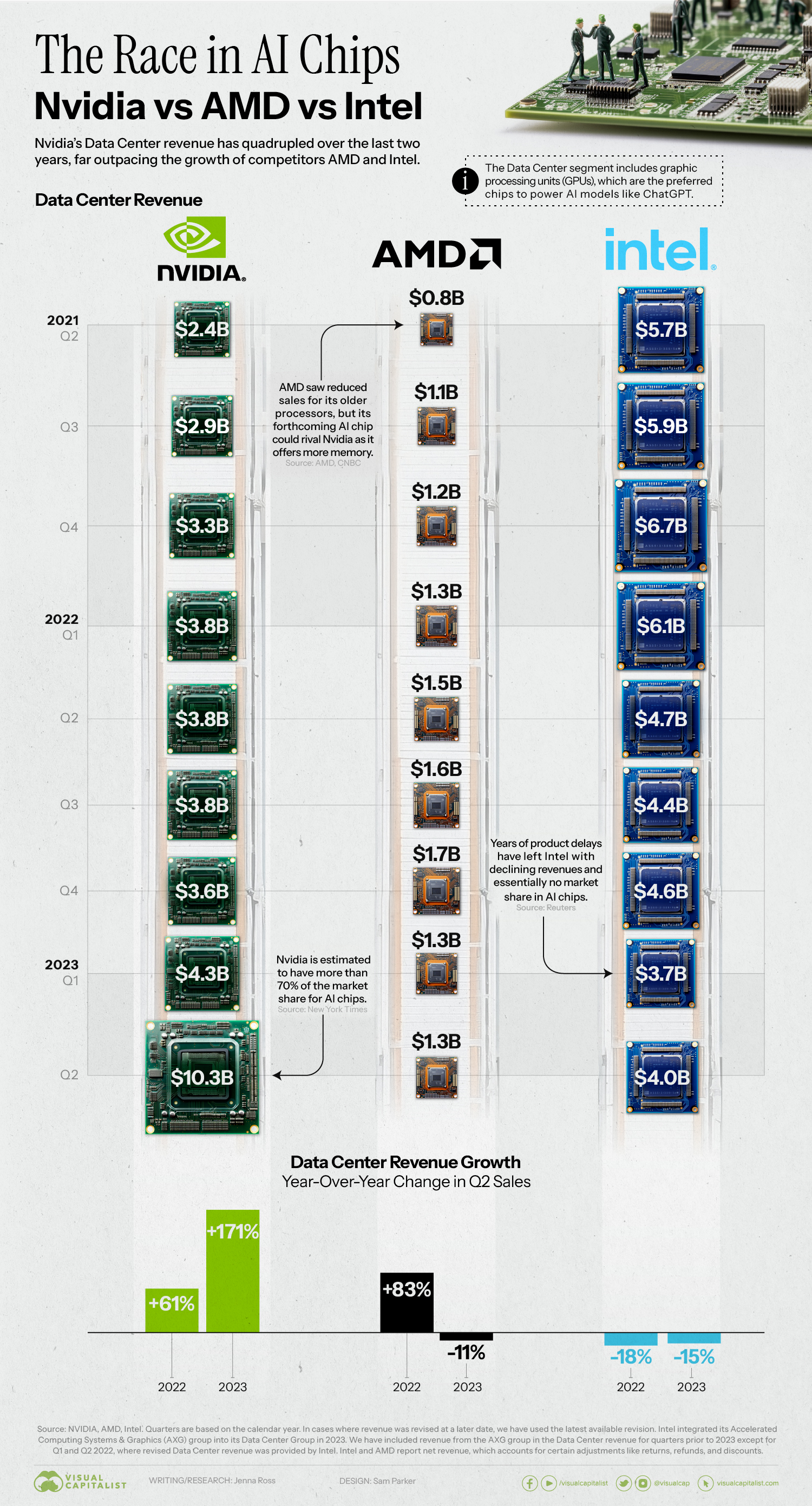
NEW YORK — For the better part of the post-ChatGPT era, Wall Street’s valuation of NVIDIA Corporation (NASDAQ: NVDA) has rested on a simple, relentless calculus: how many silicon wafers can Taiwan Semiconductor Manufacturing Company (TSMC) etch, and how fast can hyperscale cloud providers write billion-dollar checks to assemble them into server racks. Yet, beneath the headline-grabbing shipments of H100 and upcoming Blackwell clusters, a profound structural transformation is quietly taking shape within the corporate headquarters in Santa Clara.
According to comprehensive financial disclosures and supply chain telemetry, NVIDIA is executing a strategic pivot from a pure-play hardware vendor into an indispensable infrastructure utility. By weaponizing its proprietary software stack, CUDA ecosystem, and newly minted enterprise AI foundry services, the company is engineering a transition toward usage-linked, recurring revenue streams. For institutional portfolio managers and equity analysts tracking the stock’s unprecedented trajectory—currently buoyed by 44 upward earnings per share (EPS) revisions—this evolution could permanently alter how the market prices semiconductor cyclicity.
The Anatomy of the AI Factory: Redefining Enterprise Compute Economics
To understand the mechanics of NVIDIA’s revenue evolution, one must examine the fundamental economics of the modern data center. Historically, enterprise hardware purchases are treated as capital expenditures (CapEx)—lumpy, highly cyclical outlays that leave technology providers vulnerable to inventory digestion phases. When cloud giants like Microsoft Azure, Amazon Web Services (AWS), and Google Cloud build out their server farms, they absorb massive upfront costs, creating a high-beta revenue profile for their suppliers.
NVIDIA’s "AI Factory" model seeks to upend this dynamic by embedding its technology deeper into the operational workflow of enterprise customers. Rather than merely selling accelerators, NVIDIA is packaging compute architecture, networking fabrics (via Quantum InfiniBand and Spectrum-X Ethernet), and proprietary microservices—collectively known as NVIDIA Inference Microservices (NIM)—into cohesive, subscription-backed operational frameworks.
This approach mirrors the enterprise software playbook pioneered by enterprise giants like Salesforce or Microsoft, but executed at the physical layer of silicon and optics. By abstracting the crushing complexity of deploying large language models (LLMs) and computer vision pipelines into turnkey software APIs, NVIDIA captures a recurring economic toll on every enterprise token generated, inference executed, and model fine-tuned across its deployed base.
The Blackwell Catalyst: Unlocking Usage-Linked Monetization

The arrival of the Blackwell architecture acts as the primary catalyst for this business model evolution. Delivering up to 25 times the energy efficiency and significantly lower total cost of ownership (TCO) compared to its Hopper predecessor, Blackwell is designed not just to train massive foundational models, but to economically sustain continuous enterprise inference.
Inference—the process by which an AI model applies its learned weights to generate real-time responses—is inherently continuous, unlike training, which is episodic. As global enterprises transition from experimental model training to live, mission-critical customer deployments, inference demand scales linearly with user engagement. By tying its software ecosystem directly to Blackwell-powered clusters, NVIDIA positions itself to capture software licensing fees, runtime management revenues, and cloud orchestration tolls that fluctuate directly with end-user consumption.
This structural shift addresses the perennial investor anxiety regarding peak hardware demand. If a hyperscaler temporarily slows its physical data center expansion, an established base of millions of active enterprise AI applications running on NVIDIA silicon continues to generate high-margin software and service yields.
| Metric / Indicator | Traditional Hardware Model (Hopper Era) | AI Factory / Usage Model (Blackwell Era) |
|---|---|---|
| Revenue Recognition | Upfront product delivery and server rack sales | Hybrid upfront hardware + recurring software/services |
| Demand Driver | Hyperscale CapEx budgets & model training size | Enterprise inference volume & active user token counts |
| Margin Profile | Extremely high gross margins on silicon (70%+) | High gross margins blended with software-tier scalability |
| Cyclical Vulnerability | High exposure to cloud digestion cycles | Mitigated by sticky, usage-linked operational workloads |
Industry & Market Implications: Ecosystem Consolidation and Competitive Moats
The financial and competitive implications of NVIDIA’s strategy reverberate across the global technology landscape. For rival merchant silicon manufacturers and custom ASIC (Application-Specific Integrated Circuit) initiatives inside major cloud providers—such as Google’s TPU or Amazon’s Trainium—matching raw teraflops is no longer the primary hurdle. The true barrier to entry is replicating an end-to-end ecosystem that seamlessly transitions an enterprise from raw silicon to monetizable software applications.
By cementing its position as the foundational operating system of the AI economy, NVIDIA exercises immense pricing power and supply chain priority. Even as regulatory scrutiny intensifies globally regarding antitrust concerns and market concentration, the sheer velocity of enterprise adoption creates a self-reinforcing flywheel. Developers trained on CUDA build applications that require NVIDIA infrastructure, which in turn drives enterprise procurement teams to mandate NVIDIA hardware, protecting market liquidity and equity valuation multiples.
Conversely, traditional enterprise software incumbents face a strategic reckoning. Companies that fail to integrate deeply with NVIDIA’s accelerated computing frameworks risk finding their legacy software stacks bypassed by agile, AI-native competitors built entirely upon the Blackwell and NIM architecture.
Frequently Asked Questions (People Also Ask)
How does NVIDIA’s AI Factory model change its traditional revenue structure?
Traditionally, NVIDIA recognized revenue primarily through upfront sales of GPUs and networking hardware. The AI Factory model introduces software subscriptions, microservice access fees (via NVIDIA NIM), and managed cloud services that generate recurring, usage-linked revenue tied to active enterprise inference and token generation.
Why is the Blackwell architecture critical to this usage-linked transition?
Blackwell provides massive efficiency gains in real-time inference execution. Because inference is a continuous operational workload—unlike episodic model training—Blackwell’s superior TCO and performance make continuous enterprise AI deployments economically viable at scale, driving the transaction volume necessary for usage-linked monetization.
What role do upward EPS revisions play in investor perception of NVDA?
The accumulation of 44 upward EPS revisions reflects accelerating institutional confidence that near-term demand is not a temporary bubble, but a durable multi-year corporate transformation supported by expanding enterprise software monetization.
Future Outlook: Milestones and Key Watchpoints for Investors
As NVIDIA navigates the second half of the decade, institutional investors will closely monitor several key operational metrics to gauge the success of the AI Factory transition. First, analysts will track the non-hardware segment of NVIDIA's revenue—specifically software, support, and cloud services revenue—to measure the tangible velocity of recurring cash flows.
Second, supply chain execution regarding Blackwell volume shipments and advanced packaging capacities will remain a decisive factor in meeting unfulfilled enterprise backlogs. Finally, monitoring enterprise adoption rates of NVIDIA AI Enterprise software licenses will provide clear visibility into whether the company is successfully decoupling its long-term financial performance from traditional hardware CapEx cycles.
For a market constantly searching for structural growth anchors, NVIDIA’s ability to turn silicon supremacy into software-driven recurring revenue could redefine the playbook for modern technology conglomerates.