The $100 Oil Shock: Global Markets Fracture as Crude Breaches Critical Tipping Point
LONDON & MUMBAI — The psychological and economic fault lines of the global financial system were laid bare on September 9, as Brent crude oil decisively breached the triple-digit threshold to trade above $100 a barrel. The milestone—driven by a perfect storm of protracted OPEC+ supply curbs, depleting inventories, and surprisingly resilient demand—has sent shockwaves through international equity markets, leaving overseas bourses deeply divided.
For global investors, the return of $100 oil is not merely a trading headline; it is a fundamental shift in the macroeconomic landscape. The threat of a renewed energy-led inflationary spiral is forcing traders to price in a "higher-for-longer" interest rate trajectory from central banks, threatening to choke off fragile economic growth in Europe and Asia alike.
Executive Summary: The Ripple Effect of Triple-Digit Oil
- The Crude Catalyst: Brent crude futures breached $100.40 per barrel, while West Texas Intermediate (WTI) climbed to $96.80, fueled by extended supply cuts from Saudi Arabia and Russia alongside depleted U.S. crude inventories.
- A Fractured Market Response: Overseas equity markets displayed stark asymmetry. Energy-heavy indices, such as London’s FTSE 100, found support, while import-dependent Asian markets, including Tokyo’s Nikkei 225, suffered significant pullbacks.
- Monetary Policy Anxiety: Central bankers face a direct challenge. Rising energy costs threaten to undo months of aggressive monetary tightening, raising the specter of stagflation in vulnerable European economies.
- Corporate Margin Squeeze: Downstream sectors—most notably aviation, logistics, and consumer discretionary packaging—experienced sharp sell-offs as input cost projections surged.
The Mechanics Behind the Rally: Why Oil Crossed $100
The march to $100 oil has been building for months, characterized by tight physical supply dynamics. Riyadh and Moscow’s coordinated decision to extend voluntary supply cuts totaling 1.3 million barrels per day through the end of the year has effectively starved the market of medium-sour crude. Simultaneously, domestic demand in the United States and a stabilization of manufacturing activity in China have kept demand surprisingly robust.
"We are looking at a market in severe structural deficit," said Marcus Vance, Chief Energy Strategist at London-based Capital Partners. "With commercial stockpiles at Cushing, Oklahoma, hovering near operational floors, there is zero margin for error. Any minor geopolitical friction or infrastructure bottleneck now translates directly into a price spike."
Global Equity Markets: A Tale of Two Hemispheres
The reaction across major overseas trading floors highlights the divergent impact of high energy prices on national economies. Resource-rich nations and energy-weighted indices acted as natural hedges, while manufacturing-dependent regions bore the brunt of the selling pressure.
Europe: The Inflationary Crucible
In Europe, stock markets struggled to find a uniform direction. The UK’s benchmark FTSE 100 edged higher by 0.4%, buoyed by its heavy concentration of oil majors like BP and Shell, alongside diversified miners. However, across the English Channel, the picture was far bleaker. France’s CAC 40 fell by 0.7%, and Germany’s DAX shed 0.8%.
As Europe’s industrial engine, Germany is highly sensitive to energy input costs. With the eurozone already flirting with stagnation, the prospect of sustained $100 oil threatens to further dampen consumer demand and force the European Central Bank (ECB) to maintain a highly restrictive policy stance, despite deteriorating growth metrics.
Asia-Pacific: Importers on the Defensive
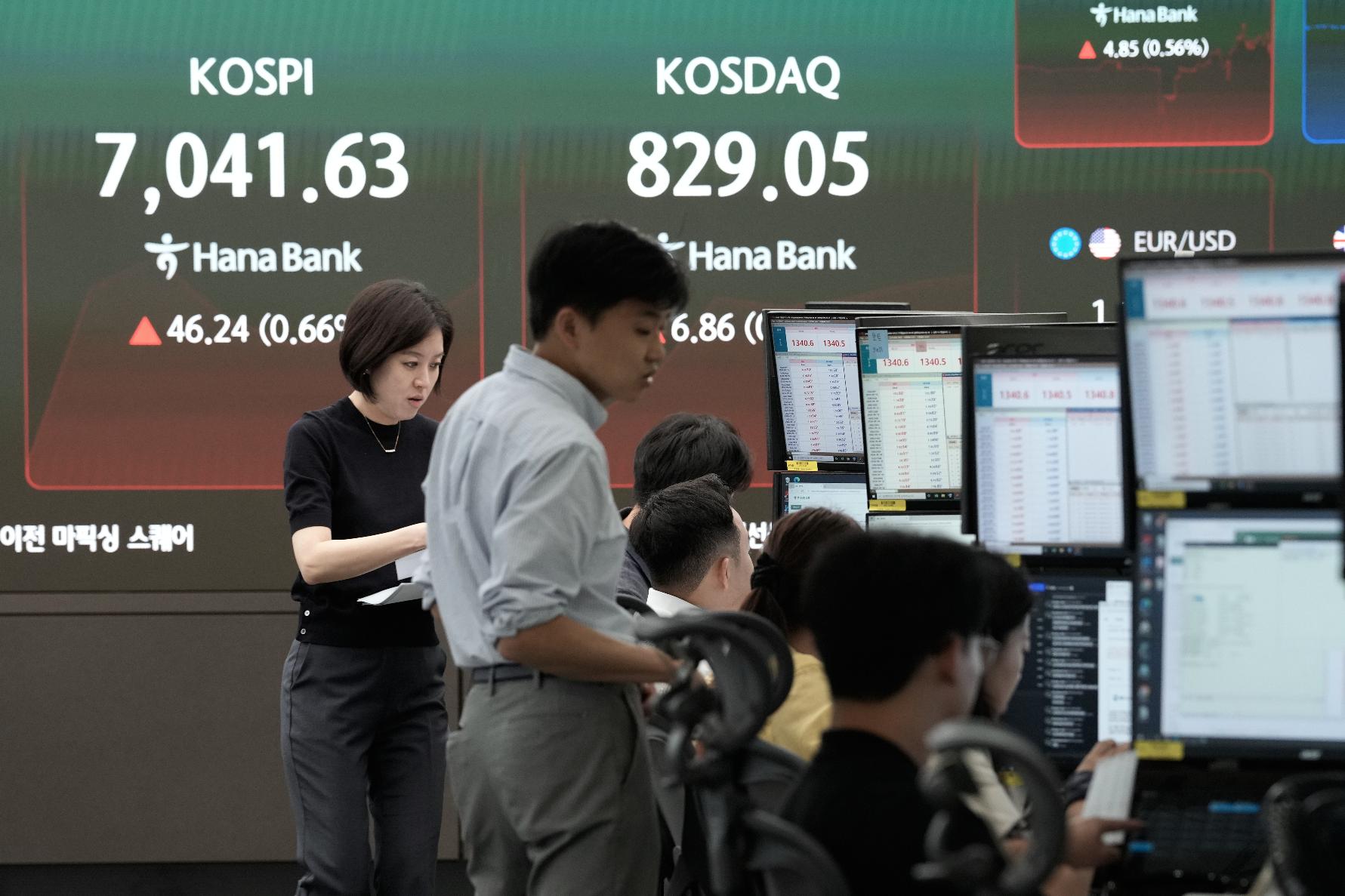
In Asia, where most nations are net energy importers, the mood was decidedly defensive. Japan's Nikkei 225 dropped 1.1%, led by declines in technology and automotive manufacturing, where high input costs threaten to erode export margins. South Korea's Kospi declined by 0.9%.
Conversely, Australia’s S&P/ASX 200 managed a modest 0.3% gain, insulated by its heavy reliance on resource and energy exports. In mainland China, the Shanghai Composite remained flat, as state-directed energy subsidies partially insulated domestic firms, though broader economic recovery concerns capped any potential upside.
Market Snapshot: Key Asset Class Movements
The table below outlines the mixed performance of key global asset classes following Brent's surge past the $100 threshold on September 9.
| Asset / Index | Current Level / Price | Daily Change (%) | Market Sentiment |
|---|---|---|---|
| Brent Crude Oil | $100.45 | +1.85% | Strongly Bullish (Supply Deficit) |
| WTI Crude Oil | $96.80 | +1.62% | Bullish (Inventory Depletion) |
| FTSE 100 (UK) | 7,495.20 | +0.40% | Resilient (Energy/Mining Weighted) |
| DAX 40 (Germany) | 15,580.40 | -0.80% | Bearish (Industrial Input Concerns) |
| Nikkei 225 (Japan) | 32,150.50 | -1.10% | Bearish (Import Cost Pressure) |
The Outlook: Will Central Banks blink?
The critical question facing institutional allocators is whether this oil spike will prove transitory or structural. If crude remains above $100 through the next quarter, headline inflation metrics in the US and Europe will inevitably tick upward, forcing the Federal Reserve, the ECB, and the Bank of England to maintain or even increase interest rates, despite visible cracks in regional banking and real estate sectors.
"The current market dynamic is a double-edged sword," says Amara Sen, Senior Director of Macro Strategy at the Economic Times. "While commodity desks are enjoying a windfall, the broader equity market is pricing in a structural tax on consumer discretionary spending. Every dollar increase in gasoline prices is effectively a dollar removed from retail, hospitality, and tech spending."
For now, global markets remain highly fragmented, characterized by high volatility and rapid sector rotation. Until supply-side pressures ease, or global demand experiences a significant, recessionary cooling, $100 oil appears poised to remain the central pillar around which all other market assets revolve.
Frequently Asked Questions (FAQ)
1. Why is $100 oil considered a "tipping point" for global financial markets?
Oil at $100 per barrel acts as an economic tax on both businesses and consumers. Structurally, it drives up manufacturing, transportation, and agricultural costs, which are quickly passed down to the consumer. This threatens to reignite headline inflation, forcing central banks to keep interest rates high, which historically dampens corporate earnings and suppresses equity valuations.
2. Which sectors are best positioned to outperform in this environment?
Upstream oil and gas exploration and production companies directly benefit from elevated commodity prices, as do oilfield service providers and agricultural chemical firms. Conversely, downstream sectors such as commercial airlines, logistics, maritime shipping, and consumer product manufacturing face significant margin compression and are typically underweight in a sustained high-energy environment.