Executive Takeaways
- Strategic Realignment: Microsoft is methodically winding down its high-profile infrastructure-sharing agreement to rent external AI cloud capacity from Oracle Cloud Infrastructure (OCI).
- Capex Rationalization: The shift reflects aggressive capital allocation strategies as Redmond brings massive, proprietary hyperscale data center capacity online, drastically reducing reliance on third-party architecture for LLM training and inference.
- Ecosystem Ripple Effects: While Oracle faces a strategic recalibration of its aggressive AI hypergrowth narrative, enterprise cloud buyers must re-evaluate multi-cloud architectures, infrastructure scalability, and vendor lock-in risks.
- Financial Valuation Impact: Wall Street analysts are closely scrutinizing valuation multiples, capital expenditure (CapEx) efficiency, and enterprise ROI across Big Tech as infrastructure spending enters a hyper-scrutinized phase.
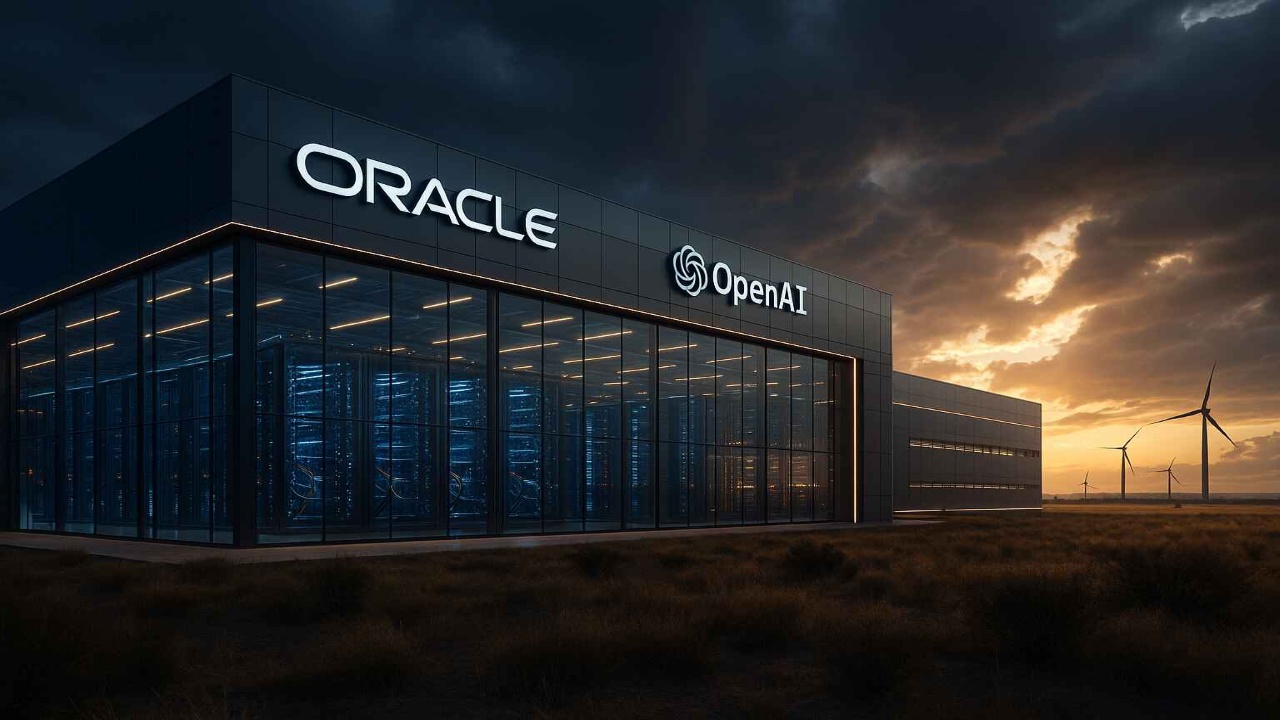
In a definitive pivot that underscores the ruthless, high-stakes economics of the generative artificial intelligence boom, Microsoft is systematically winding down its strategic arrangement to lease AI cloud capacity from Oracle Cloud Infrastructure (OCI). According to senior industry insiders, enterprise architects, and financial analysts briefed on the transition, the decision marks a critical turning point in how Big Tech manages exponential infrastructure scalability, soaring power demands, and long-term capital allocation.
For over a year, the partnership between Microsoft and Oracle was heralded as a triumph of cross-platform interoperability. Designed to bridge Microsoft Azure’s soaring foundational model training requirements with Oracle’s high-performance InfiniBand networking and high-density GPU clusters, the deal symbolized an era of collaborative coopetition. However, as global supply chains for advanced silicon stabilize and Microsoft’s proprietary data center footprint expands at an unprecedented velocity, the economic calculus of renting external cloud compute has fundamentally shifted.
The Genesis and Mechanics of the Oracle-Microsoft AI Alliance
Test Our Free AI & Tech Utilities Suite
Calculate LLM API token costs, analyze article dwell-time, or simulate tech DCA returns.
To understand the gravity of Microsoft’s wind-down, one must examine the acute infrastructural bottleneck that defined the 2023–2024 generative AI gold rush. As OpenAI accelerated the training iterations of its frontier models, Microsoft—its primary cloud and financial backer—faced an unprecedented deficit in raw compute architecture. Azure’s internal data centers, while vast, could not instantly provision the hundreds of thousands of specialized NVIDIA H100 and Blackwell GPUs required to sustain concurrent enterprise workloads and foundational research.
Enter Oracle. Under the visionary leadership of Larry Ellison and Safra Catz, Oracle had aggressively positioned OCI as a nimble, ultra-high-performance alternative for high-performance computing (HPC) and AI workloads. By deploying ultra-low-latency RoCEv2 and NVIDIA InfiniBand networking architectures, OCI offered a compelling plug-and-play destination for hyperscalers experiencing acute capacity crunches. The resulting cross-cloud interconnect enabled enterprise clients to seamlessly bridge data residing in Oracle Autonomous Databases with Azure’s cognitive services and AI pipelines.
Yet, the long-term viability of renting external cloud compute from a fierce competitor always carried inherent friction. Industry observers noted that while the partnership served as an invaluable stopgap measure—mitigating immediate supply chain constraints and satisfying surging enterprise demand—it was structurally inefficient for Microsoft’s long-term margin profile.
Shifting Economics: Why Microsoft is Bringing AI Compute In-House
As financial markets demand rigorous oversight of AI monetization, executive leadership in Redmond has shifted its focus from pure speed-to-market to granular cost optimization. Renting infrastructure at scale introduces margin dilution, dependency risks, and operational complexities that modern cloud giants actively seek to eliminate.
1. Capital Allocation and Infrastructure Scalability
Over the past twenty-four months, Microsoft has poured tens of billions of dollars into securing prime real estate, power purchase agreements (PPAs), and specialized server hardware. As these proprietary data centers come online across North America, Europe, and Asia, Microsoft’s internal cloud compute architecture has achieved the critical mass necessary to absorb workloads previously offloaded to OCI. Managing infrastructure internally allows Microsoft to optimize its capital expenditure (CapEx) cycles, ensuring superior enterprise ROI over multi-year asset lifecycles.
2. Power and Grid Constraints
The modern AI data center is no longer constrained merely by silicon availability, but by megawatt capacity. With grid interconnect queues stretching for years, hyperscalers must meticulously allocate power to their most profitable, proprietary workloads. Winding down external commitments allows Microsoft to redirect vital power allocations and advanced hardware directly to Azure-native deployments and strategic AI partnerships under its direct operational control.
3. Strategic Independence and Risk Mitigation
In enterprise technology, architectural sovereignty is paramount. Relying on a third-party cloud provider for foundational AI model training introduces regulatory, operational, and data governance variables. By consolidating workloads onto its proprietary cloud infrastructure, Microsoft enhances its security posture and regulatory compliance frameworks, offering enterprise clients an unbroken chain of custody from silicon to software.
Verified Data & Metrics Breakdown
| Metric / Indicator | Initial Partnership Phase (2023) | Current Wind-Down Phase (2025/2026) | Strategic Implication |
|---|---|---|---|
| Primary Compute Dependency | High reliance on external OCI clusters for overflow AI training | Transitioning to 100% internal Azure infrastructure | Improved gross margins and operational control |
| Hyperscale CapEx Velocity | Accelerated spending on rented & leased capacity | Targeted investment in proprietary data centers & green energy | Long-term asset ownership over short-term leasing |
| Silicon Supply Chain Status | Severe shortage of enterprise-grade AI accelerators (H100) | Stabilized procurement channels & custom silicon integration | Reduced external partnership urgency |
| Market Liquidity & Valuation Impact | High enthusiasm for multi-cloud AI synergies | Heightened investor scrutiny on AI infrastructure ROI | Differentiation between infrastructure owners and renters |
Industry & Market Implications: Who Wins, Who Loses
The unwinding of this landmark agreement reverberates across the enterprise technology landscape, creating distinct winners and losers among hardware manufacturers, cloud providers, and institutional investors.
The Winners: Proprietary Hyperscalers and Custom Silicon Developers
Microsoft emerges as a primary beneficiary of its own capital expenditure consolidation. By migrating workloads back to its proprietary data centers, Azure can better protect its operating margins while ensuring that enterprise customers receive optimized performance. Furthermore, semiconductor giants and custom ASIC designers stand to gain as Microsoft directs its immense procurement power toward dedicated hardware deployments rather than third-party rental arbitrage.
The Losers: Near-Term Rental Projections and Co-Location Partners
Oracle, while maintaining a fiercely loyal database enterprise customer base and robust standalone OCI growth, absorbs a notable strategic adjustment. The partnership had served as a powerful validation of Oracle’s AI cloud capabilities for tier-one hyperscalers. While OCI continues to onboard independent AI labs and enterprise clients, the loss of Microsoft’s massive baseline load forces Oracle to pivot its sales and marketing narrative back toward direct enterprise adoption.
Broader Economic Impact
For Wall Street, this development signals a mature phase in the AI infrastructure buildout. Investors are increasingly penalizing capital-intensive models that rely on rented capacity without a clear line of sight to sustainable enterprise ROI. The market is rewarding disciplined balance sheets and infrastructure ownership, reinforcing the moat enjoyed by cash-rich platform giants.
Frequently Asked Questions (People Also Ask)
Why is Microsoft winding down its AI cloud rental deal with Oracle?
Microsoft is winding down the OCI rental agreement because its proprietary, hyperscale data center footprint has expanded significantly. With internal compute capacity scaling up and global silicon supply chains stabilizing, Microsoft can now handle massive AI training and inference workloads within its own Azure architecture, improving long-term margins and capital efficiency.
Does this mean Microsoft and Oracle are ending all partnerships?
No. The wind-down specifically targets the infrastructure-sharing agreement used to rent external OCI compute capacity for heavy AI workloads. Broader enterprise interoperability initiatives—such as the Oracle Database@Azure service, which allows customers to run Oracle databases directly within Azure data centers—remain active and operational.
How does this shift impact Oracle Cloud Infrastructure (OCI)?
While losing a high-profile hyperscale client like Microsoft removes a massive baseline compute consumer, OCI continues to expand its market share by targeting independent AI labs, sovereign cloud projects, and traditional enterprise migrations. However, it forces Oracle to accelerate its direct-to-enterprise customer acquisition strategy for AI workloads.
What are the financial and valuation implications for Big Tech?
The move highlights a broader trend among tech giants to scrutinize capital expenditure (CapEx) and operational efficiency. Wall Street is increasingly rewarding companies that demonstrate direct enterprise ROI on AI investments rather than relying on expensive third-party infrastructure rental models that dilute operating margins.
Future Outlook: What Comes Next
As Microsoft fully transitions its AI workloads onto proprietary infrastructure, industry analysts will closely monitor several key milestones over the coming quarters:
- Azure CapEx Efficiency Reports: Financial markets will examine whether bringing compute in-house successfully stabilizes cloud gross margins amidst surging artificial intelligence demand.
- Oracle’s Counter-Strategy: Investors will track OCI’s earnings reports to assess how effectively Oracle backfills the capacity previously utilized by Microsoft, particularly regarding enterprise AI adoption and multi-cloud database integrations.
- Next-Generation Silicon Integration: Watch for how both companies deploy next-generation accelerators and proprietary silicon, which will dictate the physical and economic boundaries of cloud architecture through the end of the decade.
Ultimately, Microsoft’s decision to wind down its Oracle cloud rental agreement is a defining watershed moment. It signifies that the initial "land grab" era of generative artificial intelligence—characterized by desperate leasing and emergency capacity acquisition—is giving way to an era of mature, disciplined, and highly optimized infrastructure management.