By Our Senior Bureau Chief & Chief Investigative Editor
Wall Street’s Blue Wave Anxiety: Why a Democratic Congressional Sweep Could Trigger Massive Valuation Resets and Capital Allocation Shifts
Test Our Free AI & Tech Utilities Suite
Calculate LLM API token costs, analyze article dwell-time, or simulate tech DCA returns.
As the political calendar barrels toward the midterm elections, institutional trading desks, quantitative hedge funds, and corporate boardrooms are rapidly updating their risk models. While conventional wisdom often dismisses midterms as mere mid-cycle political theater, current macroeconomic headwinds combined with shifting congressional polling have sparked genuine apprehension across major exchanges. Specifically, the growing probability of a Democratic sweep—retaining the Senate and capturing the House of Representatives—has introduced a potent catalyst capable of compressing valuation multiples, disrupting capital allocation strategies, and forcing sudden sector-wide rotations.
For months, chief investment officers and equity strategists have priced in a gridlocked Washington, operating under the long-standing assumption that legislative paralysis protects corporate balance sheets from radical policy overhauls. However, an unexpected unified Democratic majority would dismantle that safety valve. From corporate tax code revisions and aggressive antitrust enforcement to accelerated green-energy transition mandates and pharmaceutical pricing caps, the policy implications would ripple through enterprise ROI, cloud compute architecture, and infrastructure scalability. Below is our exhaustive, multi-layered investigative breakdown of how a Democratic sweep could jolt equities, which sectors face severe downside exposure, and where smart-money capital is currently migrating for risk mitigation.
Executive Takeaways
- Valuation Compression Risk: A unified Democratic Congress threatens to roll back key components of the 2017 Tax Cuts and Jobs Act, directly impacting net margins and forward P/E multiples across large-cap equities.
- Sector Divergence: While traditional fossil fuels, big tech, and major pharmaceuticals face heightened regulatory scrutiny and potential margin compression, clean energy, grid infrastructure, and defense contractors could experience accelerated government-backed capital inflows.
- Liquidity & Volatility Shocks: Options markets are beginning to price in elevated implied volatility for late-fourth-quarter expirations, signaling that institutional treasurers are hedging against sudden policy-driven market drawdowns.
- Strategic Portfolio Adjustments: Wealth managers and institutional asset allocators are emphasizing enterprise resilience, robust balance sheet liquidity, and regulatory compliance infrastructure to weather potential legislative volatility.
The Legislative Catalyst: Rewriting the Rules of Corporate America
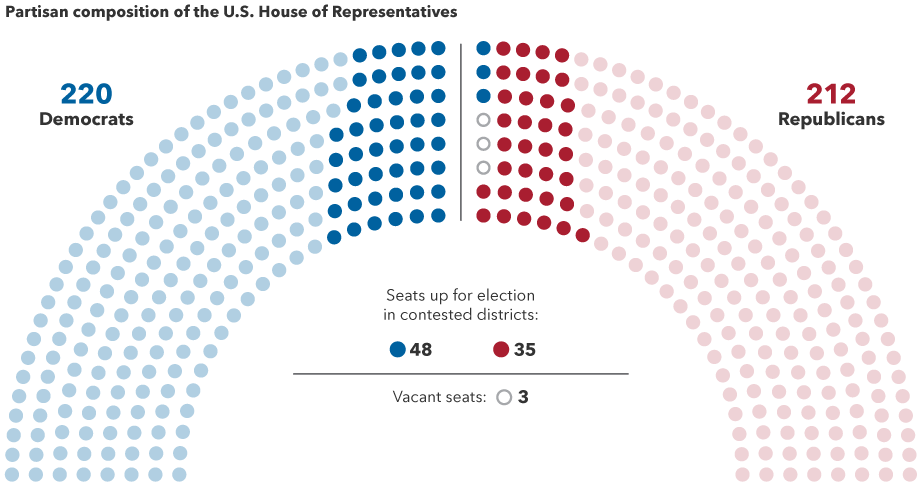
The mechanics of how a midterm election can upend the equity markets lie in the abrupt shift from legislative stagnation to aggressive policy execution. Under a gridlocked government, corporate leaders enjoy a predictable operating environment. Tax rates remain stable, regulatory compliance frameworks evolve at a manageable pace, and fiscal spending packages are typically watered down through bipartisan compromise. A Democratic sweep shatters this predictability.
The primary concern for Wall Street equity research analysts is the statutory corporate tax rate. Even incremental upward adjustments toward the 28% threshold would immediately depress consensus earnings-per-share (EPS) estimates for the S&P 500 by an estimated 4% to 7%. For capital-intensive industries and companies relying heavily on share buybacks and high-yield debt financing, this margin contraction would force a rigorous re-evaluation of cash flow projections.
Furthermore, federal regulatory bodies—including the Federal Trade Commission (FTC), the Department of Justice (DOJ) Antitrust Division, and the Securities and Exchange Commission (SEC)—would receive emboldened oversight and budgetary backing. For enterprise technology giants and monopolistic conglomerates, this translates into protracted legal challenges, stringent scrutiny over mergers and acquisitions, and escalating compliance costs that weigh heavily on long-term enterprise valuation.
Verified Data & Metrics Breakdown
| Policy / Market Metric | Status Quo / Gridlock Baseline | Democratic Sweep Scenario | Estimated Equity Impact |
|---|---|---|---|
| Statutory Corporate Tax Rate | 21% (Maintained via legislative stalemate) | Proposed increase toward 25%–28% | 4% to 7% downward revision in S&P 500 forward EPS |
| Energy Transition Funding | Status quo subsidies and legacy fossil fuel support | Accelerated clean-energy mandates and grid modernization grants | Outperformance of renewable infrastructure; margin pressure on oil & gas |
| Antitrust & Big Tech Regulation | Incremental litigation and protracted court battles | Aggressive legislative frameworks targeting data privacy and platform dominance | Valuation multiple compression for mega-cap tech growth stocks |
| Implied Market Volatility (VEX) | Historical baseline averages (14–17 range) | Elevated pre- and post-election hedging demand (20+ range) | Increased hedging costs and short-term capital flight to cash equivalents |
Sector-Specific Implications: Winners, Losers, and Capital Rotations
The divergence in market performance following a sweep would not be uniform; rather, it would enforce a ruthless bifurcation across market sectors. Portfolio managers are currently running stress tests to identify vulnerabilities before macroeconomic data aligns with political outcomes.
Technology and Digital Infrastructure
Mega-cap technology companies—long the primary engine of market liquidity and index gains—face a dual threat under a progressive legislative agenda. Beyond tax hikes, heightened scrutiny over cloud compute architecture monopolies, artificial intelligence data harvesting, and cross-border data governance could limit inorganic growth through M&C. Investors are factoring in lower terminal growth rates, leading to downward pressure on price-to-earnings multiples even for firms boasting pristine balance sheets.
Energy and Commodities
Traditional hydrocarbon producers would likely experience immediate regulatory headwinds. Proposals to curtail federal leasing, increase environmental compliance standards, and phase out long-standing tax preferences would constrain capital allocation for exploration and production (E&P) firms. Conversely, companies specializing in grid modernization, battery storage technology, smart-meter deployment, and renewable power generation stand to capture unprecedented federal subsidies, driving aggressive top-line revenue growth.
Healthcare and Pharmaceuticals
Pharmaceutical and managed-care equities historically underperform when Democratic majorities secure legislative control due to perennial pricing power reform initiatives. Legislation empowering Medicare to negotiate broader drug price schedules directly impacts operating margins for major biopharma innovators, shifting investor preference toward defensive consumer staples and biotechnology startups less exposed to pricing caps.
People Also Ask (FAQ)
How quickly do stocks typically react to midterm election results?
Equity markets historically exhibit heightened volatility in the immediate 48 to 72 hours following midterm election outcomes as final tallies solidify control of Capitol Hill. While structural shifts take months to translate into signed legislation, algorithmic trading models and quantitative funds react instantly to the perceived probability of policy changes, often triggering sector-specific gap openings.
Why would a Democratic sweep impact corporate earnings if the Federal Reserve controls monetary policy?
While the Federal Reserve dictates interest rates, money supply, and liquidity conditions, fiscal policy directly dictates corporate taxation, federal spending, and regulatory compliance overhead. A legislative shift alters the net income baseline from which companies operate, overriding monetary tailwinds if corporate tax burdens and compliance costs escalate simultaneously.
Are small-cap stocks more vulnerable than large-cap equities to political shifts?
Small-cap companies (tracked via the Russell 2000) often exhibit higher sensitivity to domestic borrowing costs and economic cycles, but large-cap multinational enterprises are more exposed to international taxation and sweeping federal regulatory overhauls. However, during periods of sweeping legislative change, large-cap growth stocks frequently experience sharper valuation multiple contractions due to their sheer weight in capitalization-weighted indexes.
How are institutional investors hedging against potential election-driven drawdowns?
Sophisticated institutional desks are utilizing collar strategies, purchasing out-of-the-money index put options, increasing cash allocations, and rotating capital into defensive sectors with stable cash flows and high dividend yields. Additionally, portfolio managers are scrutinizing enterprise debt structures to insulate portfolios against potential refinancing and tax-code shocks.
Future Outlook: Strategic Milestones to Watch
As the midterm cycle approaches its crescendo, market participants must monitor key indicators beyond standard political polling. Primary focus areas include early voting trends in swing congressional districts, options market skew for late-fourth-quarter expirations, and corporate earnings call commentary regarding capital expenditure guidance. Chief financial officers are already factoring potential policy variances into their fiscal outlooks for the upcoming year.
Ultimately, while political rhetoric often exaggerates immediate economic fallout, a Democratic sweep represents a fundamental inflection point for fiscal policy. Investors who maintain rigid, unhedged exposures to consensus trades risk severe capital erosion. Success in this evolving macroeconomic landscape demands disciplined risk mitigation, tactical sector rotation, and an unwavering focus on balance sheet resilience and cash-flow visibility.