Executive Takeaways
- The Catalyst: Influential tech creator Marques Brownlee (MKBHD) delivered an unvarnished critique regarding Apple’s rumored and historical resistance to touchscreen MacBooks, forcing institutional investors to re-evaluate product roadmap risk mitigation.
- Market Valuation Impact: Apple’s capital allocation strategy prioritizes ecosystem unification, but hardware shifts directly impact enterprise ROI, infrastructure scalability, and upgrade cycles across Fortune 500 deployments.
- Engineering Realities: The friction between macOS ergonomics and touch-interface physics presents complex UX hurdles that threaten long-held operating margins and valuation multiples.
- Strategic Pivot: Enterprise buyers must assess how shifting hardware paradigms will influence cloud compute architecture, software vendor compliance, and future hardware liquidity.
In the high-stakes theater of consumer electronics and institutional enterprise hardware, few voices carry the market-moving gravity of Marques Brownlee, universally known as MKBHD. When Brownlee dropped his blunt, unvarnished verdict on the concept of a touchscreen MacBook Pro, it reverberated far past YouTube view counts, landing squarely on the trading desks of Wall Street and the strategic planning committees of Cupertino. For decades, Apple Inc. (NASDAQ: AAPL) has maintained a doctrinal firewall between iOS-driven touchscreen devices and macOS-powered productivity powerhouses. MKBHD’s recent analysis dissects the engineering contradictions, ergonomics, and market friction of bringing touch to the MacBook Pro line, sparking urgent discussions about capital allocation, product roadmap velocity, and enterprise risk mitigation.
The Genesis of a Silicon Standoff: Historical Context and Catalytic Events
To comprehend the weight of MKBHD’s commentary, one must analyze the historical dichotomy that Apple’s executive leadership has aggressively defended. Steve Jobs famously lambasted vertical touchscreens on laptops as "ergonomically terrible," arguing that users' arms would fatigue after prolonged periods of reaching across a keyboard. For over a decade, Apple successfully insulated its Mac lineup from the touchscreen contagion sweeping Windows OEMs like Microsoft, Dell, and Lenovo. Instead, Cupertino directed touch-first consumers toward the iPad ecosystem, optimizing enterprise ROI for tablet deployments while preserving the pure, mouse-and-keyboard integrity of macOS.
However, the commercial convergence of Apple Silicon—specifically the M-series architecture (M1, M2, M3, and M4 chips)—fundamentally altered the underlying cloud compute architecture and hardware physics. Because iPadOS and macOS now share a unified foundational binary, and because Apple silicon seamlessly runs iOS apps natively on Mac hardware, the software barrier preventing touchscreen integration has evaporated. Industry insiders and institutional equity research analysts have long whispered about an impending hardware pivot. MKBHD’s assessment cuts through the speculative noise, delivering a pragmatic reality check: just because engineering can execute a touchscreen MacBook Pro doesn’t mean the user experience justifies the structural shift in product valuation.
Deconstructing the Verdict: UX Friction vs. Enterprise ROI
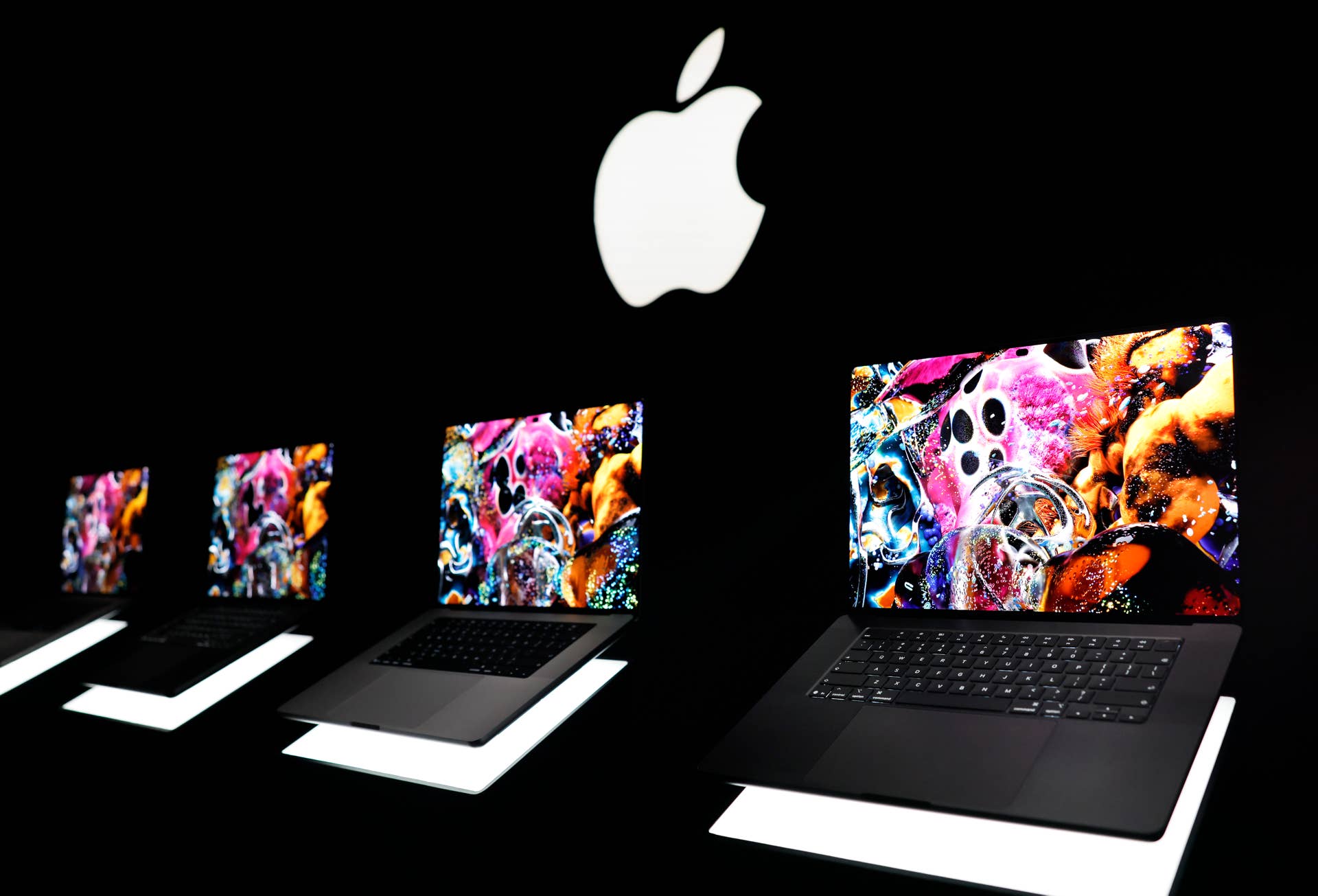
MKBHD’s blunt analysis zeroes in on a fundamental law of human-computer interaction: desktop operating systems are engineered around precision pointer control, keyboard shortcuts, and multi-window multitasking. Introducing touch inputs to a 14-inch or 16-inch horizontal display creates profound ergonomic and workflow inefficiencies. Financial institutions, software development houses, and creative enterprises depend on predictable hardware responsiveness to maximize employee output and minimize operational drag.
From an enterprise purchasing perspective, adding touch-digitizer layers to MacBook Pro displays introduces complex supply chain dependencies, higher manufacturing defect rates, and potential downward pressure on operating margins. Furthermore, enterprise infrastructure scalability relies on uniform hardware durability. Touchscreens on laptops introduce vulnerable glass panels prone to smudging, scratching, and catastrophic impact damage—factors that chief information security officers (CISOs) and procurement directors weigh heavily during hardware refresh cycles.
Comparative Analysis: Touchscreen MacBooks vs. Traditional Form Factors
| Metric / Parameter | Traditional MacBook Pro (Current M-Series) | Hypothetical Touchscreen MacBook Pro | Enterprise Impact & Risk Analysis |
|---|---|---|---|
| Hardware Valuation Multiples | Stable; predictable replacement cycles (3-4 years). | Potentially higher initial unit cost; margin compression risk. | Higher capital expenditure for corporate procurement divisions. |
| Ergonomic & UX Efficiency | Optimized for trackpad, keyboard, and external peripherals. | Prone to "Gorilla Arm" fatigue; macOS UI elements too small for touch. | Potential dip in professional productivity metrics. |
| Supply Chain & Repairability | Standardized display panels; lower component failure rates. | Integrated digitizers; elevated warranty and repair overhead. | Increased total cost of ownership (TCO) for enterprise fleets. |
| Market Liquidity & Resale | Exceptionally high secondary market residual values. | Uncertain secondary demand due to screen wear-and-tear. | Alters asset depreciation schedules for corporate balance sheets. |
Industry & Market Implications: Who Wins, Who Loses
The public discourse generated by MKBHD’s commentary extends far beyond tech enthusiast circles. Wall Street equity analysts tracking AAPL note that Apple’s valuation relies heavily on ecosystem lock-in and high-margin services revenue. Introducing a radical hardware shift like a touchscreen Mac forces software developers to rewrite enterprise applications, navigation menus, and accessibility protocols.
Winners: Enterprise competitors such as Microsoft and Lenovo stand to benefit if Apple muddies the waters of professional productivity laptops. Windows OEMs have spent over a decade refining 2-in-1 form factors and enterprise-grade touch integration, capturing specific niches in field-service engineering, medical diagnostics, and mobile executive workflows where touchscreens provide genuine operational utility.
Losers: Creative professionals and enterprise procurement teams who value hardware stability. Forcing a touch interface onto a device engineered for high-end video editing, audio engineering, and software compilation risks compromising the precise mechanical balance that has made the MacBook Pro the undisputed gold standard for white-collar productivity.
Frequently Asked Questions (People Also Ask)
Why did MKBHD criticize the concept of a touchscreen MacBook Pro?
Marques Brownlee highlighted that macOS is fundamentally designed for precise cursor navigation and keyboard inputs, making touch interaction ergonomically awkward on a vertical laptop screen. He emphasized that attempting to force touch inputs onto a desktop operating system creates unnecessary workflow friction without providing meaningful productivity gains.
Is Apple officially releasing a touchscreen MacBook Pro?
As of current reporting, Apple has made no official announcement regarding a touchscreen MacBook Pro. While supply chain rumors and patent filings suggest Apple continuously prototypes various form factors, executive leadership has historically resisted merging macOS hardware with touchscreens, preferring to keep touch interactions within the iPad and iPhone ecosystems.
How does a potential touchscreen MacBook impact enterprise procurement and ROI?
For corporate IT buyers, touch-enabled laptops introduce higher hardware acquisition costs, increased vulnerability to display damage, and complex repair overhead. These factors negatively influence total cost of ownership (TCO) and complicate asset depreciation schedules across large enterprise fleets.
Why hasn't Apple added touchscreens to Macs despite competitors doing so?
Apple's product philosophy centers on deliberate, distinct category separation. By maintaining iPads for touch-first tasks and MacBooks for pointer-and-keyboard productivity, Apple avoids compromising the ergonomics of macOS while successfully encouraging multi-device ownership within its ecosystem.
Future Outlook: Key Milestones and Strategic Watchpoints
As global markets navigate macroeconomic uncertainties, supply chain recalibrations, and rapid advancements in artificial intelligence silicon, hardware manufacturers face intense pressure to innovate. However, MKBHD’s blunt verdict serves as a timely reminder that not every technological capability warrants commercial execution.
Institutional investors and enterprise IT directors should monitor several crucial milestones over the next 12 to 24 months:
- macOS Interface Evolution: Watch for subtle UI design changes in upcoming macOS iterations that hint at touch-friendly scaling or hybrid input adaptations.
- Enterprise Refresh Cadence: Track corporate adoption rates of current M-series MacBook Pros to gauge whether hardware stability outweighs consumer feature novelties in institutional purchasing decisions.
- Competitor Hardware Responses: Evaluate how Windows OEMs leverage AI-driven processing and advanced 2-in-1 form factors to capture market share in high-growth enterprise verticals.
Ultimately, the intersection of creator critique and market reality underscores a fundamental truth: in enterprise technology and high-end consumer hardware, execution and ergonomics will always outweigh gimmicks. Apple’s next move will test whether Cupertino can resist the siren song of industry trends in favor of disciplined, uncompromising product engineering.