SAN FRANCISCO & NEW YORK — In the annals of corporate financial history, few operational prints match the sheer velocity of Nvidia’s Q4 fiscal 2025 performance. For the quarter ended January 26, the world’s most valuable semiconductor titan delivered a staggering US$39.3 billion in quarterly revenue, vaulting past Wall Street consensus and signaling that the enterprise generative artificial intelligence boom is transitioning from an exploratory capital expenditure cycle into an entrenched, mission-critical utility.
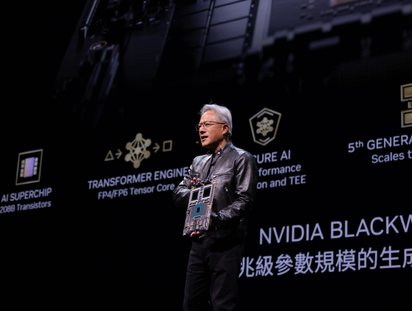
Behind the headline-grabbing figures lies the true catalyst of this triumph: the commercial inflection of the Blackwell architecture. As hyperscale cloud providers, sovereign AI initiatives, and Fortune 500 enterprises scramble to deploy next-generation large language models, Nvidia’s engineering gamble has paid off with historic dividends. Yet, beneath the veneer of record-shattering margins and soaring equity valuations lie complex questions regarding supply chain bottlenecks, capital allocation sustainability, and the broader enterprise ROI equation.
Executive Takeaways
Test Our Free AI & Tech Utilities Suite
Calculate LLM API token costs, analyze article dwell-time, or simulate tech DCA returns.
- Unprecedented Scale: Nvidia reported record Q4 revenue of US$39.3 billion, representing a phenomenal 78% year-on-year increase driven by insatiable global demand for accelerated computing.
- The Blackwell Inflection: The commercial ramp-up of the next-generation Blackwell platform successfully overcame early production yields to become the fastest-scaling product cycle in the company’s history.
- Hyper-Growth Profitability: Gross margins remained resilient at elite tiers, validating the pricing power afforded by Nvidia’s integrated hardware and software moat (CUDA ecosystem).
- Macroeconomic Ripple Effects: The earnings print serves as a crucial barometer for global enterprise IT spending, heavily influencing venture capital liquidity, datacenter real estate, and semiconductor supply chain dynamics.
The Blackwell Breakthrough: Engineering Meets Market Timing

To understand the mechanics behind Nvidia’s $39.3 billion quarter, one must examine the grueling engineering milestones of the past twelve months. Following initial reports of design adjustments and packaging hurdles related to TSMC’s custom 4NP process and advanced Chip-on-Wafer-on-Substrate (CoWoS) packaging, skeptics questioned whether Nvidia could hit its aggressive deployment timeline.
Those doubts have been comprehensively dismantled. The Blackwell architecture—featuring the B200 GPU and GB200 Grace Blackwell Superchip—has achieved a seamless transition from fab to server rack. By delivering up to 30 times the inference performance of the preceding Hopper architecture while significantly reducing energy consumption per token, Blackwell solved the most pressing operational bottleneck facing hyperscalers: datacenter thermal limits and escalating electricity costs.
“We are no longer just selling chips; we are delivering entire AI factories,” noted senior industry analysts tracking enterprise infrastructure scalability. The shift toward rack-scale architecture means Nvidia is capturing a much larger share of the total datacenter wallet, encompassing not just GPUs, but custom networking switches (Quantum-2 InfiniBand and Spectrum-X Ethernet), proprietary liquid-cooling solutions, and the comprehensive AI enterprise software layer, Nvidia AI Enterprise.
| Metric / Indicator | Q4 FY2025 Result | Year-on-Year Change | Strategic Significance |
|---|---|---|---|
| Quarterly Revenue | US$39.3 Billion | +78% YoY | Outpaced all Wall Street consensus estimates, driven by massive datacenter compute demand. |
| Datacenter Segment | Record High | Triple-digit percentage growth | Maintains absolute dominance across hyperscale cloud providers and sovereign AI builds. |
| Gross Margins | Industry-Leading Tier | Stable / High-70s % | Demonstrates unmatched pricing power despite the introduction of complex new architectures. |
| Product Driver | Blackwell Platform | Rapid Ramp Phase | Fastest production scaling in semiconductor history, mitigating early yield concerns. |
Industry & Market Implications: Winners, Losers, and Systemic Risk
Nvidia’s financial triumph sends seismic waves across the global technology landscape, dictating winners and losers across multiple asset classes:
The Winners: Hyperscalers and Specialized Foundries
Major cloud service providers—including Microsoft Azure, Amazon Web Services (AWS), Google Cloud, and Meta Platforms—continue to extract substantial enterprise ROI from their accelerated compute clusters, justifying continued capital expenditure budgets. Meanwhile, manufacturing partners like Taiwan Semiconductor Manufacturing Company (TSMC) and advanced packaging specialists continue to reap historic utilization rates, cementing a symbiotic industrial partnership.
The Pressure Points: Custom Silicon and Competitors
Alternative merchant silicon providers and hyperscalers developing proprietary Application-Specific Integrated Circuits (ASICs) face an increasingly formidable moat. While companies like AMD (with its MI300 series) and Intel (with Gaudi) capture secondary market share, Nvidia’s deep software ecosystem—rooted in millions of developers utilizing CUDA—creates massive switching costs. Risk mitigation for enterprise CIOs remains heavily tilted toward staying within the Nvidia ecosystem to ensure code compatibility and optimal model training velocity.
Broader Economic Liquidity and Valuation Multiples
From a macroeconomic perspective, Nvidia’s earnings have become a litmus test for overall market liquidity and investor confidence in tech-heavy equity indices. As long as cash flows and top-line expansion outpace valuation multiples, the secular shift toward cloud compute architecture and AI-driven automation will continue to dictate global capital allocation strategies.
Frequently Asked Questions (People Also Ask)
1. What drove Nvidia's record $39.3 billion revenue in Q4?
The primary driver was the explosive demand for generative AI infrastructure, spearheaded by the commercial rollout of the Blackwell architecture. Hyperscale cloud providers, enterprise customers, and sovereign AI projects aggressively purchased accelerated computing clusters to handle massive LLM training and real-time inference workloads.
2. How does the Blackwell architecture differ from the previous Hopper generation?
Blackwell introduces groundbreaking innovations, including a second-generation transformer engine and custom-built NVLink interconnects. It delivers up to 30x higher performance for real-time generative AI inference compared to Hopper while dramatically improving energy efficiency, addressing critical datacenter power constraints.
3. Are supply chain constraints still affecting Nvidia's ability to fulfill orders?
While early production of the Blackwell architecture faced minor yield and packaging adjustments, Nvidia successfully scaled manufacturing through close collaboration with partners like TSMC. Current output reflects robust operational execution, though demand continues to outpace supply across certain high-end configurations.
4. What are the implications of Nvidia's earnings for enterprise IT spending?
Nvidia's performance underscores that artificial intelligence is no longer an experimental line item but a core budgetary priority. CIOs are aggressively allocating capital toward AI infrastructure scalability, viewing accelerated computing as essential for maintaining competitive advantage and long-term enterprise ROI.
Future Outlook: Milestones and Strategic Horizons
As Nvidia looks beyond fiscal 2025, the strategic roadmap is defined by several critical milestones. First, the ongoing volume production of Blackwell variants—including liquid-cooled rack configurations—will test the limits of global supply chains and datacenter engineering. Second, the maturation of sovereign AI initiatives, where governments build dedicated national compute grids, represents an expansive new total addressable market.
Furthermore, regulatory compliance and geopolitical trade dynamics will remain vital variables. Navigating export controls while servicing a fiercely competitive global market requires masterclass diplomacy and supply chain diversification.
Ultimately, Nvidia has proven that its dominance is not merely a cyclical artifact of the initial generative AI gold rush, but the foundational architecture of the modern digital economy. For institutional investors, enterprise leaders, and policymakers alike, the lesson of Q4 fiscal 2025 is definitive: the silicon-driven transformation of global enterprise is accelerating, and Nvidia remains firmly in the driver's seat.