The 2026 Boardroom Imperative: Why CIOs Must Pivot from Passive Defense to Active Capital-Protected Cybersecurity
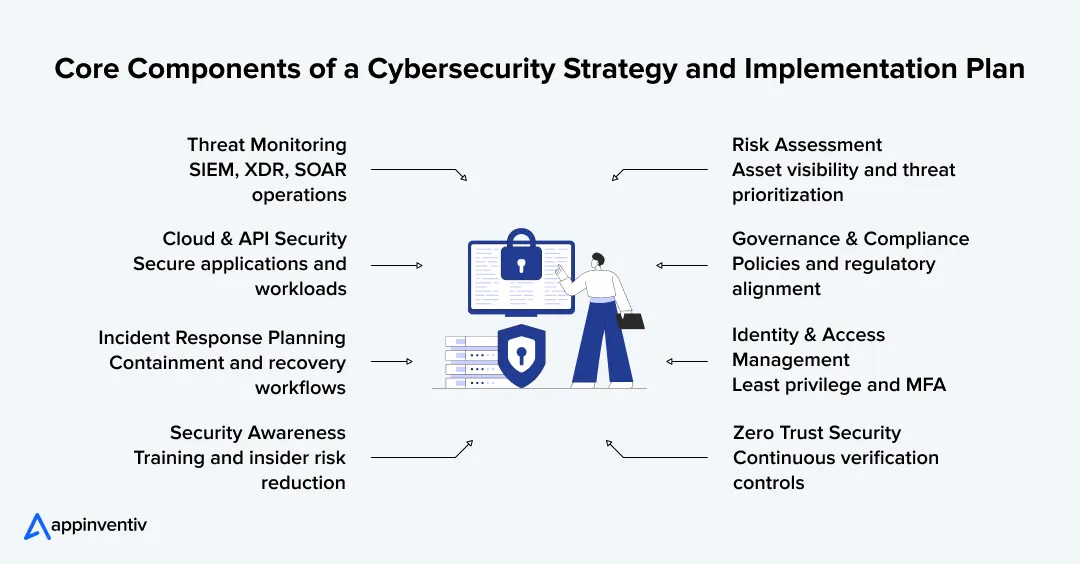
As the corporate landscape accelerates through 2026, the role of the Chief Information Officer has fundamentally transformed. No longer judged solely on infrastructure scalability, cloud compute migration velocity, and digital transformation ROI, modern CIOs find their operational tenure and personal liabilities inextricably linked to enterprise cyber resilience. According to landmark operational disclosures and strategic insights released by digital engineering leader Appinventiv, the convergence of hyper-sophisticated adversarial AI, geopolitical cyber-warfare, and aggressive regulatory enforcement has rendered legacy security frameworks obsolete.
Today, a single security lapse does more than compromise operational continuity; it triggers immediate valuation multiple compression, exposes corporations to catastrophic shareholder derivative litigation, and damages market liquidity. To survive and thrive in this high-stakes environment, leadership teams require more than an ad-hoc patchwork of anti-virus subscriptions and firewalls. They demand a mathematically rigorous, enterprise-wide cybersecurity strategy and implementation plan. This investigative report breaks down the anatomy of modern risk mitigation, detailing how elite CIOs are reallocating capital, deploying Zero-Trust architecture, and insulating their balance sheets against the defining threat vector of the decade.
Executive Takeaways
- The 2026 Paradigm Shift: Cybersecurity has transitioned from an IT compliance cost-center to a core determinant of enterprise valuation multiples, investor confidence, and market liquidity.
- Zero-Trust as Baseline: Perimeter defense models are defunct; modern implementation plans require pervasive, identity-centric verification, continuous micro-segmentation, and AI-driven automated threat hunting.
- Regulatory Penalties and Board Accountability: Regulators globally are enforcing severe personal liability for executives and board members who fail to treat cyber risk with the same rigor as financial capital allocation.
- Quantifying Cyber ROI: Forward-thinking CIOs are shifting capital allocation models to demonstrate clear risk-adjusted returns on security investments, transforming defense into a competitive differentiator.
The Catalytic Shift: Anatomy of the 2026 Cyber Threat Landscape
The macroeconomic environment of 2026 is defined by unprecedented digital dependency. Accelerated cloud adoption, ubiquitous remote and hybrid enterprise workforces, and the widespread deployment of generative artificial intelligence have vastly expanded the corporate attack surface. Threat actors—ranging from state-sponsored cyber-espionage syndicates to sophisticated ransomware-as-a-service (RaaS) cartels—now utilize autonomous AI agents to probe networks, identify zero-day vulnerabilities, and execute multi-vector attacks at machine speed.
Historically, corporate boards viewed cybersecurity through the narrow lens of IT hygiene. However, high-profile supply chain compromises and devastating infrastructure attacks have shattered this complacency. Institutional investors and credit rating agencies now factor cyber posture directly into capital allocation decisions. A company unable to demonstrate a verified, resilient cybersecurity implementation plan faces severe penalties, including higher debt issuance costs, depressed equity valuation multiples, and rapid erosion of customer trust.
It is within this crucible that Appinventiv’s strategic guidance for CIOs gains vital relevance. Building a resilient strategy requires abandoning reactive firefighting. CIOs must architect a comprehensive implementation plan that aligns technical controls with corporate risk tolerance, regulatory mandates, and overarching business objectives.
Core Pillars of the 2026 CIO Cybersecurity Blueprint
Constructing an institutional-grade security framework demands a methodical, multi-phased approach. Elite technology leaders are focusing their capital expenditure and engineering talent on three foundational pillars:
1. Architectural Transformation: Embracing Pervasive Zero-Trust
The traditional castle-and-moat security architecture—where internal network access implied implicit trust—is mathematically and operationally defunct. Modern implementation blueprints mandate a Zero-Trust Architecture (ZTA) framework adhering strictly to the principle of "never trust, always verify." Every user, device, and application request must be authenticated, authorized, and encrypted before gaining access to enterprise assets. Micro-segmentation of cloud compute architecture ensures that even if an attacker breaches the perimeter, lateral movement is severely restricted, neutralizing the threat before it achieves systemic blast radius.
2. Behavioral Analytics and AI-Driven Threat Hunting
In 2026, human analysts alone cannot review the sheer volume of telemetry generated by enterprise systems. Effective implementation plans integrate advanced Security Orchestration, Automation, and Response (SOAR) platforms powered by machine learning. These systems establish dynamic baselines of user and entity behavior, immediately flagging anomalies such as unusual data exfiltration patterns or unauthorized privilege escalations. By automating threat remediation, organizations reduce their mean-time-to-detect (MTTD) and mean-time-to-respond (MTTR) from days to mere seconds.
3. Supply Chain and Third-Party Risk Mitigation
A corporation is only as secure as its weakest vendor link. Recent systemic breaches frequently originate not in core corporate networks, but through third-party software vendors, API integrations, and outsourced service providers. A robust 2026 strategy requires continuous vendor risk profiling, automated compliance auditing, and strict contractual security SLAs. CIOs must enforce cryptographic verification of all software bills of materials (SBOMs) to prevent malicious code injection during the software development lifecycle.
Verified Data & Metrics Breakdown
To contextualize the financial and operational stakes facing CIOs in 2026, the following matrix compares legacy security paradigms against modern, resilient enterprise strategies:
| Strategic Dimension | Legacy Approach (Pre-2024) | Modern Enterprise Standard (2026 Blueprint) | Financial & Operational Impact |
|---|---|---|---|
| Perimeter Defense | Firewall-centric, implicit internal network trust. | Pervasive Zero-Trust Architecture (ZTA) & micro-segmentation. | Eliminates lateral movement; reduces breach impact by up to 70%. |
| Threat Detection | Signature-based alerts; reactive manual investigation. | AI-driven behavioral analytics & autonomous SOAR. | Cuts MTTD/MTTR from days to seconds; prevents operational paralysis. |
| Capital Allocation | Treated as a baseline IT compliance overhead cost. | Integrated into core enterprise risk management and ROI models. | Protects valuation multiples and secures favorable credit ratings. |
| Vendor Risk Management | Annual point-in-time security questionnaires. | Continuous cryptographic auditing and automated SBOM tracking. | Mitigates third-party supply chain vulnerabilities. |
Industry & Market Implications: Who Wins, Who Loses
The strict enforcement of modern cybersecurity standards is actively reshaping competitive dynamics across global capital markets. The economic fallout is distinctly asymmetric:
- The Winners: Forward-thinking enterprises that treat cybersecurity as a strategic differentiator are capturing market share from compromised rivals. Cybersecurity vendors specializing in AI-driven threat intelligence, Zero-Trust network access (ZTNA), and automated compliance are experiencing surging demand and robust enterprise valuations. Furthermore, executives who successfully execute these strategies are commanding greater board influence and executive compensation.
- The Losers: Organizations anchored in legacy thinking—relying on underfunded IT departments and compliance checklists—face existential threats. A single catastrophic breach can wipe out years of equity appreciation, trigger executive ousters, and result in crippling regulatory fines under evolving global privacy and data protection frameworks. Insurers are increasingly denying coverage or pricing out firms that fail to meet baseline 2026 security benchmarks.
Frequently Asked Questions (People Also Ask)
What is the primary objective of a modern CIO cybersecurity strategy in 2026?
The primary objective is to transition the organization from reactive defense to proactive risk management. This involves safeguarding enterprise valuation, ensuring uninterrupted operational continuity, protecting sensitive customer data, and embedding security principles into every facet of cloud compute architecture and digital transformation.
How does Zero-Trust architecture differ from traditional perimeter defense?
Traditional perimeter defense assumes that everything inside the corporate network is safe, creating significant vulnerability once a breach occurs. Zero-Trust architecture operates on the principle of continuous verification, requiring strict identity authentication, device posture checking, and authorization for every single transaction, regardless of whether the user is inside or outside the physical network.
What role does Artificial Intelligence play in the 2026 cybersecurity implementation plan?
AI serves a dual purpose. Adversaries use it to automate sophisticated, multi-vector attacks at unprecedented speeds. Consequently, enterprise CIOs must deploy advanced AI and machine learning tools for automated threat hunting, behavioral anomaly detection, and rapid incident response to match the velocity of modern threats.
How can CIOs justify cybersecurity capital expenditures to the board of directors?
CIOs must frame cybersecurity investments not as operational costs, but as critical capital preservation strategies. By quantifying potential financial losses—such as regulatory fines, downtime costs, and valuation multiple compression—against the cost of preventative architecture, security leaders can demonstrate clear, risk-adjusted enterprise ROI.
Future Outlook: Milestones and Executive Imperatives
Looking ahead, the complexity of enterprise technology will only escalate. The advent of quantum computing breakthroughs on the horizon threatens current encryption standards, making cryptographic agility an emerging boardroom priority for late 2026 and beyond. Furthermore, regulatory bodies are moving toward harmonized, cross-border reporting mandates that demand near-instantaneous incident disclosure.
For CIOs and executive leadership teams, the mandate is unambiguous. Building a resilient cybersecurity strategy and implementation plan is no longer a technical checkbox managed by mid-tier IT staff. It is a fundamental leadership responsibility that dictates corporate survival, market reputation, and long-term shareholder value creation. Those who act decisively today will fortify their organizations for the challenges of tomorrow; those who hesitate invite obsolescence.