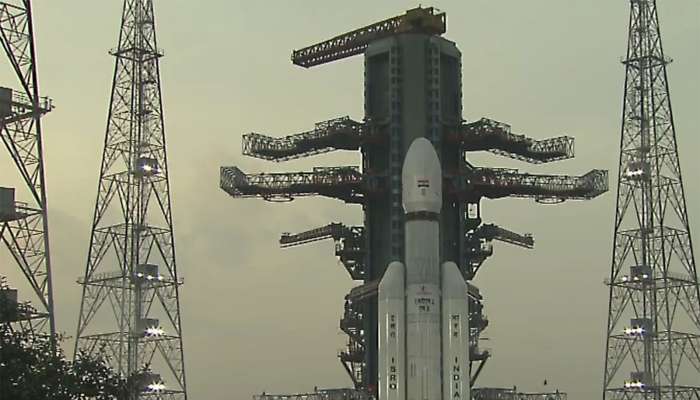
BENGALURU — When the Vikram lander executed its terminal descent onto the lunar South Pole on August 23, 2023, the achievement was heralded as a geopolitical triumph achieved on a frugal budget of $75 million. Yet, inside the corridors of the Prime Minister’s Office in New Delhi, the Department of Space, and the venture capital offices along Bengaluru’s Outer Ring Road, the mission was viewed through a far more transactional lens: it was the ultimate sovereign proof-of-concept.
Three years later, the soft landing has metastasized into a structural economic pivot. India’s space industry has breached the perimeter of state-subsidized exploration, evolving into a capital-efficient, dual-use industrial complex. Bolstered by aggressive FDI liberalization, the regulatory maturation of IN-SPACe (Indian National Space Promotion and Authorization Centre), and the commercial engine of NewSpace India Limited (NSIL), the domestic space economy is crossing the $13 billion threshold. By systematically unbundling the Indian Space Research Organisation (ISRO) and unleashing private launch service providers, satellite constellation operators, and geospatial analytics platforms, India is transforming from an unaligned space power into an indispensable high-margin node in the global aerospace supply chain.
Executive Takeaways
- Capital Allocation Paradigm Shift: Following the 100% foreign direct investment (FDI) liberalization under updated space sector guidelines, international institutional capital into Indian spacetech startups has surpassed $780 million across late-stage equity and sovereign co-investments over the last 36 months.
- Structural De-linking of ISRO: The state space agency has formally pivoted from operational launch monopolism to pure-play fundamental R&D, human spaceflight (Gaganyaan), and interplanetary exploration, transferring established heavy-lift vehicles (LVM3, PSLV) to commercial consortia.
- Launch Unit Economics: Private launch ventures, led by Skyroot Aerospace and Agnikul Cosmos, have transitioned from sub-orbital demonstrators to sustained orbital commercial cadences, exerting severe downward pressure on small-satellite launch costs (sub-$18,000/kg) targeting the 100kg-to-500kg payload band.
- Downstream Data Monetization: The true margin expansion is taking place downstream. India's Earth Observation (EO) and Hyperspectral imagery operators have captured enterprise contracts across agriculture, defense, risk underwriting, and climate infrastructure across the Indo-Pacific.
The Sovereign Pivot: From Lunar Touchdown to Capital Flywheel
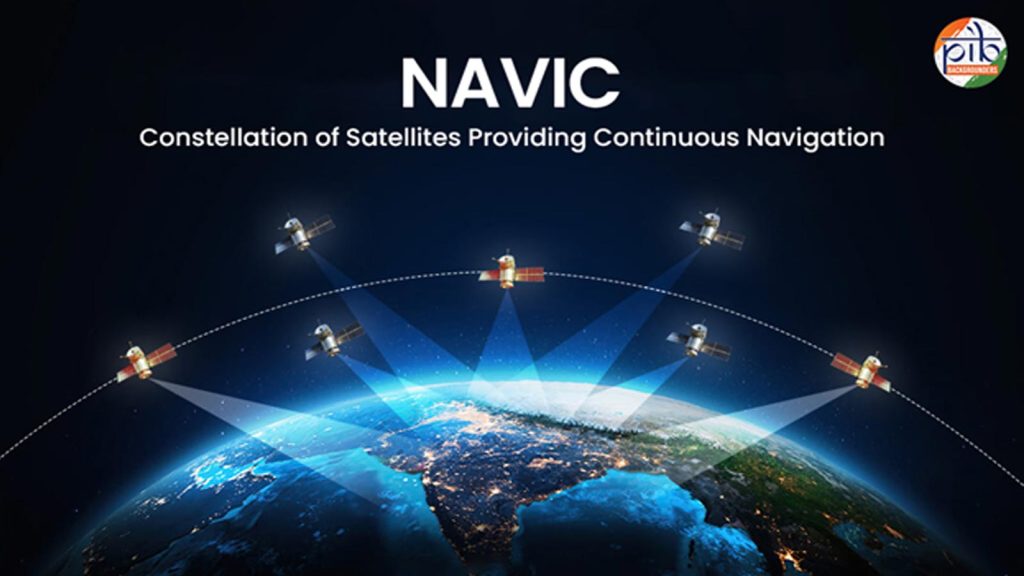
For nearly five decades, India’s space posture was defined by self-reliance born of sanctions. ISRO’s institutional mandate prioritized utilitarian socio-economic programs: telecommunications, weather monitoring, and agricultural surveillance, executed under ruthless capital constraints. However, that isolationist architecture left the country holding less than 2% of the global commercial space economy as late as 2020.
The successful touchdown of Chandrayaan-3 was the inflection point that triggered regulatory codification. In early 2024, the Indian cabinet amended its FDI policy, permitting up to 100% foreign investment in satellite manufacturing, 74% under the automatic route for satellite data products and ground segment, and up to 49% for launch vehicles and spaceports without requiring prior government approval. This regulatory clarity addressed the primary deterrent for tier-1 global venture capital: legal ambiguity surrounding sovereign intellectual property and orbital asset liability.
The ensuing capital deployment has driven valuations upward. Private space startups in India, once reliant on domestic family offices and seed funds, have closed Series B and C rounds led by Silicon Valley, European, and Japanese institutional investors. Capital allocators are not underwriting scientific experiments; they are underwriting unit economics. With engineering wages representing a fraction of their counterparts in El Segundo or Toulouse, Indian upstream manufacturers are delivering satellite buses and propulsion systems at a 40% to 60% discount compared to Western suppliers, while matching ISO-grade reliability.
The Structural Unbundling: IN-SPACe, NSIL, and the New Corporate Ecosystem
The institutional architecture behind this expansion relies on a three-pillar division of labor designed to insulate public assets while enabling private commercialization:
- ISRO (Pure Research & National Mandates): Focused on deep space exploration, the Aditya-L1 solar observatory outputs, Gaganyaan human spaceflight trials, and the preparatory architecture for the Bharatiya Antariksh Station (BAS).
- IN-SPACe (The Single-Window Regulator): Operating as an autonomous gatekeeper, clearing payload launches, licensing ground stations, and facilitating private access to ISRO’s multi-million-dollar testing and launch infrastructure at Sriharikota.
- NSIL (The Commercial Arm): The corporate vehicle mandated to commercially leverage ISRO’s operational assets, bundle launch capacity, and privatize workhorses like the Polar Satellite Launch Vehicle (PSLV) and the Launch Vehicle Mark-3 (LVM3).
This structural clarity has paved the way for industrial heavyweights to step into prime contractor roles. A consortium comprising Hindustan Aeronautics Limited (HAL) and Larsen & Toubro (L&T) successfully operationalized the end-to-end production of the PSLV, transitioning the venerable rocket from an agency-assembled vehicle to a corporatized assembly line. Simultaneously, private launch pioneers have established dedicated manufacturing hubs. Skyroot Aerospace’s MAX-Q campus and Agnikul’s additive-manufacturing-driven rocket engine facilities in Chennai have transformed 3D-printed bi-propellant engines from novel academic papers into commercial-grade launch manifest reality.
Three Years of Acceleration: Key Performance Indicators
To grasp the speed of India’s space industry pivot between the touchdown of Chandrayaan-3 in August 2023 and the present landscape, the trajectory can be observed through empirical operational metrics:
| Metric / Indicator | August 2023 (Touchdown Baseline) | August 2026 (Three Years Post-Landing) | Strategic Shift Vector |
|---|---|---|---|
| Estimated Space Economy Valuation | ~$8.4 Billion | ~$13.2 Billion | 57.1% aggregate growth; on track for $44B by 2033 projection. |
| Registered Spacetech Startups (IN-SPACe) | ~140 entities | 430+ entities | Shift from basic component suppliers to vertically integrated primes. |
| Annual Cumulative Venture Funding | ~$110 Million (annual run rate) | ~$340 Million (annual run rate) | Institutional private equity, sovereign funds, and tier-1 multi-stage VCs. |
| Launch Infrastructure Access | Exclusively Satish Dhawan Space Centre (SDSC) | SDSC Sriharikota + Kulasekarapattinam Spaceport | Dedicated private SSLV launch pad optimizes direct-to-polar trajectories. |
| FDI Regulatory Framework | Discretionary / Government Route required | Up to 100% liberalized (Automatic Route tiered) | Eliminated sovereign risk discount for cross-border M&A and JV formations. |
| PSLV Industrialization Status | ISRO-led with component outsourcing | Fully privatized HAL-L&T production line | Commercialized launch manifest freed from ISRO operational bandwidth. |
Downstream Satellites: The High-Margin Battleground
While rocket launches capture headlines, the financial architecture of the space economy shows that upstream launch services capture only 8% to 10% of total industry revenue. The real margin expansion is concentrated downstream in satellite-enabled connectivity, Earth Observation (EO), and synthetic aperture radar (SAR) analytics.
Indian operators are capitalizing on this dynamic. Constellation startups like Pixxel have commercialized high-resolution hyperspectral satellite constellations, securing enterprise contracts with global mining conglomerates, agricultural commodity traders, and Western defense agencies. Hyperspectral imaging provides material composition data—from pipeline gas leaks to subterranean mineral deposits—commanding subscription-based analytics revenues with gross margins exceeding 70%.
Concurrently, firms like Dhruva Space have vertically integrated satellite bus platforms with proprietary ground-station-as-a-service (GSaaS) networks. By co-locating engineering, testing, and cleanroom facilities within India's lower-cost ecosystem, these companies offer smallsat constellation developers globally an integrated turn-key solution: payload design, orbital launch booking, and ground-station telemetry tracking at prices that undercut traditional North American and European primes.
Industry & Market Implications: Sovereign Alignments, Corporate Winners, and Headwinds
The transformation of India's space economy produces clear realignments across the international commercial ecosystem:
The Winners
- Domestic Engineering Primes: Industrial conglomerates such as Larsen & Toubro, HAL, Godrej Aerospace, and Tata Advanced Systems have transformed from sub-tier contract manufacturers into primary system integrators.
- Western Satellite Constellation Operators: Launch bottlenecks caused by the geopolitical isolation of Russia’s Soyuz, production backlogs for the European Ariane 6, and high demand for SpaceX’s Falcon 9 manifests have left mega-constellations searching for alternatives. India’s LVM3 and emerging commercial SSLVs offer an accessible, neutral, cost-effective launch option.
- Global Defense Tech Procurement: Through the India-U.S. initiative on Critical and Emerging Technology (iCET) and bilateral space deals with France and Japan, Indian defense-space startups are integrating directly into Indo-Pacific allied reconnaissance networks.
The Losers and Structural Risks
- Legacy Small-Launch Vehicles: High-cost Western small-launch rocket operators face severe margin compression from Indian launch vehicles that leverage lower domestic supply-chain costs.
- Spectrum & Orbital Congestion Risks: As hundreds of Indian-designed satellites prepare to enter Low Earth Orbit (LEO), domestic operators face increasing regulatory friction regarding space situational awareness (SSA), orbital debris mitigation, and ITU frequency allocations.
- Capital Allocation Bottlenecks: Despite recent policy progress, India’s domestic capital markets still lack the debt financing mechanisms and late-stage growth equity needed to sustain capital-intensive spacetech enterprises through development cycles without dilutive offshore equity rounds.
Frequently Asked Questions (People Also Ask)
How did the Chandrayaan-3 landing impact India’s commercial space sector?
Chandrayaan-3 served as a sovereign technological validator that confirmed the technical reliability, cost-efficiency, and mission execution of India’s aerospace industrial base. It accelerated regulatory reforms, prompted the Indian government to pass the 2024 FDI space policy liberalizing foreign investment up to 100%, and attracted significant foreign institutional capital into Indian private space companies.
What is IN-SPACe, and how does it help private space startups?
IN-SPACe (Indian National Space Promotion and Authorization Centre) is an autonomous, single-window regulatory agency under the Department of Space. It serves as an ombudsman and licensing authority for non-government entities, permitting private spacetech firms to access ISRO’s testing facilities, launch complexes, and technical IP, while simplifying launch permits and payload integration clearances.
Why are global companies increasingly using Indian rockets for satellite launches?
The global launch market faces an ongoing capacity crunch driven by geopolitical disruptions and backlogged manifests for Western heavy-lift rockets. India’s launch vehicles, particularly the PSLV and LVM3 (and emerging private launchers), offer proven track records, reliable mission profiles, and competitive pricing per kilogram, making them a strategic alternative for deployment into low-Earth orbit.
What is the projected size of India’s space economy over the next decade?
According to projections by IN-SPACe and Arthur D. Little, India’s space economy is forecast to grow from roughly $8 billion in 2023 to $44 billion by 2033. This growth will be driven by increasing its share of the global commercial space market from approximately 2% to over 8% through private satellite manufacturing, constellation-driven analytics, and commercial launch services.
The Horizon: Gaganyaan, BAS, and Deep-Space Industrialization
As the initial operational cycle following the lunar landing winds down, India’s space program stands on the threshold of its next structural leap. The upcoming orbital trials of the crewed Gaganyaan mission represent more than national pride; they are testing high-reliability life-support systems, advanced guidance computers, and heavy recovery protocols that will underpin India's long-term sovereign ambitions.
ISRO’s roadmap toward the deployment of the first module of the Bharatiya Antariksh Station (BAS) and the planned sample-return architecture of Chandrayaan-4 indicate that sovereign scientific exploration will continue to push new frontiers. However, the critical operational difference in this post-Chandrayaan-3 era is that ISRO no longer carries this mandate in isolation. Behind the state agency stands an agile, highly capitalized private space infrastructure, operating as an integrated ecosystem of contract manufacturers, propulsion startups, and satellite platform operators ready to transform sovereign technical achievements into lasting commercial enterprise.
!['Mirzapur: The Movie' box office collection Day 4 [LIVE]: Pankaj Tripathi, Ravi Kishan, and Ali Fazal sta](https://static.toiimg.com/thumb/msid-133873573,imgsize-642174,width-400,resizemode-4/mirzapur-the-movie-box-office-collection-day-4-live-pankaj-tripathi-ravi-kishan-and-ali-fazal-starrer-set-to-cross-rs-100-crore-in-india-on-fourth-day.jpg)