Executive Takeaways
- The Efficacy Mirage: While Moderna (NASDAQ: MRNA) and Merck & Co.’s (NYSE: MRK) individualized neoantigen therapy (mRNA-4157/V940) showed a statistically significant 44% reduction in melanoma recurrence or death in Phase 2b trials, oncology specialists caution that recurrence-free survival (RFS) does not cleanly translate into the long-sought holy grail of definitive overall survival (OS).
- The Vein-to-Vein Bottleneck: The personalized paradigm demands biopsy extraction, high-throughput tumor sequencing, proprietary AI-driven neoantigen selection, and bespoke mRNA synthesis—a logistical marathon averaging six to nine weeks that leaves rapidly progressing metastatic patients in severe clinical peril.
- The Cold Tumor Wall: Outside of hyper-mutated, immunogenic "hot" cancers like melanoma, early investigative signals in non-small cell lung cancer (NSCLC) and cold gastrointestinal malignancies suggest dramatic declines in therapeutic response rates, capping initial addressable market projections.
- Balance Sheet Pressures: Confronting a brutal post-COVID-19 revenue cliff and an annual R&D burn rate surpassing $4.2 billion, Moderna recently slashed five pipeline programs and delayed its cash break-even target to 2028, turning the cancer vaccine from an opportunistic windfall into an existential capital allocation challenge.
The Post-Pandemic Hangover Meets Oncology Realism

In late 2022, Moderna Inc. appeared to have pulled off the ultimate post-pandemic pivot. With Spikevax revenues tumbling off a historic fiscal precipice—falling from a peak of $18.4 billion in 2021 to sub-$3.5 billion run rates—the Cambridge, Massachusetts-based biotech heralded early Phase 2b data for its personalized cancer vaccine (mRNA-4157, designated V940 in partnership with Merck) as the definitive vindication of its mRNA platform. Wall Street modelers immediately penciled in peak annual sales projections exceeding $10 billion, sending Moderna’s enterprise valuation soaring on the assumption that messenger RNA would dismantle oncology’s most stubborn barriers.
Two years later, an exhaustive investigation across institutional oncology corridors, clinical trial centers, and healthcare asset management desks reveals that the reality on the ground is far more nuanced, friction-laden, and financially precarious than early corporate disclosures suggested. The euphoria that characterized Moderna's initial foray into personalized immuno-oncology has collided with structural manufacturing limitations, challenging biological microenvironments, and severe healthcare economics.
Far from a universal plug-and-play cancer remedy, mRNA-4157 is proving to be a highly complex, niche intervention that faces profound scientific resistance as it attempts to break out of melanoma and tackle cancers with lower mutational burdens.
The Vein-to-Vein Dilemma: The Cost and Fragility of Bespoke Medicine
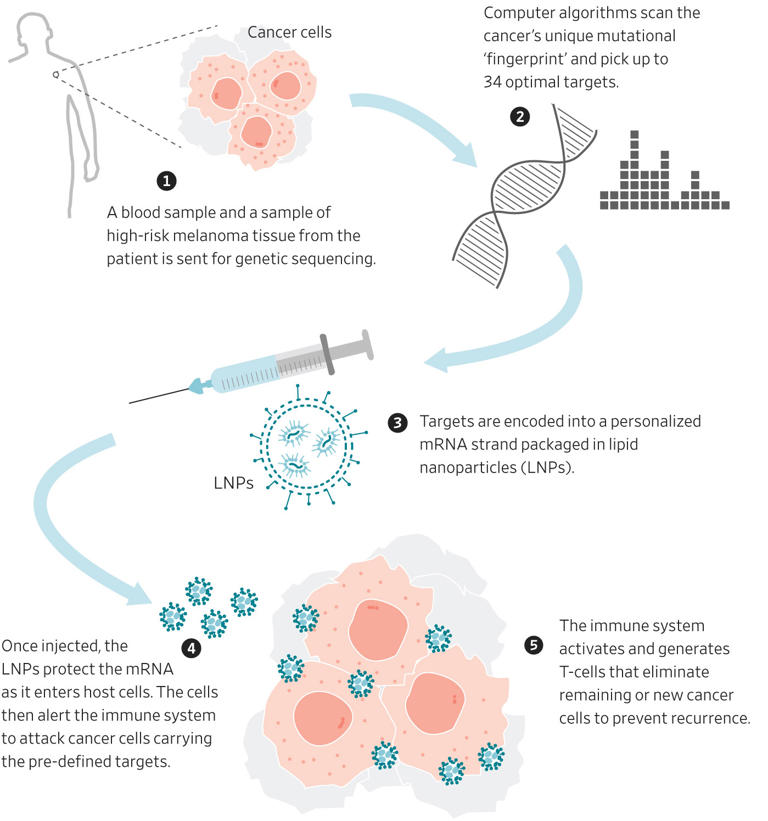
At the center of Moderna’s clinical headache is the punishing reality of its manufacturing architecture. Unlike traditional biologics or off-the-shelf monoclonal antibodies like Merck’s mega-blockbuster Keytruda (pembrolizumab), mRNA-4157 cannot be produced in batch bioreactors and warehoused at distribution hubs. Every individual dose is bespoke, synthesized strictly around up to 34 patient-specific neoantigens identified through comparative whole-exome sequencing of resected tumor tissue and healthy blood cells.
This process—spanning biopsy shipment, next-generation sequencing (NGS), proprietary bioinformatic algorithmic filtering to predict Human Leukocyte Antigen (HLA) binding affinity, plasmid DNA generation, mRNA transcription, and lipid nanoparticle (LNP) encapsulation—currently takes between six and nine weeks under optimal clinical trial conditions. In a high-stakes, real-world oncology setting, that turnaround timeline presents severe therapeutic risk.
For patients with stage III or IV resected melanoma, a six-to-nine-week wait before adjuvant administration carries measurable risk of micro-metastatic acceleration. For non-melanoma indications like aggressive non-small cell lung cancer or cutaneous squamous cell carcinoma, that window can be fatal. If a patient experiences rapid disease progression while their customized mRNA batch is still churning through high-performance compute clusters and synthesis suites, the window for adjuvant efficacy shuts completely.
Furthermore, this individualized workflow triggers enormous cost of goods sold (COGS). Traditional biopharma relies on manufacturing economies of scale to drive gross margins north of 85%. Industry analysts estimate the per-patient production cost of personalized neoantigen therapies sits between $40,000 and $65,000 before factoring in cold-chain distribution, administration, or corporate profit margins. When added to Keytruda’s baseline price tag of approximately $185,000 annually, the aggregate price of the combination therapy threatens to exceed $300,000 to $350,000 per patient course—triggering aggressive pushback from commercial payers and single-payer state healthcare apparatuses across Europe and North America.
The Cold Tumor Wall and Biological Hurdles
From a biological standpoint, Moderna’s early win in the KEYNOTE-942 Phase 2b trial was strategically orchestrated on the most favorable clinical terrain available: resectable melanoma. Cutaneous melanoma possesses one of the highest tumor mutational burdens (TMB) across all human malignancies, largely driven by chronic ultraviolet radiation damage. A high TMB provides Moderna’s machine-learning algorithms with an abundance of distinct somatic neoepitopes to weaponize, maximizing the probability that patient cytotoxic T lymphocytes (CD8+ and CD4+) will mount a robust immune response upon vaccination.
The fundamental challenge—and the core driver behind the dampening of early hype—is that the vast majority of human cancers are biologically "cold." Common, high-mortality malignancies such as pancreatic ductal adenocarcinoma, microsatellite-stable (MSS) colorectal cancer, and prostate cancer present vastly lower mutational frequencies and are cloaked inside heavily immunosuppressive tumor microenvironments (TMEs) fortified by regulatory T cells (Tregs), myeloid-derived suppressor cells (MDSCs), and dense fibrotic stroma.
Early data and pre-clinical explorations suggest that in cold tumors, mRNA vaccines frequently fail to orchestrate meaningful immune infiltration. Even if a vaccine successfully primes circulating T cells against selected neoantigens, those cells are routinely neutralized or physically blocked upon reaching the tumor boundary. Combining mRNA-4157 with an immune checkpoint inhibitor like Keytruda addresses programmed cell death protein-1 (PD-1) exhaustion, but it does little to solve primary immune evasion mechanisms driven by loss of beta-2 microglobulin, down-regulated MHC Class I expression, or transforming growth factor-beta (TGF-β) suppression.
Quantitative Reality: Clinical, Financial, and Pipeline Metrics
The following institutional performance matrix illustrates the divergence between initial capital market assumptions and the empirical realities Moderna faces as its clinical trials advance into late-stage pivotal execution:
| Metric / Dimension | Early Peak Hype Projections (2022–2023) | Empirical Reality & Revised Consensus (2025–2026) | Strategic & Financial Impact |
|---|---|---|---|
| Melanoma Efficacy Endpoint | Phase 2b RFS: 44% reduction in recurrence/death (HR 0.56); assumed 1:1 conversion to Overall Survival (OS). | Durable RFS confirmed at 3 years (~49%), but definitive Phase 3 OS data remains years away; potential confounding cross-over therapies. | Regulators demand stringent confirmatory Phase 3 OS data for full labeling; accelerated approvals face post-marketing scrutiny. |
| Manufacturing Vein-to-Vein Time | Targeted at 3 to 4 weeks via automated microfluidics and centralized AI pipelines. | Realized turnaround averages 6 to 9 weeks across global clinical sites; complex sequencing QC. | Severe bottleneck for aggressive solid tumors; restricts addressable patient population to strictly adjuvant, post-surgical cases. |
| Cross-Indication Applicability | Broad utility assumed across high, medium, and low-TMB solid tumors (melanoma, NSCLC, bladder, CRC, pancreatic). | High clinical efficacy confined largely to high-TMB (melanoma); mid/low-TMB trials face steep immunogenic resistance. | Reduces total addressable market (TAM) valuation by an estimated 40% to 55%; restricts broad oncology multi-blockbuster status. |
| Corporate R&D Burn & Cash Horizon | Self-funded by COVID-19 cash windfall; rapid break-even by 2026 driven by pipeline scale. | Annual R&D burn rate of $4.2B–$4.8B; five clinical programs paused/cut; operating break-even delayed to 2028. | Moderna forced to prioritize capital allocation strictly into Phase 3 assets, limiting discovery and early-stage moonshots. |
| Per-Patient Treatment Economics | Projected COGS reduction via mRNA manufacturing efficiency; easily absorbed by private/public payers. | Estimated combined cost (V940 + Keytruda) exceeds $300,000/year; gross margins compressed to 55%–65% for personalized batch runs. | Intense pharmacoeconomic pushback expected from CMS, European HTA agencies (NICE, G-BA); risk of strict reimbursement caps. |
Capital Allocation Pressures and the 2028 Horizon
The cooling enthusiasm for Moderna’s oncology pipeline has manifested directly on its balance sheet. CEO Stéphane Bancel and the executive leadership team have been forced to navigate an increasingly hostile capital markets environment. With Moderna’s market capitalization falling more than 80% from its pandemic-era peak, the enterprise can no longer afford to finance speculative clinical research at an unlimited rate.
In late 2024, Moderna announced a comprehensive portfolio review, cutting 2025–2028 R&D expenditures by $1.1 billion. The company paused its preclinical and Phase 1 efforts in rare diseases and deprioritized several vaccine candidates to consolidate its remaining capital around its Phase 3 oncology programs (including the pivotal V940-001 trial in resected melanoma and V940-002 in NSCLC). Yet, even with these cuts, Moderna projects it will burn through cash until reaching self-sustainability in 2028, requiring flawless execution of its commercial launches.
For partner Merck, the stakes are equally existential. Merck faces the impending loss of exclusivity (LOE) on Keytruda, its marquee anti-PD-1 therapy that generates over $25 billion in annual revenue, toward the end of the decade. Merck viewed mRNA-4157 as a critical lifecycle extension strategy: by demonstrating that Keytruda co-administered with a personalized mRNA vaccine provides superior outcomes compared to Keytruda monotherapy, Merck could transition patient volume to patented combination regimens before generic biosimilars ravage its top line. If V940 fails to secure broad, unconditional approvals across multiple tumor types, Merck's defensive moat against the patent cliff will be significantly compromised.
Competitive Dynamics: The Off-the-Shelf Alternative
Moderna is not operating in a scientific vacuum. The personalized neoantigen model is facing fierce competitive pressure from alternative biotechnology platforms pursuing far more commercially scalable, off-the-shelf immunotherapies. Chief among them is historical mRNA rival BioNTech SE (NASDAQ: BNTX), which, alongside partners like Genentech, is pursuing both personalized individualized neoantigen specific immunotherapies (iNeST) and "shared neoantigen" off-the-shelf therapies like BNT111.
Shared neoantigen platforms identify recurring, high-frequency oncogenic mutations shared across patient populations (such as specific KRAS, TP53, or BRAF alterations). By developing pre-manufactured, off-the-shelf mRNA or viral-vectored vaccines targeting these universal alterations, competitors can eliminate the six-to-nine-week vein-to-vein delay entirely. A clinic could theoretically stock these vaccines on pharmacy shelves, administering doses immediately upon diagnosis at a fraction of the cost.
Furthermore, advances in bispecific T-cell engagers (BiTEs) and cell therapy (CAR-T and TCR-T platforms) are capturing substantial capital from institutional investors seeking targeted interventions that do not depend on the patient's own degraded immune system to mount an de novo endogenous response. If bispecific antibodies targeting oncofetal antigens continue to prove effective in solid tumors, they could render individualized mRNA vaccines an overly complicated, economically impractical detour in the history of cancer medicine.
Frequently Asked Questions (People Also Ask)
Why is Moderna's cancer vaccine facing skepticism despite positive Phase 2b trial results?
While Moderna and Merck reported that mRNA-4157 reduced the risk of recurrence or death by 44% in resected melanoma, oncology experts and market analysts point out several major limitations. The primary endpoint was Recurrence-Free Survival (RFS) rather than definitive Overall Survival (OS). Furthermore, the therapy’s manufacturing process requires an average of six to nine weeks per individual, making it logistically challenging for aggressive cancers. Finally, melanoma has an unusually high tumor mutational burden, meaning the strong results may not translate successfully to colder, more common cancers like lung, colon, or pancreatic cancer.
How does Moderna’s mRNA-4157 (V940) work inside the patient's body?
mRNA-4157 is a customized, personalized neoantigen therapy. Doctors surgically resect the patient's tumor and take a blood sample. Both tissues undergo next-generation DNA and RNA sequencing to identify unique genetic mutations (neoantigens) found strictly on cancer cells. Proprietary machine-learning algorithms select up to 34 neoantigens most likely to trigger an immune response. These instructions are encoded into a single mRNA molecule encapsulated in a lipid nanoparticle. Once injected, the vaccine instructs the patient's dendritic cells to display these target flags, training cytotoxic CD8+ and CD4+ T cells to hunt down and kill any remaining microscopic cancer cells throughout the body.
Can personalized cancer vaccines scale commercially given current supply chain limits?
At present, commercial scaling faces severe headwinds. Because every single dose must be synthesized from scratch for one individual patient, the therapy has high cost of goods sold (COGS) estimated at $40,000 to $65,000 per patient before commercial markups. Additionally, running high-throughput clinical-grade sequencing, bioinformatic design, and specialized microfluidic formulation globally requires massive infrastructure investment. Without major breakthroughs in distributed local manufacturing or significant reductions in vein-to-vein cycle times, the therapy may face tight reimbursement caps from commercial insurers and health authorities.
When could Moderna and Merck realistically win broad FDA approval for their cancer vaccine?
Moderna and Merck initiated global Phase 3 trials (V940-001 in melanoma and V940-002 in non-small cell lung cancer) throughout 2023 and 2024. While the FDA granted mRNA-4157 Breakthrough Therapy Designation, formal commercial approval hinges on event-driven interim or final readouts from these Phase 3 studies. Primary completion dates for these registration trials stretch between late 2025 and 2027. Consequently, broad commercial availability with full regulatory labeling is unlikely before 2026 or 2027, barring an early accelerated approval based on intermediate clinical endpoints.
Future Outlook: Pivotal Catalysts and Strategic Benchmarks
The narrative surrounding Moderna’s cancer vaccine is shifting from unbridled post-pandemic hype to sober clinical interrogation. Over the next 18 to 36 months, several critical benchmarks will determine whether mRNA-4157 transforms into an oncology staple or remains a restricted, high-cost therapy for a narrow subset of high-TMB patients.
The market’s primary focus will rest on data readouts from the global Phase 3 melanoma trial (V940-001), which has expanded enrollment across more than 165 clinical sites globally. Investors and clinicians will scrutinize whether the 44% RFS benefit seen in Phase 2b sustains across a geographically diverse patient population with varied prior treatment backgrounds, and crucially, whether it yields a statistically significant divergence in true Overall Survival.
Simultaneously, intermediate safety and efficacy signals from the Phase 3 non-small cell lung cancer trial will provide the first real test of the therapy's ability to cross the immunological divide into epithelial tumors with more variable mutational loads. Should the NSCLC trials reveal a dramatic drop in efficacy relative to standard-of-care Keytruda monotherapy or chemo-immunotherapy regimens, Moderna will likely be forced to narrow its oncology ambitions to cutaneous malignancies.
For executive leadership, the financial clock is ticking. With Moderna’s cash reserves expected to plateau near $6 billion by the end of 2025 and capital markets demanding fiscal discipline over speculative burn, the company cannot afford a high-profile Phase 3 oncology misstep. The coming data readouts will ultimately settle whether mRNA technology’s second act can fulfill its transformative promises, or whether the reality of oncology will prove immune to the playbook that redefined global infectious disease response.