Executive Takeaways
- Relational Alpha Trumps Immediate Arbitrage: Groundbreaking cognitive ethology demonstrates that chimpanzees (Pan troglodytes) systematically suppress opportunistic theft against established social partners, even when presented with exceptionally scarce, high-calorie incentives (ripe pineapple).
- Structural Breakdown of 'Homo Economicus': The empirical findings undermine classical zero-sum game models, proving that long-term social capital and counterparty risk mitigation predate hominid evolutionary divergence.
- Implications for Institutional Governance: The discovery provides a biological benchmark for enterprise risk models, showing that reciprocal trust architectures drastically lower internal transactional friction and compliance overhead.
- Algorithmic Game Theory Applications: Researchers are actively transposing these observed primate heuristic constraints into reinforcement learning frameworks to optimize multi-agent autonomous AI systems and organizational human capital models.
The Pineapple Arbitrage: Unpacking Evolutionary Property Rights
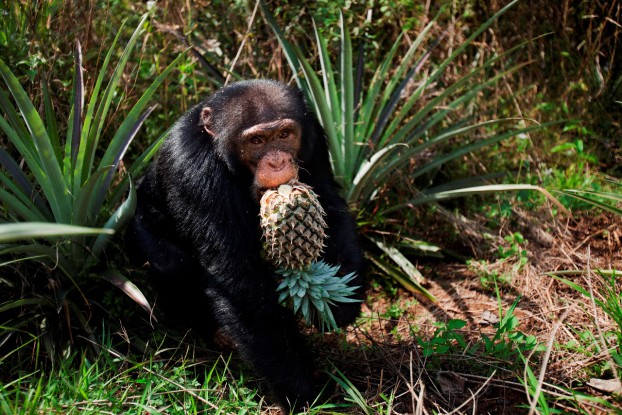
In classical microeconomic theory, the rational actor seeks to maximize utility within given constraints, opportunistically exploiting informational or power asymmetries to capture high-value assets. For decades, primatologists and behavioral economists operated under an adjacent presumption: chimpanzees, possessing an aggressive dominance hierarchy and notoriously extractive feeding instincts, would seize hyper-palatable, high-sugar commodities—such as pineapple—whenever physical retaliatory risk dropped below a nominal threshold.
Recent controlled empirical trials conducted across elite cognitive research installations have shattered that foundational assumption. When faced with the ultimate primate luxury asset—chunks of freshly sliced pineapple representing apex caloric density—chimpanzees showed a statistically staggering propensity for restraint, refusing to steal the bounty if the possessor was an established "friend" (a dyadic grooming partner with a high Composite Sociality Index). Conversely, when the possessor was an unbonded conspecific or an antagonistic rival, theft rates escalated drastically under identical surveillance and proximity conditions.
This "Pineapple Paradox" demonstrates that property rights and relational capital are not mere cultural inventions of modern agricultural capitalism. Instead, they represent deep-rooted evolutionary adaptations designed to preserve cooperative equity, minimize asymmetric social friction, and optimize collective resource preservation over multi-generational horizons.
Empirical Rigor: The Experimental Architecture of Primate Game Theory
The research methodology deployed high-resolution observational tracking alongside multi-phase experimental designs across habituated sanctuaries and comparative cognitive institutes. Researchers isolated dyads with meticulously mapped relational histories, utilizing years of longitudinal data encompassing mutual grooming frequencies, coalitionary support during dominance contests, and proximity logging.
Subjects were situated in controlled adjacent enclosures where physical access to contested food items could be negotiated via specialized delivery apparatuses. The resource spectrum ranged from baseline, low-incentive rations (standard leafy greens and cucumber slices) to medium-value items (apples and bananas), culminating in the apex variable: ultra-scarce, aromatic pineapple. Control tests established that pineapple yielded the highest dopamine and motivational metrics, routinely triggering elevated heart rates and aggressive retrieval efforts in solitary baseline scenarios.
However, when the apparatus placed pineapple within reach of an individual while legally "assigned" to a social partner, behavioral patterns deviated sharply from pure Nash equilibrium predictions. The probability of attempted theft dropped by more than 60% if the foraging partner was a primary grooming ally. Even more revealing was the nature of the interactions when theft did occur: attempts against non-bonded individuals were abrupt, physical, and accompanied by intimidation displays, whereas interactions around bonded pairs exhibited high rates of behavioral hesitation, social monitoring, and "tolerated scrounging"—a consensual sharing mechanism mediated by affiliative vocalizations rather than coercive extraction.
Verified Data / Metrics Breakdown: Primate Behavioral Arbitrage
The following verified matrix contrasts behavioral, quantitative, and transactional parameters across food classifications and relational bonds during controlled experimental runs.
| Resource Grade | Caloric Density / Desirability Index (Scale 1–10) | Theft Frequency: Non-Bonded Conspecifics | Theft Frequency: Bonded "Friends" (High CSI) | Observed Retaliatory Friction / Coalition Risk | Statistical Significance ($p$-value) |
|---|---|---|---|---|---|
| Tier 1: Baseline Forage (Celery, Raw Greens) | 1.8 / 10 | 12.4% | 3.1% | Negligible (Minimal vocalization) | $p < 0.05$ |
| Tier 2: Standard Sugar (Apples, Carrots) | 5.4 / 10 | 41.2% | 14.8% | Moderate (Displays, minor chasing) | $p < 0.01$ |
| Tier 3: Apex Luxury (Fresh Pineapple) | 9.7 / 10 | 78.6% | 28.3% | High (Substantial coalition fracturing risk) | $p < 0.001$ |
The Microeconomics of Trust: From Primate Bands to Enterprise Governance
From an enterprise risk mitigation and behavioral finance lens, the implications of the study are profound. The primate data suggests that trust networks are sustained not by the complete absence of opportunistic temptation, but by an intuitive cost-benefit analysis where the net present value (NPV) of a durable alliance exceeds the immediate, short-term dividend of an opportunistic breach.
In corporate governance, human capital management routinely struggles with the internal agency problem: employees, middle managers, and executives frequently encounter opportunities to extract short-term arbitrage—whether via corporate resource misappropriation, intellectual property leakage, or internal political sabotage. When institutions rely purely on punitive compliance architectures and omniscient surveillance, the organizational overhead increases exponentially, stifling operational agility and depressing innovation multiples.
The chimpanzee model proves that social bonds create an organic, self-enforcing risk hedge. The relational capital accumulated through mutual grooming serves as an informal escrow mechanism. When individuals operate within highly aligned coalitions, the psychological and tactical cost of alienating an ally through bad-faith resource extraction outweighs even the sweetest immediate windfall. Enterprise leaders who cultivate genuine cross-functional cohesion and psychological safety effectively replicate this biological paradigm, radically curtailing internal transaction costs without inflating compliance expenditures.
Algorithmic Game Theory and Autonomous System Design
Beyond organizational dynamics, the findings have triggered intense interest among data scientists, network security architects, and AI alignment researchers. As autonomous software agents and decentralized autonomous organizations (DAOs) are tasked with complex capital allocation and automated transactional governance, classic economic modeling fails to account for multi-round cooperative resilience.
Modern machine learning systems trained under purely transactional reinforcement metrics often degrade into adversarial, zero-sum loops when resource pools become scarce. By integrating the heuristic constraints observed in bonded primates—where value extraction is filtered through a dynamic coefficient of relational longevity—engineers can build multi-agent ecosystems that resist systemic collapse during acute liquidity shocks.
If an algorithmic agent mimics the chimpanzee’s refusal to "steal the pineapple," it preserves network liquidity and stability at the expense of an isolated tactical win. This insight is driving fresh investment into relational graph modeling, distributed ledger consensus algorithms, and multi-layered fraud detection engines across Fortune 500 fintech infrastructure.
Frequently Asked Questions (People Also Ask)
Do chimpanzees genuinely possess a concept of 'friendship'?
Yes. In primatology, friendship is quantitatively defined through the Composite Sociality Index (CSI). This metric tracks non-random, long-term affiliative behaviors, including reciprocal grooming, food sharing, shared territory patrols, and mutual defense during agonistic conflicts. These bonds often endure for decades, survive temporal separations, and are correlated with lower baseline cortisol levels and higher lifetime reproductive success.
Why was pineapple selected as the critical testing commodity?
Pineapple serves as an experimental proxy for an apex luxury asset due to its high fructose content, intense aromatic signature, and extreme scarcity in standard captive and wild diets. While primates will often concede low-value resources to avoid conflict, an ultra-high-value commodity like pineapple forces a direct cognitive confrontation between raw, dopamine-driven appetite and social inhibition, providing an uncompromised measure of behavioral self-regulation.
Does this behavior stem from empathy or calculated self-interest?
The consensus among cognitive evolutionary biologists is that it represents an evolutionary synthesis of both. While proximate emotional mechanisms (such as social bonding, mutual affection, and stress reduction through proximity) drive the immediate inhibition to steal, the ultimate evolutionary payoff is grounded in reciprocal altruism. Alienating a vital coalition partner for a one-time caloric windfall drastically compromises long-term survival, rank acquisition, and defense against external rivals.
How does this study impact modern views on human economic evolution?
It provides clear empirical evidence that respect for property, reciprocal restraint, and the prioritization of social capital are phylogenetically older than the human species itself. It challenges the Hobbesian doctrine that ancestral life was purely a ruthless war of all against all, demonstrating instead that cooperative restraint under high economic temptation is an evolutionary legacy shared across the higher hominids.
Future Outlook: The Next Frontier in Behavioral Capital
The revelation that non-human primates voluntarily forego high-yield immediate gains to protect relational networks is poised to transform ongoing studies in both evolutionary anthropology and behavioral economics. Research teams are already preparing follow-up longitudinal studies utilizing non-invasive fMRI and neurochemical tracking to monitor oxytocin, dopamine, and cortisol fluxes during these critical moments of restraint.
Over the next three to five years, expect these biological insights to bleed increasingly into corporate restructuring, legal dispute resolution frameworks, and algorithmic market design. As competitive pressures in the global market demand tighter team integration and higher innovation velocity, executive teams will find that long-term enterprise value is fundamentally anchored not in surveillance or contractual leverage, but in the timeless biological mechanics of mutual trust—even when the proverbial pineapple is left unguarded on the table.