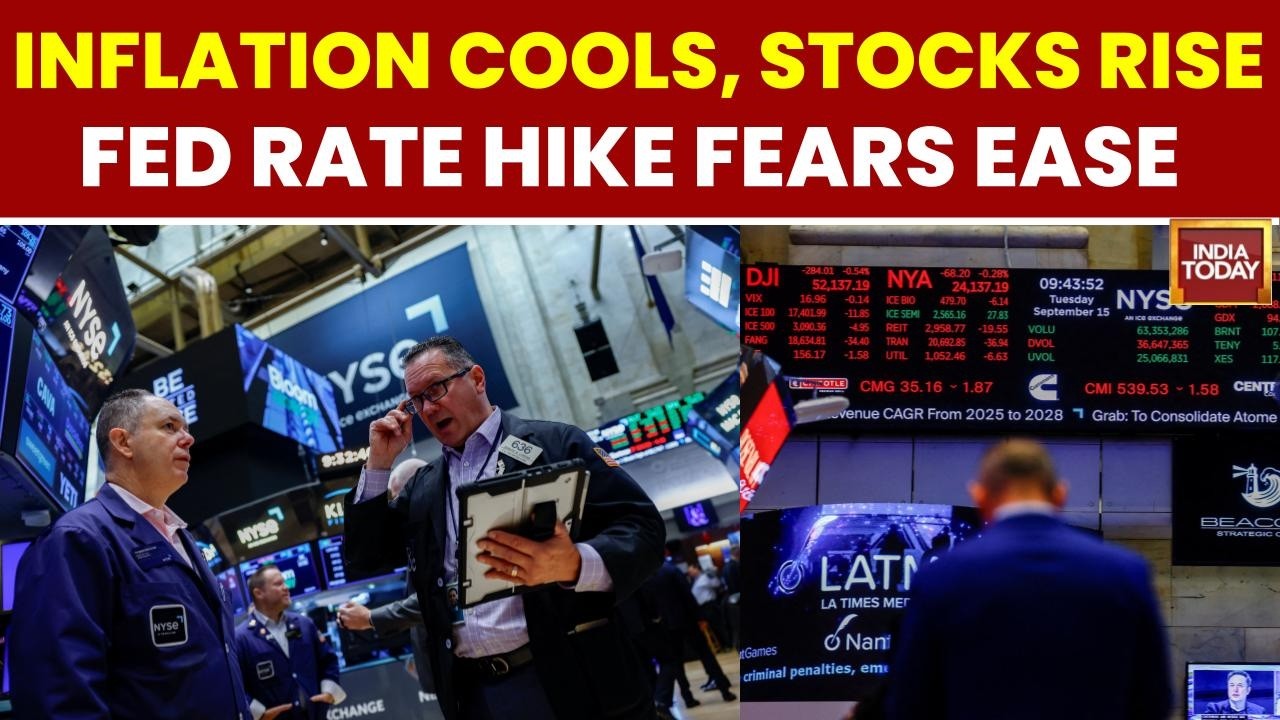
Wall Street Rallies as June Inflation Collapse Revives Rate-Cut Hopes and Triggers Massive Tech Reallocation
By Our Financial Markets Investigative Desk | Published: July 15, 2026
Executive Takeaways
- Historic CPI Contraction: June recorded the steepest monthly Consumer Price Index decline since April 2020, spearheaded by a 5.7% plunge in global energy commodities.
- Tech Outperformance: The Nasdaq Composite surged 0.9%, outstripping the broader S&P 500 as valuation multiples expanded across high-growth sectors.
- Monetary Policy Pivot: Easing inflationary pressures have fundamentally altered capital allocation strategies, forcing institutional investors to recalibrate their risk mitigation frameworks for the remainder of 2026.
- Enterprise Capital Expenditure: Lower cost-of-capital projections are driving renewed corporate investment in cloud compute architecture and infrastructure scalability.
The Macroeconomic Catalyst: Deconstructing the June CPI Shock
Global financial markets experienced a decisive shift on July 15, 2026, as newly released macroeconomic data confirmed a dramatic cooling of inflationary pressures. The headline Consumer Price Index (CPI) printed a contraction not seen since the unprecedented economic disruptions of April 2020. This unexpected deceleration was primarily engineered by a sharp, 5.7% collapse in energy prices, which cascaded through domestic supply chains, alleviating input cost pressures for both industrial manufacturers and consumer discretionary enterprises.
For months, institutional asset managers, corporate treasurers, and central bank watchers have navigated a volatile monetary landscape defined by sticky inflation readings and aggressive quantitative tightening. However, the June print has fundamentally altered the prevailing narrative. By dampening persistent fears of further Federal Reserve rate hikes, the data has injected a surge of market liquidity into equities, driving a pronounced rotation back toward growth-oriented equities and technology leaders.
Sector-Specific Dynamics: Nasdaq Leadership and Energy Correction

The immediate reaction across major indices underscored a classic risk-on posture. The Nasdaq Composite outpaced the broader benchmark, registering a decisive 0.9% gain driven by robust buying in mega-cap technology stalwarts, semiconductor designers, and enterprise software providers. Investors are increasingly reassessing valuation multiples through the lens of a lower terminal federal funds rate, significantly reducing the discount applied to future cash flows.
Conversely, the energy sector bore the brunt of the session's structural adjustments. While a 5.7% drop in energy prices served as the primary deflationary catalyst for the broader economy, upstream exploration and production equities faced downward pressure. Nevertheless, portfolio managers noted that the net economic benefit of cheaper energy far outweighed the localized sector contraction, acting effectively as a tax cut for American consumers and margin expansion for heavy industrials.
Verified Data & Metrics Breakdown
| Economic Indicator / Index | Performance / Print | Historical Context / Benchmark | Strategic Market Implication |
|---|---|---|---|
| Nasdaq Composite | +0.9% Daily Gain | Outperformed S&P 500 | Expansion of valuation multiples for growth assets. |
| Energy Price Index | -5.7% Monthly Drop | Sharpest correction in quarters | Primary driver of headline CPI deceleration. |
| June CPI Print | Largest monthly decline since April 2020 | Defies sticky inflation consensus | Eases aggressive rate-hike terminal rate fears. |
| S&P 500 Index | Broad Positive Advance | Steady institutional inflows | Broad-based risk mitigation unwinding. |
Industry & Market Implications: Winners, Losers, and Corporate Strategy
The macroeconomic turning point observed in mid-July has immediate ramifications for corporate boardrooms and institutional portfolio construction. Organizations are systematically reviewing their capital allocation strategies in anticipation of shifting monetary policy.
Corporate Winners: Tech, Real Estate, and Discretionary Retail
Technology enterprises leading the charge in artificial intelligence infrastructure, cloud compute architecture, and enterprise SaaS solutions stand out as primary beneficiaries. With capital becoming progressively less expensive, Chief Information Officers (CIOs) are expected to greenlight delayed digital transformation projects. Furthermore, interest-sensitive sectors such as real estate investment trusts (REITs) and consumer discretionary retailers are experiencing relief rallies as borrowing costs stabilize.
Corporate Laggards: Commodity Hedging and Defensive Refuges
Conversely, traditional defensive hedges that thrived during the peak inflationary cycle are facing asset reallocation pressures. Energy producers must adapt to lower commodity price realizations, forcing management teams to focus intensely on operational efficiency and debt reduction rather than aggressive output expansion. Fixed-income managers are also aggressively repositioning duration risk within their portfolios to capture current yields before potential central bank rate cuts materialize.
Frequently Asked Questions (People Also Ask)
What caused the sharp decline in the June Consumer Price Index (CPI)?
The June CPI contraction was primarily driven by a significant 5.7% drop in energy prices. This correction in global energy markets relieved upstream and downstream cost pressures, resulting in the largest monthly decline in the headline index since April 2020.
Why did the Nasdaq outperform the S&P 500 following the inflation report?
Growth-oriented equities, particularly within the Nasdaq Composite, are heavily sensitive to interest rate projections. As softer inflation data reduced fears of further Federal Reserve rate hikes, the projected discount rate applied to future tech earnings dropped, causing valuation multiples to expand rapidly.
How does this inflation report impact corporate capital allocation and enterprise ROI?
A stabilizing or declining interest rate environment lowers the corporate cost of capital. This encourages executives to accelerate infrastructure scalability investments, cloud computing migrations, and research-and-development initiatives aimed at maximizing enterprise ROI.
What are the implications for future Federal Reserve monetary policy decisions?
The unexpected cooling in inflation reduces the probability of additional monetary tightening. Financial markets are now increasingly pricing in a prolonged pause, with forward-looking traders actively speculating on the timing of potential central bank rate cuts later in the economic cycle.
Future Outlook & Strategic Milestones to Watch
As the financial markets digest the July 15 macroeconomic data, attention turns swiftly toward upcoming corporate earnings announcements and subsequent macroeconomic prints. Chief Investment Officers are advising clients to monitor several critical indicators over the next quarter:
- Federal Open Market Committee (FOMC) Forward Guidance: Central bank commentary regarding the terminal rate and potential policy pivots will dictate market momentum through Q3 and Q4.
- Corporate Earnings Margins: Analysts will scrutinize second-quarter earnings reports to evaluate how effectively corporations utilized lower input costs to expand operating margins.
- Labor Market Resilience: Employment data, including non-farm payrolls and wage growth figures, will remain paramount in determining whether the economy achieves a sustained soft landing.
Ultimately, the June inflation data marks a crucial psychological and structural milestone for global financial markets. While volatility remains an inherent characteristic of the 2026 economic environment, the easing of rate-hike fears has re-established a constructive foundation for equity valuation and strategic corporate investment.