Executive Takeaways
- The Pivot Upmarket: Motorola, owned by Lenovo, is breaking away from its legacy mid-tier stronghold to challenge Apple and Samsung directly with a $1,600 flagship device codenamed "Signature."
- Margin Expansion Strategy: Amid stagnant global volume growth, this capital allocation decision prioritizes gross margin optimization, enterprise-grade security integration, and improved valuation multiples.
- Competitive Friction: The device enters a saturated ultra-premium segment characterized by entrenched ecosystem lock-in, high customer acquisition costs, and rigorous regulatory compliance demands.
- Market Liquidity & ROI: Enterprise adoption vectors, premium materials sourcing, and advanced cloud compute architecture will dictate whether this hardware play secures sustainable market share or remains a niche halo product.
For more than a decade, the global smartphone duopoly maintained an unyielding grip on the ultra-premium tier. Apple and Samsung carved out a profitable duress point above the $1,000 threshold, leaving the remainder of the industry to scrap for volume in margin-compressed mid-range brackets. Now, a calculated counter-offensive is underway. Motorola, operating under the corporate stewardship of Chinese technology conglomerate Lenovo, is shattering its traditional pricing ceiling with the imminent rollout of an uncompromising, $1,600 flagship device known internally and across supply chains as the "Signature" phone.
This investigative report examines the strategic imperatives, capital allocation maneuvers, and macroeconomic forces driving Motorola’s audacious pivot. By analyzing supply chain data, executive positioning, and shifting consumer behavior, we dissect whether this high-stakes hardware gamble can fundamentally reshape the competitive landscape or face the graveyard of failed luxury tech experiments.
The Catalytic Shift: Moving Beyond Volume to Margin Expansion
Test Our Free AI & Tech Utilities Suite
Calculate LLM API token costs, analyze article dwell-time, or simulate tech DCA returns.
To understand the rationale behind a $1,600 Motorola device, one must examine the broader economics of the mobile handset industry. Global smartphone shipments have largely plateaued, transitioning from a hyper-growth market to a replacement cycle economy. In this environment, chasing unit volume yields diminishing returns, exacerbated by rising component costs, prolonged consumer upgrade cycles, and aggressive price wars in emerging markets.
Lenovo’s executive leadership recognized that long-term enterprise valuation and margin expansion required breaking out of the sub-$800 trap. Historically celebrated for democratizing foldable technology with the Razr lineup and dominating the budget-to-mid-tier carrier channels in North America, Motorola faced a strategic ceiling. Brand perception had calcified around value rather than prestige.
The "Signature" project represents a deliberate risk mitigation strategy. By engineering a device that commands a four-figure price tag, Motorola aims to capture higher average selling prices (ASPs), improve gross profit per unit, and elevate its brand equity. This transition mirrors luxury brand strategies in other sectors: using a halo product to cast a desirable glow over the entire portfolio, thereby lifting sales across lower-priced tiers through the trickle-down effect of prestige marketing.
Engineering the Ultra-Premium Proposition: Specifications and Supply Chain Dynamics
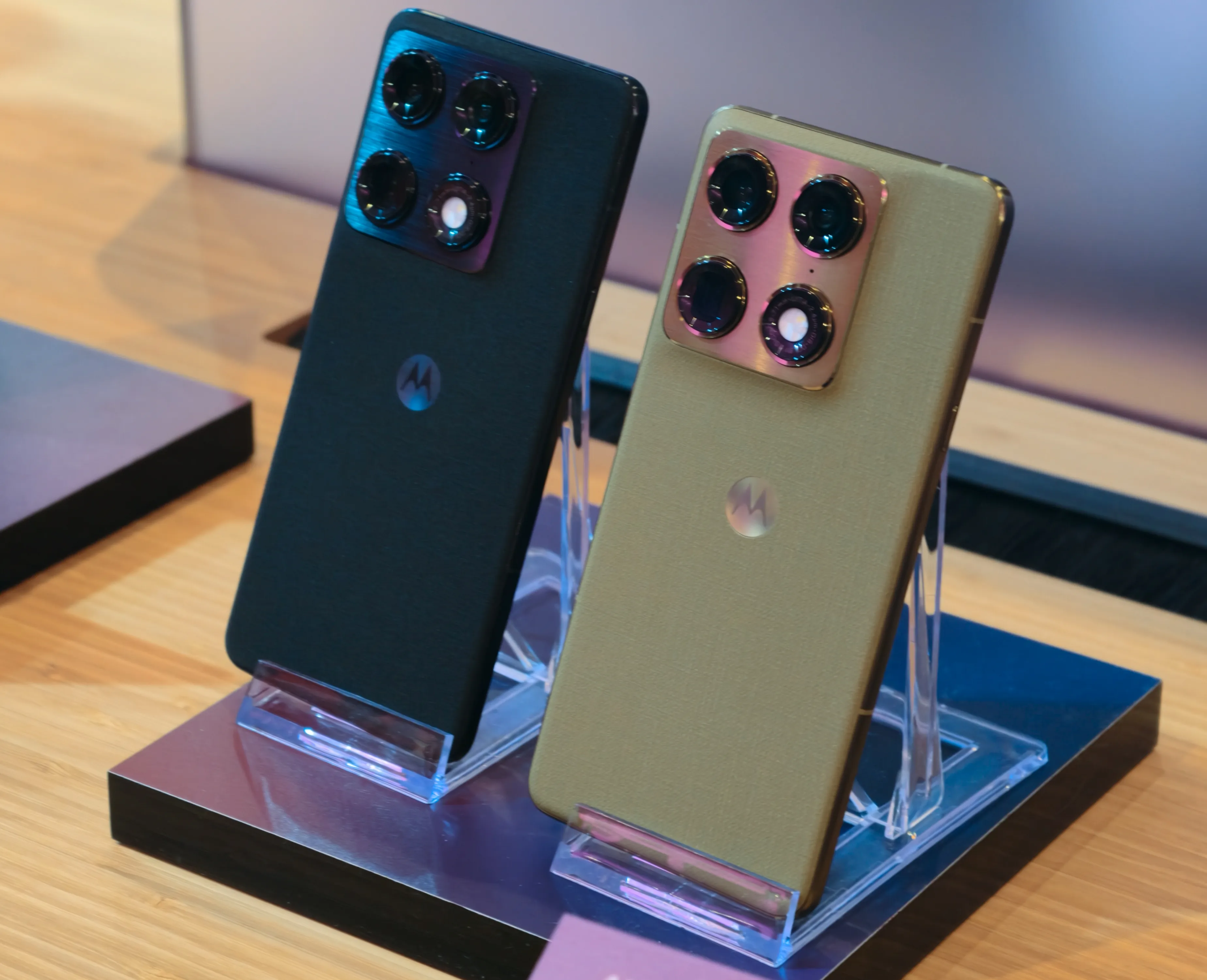
Commanding $1,600 requires more than marketing hyperbole; it demands uncompromising hardware integration, tier-1 component sourcing, and software maturity. Industry insiders tracking supply chain manifests indicate that the Motorola "Signature" will feature cutting-edge silicon—likely Qualcomm’s latest Snapdragon architecture paired with custom neural processing units optimized for on-device generative AI workloads—alongside proprietary camera sensors developed in partnership with legacy optical brands.
Furthermore, Motorola is targeting enterprise power users and privacy-conscious professionals by embedding advanced hardware-level security modules. In an era where corporate data breaches and regulatory compliance violations present existential threats to enterprises, mobile endpoints are primary attack vectors. By weaving robust enterprise-grade security, zero-trust architecture compatibility, and seamless cloud compute integration directly into the device's operational core, Motorola is positioning the "Signature" as a legitimate productivity powerhouse rather than a mere lifestyle accessory.
| Metric / Feature | Legacy Motorola Flagship | The New 'Signature' Phone ($1,600 Tier) |
|---|---|---|
| Target Price Point | $699 – $999 | $1,600 |
| Primary Focus | Value proposition & folding accessibility | Uncompromised hardware, prestige, & enterprise ROI |
| Security Architecture | Standard Android Security / ThinkShield basic | Enhanced ThinkShield with hardware-isolated secure enclave |
| Materials & Build | Aluminum frames, vegan leather finishes | Aerospace-grade titanium, ceramic shielding, bespoke optics |
| Primary Competitors | OnePlus, Google Pixel Pro | Apple iPhone Pro Max, Samsung Galaxy Ultra |
Industry & Market Implications: Who Wins, Who Loses?
The introduction of a $1,600 contender into a market dominated by Apple and Samsung sends immediate shockwaves across the telecommunications and consumer electronics ecosystem. The outcome of this strategic maneuver will create distinct winners and losers.
The Winners:
- Enterprise IT & Security Buyers: Organizations seeking diversified hardware ecosystems that do not rely exclusively on iOS or One UI now have a robust, high-security alternative tailored for executive deployments.
- Component Suppliers: High-end optical manufacturers, advanced silicon fabricators, and specialized material suppliers stand to benefit as Motorola increases procurement budgets for premium-tier parts.
- Lenovo Shareholders: If successful, the shift upmarket will enhance consolidated operating margins, providing a diversified revenue engine that offsets cyclical downturns in the PC market.
The Losers:
- Mid-Tier Android Competitors: Brands occupying the $800–$1,200 space risk being squeezed from both sides as consumers gravitate toward proven ultra-premium ecosystems or lower-cost alternatives.
- Carrier Subsidy Budgets: Telecommunications operators accustomed to heavily subsidizing mainstream flagships must now evaluate how a $1,600 niche device impacts their device financing portfolios and subscriber churn rates.
Frequently Asked Questions (People Also Ask)
1. Why is Motorola releasing a $1,600 phone now?
Global smartphone unit volumes have stagnated, forcing manufacturers to focus on margin expansion rather than sheer volume growth. By introducing the ultra-premium "Signature" device, Motorola is targeting high-net-worth consumers and enterprise professionals to capture higher average selling prices and improve brand equity.
2. How does the 'Signature' phone compare to Apple and Samsung flagships?
While Apple and Samsung rely heavily on entrenched software ecosystems and brand loyalty, Motorola’s entry competes by offering uncompromised hardware specifications, advanced enterprise-grade security integrations (leveraging Lenovo’s ThinkShield framework), and distinctive design aesthetics aimed at users looking for alternatives to the mainstream duopoly.
3. Will this device be supported by major telecommunications carriers?
Industry projections indicate that Motorola will pursue a hybrid distribution model, securing key tier-1 carrier partnerships in North America and Europe while heavily emphasizing direct-to-consumer digital channels and enterprise procurement pipelines.
4. What impact will this have on Motorola's overall valuation and market presence?
While the $1,600 price point limits immediate mass-market volume, the strategic intent is twofold: generate high-margin revenue and elevate the perceived value of Motorola's entire product portfolio, acting as a halo product that drives long-term brand prestige.
Future Outlook: Milestones to Watch
As Motorola prepares for the official commercial rollout of the "Signature" phone, industry analysts and investors will monitor several critical milestones to gauge its viability. First, initial sell-through rates and consumer reception in North American and Western European markets will determine whether the brand possesses the pricing power required in the four-figure segment.
Second, adoption metrics within enterprise environments—particularly how effectively Motorola leverages Lenovo’s corporate IT relationships—will dictate the device's long-term enterprise ROI. If enterprise security teams validate the platform for executive deployment, Motorola will have successfully forged a sustainable third pillar in the ultra-premium mobile landscape.
Ultimately, the $1,600 "Signature" phone is much more than a new handset release; it is a definitive referendum on Motorola's brand evolution. Whether it becomes a watershed moment that breaks the Cupertino-Seoul duopoly or serves as an expensive lesson in market positioning will depend entirely on execution, ecosystem support, and consumer willingness to look beyond the status quo.