Executive Takeaways
- Public Engagement Vector: NASA’s latest initiative invites global citizens to submit their names and digital footprints for inclusion on an upcoming deep-space trajectory targeting Saturn’s icy moon, Enceladus.
- Astromrobiological Significance: Enceladus represents one of the premier targets in our solar system for astrobiological discovery, featuring a subsurface liquid water ocean interacting with a rocky core.
- Capital & Infrastructure Scaling: While publicly framed as an educational outreach campaign, such missions catalyze massive R&D spending, cloud compute architecture scaling, and public-private aerospace partnerships.
- Risk Mitigation & Compliance: Planetary protection protocols remain paramount, requiring stringent sterilization and orbital disposal planning to safeguard pristine extraterrestrial environments from terrestrial biological contamination.
WASHINGTON — In a sweeping public mobilization effort that blurs the lines between deep-space exploration and global digital engagement, NASA has officially opened registration for citizens worldwide to symbolically join its upcoming mission to one of the most enigmatic destinations in our solar system: Saturn’s geologically active moon, Enceladus. While the campaign captures the public imagination through personalized boarding passes and digital spacecraft manifests, institutional analysts, aerospace strategists, and financial markets are viewing the initiative through a starkly different lens. Beyond the cultural touchstone of sending millions of names into the outer rings of the Saturnian system, this program underscores a broader secular shift in how space agencies manage capital allocation, secure multi-billion-dollar federal budgets, and validate high-risk infrastructure investments in the New Space economy.
The Catalytic Event: Unlocking the Secrets of Enceladus
Test Our Free AI & Tech Utilities Suite
Calculate LLM API token costs, analyze article dwell-time, or simulate tech DCA returns.
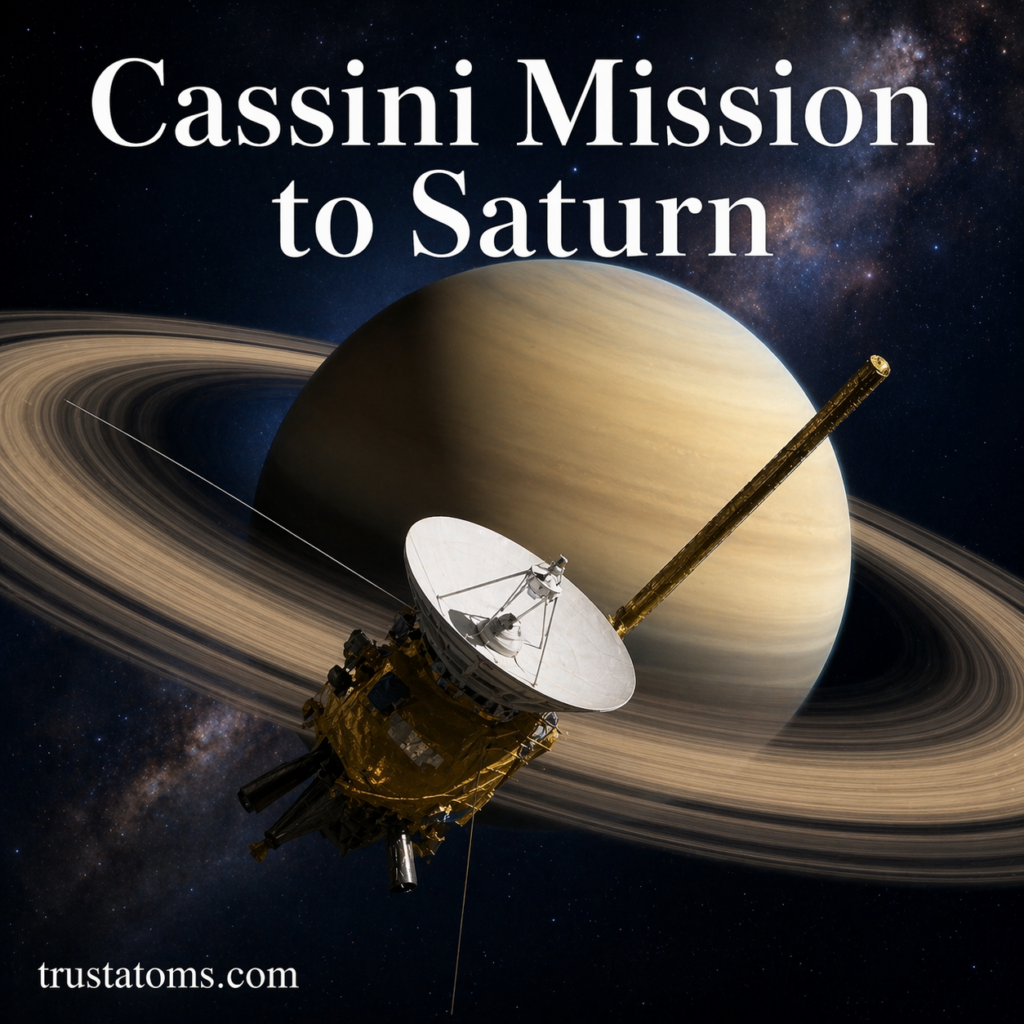
The announcement arrives at a pivotal inflection point for planetary science. Over the past decade, data harvested from the trailblazing Cassini-Huygens mission fundamentally reshaped our understanding of ocean worlds. Scientists confirmed that Enceladus—a modest body roughly the size of the United Kingdom—harbors a global, subsurface liquid water ocean locked beneath an icy crust varying in thickness from 5 to 40 kilometers. More importantly, dramatic cryovolcanic plumes erupting from the moon’s south polar fractures spray water vapor, organic molecules, simple hydrocarbons, and salts directly into space.
For aerospace engineers and mission architects, these natural geysers represent a once-in-a-generation scientific shortcut. Instead of designing a high-risk, capital-intensive robotic drilling apparatus capable of penetrating miles of solid ice, future conceptual missions—such as the proposed Enceladus Orbilander or dedicated life-detection flyby probes—can sample the moon’s internal ocean simply by flying through its plume emissions. This operational efficiency drastically reduces risk mitigation burdens while maximizing return on scientific investment.
By inviting the global populace to attach their names to this exploratory vector, NASA is executing a sophisticated public relations and stakeholder alignment strategy. In an era marked by intense fiscal scrutiny and competing federal appropriations, maintaining robust public mindshare is directly correlated with long-term legislative backing and valuation multiples for major aerospace primes.
Technical Infrastructure and Deep-Space Logistics

Executing a mission to the Saturnian system requires a staggering level of engineering precision, robust cloud compute architecture, and advanced propulsion technologies. Unlike low Earth orbit (LEO) constellations or lunar missions, missions to the outer planets demand multi-year cruise phases, complex gravity-assist maneuvers leveraging Venus, Earth, and Jupiter, and highly reliable deep-space communication networks via NASA’s Deep Space Network (DSN).
The digital infrastructure required to process millions of public submissions for the spacecraft’s onboard microchip is itself a testament to modern data engineering. Scaling web applications to handle sudden, viral surges in traffic necessitates enterprise-grade cloud compute elasticity, rigorous cybersecurity compliance, and seamless database partitioning. As private enterprise increasingly intersects with civil space programs—with companies like SpaceX, Blue Origin, and myriad avionics startups supplying launch vehicles and propulsion systems—the operational methodologies tested during these outreach campaigns mirror the scalability demands seen in high-growth commercial technology sectors.
Verified Data & Metrics Breakdown
To contextualize the scale of this initiative, the following matrix compares key operational, scientific, and engagement metrics associated with NASA’s deep-space public payload campaigns and the Enceladus exploration framework:
| Metric / Parameter | Cassini-Huygens Legacy | Current Enceladus Campaign | Projected Next-Gen Mission |
|---|---|---|---|
| Distance from Earth (Average) | ~1.2 billion kilometers | ~1.2 billion kilometers | ~1.4 billion kilometers (Orbital Insertion) |
| Public Names Registered | N/A (Targeted Mars/Deep Space later) | Millions (Trending Global Influx) | Targeting 10M+ Global Entries |
| Primary Scientific Focus | Saturn System, Rings, Titan | Astromrobiology & Cryovolcanism | Direct Biosignature Detection in Plumes |
| Estimated Mission Lifecycle | 1997 �� 2017 (20 Years) | Active Development / Planning Phase | 2030s Launch Window Projection |
Industry and Market Implications: Winners, Losers, and Economic Impact
The formalization of outer-planet science pipelines carries significant financial gravity. As space exploration transitions from purely sovereign geopolitical competition to a commercially intertwined ecosystem, defense primes, aerospace engineering contractors, and specialized instrument manufacturers stand to capture substantial capital allocations.
Who Wins:
- Advanced Propulsion & Avionics Manufacturers: Long-duration missions require cutting-edge radioisotope thermoelectric generators (RTGs) and solar electric propulsion systems, driving revenue for specialized nuclear and electrical component suppliers.
- Cloud Computing & Data Analytics Providers: Managing telemetry, deep-space communication relays, and massive digital public engagement campaigns requires scalable enterprise cloud infrastructure.
- STEM Education & Public-Private Partnerships: Organizations that bridge academic research and commercial aerospace development benefit from heightened talent inflows spurred by high-profile space campaigns.
Who Faces Headwinds:
- Short-Term Fiscal Allocations: Programs with multi-decade development horizons often face budgetary friction during macroeconomic downturns, requiring rigorous cost-benefit analyses and risk mitigation protocols to protect funding.
- Legacy Aerospace with Slow Agility: Firms unable to adapt to agile software development, rapid prototyping, and cost-efficient supply chain models risk losing prime contract bids to disruptive New Space entrants.
Frequently Asked Questions (People Also Ask)
How can individuals participate in NASA's mission to Saturn's moon?
NASA periodically opens digital registration portals—often hosted on dedicated mission websites—where participants can submit their first and last names along with a postal code. These names are subsequently compiled, etched onto microchips using electron-beam nanofabrication, and mounted directly onto the spacecraft chassis before launch, complete with a commemorative digital boarding pass.
Why is Enceladus considered a primary target in the search for extraterrestrial life?
Enceladus satisfies the fundamental triad required for life as we know it: liquid water, essential chemical elements (carbon, hydrogen, nitrogen, oxygen, phosphorus, and sulfur), and a steady source of energy (hydrothermal activity interacting with the rocky core). The presence of active geysers spraying subsurface ocean material directly into space allows probes to analyze habitable environments without landing or drilling.
What are the primary technical challenges of executing a mission to Saturn?
The vast distance to the Saturnian system—roughly 1.2 billion kilometers from Earth—presents severe hurdles regarding communication latency (signals take over an hour round-trip), solar power availability (necessitating nuclear power sources like RTGs), and the extreme delta-V requirements needed to achieve orbital insertion around Saturn rather than executing a high-speed flyby.
Does participating in these public campaigns grant any legal or commercial rights in space?
No. Participating in NASA’s name-collection initiatives is entirely symbolic. Under the 1967 Outer Space Treaty, celestial bodies and outer space are declared the province of all mankind, and no nation or individual can claim sovereign ownership or commercial property rights over extraterrestrial territory.
Future Outlook: Milestones and Strategic Horizons
As the digital registration window progresses, the underlying roadmap for outer-planet exploration continues to crystallize. Over the next 24 to 36 months, planetary scientists and budgetary committees will review prioritized recommendations from the National Academies' Decadal Survey, determining the precise mission architecture, launch vehicle selections, and funding allocations for dedicated Enceladus return spacecraft.
For investors, technologists, and global observers, the initiative is far more than a clever marketing exercise. It serves as a bellwether for public enthusiasm and political will, proving that even as capital markets navigate complex valuations and macroeconomic uncertainties, humanity’s appetite for deep-space discovery remains entirely unscaled. Monitoring the convergence of public engagement metrics, aerospace supply chain scaling, and regulatory compliance will be essential for stakeholders positioning themselves at the frontier of the multi-trillion-dollar cosmic economy.