Executive Takeaways
- The Decision Matrix: NASA faces a historic strategic choice between authorizing a high-risk, privately funded commercial servicing mission or executing a controlled deorbit of the aging Hubble Space Telescope.
- Commercial Innovation vs. Risk Mitigation: Backed by billionaire Jared Isaacman and SpaceX, the Polaris Dawn-inspired reboost proposal offers extended lifespan potential but introduces unprecedented technical and regulatory liabilities.
- Fiscal and Strategic Impact: Capital allocation, orbital asset management, and risk mitigation strategies are under intense scrutiny as government agencies weigh taxpayer exposure against private-sector space infrastructure scalability.
For more than three decades, the Hubble Space Telescope has served as the undisputed crown jewel of observational astrophysics, peering into the deepest recesses of the cosmos and fundamentally altering humanity’s understanding of the universe. Yet, as the legendary observatory drifts in low-Earth orbit (LEO) at an altitude of approximately 540 kilometers, it stands at an unprecedented structural and institutional crossroads. NASA is locked in high-stakes deliberations over whether to approve a daring, privately financed rescue and reboost mission or to initiate a controlled deorbit, effectively writing the final chapter for one of the most successful scientific instruments in human history.
This agonizing policy and engineering dilemma brings together complex intersections of aerospace engineering, federal risk management, and the rapidly maturing commercial space economy. As degradation from atmospheric drag slowly pulls Hubble toward an inevitable, fiery re-entry, the debate has evolved from a routine aerospace maintenance question into a litmus test for how public-private partnerships will govern critical orbital infrastructure in the 21st century.
The Catalytic Turning Point: How Hubble Reached the Brink
Test Our Free AI & Tech Utilities Suite
Calculate LLM API token costs, analyze article dwell-time, or simulate tech DCA returns.
Commissioned in April 1990 aboard the Space Shuttle Discovery, Hubble was engineered with modularity in mind. During the Space Shuttle era, astronauts visited the observatory five times to repair failing components, upgrade gyroscopes, and install cutting-edge scientific instruments. These daring missions transformed Hubble into a generational enterprise ROI machine, continuously maximizing its scientific utility and extending its operational runway far beyond original design parameters.
However, the retirement of the Space Shuttle fleet in 2011 fundamentally altered the maintenance paradigm. Without a heavy-lift crewed vehicle equipped with a robotic manipulator arm and a pressurized cabin capable of servicing a complex LEO satellite, Hubble was left without a safety net. Over the intervening years, orbital decay has continued unabated. Solar activity swells the Earth's upper atmosphere, increasing atmospheric drag and accelerating the satellite's descent.
The catalytic event occurred when billionaire and private astronaut Jared Isaacman, in partnership with SpaceX, approached NASA with an unprompted, fully funded proposal under the agency’s Space Act Agreement framework. Utilizing the SpaceX Crew Dragon spacecraft, the proposed Polaris-backed mission would rendezvous with Hubble, utilize a modified spacesuit architecture to conduct extravehicular activities (EVAs), and deliver the telescope to a higher, more stable orbital altitude while conducting targeted mechanical maintenance. What began as an internal NASA engineering study quickly blossomed into a contentious debate involving valuation multiples of public trust, federal regulatory compliance, and long-term space debris mitigation.
Weighing the Dual Pathways: Servicing Versus Deorbit

Inside NASA’s headquarters and at the Goddard Space Flight Center, mission architects and planetary scientists are divided into two distinct camps. Each path carries profound implications for asset preservation, budgetary forecasting, and technological precedent.
Pathway A: The Commercial Servicing and Reboost Mission
Proponents of the rescue mission argue that abandoning a fully functional scientific asset represents an unacceptable opportunity cost. Despite operating with only three of its six original gyroscopes, Hubble continues to produce world-class astronomical data that routinely complements the discoveries of the James Webb Space Telescope (JWST). A successful reboost would elevate Hubble out of its decaying orbit, potentially extending its operational lifespan by another decade.
From an enterprise perspective, this option signals a massive leap forward in infrastructure scalability and the commercialization of LEO. If a private entity can successfully service a complex, non-serviceable satellite originally built in the late 1980s, the market liquidity and valuation metrics for orbital servicing startups will experience an immediate, paradigm-shifting surge. It establishes a viable blueprint for extending the lifecycle of multi-billion-dollar government and commercial assets alike.
However, the technical hurdles are formidable. Hubble was never designed to be grappled by a Crew Dragon capsule, nor were its docking fixtures standardized for commercial systems. The risk profile is extraordinarily high: a miscalculated docking maneuver could inadvertently damage the telescope, creating a massive debris field in a heavily populated orbital highway. Furthermore, NASA must evaluate the legal and financial liabilities should an anomaly occur during a privately led, government-asset intervention.
Pathway B: The Controlled Deorbit
Conversely, NASA’s traditional risk mitigation protocols heavily favor caution. If the agency deems the technological risks of a private servicing mission to be unacceptably high, the default fallback is the design and attachment of a custom deorbit mechanism—or relying on a future dedicated robotic tug—to guide Hubble safely into an uninhabited stretch of the southern Pacific Ocean.
While emotionally wrenching for the global astronomical community, a controlled deorbit provides absolute closure and guarantees regulatory compliance with modern orbital debris mitigation standards. It eliminates the existential hazard of an uncontrolled, random atmospheric re-entry of a massive, multi-tonne structure, protecting global populations and infrastructure below.
Verified Data and Metrics Breakdown
To understand the magnitude of the Hubble decision, industry analysts and aerospace economists rely on key comparative metrics detailing the telescope's operational history, physical specifications, and fiscal parameters.
| Metric / Parameter | Hubble Space Telescope (HST) Baseline | Proposed Commercial Servicing Impact |
|---|---|---|
| Launch Date | April 24, 1990 (STS-31) | N/A (Operational Legacy Extension) |
| Current Orbital Altitude | ~540 km (Decaying steadily) | Target Reboost: ~600+ km |
| Total Program Investment | Over $16 Billion (Inflation-adjusted) | Private Capital Allocation (Unfunded Space Act Agreement) |
| Projected Lifespan Extension | Expected atmospheric decay by ~2030-2035 | Potential operation through the mid-2030s |
| Primary Risk Factor | Gyroscope failure & uncontrolled decay | Docking anomaly, EVA complications, liability exposure |
Industry and Market Implications
The resolution of the Hubble servicing debate extends far beyond the confines of astrophysics; it carries immediate commercial and strategic consequences for the global space economy.
- Commercial Space Service Providers: Companies specializing in orbital logistics, in-space manufacturing, and satellite life-extension technologies stand as primary beneficiaries. A green light for a private Hubble mission validates the business case for orbital maintenance, catalyzing venture capital deployment and driving up equity valuations across the commercial space sector.
- Federal Procurement and Risk Tolerance: NASA and other government space agencies face a cultural shift. Embracing unfunded Space Act Agreements for high-profile national assets forces a re-evaluation of bureaucratic risk aversion, encouraging leaner, more agile approaches to public infrastructure management.
- The Scientific Community: Academic institutions and researchers stand to win or lose millions in grant funding tied to Hubble observational data. While JWST commands the frontier of infrared astronomy, Hubble’s unique ultraviolet capabilities remain irreplaceable for studying star formation and planetary atmospheres.
Frequently Asked Questions (People Also Ask)
Why can't NASA simply use the Space Shuttle to service Hubble again?
The NASA Space Shuttle fleet was permanently retired in July 2011 following the completion of mission STS-135. Consequently, the specialized heavy-lift infrastructure, robotic arm capabilities, and pressurized flight crew accommodations required to physically berth and service Hubble no longer exist within the government fleet.
Who is funding the proposed commercial Hubble servicing mission?
The proposed rescue mission is conceptualized as a public-private partnership via an unfunded Space Act Agreement. Private funding is spearheaded by billionaire entrepreneur Jared Isaacman in collaboration with SpaceX, meaning taxpayers would bear minimal direct financial burden for the transit and rescue operations.
What happens if NASA decides to deorbit Hubble instead?
If NASA opts for a controlled deorbit, engineers will design and deploy a specialized propulsion or guidance module to safely direct the telescope into a predetermined, remote oceanic impact zone—typically the southern Pacific Ocean—ensuring zero risk to populated landmasses or critical global infrastructure.
When is the final decision regarding Hubble's fate expected?
While NASA has not established a rigid, public deadline, ongoing technical feasibility assessments and safety reviews conducted by agency panels are expected to yield a definitive policy and operational direction as atmospheric decay rates continue to accelerate.
Future Outlook and Strategic Milestones to Watch
As NASA weighs the delicate balance between scientific preservation and rigorous risk mitigation, the final verdict on the Hubble Space Telescope will set an indelible precedent for the governance of orbital assets. If the commercial servicing initiative receives the green light, it will mark a watershed moment where private enterprise rescues a legendary public asset, opening the floodgates for a robust new market in space infrastructure maintenance.
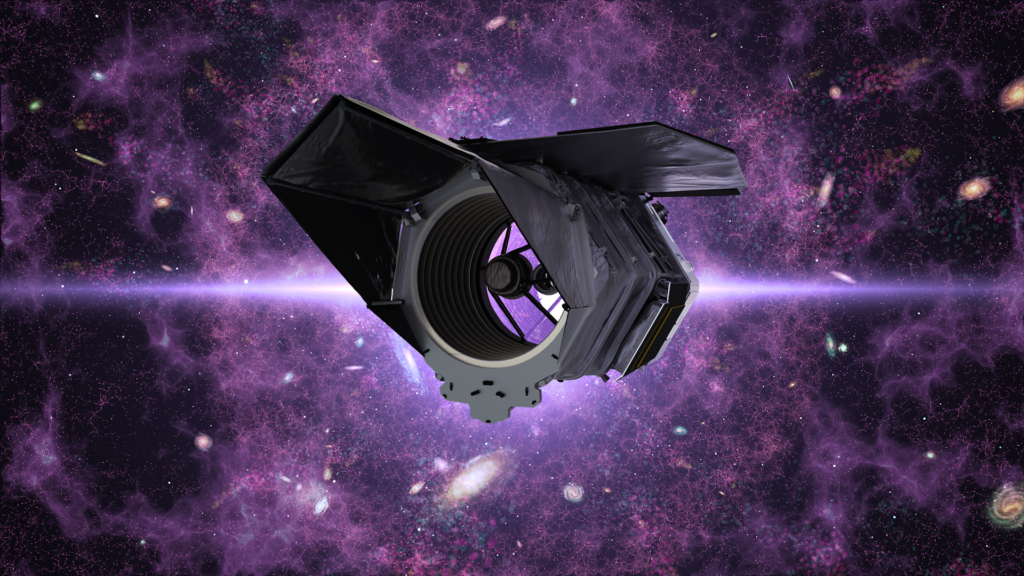
Conversely, choosing a controlled deorbit will close a glorious chapter in human exploration with absolute safety and dignity, turning the page toward next-generation observatories like JWST and the upcoming Nancy Grace Roman Space Telescope. Industry stakeholders, institutional investors, and science enthusiasts must monitor upcoming NASA technical briefings, SpaceX orbital testing milestones, and federal budgetary allocations to gauge which trajectory humanity’s most famous eye on the universe will ultimately follow.