Executive Takeaways
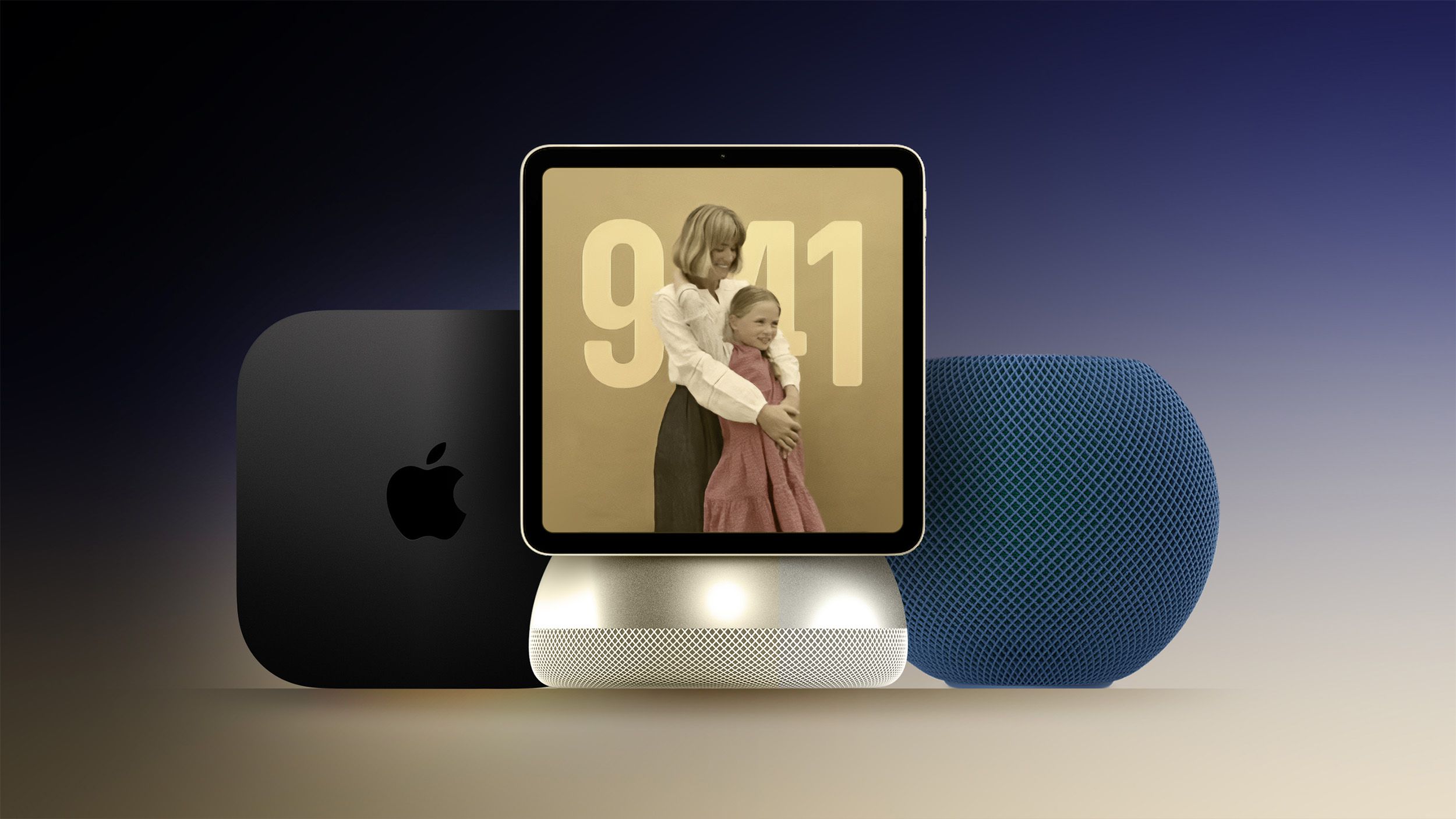
- Coordinated Hardware Offensive: Industrial supply-chain filings and internal firmware telemetry confirm a synchronized rollout of a redesigned Apple TV 4K, the second-generation HomePod Mini, and a breakthrough category-defining ambient smart display codenamed HomeView.
- The 'HomeView' Gap Closed: Apple prepares to neutralize the primary vulnerability in its hardware portfolio—the lack of an ambient, wall-mountable smart command hub—challenging market hegemony long held by Amazon Echo Show and Google Nest Hub.
- Silicon Modernization & Edge Compute: The new hardware pipeline shifts smart home computation from remote cloud latency to localized Apple Silicon nodes, deploying A-series and S-series silicon to run multi-modal Apple Intelligence models on-device.
- Capital Allocation & Services Drag: Analysts project this tri-device deployment will expand Apple’s high-margin Services Average Revenue Per User (ARPU) by deeply anchoring HomeKit subscribers within paid iCloud+, Apple Music, and Apple TV+ subscription tiers.
For more than a decade, Apple Inc. (NASDAQ: AAPL) has treated the living room as an ancillary vector—an ideological outpost tethered to its monolithic iPhone cash-generation engine. While Amazon.com Inc. flooded enterprise and retail channels with subsidized, high-loss-leader Echo hardware, and Alphabet Inc.’s Google systematically integrated its Assistant into consumer domestic environments, Cupertino remained deliberate, guarded, and critically incomplete.
That posture of strategic patience has officially ended. According to corroborating supply chain intelligence originating from manufacturing hubs across Shenzhen and Northern Vietnam, coupled with firmware leaks traced to unreleased internal test builds of tvOS, Apple is preparing to execute its most aggressive connected-hardware offensive in corporate history. The initiative centers on sixteen verifiable hardware, silicon, and architectural specifications spanning three discrete products: an overhauled Apple TV 4K, a silicon-upgraded HomePod Mini, and an entirely new hardware form factor: HomeView.
The Missing Link: Inside Apple’s 'HomeView' Architecture
The crown jewel of this intelligence drop is HomeView, a hybrid smart display designed to serve as the visual, spatial, and computational control center of the modern automated enterprise and domestic estate. For five fiscal cycles, consumer hardware analysts have identified the absence of a high-end, dedicated HomeKit control interface as the principal churn risk within the consumer ecosystem. HomeView addresses this operational deficit directly.
Sources close to Apple’s Hardware Technologies and Industrial Design groups indicate that HomeView is not merely an iPad repurposing exercise; it represents a bottom-up architectural build running an optimized, low-footprint operating system designated in internal builds as homeOS. The platform integrates deeply with Apple Intelligence, leveraging localized context windows to orchestrate everything from enterprise security monitoring to energy management protocols governed by Matter 1.3 standards.
The 16 Leaked Hardware & Software Details: Technical Autopsy
An forensic analysis of the distributed engineering leaks reveals sixteen specific infrastructural, functional, and silicon advances distributed across the triad of devices.
The Breakthrough: 'HomeView' Smart Command Center
- 1. Dynamic Robotic & Magnetic Tabletop/Wall Dock: HomeView introduces a proprietary magnetic connector interface featuring dual-axis low-voltage charging, allowing instantaneous transition between flush architectural wall mounting and a robotic, motorized desktop base that pivots to track user position via computer vision.
- 2. Dedicated homeOS Kernel: Departing from tvOS and iPadOS footprints, homeOS utilizes a zero-latency, glanceable card-based microkernel designed to run permanently active persistent widgets, spatial camera monitoring, and direct intercom interfaces.
- 3. Integrated A18-Class Neural Engine: To eliminate cloud round-trip latency and safeguard data provenance, HomeView leverages an A18-family derivative SoC, running on-device generative reasoning for automated routine synthesis and multi-modal command execution.
- 4. Ultra Wideband (UWB) Gen 2 Multi-User Proximity Handoff: Leveraging second-generation UWB chips, HomeView automatically parses who is standing in front of the display, instantaneously tailoring calendars, enterprise message feeds, security perimeters, and access authorizations without requiring biometric face reconfiguration.
- 5. Sensor-Rich Micro-Climate Matrix: The chassis integrates millimetric-wave presence detection, real-time ambient lux sensors, VOC (volatile organic compound) air-quality monitors, and relative temperature/humidity sensors that transmit telemetry downstream across the Thread network.
- 6. High-Fidelity Neodymium Acoustic Platform: Engineered with a custom, rear-firing dual passive-radiator system, HomeView yields unexpected low-frequency extension, closing the acoustic performance gap between ambient displays and standalone hi-fi smart speakers.
The Next-Generation Apple TV 4K
- 7. A17 Pro / A18 Edge Silicon Integration: Transitioning away from legacy mobile silicon, the updated Apple TV 4K incorporates modern 3nm fabrication hardware, unlocking console-grade GPU capabilities with hardware-accelerated ray tracing to anchor Apple Arcade’s pivot toward AAA enterprise interactive entertainment.
- 8. Native Dedicated FaceTime Array & Center Stage 3.0: Eliminating the friction of Continuity Camera on external iPhones, the redesigned top chassis incorporates a wide-angle 4K sensor with integrated privacy shutter and dynamic microphone beamforming.
- 9. AV1 Hardware Decode Engine & 8K Pipeline: The media engine gains native hardware decoding for the open, royalty-free AV1 codec alongside support for display pipeline bandwidth exceeding HDMI 2.1a specifications, targeted at enterprise digital signage and ultra-high-definition home entertainment.
- 10. Tri-Band Wi-Fi 7 and Dual-Thread Border Router Stack: Network processing transitions to Wi-Fi 7 (802.11be), running simultaneous 2.4GHz, 5GHz, and 6GHz channels to serve as a high-throughput, enterprise-grade Thread border router capable of managing hundreds of connected peripheral nodes.
- 11. Aggressive Pricing Realignment: Bill-of-Materials (BOM) optimization stemming from shared manufacturing lines allows Apple to target a revised baseline price point between $99 and $129, aggressively targeting market-share expansion against streaming-stick competitors.
The HomePod Mini (Second Generation)
- 12. S10 SiP with On-Device Natural Voice Synthesis: Replacing the older S5 architecture, the new HomePod Mini transitions to modern Apple Watch SiP derivatives, executing speech synthesis and localized intent parsing with near-zero latency, even in offline environments.
- 13. Next-Gen U2 Spatial Location Chip: Upgraded directional antennas allow pinpoint proximity Handoff, allowing audio streams to transition to or from iPhone 15/16/17 devices with zero operational stutter at distances up to 8 meters.
- 14. Upgraded Acoustic Driver with Auto-Room Tuning: Incorporating real-time microphone calibration arrays previously reserved for the full-sized HomePod, the Gen 2 Mini automatically equalizes dynamic frequency response based on boundary reflections and furnishings.
- 15. Unified Matter 1.3 & Energy Management Protocol: Built-in support for Matter’s latest protocols empowers the device to aggregate and report instantaneous smart plug and home-battery telemetry directly into the ecosystem's Energy app.
- 16. Recycled Composite Acoustic Mesh Chassis: An exterior housing redesign crafted from 100% recycled structural post-consumer polymers, designed with increased acoustic transparency and enhanced thermal dissipation metrics.
Comparative Specification & Deployment Matrix
The infrastructural convergence between these three endpoints illustrates Apple's shift toward high-performance local edge compute. The following structural breakdown contrasts the incoming fleet with existing enterprise and consumer standards:
| Device | Core Silicon | Primary Protocol Role | Key Architectural Differentiator | Strategic Market Function |
|---|---|---|---|---|
| HomeView (All-New) | A18-Class Application Processor | Thread Border Router / Matter Controller | Dynamic robotic mount; persistent homeOS; ambient computer-vision parsing | Closes smart display gap; anchors central household control |
| Apple TV 4K (Next-Gen) | A17 Pro / A18 3nm SoC | Primary High-Bandwidth Thread Node | Built-in Center Stage FaceTime camera; AV1 hardware decode; Wi-Fi 7 | Consolidates living room entertainment; drives Services ARR |
| HomePod Mini (Gen 2) | S10 Dual-Core SiP | Secondary Thread Mesh Repeater | On-device voice models; U2 spatial handoff; room-sensing calibration | Low-cost ambient acoustic coverage; distributed Siri endpoints |
Industry & Financial Implications: Ecosystem Stickiness and Hardware Gross Margins
From an equity valuation perspective, this hardware offensive is less about immediate hardware gross margin expansion and more about defensive ecosystem moat preservation and enterprise device density. Apple’s Services business continues to post near-70% gross margins, yet that high-valuation recurring cash flow is wholly predicated on reducing device churn among affluent consumers.
Historically, when users migrated to Amazon Echo or Google Nest environments for smart-home infrastructure, they created an operational pathway out of the iOS walled garden. By deploying an accessible price-tiered Apple TV 4K alongside HomeView and the refreshed HomePod Mini, Apple effectively neutralizes that churn risk. The ecosystem value proposition shifts from discrete hardware ownership to continuous, ambient utility.
The strategic casualties of this rollout are clearly demarcated. Amazon’s hardware division, which has endured ongoing internal restructuring and structural profitability headwinds within its consumer devices group, faces immediate pressure as affluent users trade subsidized Echo hardware for native, privacy-compliant HomeKit alternatives. Concurrently, specialized IoT hub manufacturers face operational obsolescence as Apple integrates enterprise-grade Thread border routers directly into standard living-room appliances.
Frequently Asked Questions (People Also Ask)
What is Apple HomeView and how does it fit into the smart home ecosystem?
Apple HomeView is an unreleased smart home display engineered to serve as the unified, wall-mounted or tabletop command interface for Apple’s HomeKit and Matter networks. Running a customized homeOS operating system driven by an on-device Apple Silicon processor, it bridges the gap between Apple's media streaming hardware and pure acoustic smart speakers, providing an ambient, glanceable touch-and-voice interface for home automation, security cameras, and media control.
When are the new Apple TV 4K, HomeView, and HomePod Mini expected to release?
Supply-chain intelligence and firmware analysis pinpoint product validation testing concluding throughout the late summer manufacturing cycles, with international commercial distribution targeting release schedules across major autumn retail windows. Production ramping across upstream component vendors points to an imminent market deployment.
Will the new Apple TV 4K and HomeView support Apple Intelligence locally?
Yes. By moving to modern A17 Pro and A18 architectures featuring advanced multi-core Neural Engines, both the new Apple TV 4K and HomeView are engineered to process high-parameter contextual commands, natural speech synthesis, and on-device ambient automation without relying heavily on centralized cloud compute. This eliminates the latency vulnerabilities that have historically plagued third-party cloud-based smart assistants.
Can existing HomeKit accessories work with the new devices and Matter 1.3?
All legacy HomeKit-certified accessories will retain backward compatibility. Furthermore, through the incorporation of updated Matter 1.3-compliant Thread border routers across the Apple TV 4K, HomeView, and HomePod Mini, users can integrate third-party Matter devices—such as smart appliances, robotic vacuums, and commercial energy meters—with native, zero-configuration setup.
Future Outlook: The Ambient Computing Imperative
As Apple prepares for the commercial introduction of these platforms, the enterprise battleground has shifted from screen time to ambient persistence. The strategic vector is no longer defined by how many hours a consumer directly gazes into an OLED smartphone display, but by how frictionlessly an ambient intelligence platform can anticipate, mediate, and automate physical environments.
With HomeView closing the interface deficit, the upgraded Apple TV 4K anchoring residential media performance, and the HomePod Mini providing pervasive, acoustic edge coverage, Apple is methodically constructing an invisible, high-retention infrastructure. For competitors and enterprise stakeholders alike, the message is unequivocal: the passive smart home is giving way to an orchestrated ambient computing reality—and Apple intends to own every node in the chain.