Executive Takeaways
- The August 19 Surprise: The U.S. Treasury stunned fixed-income desks by announcing plans to at least double its buyback operations for longer-dated Treasury bonds, triggering an immediate scramble for duration.
- Mitigating Market Fragility: Driven by structural deficit expansion and waning foreign demand, the intervention serves as a targeted mechanism for risk mitigation, enhancing market liquidity and preventing systemic valuation multiples contraction.
- The Yield Curve Battle: By absorbing illiquid off-the-run securities, Treasury is deploying advanced economies’ playbook to cap rising borrowing costs without officially declaring a yield curve control (YCC) regime.
- Capital Allocation Shifts: Institutional asset managers, primary dealers, and leveraged funds must rapidly recalibrate their duration risk, capital allocation strategies, and regulatory compliance frameworks.
For decades, the mechanics of the United States Treasury market operated in the background of global finance, viewed by corporate treasurers and equity strategists alike as the ultimate risk-free benchmark. However, the foundational plumbing of the world’s most critical debt market has grown increasingly brittle. On August 19, the U.S. Treasury delivered a seismic shock to Wall Street, announcing a strategic pivot to at least double the velocity and volume of its buyback operations targeting longer-dated sovereign debt. According to comprehensive analyses from the Council on Foreign Relations and premier financial institutions, this policy shift is far more than a routine liquidity adjustment; it represents a calculated intervention designed to suppress rising bond yields and restore structural stability to a strained financial system.
As institutional investors, sovereign wealth funds, and primary dealers dissect the implications of this unprecedented intervention, the central question remains: Is the Treasury’s buyback program an isolated liquidity measure, or is it the opening salvo in an undeclared campaign of structural yield management? To understand the gravity of this policy pivot, we must examine the deteriorating state of market liquidity, the mechanics of advanced economies' yield-capping strategies, and the sweeping consequences for global asset valuation.
Anatomy of a Shock: The August 19 Pivot
The announcement on August 19 caught fixed-income markets flat-footed. While Treasury buybacks had been reintroduced earlier in the year to smooth out "off-the-run" liquidity issues—securities traded less frequently than newly issued benchmarks—the sheer magnitude of the proposed expansion signaled a paradigm shift. By committing to at least double the scale of buybacks for long-duration instruments, the Treasury effectively stepped in as a price-insensitive buyer of last resort for specific segments of the curve.
To contextualize this move, one must examine the macro-financial backdrop. Persistent federal budget deficits have forced the Treasury to flood the market with unprecedented supply. At the same time, traditional buyers of U.S. government debt—such as foreign central banks, commercial banks facing stringent regulatory compliance, and price-sensitive asset managers—have scaled back their allocations. This supply-demand imbalance created pockets of acute illiquidity, where bid-ask spreads widened dramatically and market depth deteriorated.
In response, the Treasury utilized its buyback authority not merely for cash management, but as a sophisticated tool for market intervention. By repurchasing older, less liquid bonds and replacing them with regular issuances of benchmark tenors, the Treasury engineered a synthetic compression of term premiums. This maneuver directly counteracted upward pressure on long-term yields, echoing the proactive policy interventions observed across other advanced economies striving to prevent disorderly sell-offs in sovereign debt.
The Mechanics of Yield Suppression: Three Paths for Advanced Economies
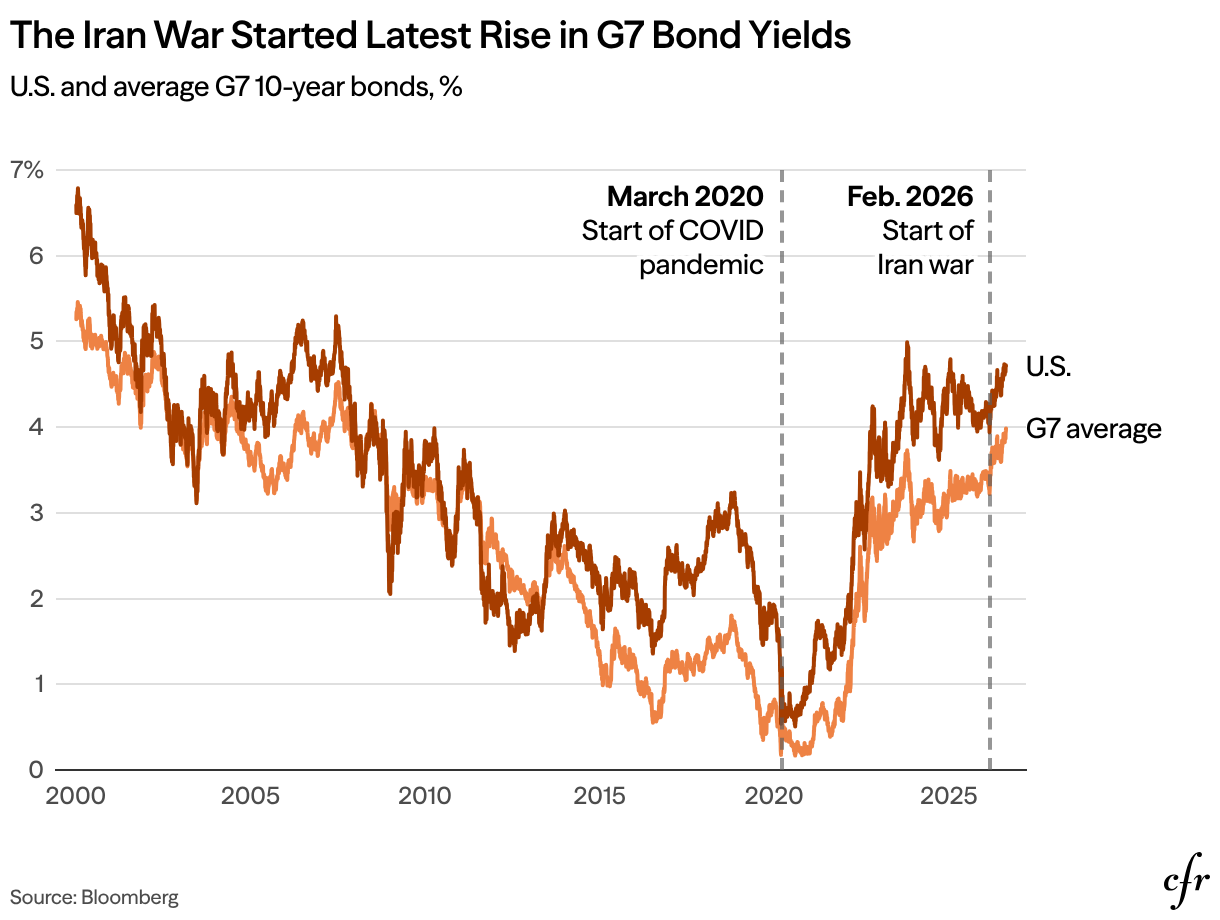
According to economic research highlighted by the Council on Foreign Relations, advanced economies facing mounting fiscal pressures typically rely on three primary mechanisms to lower government bond yields and maintain structural stability. The Treasury’s August 19 announcement places the United States firmly on the trajectory of executing the third and most sophisticated path.
1. Quantitative Easing (QE) and Balance Sheet Expansion
The traditional post-crisis playbook involves central bank asset purchases. By creating reserves to buy government bonds, central banks drive up bond prices and force yields down. However, in an inflationary environment accompanied by ongoing quantitative tightening (QT), relying on Federal Reserve balance sheet expansion presents severe political and monetary policy contradictions. The Treasury buyback program bypasses this hurdle, executing debt management operations directly through the executive branch's cash management authority.
2. Forward Guidance and Communication Policy
Central banks and fiscal authorities frequently attempt to shape market expectations through verbal intervention, signaling that policy rates will remain lower for longer or that supply pressures will moderate. While effective during stable cycles, forward guidance loses credibility when structural deficits outpace rhetoric. Investors demand tangible market actions rather than verbal assurances, making direct operational intervention necessary.
3. Targeted Debt Buybacks and Maturity Structuring
This is the precise vector chosen by the U.S. Treasury. By aggressively retiring long-duration debt, the Treasury actively reduces the duration risk absorbed by the private sector. Primary dealers and institutional investors are relieved of legacy securities that tie up balance sheet capacity and regulatory capital. This targeted intervention lowers long-term yields organically, serving as a surgical alternative to broad-based monetary intervention.
Verified Data & Metrics Breakdown Table
The following table outlines the structural shift in Treasury operations, contrasting the legacy framework with the revised August 19 buyback parameters and their immediate market transmission channels.
| Metric / Parameter | Legacy Framework (Pre-Aug 19) | Revised Buyback Regime | Market & Economic Impact |
|---|---|---|---|
| Buyback Volume & Velocity | Modest, predictable schedules focused strictly on cash management. | At least doubled in scale, targeting specific off-the-run sectors. | Significantly enhanced market liquidity and reduced tail risk. |
| Target Tenors | Short-to-medium maturity liquidity adjustments. | Longer-dated Treasury bonds and high-duration off-the-run issues. | Direct downward pressure on the 10-year and 30-year term premium. |
| Primary Dealer Impact | High balance sheet encumbrance holding legacy inventory. | Streamlined inventory offloading and improved capital velocity. | Optimized risk mitigation and enhanced secondary market turnover. |
| Yield Curve Transmission | Passive response to macroeconomic supply and demand forces. | Active suppression of long-end volatility and term premia. | Stabilized borrowing costs for corporate and consumer credit markets. |
Industry & Market Implications: Winners, Losers, and Systemic Risk
Every major structural intervention in the sovereign debt market creates profound ripple effects across global asset classes. The Treasury’s aggressive buyback posture is no exception, dictating distinct winners and losers across institutional finance, corporate treasuries, and leveraged funds.
The Winners
- Primary Dealers and Major Banks: Financial institutions tasked with making markets in government debt benefit immensely. The buyback program provides a reliable exit mechanism for illiquid inventory, freeing up valuable balance sheet capacity and improving regulatory compliance metrics such as the Supplementary Leverage Ratio (SLR).
- Corporate Borrowers and Real Estate Sectors: By compressing long-term benchmark yields and reducing term premia, the intervention stabilizes borrowing costs across corporate credit and commercial real estate. This provides vital breathing room for entities refinancing debt in a high-rate environment.
- Equity Valuation Multiples: Equities—particularly in growth-oriented and capital-intensive sectors—find support as the threat of an uncontrolled spike in the risk-free rate recedes. Lower long-term yields stabilize discounted cash flow models, preventing severe valuation multiples contraction.
The Losers and Risk Bearers
- Unhedged Bond Investors and Pension Funds: Institutional investors that structured their asset-liability matching (ALM) models around high, organic long-term yields face compressed returns. The artificial suppression of term premiums reduces the yield pickup available on long-duration fixed-income portfolios.
- Taxpayers and Fiscal Discipline Advocates: By utilizing debt management operations to ease borrowing friction, critics argue that the Treasury is masking the true cost of structural fiscal deficits. This dynamic transfers long-term interest rate risk onto the broader public balance sheet.
- Currency Stability: To the extent that aggressive debt management is perceived as a dovish operational pivot that discourages foreign capital inflows, the U.S. dollar may face downward pressure relative to competing G10 currencies.
Frequently Asked Questions (People Also Ask)
Why did the U.S. Treasury suddenly double its bond buyback program?
The Treasury accelerated its buyback program on August 19 to combat severe structural illiquidity in the secondary market for older ("off-the-run") government securities. Persistent federal deficits have flooded the market with new debt issuance, straining primary dealer balance sheets and driving up long-term yields. By doubling buybacks of longer-dated bonds, the Treasury actively absorbs duration risk, enhances market liquidity, and puts downward pressure on borrowing costs.
How does a Treasury buyback differ from Federal Reserve Quantitative Easing (QE)?
While both operations involve purchasing government debt to influence prices and yields, they originate from entirely different entities with distinct mandates. Quantitative Easing is executed by the Federal Reserve, which creates central bank reserves to buy assets, directly expanding the monetary base and impacting monetary policy. In contrast, Treasury buybacks are executed by the executive branch using cash management funds or proceeds from new debt issuance. It is a fiscal debt management tool rather than a monetary expansion policy.
What impact does this intervention have on institutional portfolios and capital allocation?
For institutional asset managers, pension funds, and insurance companies, the buyback program compresses term premiums and reduces the yield available on long-duration fixed-income assets. Portfolio managers must recalibrate their asset allocation strategies, shifting toward diversified duration matching and alternative credit instruments to maintain target returns while navigating lower yield volatility.
Is the Treasury effectively implementing Yield Curve Control (YCC)?
While officials maintain that buybacks are strictly executed for cash management and market liquidity enhancement, market participants view the operations as a de facto form of yield curve management. By selectively targeting longer-dated maturities and absorbing excess supply, the Treasury achieves outcomes structurally similar to explicit YCC without committing to a rigid, central-bank-enforced interest rate cap.
Future Outlook: What Comes Next and Key Milestones to Watch
As the dust settles from the August 19 announcement, the focal point shifts to execution and market reception. The Treasury’s willingness to deploy buybacks as a dynamic tool signals a permanent evolution in debt management strategy. No longer is the U.S. sovereign debt market governed solely by passive auction mechanics; active operational intervention has become a permanent feature of modern fiscal governance.
Market participants must closely monitor several critical milestones in the quarters ahead:
- Quarterly Refunding Announcements: Future Treasury refunding statements will reveal whether the expanded buyback pace is maintained, scaled up further, or adjusted in response to changing deficit projections.
- Primary Dealer Inventory Reports: Monitoring dealer positions will provide empirical evidence regarding how effectively the buyback program is relieving balance sheet constraints and restoring secondary market depth.
- Term Premium Trajectory: Tracking the behavior of the 10-year and 30-year term premium will determine whether the Treasury's intervention is successfully anchoring long-end yields or if structural supply pressures will eventually overwhelm operational adjustments.
- Global Central Bank Coordination: As other advanced economies navigate similar fiscal strains, cross-border capital flows and foreign official holdings of Treasuries will serve as a vital stress test for global bond market resilience.
Ultimately, the Treasury's buyback surprise is a stark reminder that the intersection of massive fiscal deficits, evolving market plumbing, and fragile liquidity demands constant vigilance. For institutional investors, mastering this new paradigm of active sovereign debt management is no longer optional—it is the definitive prerequisite for navigating the modern fixed-income landscape.