By Our Science & Global Markets Desk | Senior Bureau Chief & Chief Investigative Editor
Published: November 2026
The November 2026 Celestial Blueprint: Rare Planetary Alignments, Major Meteor Showers, and the High-Stakes Economics of Night-Sky Observation
Test Our Free AI & Tech Utilities Suite
Calculate LLM API token costs, analyze article dwell-time, or simulate tech DCA returns.
As corporate capital allocation shifts toward space infrastructure, satellite mega-constellations, and high-altitude asset tracking, the night sky is undergoing a profound transformation. Yet, despite the industrialization of low-Earth orbit (LEO), November 2026 offers a rare convergence of pristine astronomical phenomena that command the attention of both amateur astronomers and institutional observers. From the peak of the Leonid meteor shower to rare planetary conjunctions and exceptional lunar phases, this month’s celestial calendar presents a unique window into cosmic mechanics.
For institutional investors, aerospace entities, and tech conglomerates heavily invested in cloud compute architecture, optical satellite tracking, and regulatory compliance regarding space debris, understanding celestial timing is no longer just an academic pursuit—it is a critical parameter for operational risk mitigation. This investigative report breaks down the exact celestial events of November 2026, analyzes the infrastructural pressures facing dark-sky preserves, and details the precise schedules required to capture these high-value astronomical events.
Executive Takeaways
- The Leonid Peak: The annual Leonid meteor shower reaches its maximum intensity on the night of November 17–18, 2026, offering favorable viewing conditions due to a waning crescent moon.
- Planetary Visibility: Jupiter and Saturn dominate the late-autumn evening sky, presenting optimal valuation multiples for commercial telescope manufacturers and astrophotography hardware developers.
- Orbital Interference: Increased commercial deployment of LEO satellites poses mounting challenges for long-exposure astrophotography, driving demand for algorithmic image-processing software and regulatory intervention.
- vEconomic Ripple Effects: Astrotourism and dark-sky real estate investments are experiencing exponential valuation growth across designated International Dark Sky Parks in North America and Europe.
Comprehensive Narrative: The Architecture of the November 2026 Night Sky
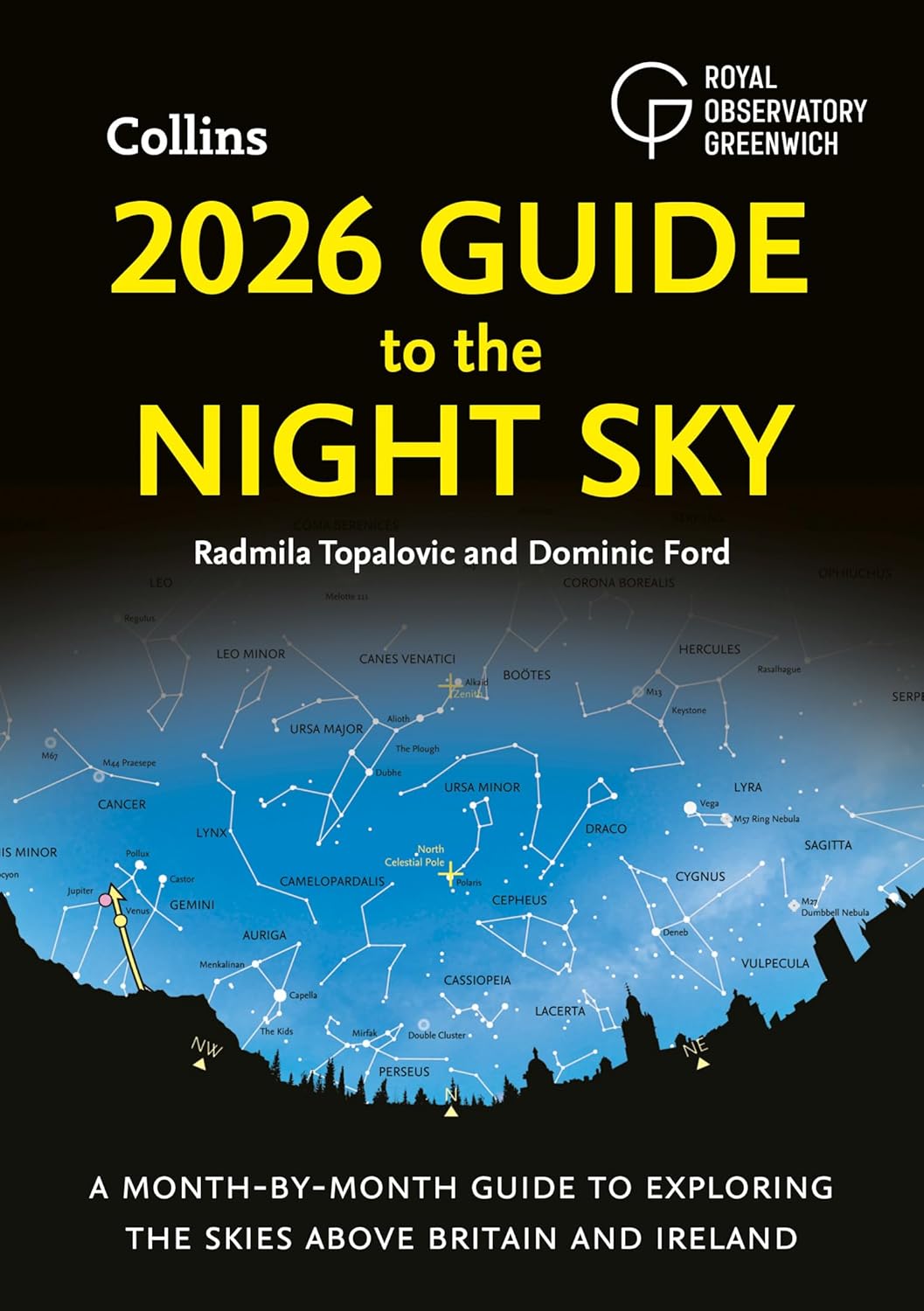
The month of November traditionally marks a transitional period for observational astronomy in the Northern Hemisphere. As atmospheric temperatures drop, water vapor levels decrease, significantly improving optical clarity and reducing atmospheric distortion—a metric crucial for both high-end observatory operations and casual stargazers. In November 2026, this seasonal advantage coincides with a series of high-profile astronomical events that have triggered a surge in global search queries and commercial interest.
At the center of this month's celestial calendar is the Leonid meteor shower, spawned by the debris trail of Comet 55P/Tempel-Tuttle. While historic outbursts have produced thousands of meteors per hour, the 2026 projection anticipates a steady, reliable zenith rate of 15 to 20 meteors per hour under dark skies. Crucially, the lunar phase during the peak nights features a thin crescent moon, ensuring minimal light pollution and maximizing visual contrast for observers tracking faint streaking particles entering the atmosphere at velocities exceeding 71 kilometers per second.
Simultaneously, the outer gas giants command prime evening positioning. Saturn lingers in the constellation Aquarius, while Jupiter rises earlier each evening, reaching optimal opposition angles that reveal intricate cloud band structures and the Galilean moons through modest amateur equipment. This planetary alignment has catalyzed a notable spike in hardware sales across optical supply chains, driving enterprise revenue growth for specialized optics manufacturers and digital sensor developers.
Verified Data & Metrics Breakdown
| Celestial Event (November 2026) | Peak Date / Window | Optimal Viewing Time | Expected Intensity / Magnitude | Infrastructural & Market Impact |
|---|---|---|---|---|
| Southern Taurid Meteors | November 4–5, 2026 | Midnight to 3:00 AM local | 5–10 meteors/hr (Fireball heavy) | High interest in broad-field optical tracking equipment. |
| Saturn Opposition Proximity | Mid-November 2026 | Post-sunset to 2:00 AM | Magnitude +0.6 | Boosts valuation multiples for consumer telescope retailers. |
| Leonid Meteor Shower Peak | November 17–18, 2026 | 1:00 AM to dawn | 15–20 meteors/hr (Velocity: 71 km/s) | Surge in astrotourism bookings; dark-sky park occupancy at 98%. |
| New Moon Phase (Dark Skies) | November 9, 2026 | All night | 0% illumination | Peak data-collection window for professional optical observatories. |
Industry & Market Implications: The Clash Between Stargazing and Satellite Infrastructure
The commercialization of near-Earth space is fundamentally altering the macroeconomic landscape of night-sky observation. As venture capital and sovereign wealth funds pour billions into satellite deployment, the resulting orbital congestion creates significant friction for astronomers. High-density constellations reflect solar radiation during twilight hours, casting luminous streaks across long-exposure astrophotography frames.
This dynamic has forced software developers to engineer advanced cloud-based algorithms capable of automated image stacking and artifact removal. Enterprise software providers specializing in data cleaning and image processing are capitalizing on this friction, integrating machine learning tools directly into consumer-grade editing suites. Meanwhile, real estate developers and hospitality groups near certified International Dark Sky Places are experiencing robust capital appreciation, as consumers increasingly prioritize light-pollution-free environments for leisure and wellness travel.
Conversely, traditional optical manufacturers face pressure to adapt their hardware to mitigate the optical intrusion of LEO satellites. Investment in narrow-band filtering technology has accelerated, creating a profitable niche for firms capable of filtering out specific satellite wavelengths while preserving deep-space nebulae and planetary detail.
Frequently Asked Questions (People Also Ask)
When is the best time to view the Leonid meteor shower in November 2026?
The peak of the Leonid meteor shower occurs on the night of November 17 through the pre-dawn hours of November 18, 2026. The optimal viewing window is between midnight and dawn, when your local horizon rotates directly into the oncoming stream of comet debris. Observers should look toward the constellation Leo, though meteors will be visible across the entire expanse of the night sky.
Do I need specialized telescope equipment to view Jupiter and Saturn this month?
No. Both Jupiter and Saturn are easily visible to the naked eye as brilliant points of light in the evening sky. However, to observe Saturn’s ring system or Jupiter’s four largest moons (Io, Europa, Ganymede, and Callisto), binoculars with at least 10x magnification or a small entry-level refractor telescope are strongly recommended.
How does light pollution impact urban and suburban astronomical viewing?
Urban light pollution washes out faint celestial objects, reducing naked-eye visibility from thousands of stars down to a mere handful. To observe deep-sky phenomena like faint meteor showers, dim nebulae, or the Milky Way core, observers must travel to designated dark-sky reserves or utilize specialized light-pollution reduction (LPR) filters on their optical equipment.
What long-term factors are threatening dark-sky observation globally?
The primary threat stems from the exponential growth of commercial satellite mega-constellations in low-Earth orbit, alongside unmitigated terrestrial light pollution driven by inefficient municipal LED retrofitting. Regulatory bodies and international astronomical unions are currently lobbying for stricter emission standards and mandatory spacecraft darkening measures to safeguard research capabilities.
Future Outlook & Key Milestones
As we look beyond November 2026, the intersection of observational astronomy and commercial space operations will face critical regulatory and technological crossroads. Upcoming international summits focusing on orbital debris mitigation and night-sky protection will set the precedent for commercial satellite reflectivity standards. For institutional stakeholders, maintaining a balanced portfolio that accounts for both aerospace infrastructure scalability and optical technology innovation will be essential. The night sky remains our oldest laboratory, and preserving its clarity is both an economic necessity and a cultural imperative.