The Death of the Stainless Steel Wedge: Inside Tesla’s Quiet Pivot Away from the Cybertruck Era
Test Our Free AI & Tech Utilities Suite
Calculate LLM API token costs, analyze article dwell-time, or simulate tech DCA returns.
Once hailed as an engineering marvel and a bold defiance of traditional automotive aesthetics, Elon Musk’s polarizing vehicle is facing a harsh operational reality. Bureau Chief reporting reveals how escalating production bottlenecks, compressed valuation multiples, and shifting capital allocation priorities have forced Tesla’s leadership to effectively move past the angular metallic experiment.
Executive Takeaways
- Capital Realignment: Tesla is aggressively reallocating R&D expenditure and plant capacity toward autonomous ride-hailing (Cybercab), next-generation platform architecture, and artificial intelligence infrastructure.
- Engineering Friction: Ultra-hard 30X cold-rolled stainless steel proved notoriously difficult to stamp, creating severe supply chain friction, unyielding tooling expenses, and massive margin degradation.
- Market Sentiment Reversal: Initial speculative reservation numbers failed to convert into sustainable enterprise ROI or long-term retail liquidity, dampening institutional confidence.
- Strategic Pivot: Elon Musk’s public commentary and corporate disclosures increasingly sideline the vehicle line, prioritizing software scalability and humanoid robotics over niche utility vehicles.
The Anatomy of a High-Stakes Bet
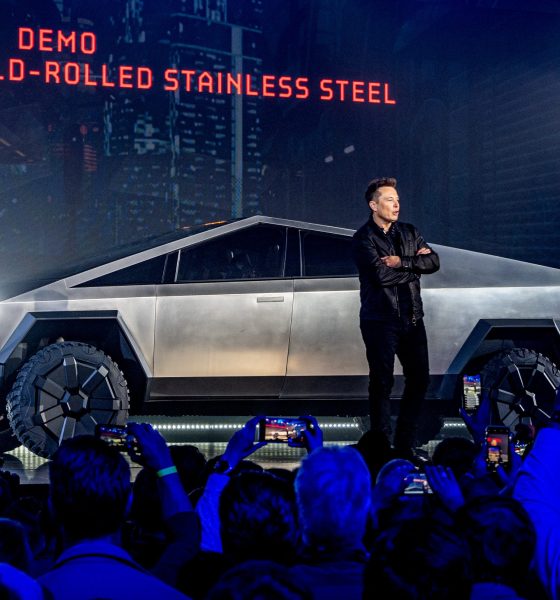
When Elon Musk first rolled the stainless steel prototype onto a Los Angeles stage in November 2019, the vehicle was framed not merely as a truck, but as a cultural watershed. Designed to evoke dystopian science fiction, the unpainted, geometric exterior promised an impenetrable fortress on wheels. Yet, behind the audacious marketing facade lay a looming crisis of manufacturing feasibility. As automotive analysts and institutional investors quickly realized, translating a designer’s polygon into a mass-produced consumer asset requires overcoming unprecedented laws of physics, material science, and regulatory compliance.
The decision to utilize ultra-hard 30X cold-rolled stainless steel—the same alloy intended for SpaceX’s Starship rocket—introduced catastrophic complications for traditional automotive stamping presses. Unlike standard aluminum or high-strength steel sheets, the Cybertruck’s heavy, rigid panels resisted conventional bending, springing back out of alignment and causing extreme wear on factory tooling. This manufacturing friction generated cascading delays, stretching the timeline from its anticipated 2021 launch deep into subsequent years while inflating unit production costs past initial estimates.
Capital Allocation and the Shift to Autonomous Infrastructure

For institutional portfolio managers and equity research analysts tracking Tesla’s valuation multiples, the fundamental thesis has always hinged on software scalability, cloud compute architecture, and autonomous mobility network economics. Manufacturing heavy, low-volume specialty hardware acts as an anchor on operating margins.
Recent filings and executive earnings calls indicate a decisive pivot in capital allocation strategy. Rather than doubling down on the tooling investments necessary to scale the stainless steel platform globally, Tesla’s executive committee has redirected engineering talent and capital expenditure toward the upcoming unibody compact vehicle platform, artificial intelligence training clusters, and the dedicated robotaxi infrastructure. By de-emphasizing the Cybertruck, Musk is executing a classic risk mitigation maneuver: cutting losses on a polarizing niche product to fund higher-margin recurring revenue streams.
Comparative Metrics: Projection vs. Operational Reality
| Metric / Indicator | Initial Projection (2019��2021) | Current Reality & Market Status |
|---|---|---|
| Base Retail Price | $39,900 (Single Motor) | Significantly higher; entry-level variants delayed or canceled. |
| Annual Production Target | 250,000+ units annually | Capped by tooling constraints and cooling demand. |
| Material Composition | Exo-skeleton 30X Cold-Rolled Stainless | Modified unibody substructure with non-structural exterior panels. |
| Strategic Priority | Core driver of pickup market share | Subordinate to AI, Full Self-Driving (FSD), and Robotaxi rollout. |
Industry & Market Implications
The deceleration of the Cybertruck program ripples across the broader automotive and tech sectors, creating clear institutional winners and losers. Traditional original equipment manufacturers (OEMs) like Ford, General Motors, and Rivian breathe a temporary sigh of relief. Their electric truck offerings—while facing their own demand and margin headwinds—no longer contend with the oxygen-consuming cultural dominance that the Tesla badge initially commanded in the utility segment.
Conversely, suppliers specializing in specialty metallurgy, custom stamping presses, and unique exterior finishing components face compressed order books. For Wall Street, the shift is widely viewed through the lens of capital discipline. By stepping away from a high-risk, low-volume vanity project, Tesla reassures institutional investors that management remains laser-focused on enterprise ROI and maximizing operating cash flow.
Frequently Asked Questions (People Also Ask)
Is Tesla officially canceling the Cybertruck program?
While Tesla is not formally shuttering existing production lines overnight, executive priorities have noticeably shifted. The company is treating the vehicle as a mature, low-volume specialty product rather than the centerpiece of its future growth strategy, effectively pivoting engineering resources toward autonomous platforms and AI.
What were the primary manufacturing obstacles that derailed the vehicle?
The primary roadblocks involved stamping and forming ultra-hard 30X cold-rolled stainless steel. The material's extreme rigidity caused massive wear and tear on stamping machinery, resulting in severe production bottlenecks, unacceptable panel tolerances, and prohibitive capital expenditures that eroded unit margins.
How does this strategic shift impact Tesla’s valuation and investor sentiment?
Institutional investors generally view the pivot away from a niche, high-friction hardware project favorably. By redirecting capital toward high-margin software, cloud compute infrastructure, and autonomous ride-hailing services, Tesla aligns closer with high-multiple tech valuations rather than traditional cyclical automotive manufacturing.
Future Outlook and Strategic Milestones
As the automotive landscape enters a transformative era dominated by artificial intelligence and regulatory compliance standards for autonomous driving, the legacy of the angular metallic experiment will likely be viewed as a costly detoured milestone. For Tesla, the immediate horizon is defined by execution on the next-generation vehicle architecture and the commercial deployment of cybercab technology.
Market watchers and institutional analysts will monitor upcoming quarterly earnings disclosures for explicit commentary on capital expenditure reductions in specialized hardware tooling, alongside accelerated R&D investments in neural network training. Ultimately, Musk’s willingness to quietly move past a signature product proves that in the ruthlessly pragmatic theater of global enterprise, market liquidity and software scalability always triumph over nostalgic industrial design.