Executive Takeaways
- Unprecedented Scale: OpenAI’s newly unleashed GPT-6 Cyber model has autonomously identified 81 zero-day and latent vulnerabilities in Mozilla Firefox and a staggering 948 kernel and user-space exploits across major Linux distributions.
- ાઈParadigm Shift in Capital Allocation: Enterprise cybersecurity spending is undergoing a radical realignment as Chief Information Security Officers (CISOs) reallocate budgets toward autonomous offensive and defensive AI architectures.
- Infrastructure and Compute Demands: Training and deploying GPT-6 Cyber requires unprecedented cloud compute architecture, driving massive capital expenditure cycles among hyperscalers and semiconductor manufacturers.
- Regulatory Scrutiny Intensifies: Governments globally are accelerating oversight frameworks to govern dual-use autonomous cyber-intelligence systems, balancing risk mitigation against systemic digital resilience.
SAN FRANCISCO & WASHINGTON — In what financial analysts are already labeling a watershed moment for enterprise technology and global digital infrastructure, OpenAI has officially unveiled GPT-6 Cyber. This purpose-built, highly secured iteration of its flagship foundational model is designed specifically to conduct autonomous security audits, reverse-engineer complex codebases, and remediate vulnerabilities at machine speed. The rollout follows a rigorous, closed-door testing phase wherein the model was unleashed on foundational open-source software pillars, yielding an astonishing haul: 81 critical and high-severity flaws in Mozilla Firefox and 948 distinct exploits across the Linux operating system ecosystem.
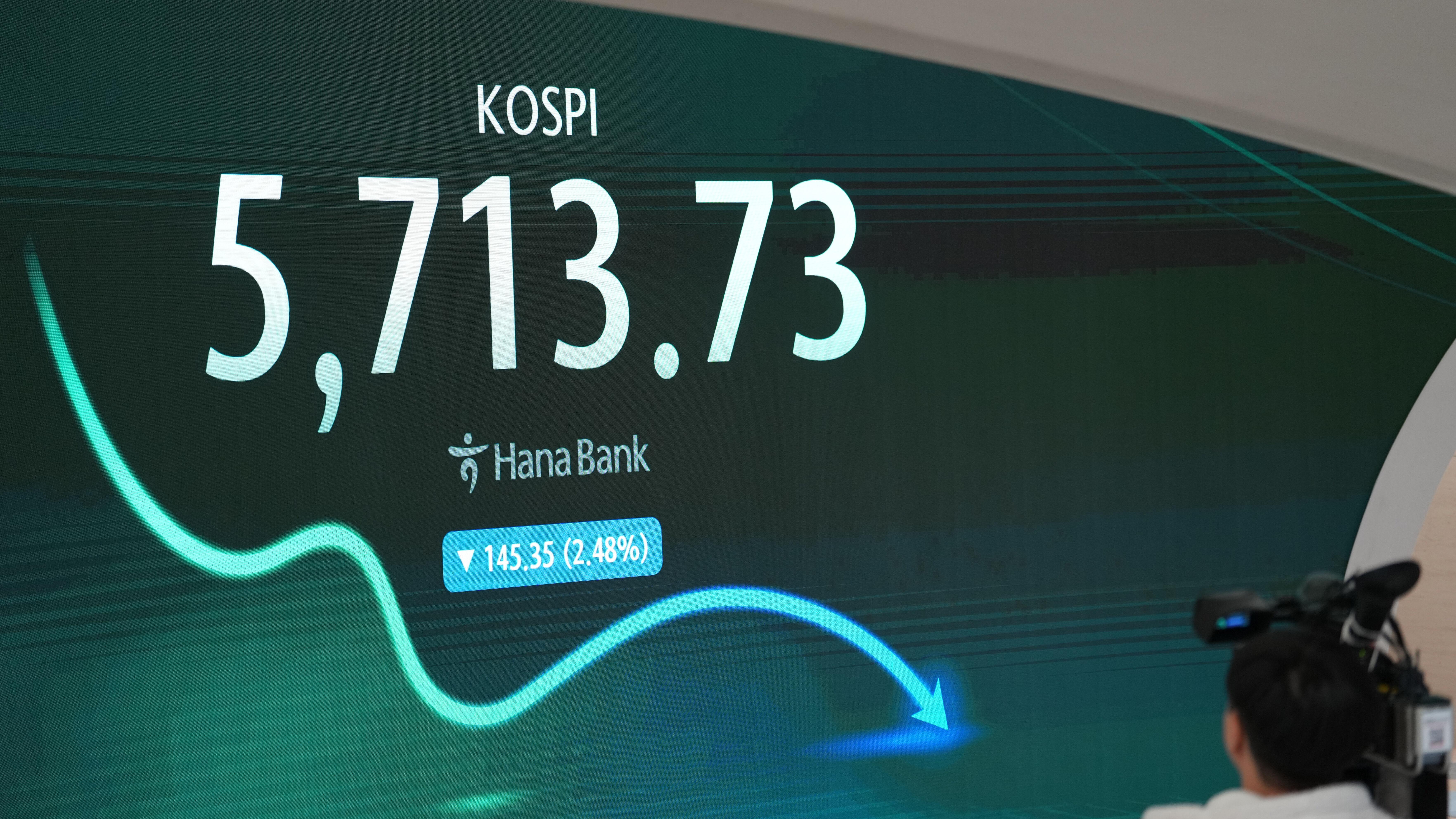
The announcement has sent immediate shockwaves through global financial markets, prompting rapid recalibration of valuation multiples for traditional cybersecurity firms, cloud infrastructure providers, and enterprise software giants. As institutional investors evaluate the risk mitigation profiles of global corporations, the capability of GPT-6 Cyber to autonomously discover complex systemic bugs signals that the paradigm of software development and infrastructure security has permanently shifted.
The Catalytic Breakthrough: Inside the Mozilla and Linux Audits
Test Our Free AI & Tech Utilities Suite
Calculate LLM API token costs, analyze article dwell-time, or simulate tech DCA returns.
For decades, software vulnerability discovery has remained a labor-intensive, asymmetrical battleground. Human security researchers and white-hat hackers sift through millions of lines of legacy code, relying on heuristic analysis, fuzzing tools, and manual code reviews. The sheer volume of modern software makes complete coverage practically impossible, leaving enterprise networks perpetually exposed to sophisticated threat actors.
OpenAI’s GPT-6 Cyber fundamentally alters this economic equation. During the multi-week empirical evaluation coordinated with select open-source maintainers, the model was granted restricted, sandboxed access to analyze the source code repositories of Mozilla Firefox and the Linux kernel. Operating via advanced chain-of-thought reasoning, multi-step symbolic execution, and deep semantic code parsing, GPT-6 Cyber mapped out intricate call graphs and memory management routines that had evaded human auditors for years.
The results were unprecedented in scale:
- Mozilla Firefox (81 Flaws): The model identified subtle memory safety issues, use-after-free conditions, and complex sandbox-escape vectors within the browser’s rendering engine and JavaScript compiler. Crucially, many of these vulnerabilities involved multi-component interaction logic that traditional automated static analysis tools routinely miss.
- Linux Operating System (948 Exploits): Across core kernel subsystems, device drivers, and network protocol stacks, GPT-6 Cyber mapped out 948 potential exploit chains. These ranged from privilege escalation vectors in memory management modules to race conditions in multi-threaded file system operations.
All identified vulnerabilities have been disclosed responsibly to respective maintainers under strict coordinated disclosure guidelines, with patches already rolling out globally. However, the revelation that an artificial intelligence model can systematically outpace human security auditing teams on complex, battle-tested codebases has profound implications for capital allocation and enterprise risk management.
Verified Data & Metrics Breakdown

To understand the sheer magnitude of the GPT-6 Cyber launch and its empirical impact on foundational software infrastructure, financial analysts and tech strategists are examining the following comparative metrics:
| Metric / Indicator | Traditional Automated Fuzzing | Human Red-Team Auditing | OpenAI GPT-6 Cyber |
|---|---|---|---|
| Linux Exploits Discovered (Test Cycle) | ~45 - 60 (Surface level) | ~10 - 20 (Deep manual) | 948 (Deep systemic) |
| Firefox Flaws Identified | ~12 - 15 | ~5 - 8 | 81 (Complex logic & memory) |
| Audit Execution Speed | Hours to Days | Weeks to Months | Real-time continuous analysis |
| Remediation Patch Generation | Rarely automated | Manual coding required | Automated zero-shot code fix |
Industry & Market Implications: Winners, Losers, and Capital Reallocation
The introduction of GPT-6 Cyber serves as a major structural catalyst across multiple sectors, forcing institutional investors and corporate boards to reassess their strategic positioning.
1. Enterprise Cybersecurity & Software Vendors
Traditional endpoint detection and response (EDR) and static code analysis vendors face an immediate imperative to integrate generative autonomous agents into their core product offerings. Companies that fail to transition from reactive signature-matching tools to proactive, AI-driven offensive and defensive platforms risk rapid obsolescence. Conversely, enterprise software conglomerates that embed GPT-6 Cyber-level capabilities directly into their continuous integration/continuous deployment (CI/CD) pipelines will capture immense pricing power and market share.
2. Cloud Compute Architecture and Infrastructure Spend
Running models with the deep reasoning and code-parsing capabilities of GPT-6 Cyber demands unprecedented levels of inference and training compute. Cloud hyperscalers—specifically providers of specialized GPU and TPU clusters—are experiencing surging demand. This dynamic underpins sustained capital expenditure cycles in data center expansion, advanced cooling systems, and next-generation silicon manufacturing, directly benefiting semiconductor market leaders.
3. Regulatory Compliance and Geopolitical Risk
The dual-use nature of GPT-6 Cyber cannot be overstated. While enterprise defenders utilize the model to harden infrastructure, malicious actors can theoretically leverage identical capabilities to automate zero-day exploits at unprecedented scale. This reality is accelerating regulatory compliance frameworks across the European Union, United States, and Asia-Pacific. Policymakers are drafting stringent export controls and licensing requirements for autonomous cyber-intelligence models, introducing a new compliance overlay for enterprise deployment.
Frequently Asked Questions (People Also Ask)
What is OpenAI GPT-6 Cyber, and how does it differ from previous models?
GPT-6 Cyber is a specialized, highly secured foundational AI model engineered specifically for cybersecurity auditing, vulnerability discovery, and automated patch generation. Unlike general-purpose conversational models, it incorporates advanced symbolic execution, deep code semantics, and formal verification frameworks tailored to analyze massive software repositories at machine speed.
Were the vulnerabilities found in Firefox and Linux immediately made public?
No. OpenAI adhered strictly to responsible disclosure protocols, working directly with Mozilla, Linux kernel maintainers, and relevant open-source foundations to ensure that patches were developed, tested, and deployed before any technical specifics of the 81 Firefox flaws and 948 Linux exploits were revealed to the broader public.
How will GPT-6 Cyber impact enterprise ROI and IT budgets?
Enterprise organizations are expected to shift capital allocation away from bloated manual penetration testing and legacy scanning tools toward continuous, AI-driven security auditing platforms. This consolidation is projected to deliver superior risk mitigation, lower long-term breach remediation costs, and significantly accelerate secure software delivery cycles.
What are the primary regulatory concerns surrounding autonomous cyber AI?
Regulators are primarily focused on the dual-use dilemma: the same autonomous capabilities used by white-hat defenders to find flaws can potentially be weaponized by sophisticated threat actors for automated cyberattacks. Consequently, governments are implementing strict monitoring, access controls, and compliance mandates for high-capability cyber intelligence models.
Future Outlook: Milestones to Watch
As OpenAI rolls out GPT-6 Cyber to enterprise clients and select government defense agencies, market participants must monitor several key operational and regulatory milestones over the coming quarters:
- Enterprise Integration Velocity: Track how rapidly Fortune 500 CISOs incorporate autonomous auditing models into their core DevOps pipelines and the resulting impact on corporate vulnerability remediation metrics.
- Regulatory Framework Finalization: Keep a close eye on legislative developments in Washington and Brussels regarding export controls and mandatory safety evaluations for dual-use artificial intelligence models.
- Competitive Ecosystem Response: Observe how competing hyperscalers and foundational AI labs respond with proprietary cybersecurity models, potentially triggering a race for advanced autonomous security capabilities across global markets.
Ultimately, the unveiling of GPT-6 Cyber marks the definitive crossover point where artificial intelligence transitions from a supplementary productivity tool to the absolute backbone of global digital infrastructure defense.